Exceptional People: How Migration Shaped Our World and Will Define Our Future – Ian Goldin

At a national level, the educational gains from migration vary with the age of the migrant. Those who migrate to the United States as children (before 13) or as young adults (25-29) reap the greatest educational benefits from moving. Immigration between ages 13 and 19 confers a relative disadvantage on migrants, however, because of obstacles with language and integration in schools – which are no easier to overcome in teenage years.

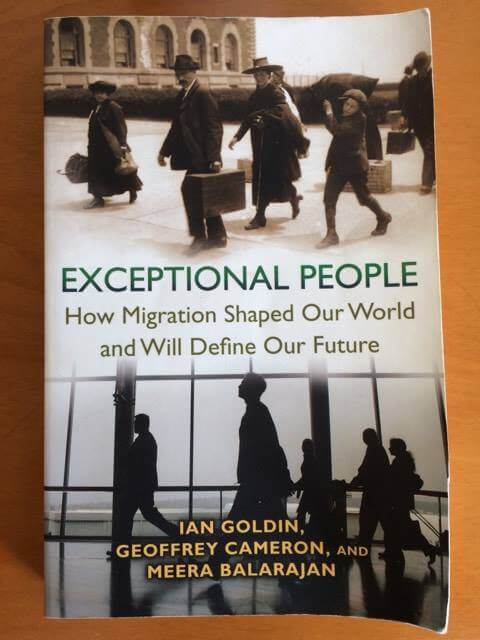
Ian Goldin, together with Geoffrey Cameron and Meera Balarajan, did a fantastic piece of work with this book. The volume is an almost academic analysis, filled with figures and charts, dissecting with great acuity the movements of humans on the planet. Divided into three parts, it covers the past, the present and the future of migration.

exceptional-people
Walking towards a new future

The message is at the end of the book, where migration is portrayed as a short-pain and long-gain strategy. An interesting insight is that people are moving historically less between countries, but further away for the ones that move.

While the book includes some solid references, it fails to see the downside on migration. It is looking at only one side of the coin. Migration indeed brings benefits for both the migrant and the host-state, but what about the drawbacks? This part is not researched, which makes the conclusions looking biased. One of those conclusions is a call for a global leadership that will advance a global migration agenda.

Nonetheless, the book makes a passionate argument for migrants (called “exceptional people”). It looks at the benefits and motives behind immigration, from pre-history to post the World Wars, the present day and the future trends.

A good read, particularly for immigrants and those interested in the subject.

Glory Main – Henry O’Neil

Both sides possessed weapons that could blow a planet’s atmosphere right off or radiate the place so badly that no one could live there, but the goal of gaining a habitable planet took those weapons off the table. Instead it set the engineers from both sides working on devices that delivered their terrible effect but didn’t permanently alter the ground where they were used.

The tech had become visibly disturbed when he reached the logical conclusion that the limited war calculus would no doubt be dropped the day either side found the enemy’s home planets.

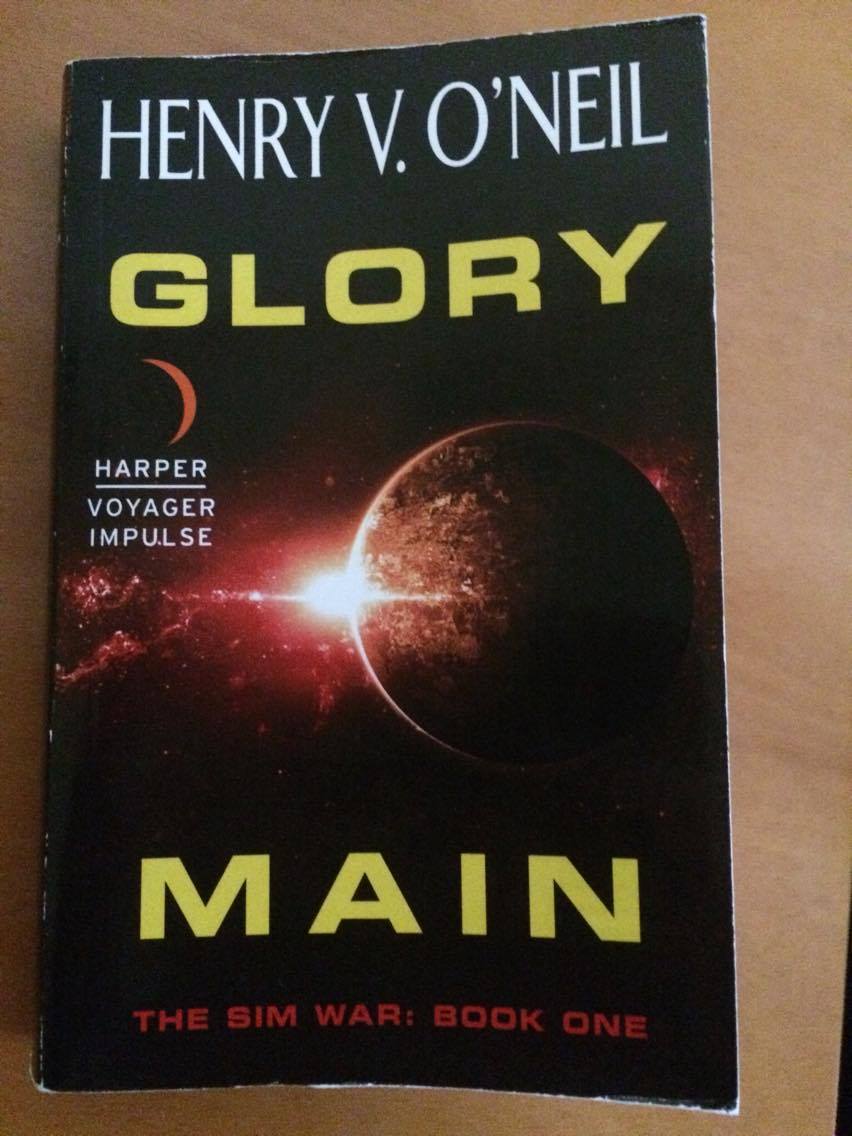
The book is a survival story during the Sim war, a war between humans and similarly-looking aliens. Lieutenant Mortas and three others crash on a desolate planet and fight to survive.

sim-war1
Survival scifi, could have used more imagination.

The four characters are nicely constructed, the infantryman, the scout, the tech and the psychoanalyst, and their struggle is believable and interesting. While less action-packed than other series, the pace of the story is fast enough to keep the reader engaged. The plot is nicely constructed with many twists and turns. The end is fantastic and unexpected. An original military sci fi overall.

The survival story could have been better developed and more imaginative, but it was interesting enough to keep the reader engaged. The narrative is focusing rather on characters then on the surroundings or the events. Nonetheless, it was a pleasure to follow the four in their fight.

A nice read for the fans of the genre.

The Way of Men – Jack Donovan

“Honor diversity” is an interesting slogan, because it essentially means “honor everyone and everything”. If everyone is honored equally, and everyone’s way of life is honored equally, honor has no hierarchy, and therefore honor has little value according to the economics of supply and demand. “Honor diversity” doesn’t mean more than “be nice”.
[…]
To honor a man is to acknowledge his accomplishments and recognize that he has attained a higher status within the group.

Jack Donovan presents in a framework of anarcho-primitivism what he sees as masculine values and way of life. It is a challenging book, with some extreme conclusions.

The book is short, but the topic is important. It is kind of an equivalent of extreme feminism, but on the other side of the axis, an extreme masculism, if you like.

On the plus side, the author correctly notes some masculine’s traits: why a simple excuse or shake of hands between men is enough to end a conflict, why men fight for status, why they go their own way sometimes, why men love playing contact games. The Bonobo Masturbation Society chapter is fantastic.

thewayofman
The way of men is the way of the gang – interesting concept.

Some points are very interesting, such as the values of man, the difference between being a good man and being good at being a man, how men talk and act in groups of men. Some research was done and presents some good stories, Romulus and Remus, Gilgamesh; though with insufficient profoundness.

On the negative side, the last chapters are insufficiently refined and the conclusions are misguided and a bit on the extreme. The book could have been so much better, if he would just had the patience to filter more the last chapters.

I don’t think that masculinity is going through a crisis, but there are some major changes, never before experienced by men. We are the first generations not being conscripted into the army, in the entire history of mankind.

Some challenging ideas. It is worthy to read it.

Armor – John Steakley

Felix took the blaze-rifle, the blazer, from the slot in the long row which had a number to match the one pulsing inside his helmet. He checked it for charge, attached it to his back. Scout suits, much smaller than standard issue, had no blazer capacity built in. Scouts carried rifles used by open-air troops for thirty years. Also, they had fewer blaze-bombs-only nine as opposed to the two dozen the warriors carried. Scouts must be fleet, must be able to realize their much greater potential for speed and agility. And, where warrior suits bore different colors for rank and group, all scouts were black. Flat black. Dull, non-shiny, space black.

The book by John Steakley is a classic military sci-fi, written in 1984. Unlike many other military sci-fis enjoying success, it is a stand alone book, not part of a series. Steakley was working on a second book, when he died in 2010.

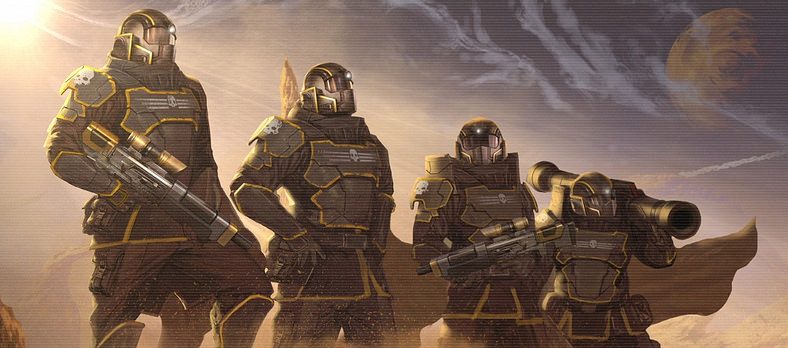
armour-loner
Felix is a loner, a hero, a veteran and a broken man.

The story is divided into three parts. In the first part, we find Felix, a scout in the Earth’s military, orbiting Banshee, a hostile planet infested by giants aliens called Ants, very similar in behavior with the Earth’s ones. Against all odds, he survives twenty or so drops on the planet, invasions aimed at eradicating the alien infestation. Felix manages to survive, by allowing a kind of a second personality, the Engine, to take his place during the battle.

The second storyline follows a space pirate called Jack Crow. He strikes a deal with a mutineer captain to infiltrate and subvert a research colony, where he finds Felix’s armour, many years after Felix’s storyline.

The third part, the ending, is moving. It is intensely emotional, when Jack Crow finds the story of Felix,  his loneliness, desperation and hopelessness during the Antwar and his motivations. The closing scenes are heart-wrenching.

The book takes some elements from Starship Troopers, but remains a beautiful narrative, at times melancholic, at times bursting with action. I finished it in the early hours of a morning, but it left me empty and sad. I think a story is good if it touches the reader and this book touched me.

Cronica de Cotroceni – Adriana Saftoiu

Prima mea zi la capatul a zece ani de colaborare cu Traian Basescu a fost vineri, 30 martie. Dimineata a sunat telefonul. Nu imi era greu sa-mi imaginez cine ar fi putut sa fie. N-am raspuns. In sfirsit, eram libera de contract. Apoi, telefonul a sunat din nou. «Te cauta Presedintele», m-a informat bine cunoscuta voce de la secretariat. «Nu mai lucrez la Cotroceni. Poti sa-i spui ca nu am raspuns la telefon.»

Cum promiteam cu cateva post-uri inainte, scriu in limba in care am citit cartea.

Adriana Saftoiu a fost consilier prezidential si purtator de cuvint al Presedintelui Romaniei, in timpul mandatului lui Traian Basescu. Ca fost purtator de cuvant si fost ziarist, Saftoiu are verva si stil. Am citit cartea intr-o seara, nu puteam sa o las din mana.

Cartea, publicata in 2015, vorbeste in principal de Presedintele la acel moment, dar nu dezvaluie prea multe, majoritatea faptelor sunt deja publice. Totusi confirma o serie de zvonuri, de exemplu relatia Presedintelui cu Elena Udrea. Memoriile incep si se termina cu activitatea Adrianei Saftoiu la Palatul Cotroceni, doar cative ani, dar sunt destul de savuroase si pline de evenimente.

poarta_cotrocenilor
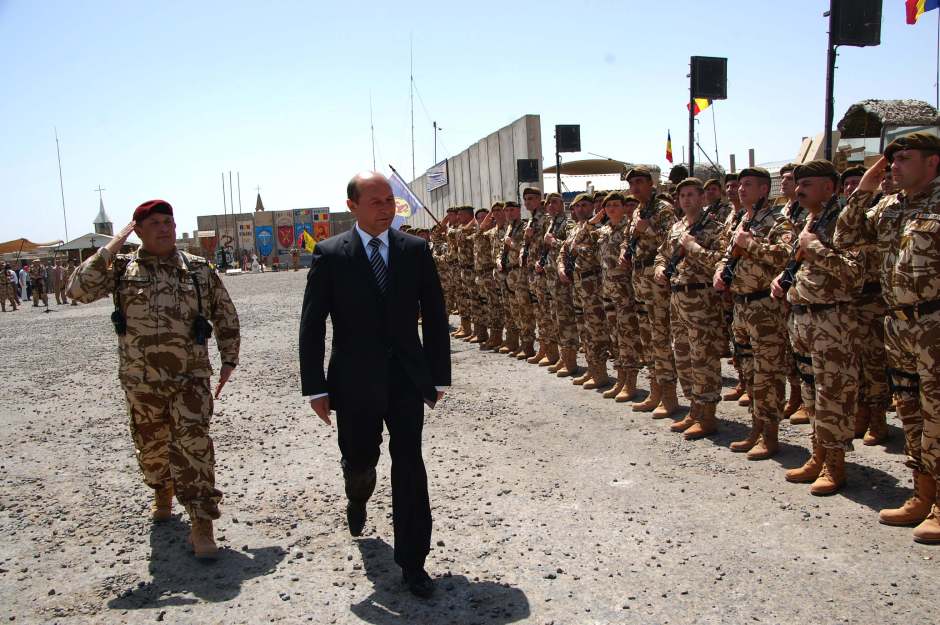
La Poarta Palatului Cotroceni

Presedintele mi se pare prezentat ca un om furios, frustat, dar determinat; majoritatea lucrurilor sunt improvizatii si se intampla alandala; gastile de mediocri ii imping pe competenti sa plece. Pare destul de gri, insa sa nu uitam ca Romania a intrat in UE, iar ANI si DNA si-au pus bazele in perioada aceia.

Este o lectura usoara, pentru cei vag interesati de politica si o ofera o imagine in timp a Cancelariei Prezidentiale in timpul mandatului lui Traian Basescu.

Starship Troopers – Robert Heinlein

The strategy was simple, and, I guess, logical… if we could afford the losses. Let the Bugs come up.
Meet them and kill them on the surface. Let them keep on coming up. Don’t bomb their holes, don’t gas their holes — let them out. After a while — a day, two days, a week if we really did have overwhelming force, they would stop coming up. Planning Staff estimated (don’t ask me how!) that the Bugs would expend 70 per cent to 90 per cent of their warriors before they stopped trying to drive us off the surface.
The book by Robert Heinlein was written in 1959, but it still has a futuristic flavour. It tells the story of the war with the Bugs, an arachnid-like alien species, sometime in the future of humankind.
It uses a first-person narrative to follow the tale of a soldier, gradually increasing in ranking, as the war progresses. Much of the book is taking place during his military training, which gives the opportunity to discuss many political ideas.
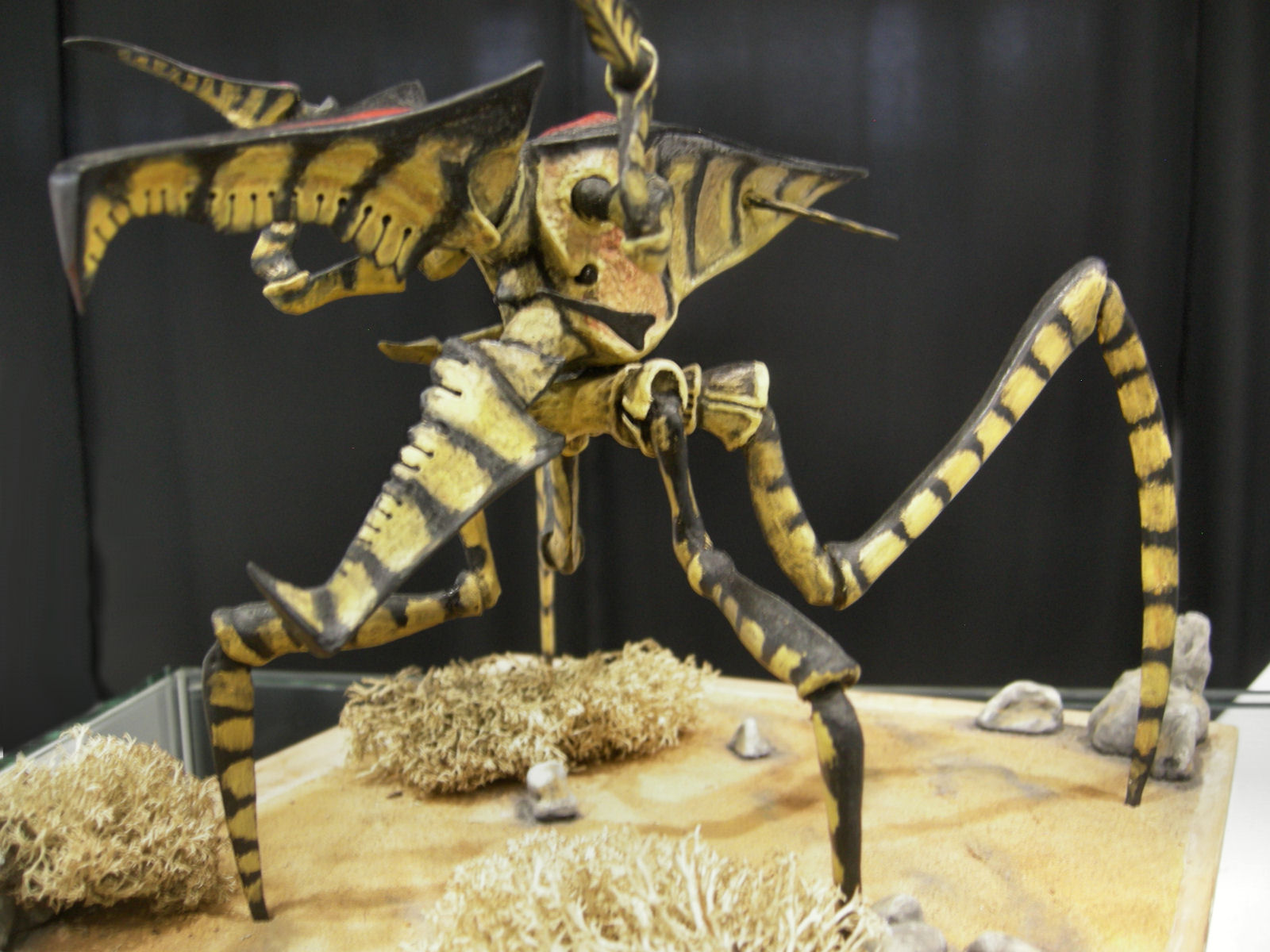
starship_troopers_miniature
Warrior bug, from the first movie.

The book basically started the military scifi genre. It has numerous ideas very advanced for their time: racial diversity, starship drives, power suits.

The first movie (1997) is quite different than the book, more action-packed and less intellectually engaging.
Overall, the novel offers an immersive lecture and an interesting storyline, where the author uses the background of war and the progress of a space marine to propose some political ideas.

Aurora – Kim Stanley Robinson

The whole voyage to Tau Ceti and back takes place inside the Local Interstellar Cloud and the G Cloud, which are concentrations of gas within the Local Bubble, which is an area of the Milky Way galaxy with fewer atoms in it than the galaxy has on average. Turbulence, diffusion: in fact, with our magnetic field coning ahead of the ship, electrostatically pushing aside the occasional grain of dust big enough to harm it in a collision, all atoms of any kind encountered en route are pushed aside, so we register our surroundings mostly as a kind of ghostly impact and then as a wake, shooting by to the sides and then astern of us.

Aurora is a beautiful hard scifi novel, describing a voyage of humankind from Earth to another planet, for colonisation. The voyage fails, as all the other voyages of colonisation tried by humankind sometime in the future. The crew decides to come back to Earth, barely trying to understand and adapt to the new planetary conditions.

While I enjoy the idea, the writing, the narrative and all the scifi descriptions, I fundamentally disagree with the message of the book: that we are chained by biological strains to remain on Earth. Hence, we should do the utmost care to preserve the planet as pristine as possible.

According to Kim Stanley Robinson, outside of Earth, people are stupider, unable to adapt and none of the tries of colonisation has any success, despite well-planned voyages. I think this conclusion comes in contrast with humankind achievements so far: small groups of people exploring, colonizing and adapting to very different strips of land and weather patterns. Humans did not get confined in Africa, but pushed further and further, from the desert to islands and from arctic to jungles.

The story of this voyage failure to Aurora, the alien planet, is well constructed and tension is skilfully built. gradually increasing pace. The protagonists’ motivations and characters are carefully constructed.

aurora
A pessimistic story of humankind interstellar voyage

However, there are things I don’t like. The leading voice towards returning to Earth has no credentials, except being the daughter of the main engineer of the ship, dead at the time of alien planet arrival. She seems the leader not because of personal willpower or building a solid argument, but because she is known to most people and most voyagers are likely to fight the least her option.

The arguments towards returning to Earth are poorly constructed. There is no try to adapting  and understanding the new planet. No years of orbiting trying to see where the problems are and how they can be resolved. It is a very different and pessimistic story than the Martian, for example.

It seems unlikely that people can revolt and endanger the entire expedition, without exhausting all avenues of solving their issues peacefully first.

I like the narrative, but the logical path seems flawed and not realistic. There are too many psychological, mind games, when there are too many practical problems to solve.


World War Z – Max Brooks

The swarm continued among the cars, literally eating its way up the stalled lines, all those poor bastards just trying to get away. And that’s what haunts me most about it, they weren’t headed anywhere. This was the 1-80, a strip of highway between Lincoln and North Platte. Both places were heavily infested, as well as all those little towns in between. What did they think they were doing? Who organized this exodus? Did anyone? Did people see a line of cars and join them without asking? I tried to imagine what it must have been like, stuck bum per to bumper, crying kids, barking dog, knowing what was coming just a few miles back, and hoping, praying that someone up ahead knows where he’s going.
You ever hear about that experiment an American journalist did in Moscow in the 1970s? He just lined up at some building, nothing special about it, just a random door. Sure enough, someone got in line behind him, then a couple more, and before you knew it, they were backed up around the block. No one asked what the line was for. They just assumed it was worth it. I can’t say if that story was true. Maybe it’s an urban legend, or a cold war myth. Who knows?
The book is a collection of reports that present a zombie apocalypse. Max Brooks is fantastic in the way he presents the apocalypse, not in a single description, but through a myriad of small puzzles divided between the reports and interviews.
The stories are so varied and imaginative that you just can’t leave the book out of your hand. The third person narrators range from India to China and the US, from military personnel to ordinary refugees, all bringing a new angle, a new experience, a new sentiment, a new tragedy to the picture.
Zombilica
Why some people have this incredible fascination with zombies, I can’t understand. But the book is good.

There is no single narrative line, but you are gradually made understating how the apocalypse unfolds. There is no classic protagonist, following the zombies; the protagonist is the zombies themselves, through their overwhelming and disrupting, horrifying presence. Or maybe the protagonist is humanity itself, through its many voices that is presented. The narrative is truly a masterpiece.

There is also a movie with the same title, but it has nothing in common with the book. Read the book, it is fascinating even if you are not fans of the genre. Zombies could be replaced by aliens, volcanoes or rabid animals. What really stands out is the human story and how it is narrated.

The Martian – Andy Weir

LOG ENTRY: SOL 497

I’ll be at the entrance to Schiaparelli crater tomorrow!

Presuming nothing goes wrong, that is. But hey, everything else has gone smoothly this mission, right? (That was sarcasm.)

Today’s an Air Day and for once, I don’t want it. I’m so close to Schiaparelli, I can taste it. I guess it would taste like sand, mostly, but that’s not the point.

Of course, that won’t be the end of the trip. It’ll take another 3 sols to get from the entrance to the MAV, but hot damn! I’m almost there!

I think I can even see the rim of Schiaparelli. It’s way the hell off in the distance and it might just be my imagination. It’s 62km away, so if I’m seeing it, I’m only just barely seeing it.

The book is a solid hard science survival story. I have seen the film first, but I still enjoyed the book. The technical detail and scientific accuracy are impressive and the action looks plausible. No fantastic, last second save or dash. The narrative line is well smoothed and comes at the right pace.
The_Martian_2014
The best on the planet

The protagonist is no perfect hero, he makes mistakes, but remains positive and determined. There are no mind games, nor psychological detours, which I appreciate a lot. The story focuses on the facts and solving problems.

I enjoyed the most the subtle message of the book which in my view, was that the greatest quality of the hero is not the technical skill, but the mental fortitude. He takes every problem at a time, makes objectives and plans for them. Not everything is going smoothly, but he keeps pushing.
An amazing alien planetary survival, a genre much in vogue today.

1984 – George Orwell

In the far distance a helicopter skimmed down between the roofs, hovered for an instant like a bluebottle, and darted away again with a curving flight. It was the police patrol, snooping into people’s windows. The patrols did not matter, however. Only the Thought Police mattered.

The book is a classic and I absolutely recommend reading it. Orwell presents a dystopia, where things aren’t what they should be. It’s a grey world, with thoughtcrimes, destruction of critical thinking and individualism, total surveillance, nomenclature and historical revisionism.
1984
Orwell’s dystopia is not an alien concept. Please see the excellent 2008 German movie, Die Welle.

The book pairs with the Brave New World by Huxley, published 2 decades earlier. While the dystopia in the Brave New World is sustained by drugs and distraction, 1984 is a brutal, overwhelming totalitarianism. They are both on the same level of crushing critical thinking and blocking any individual initiative. While they look far apart, they are the same facets of total subjugation, with a privileged few.

Unfortunately, in my opinion, we are heading today to the same level of thoughcrimes described by Orwell and brainwashing mentioned by Huxley. So many on social media make their opinion without looking at the original source and without checking the source.
You can read the book online for free at the following link.