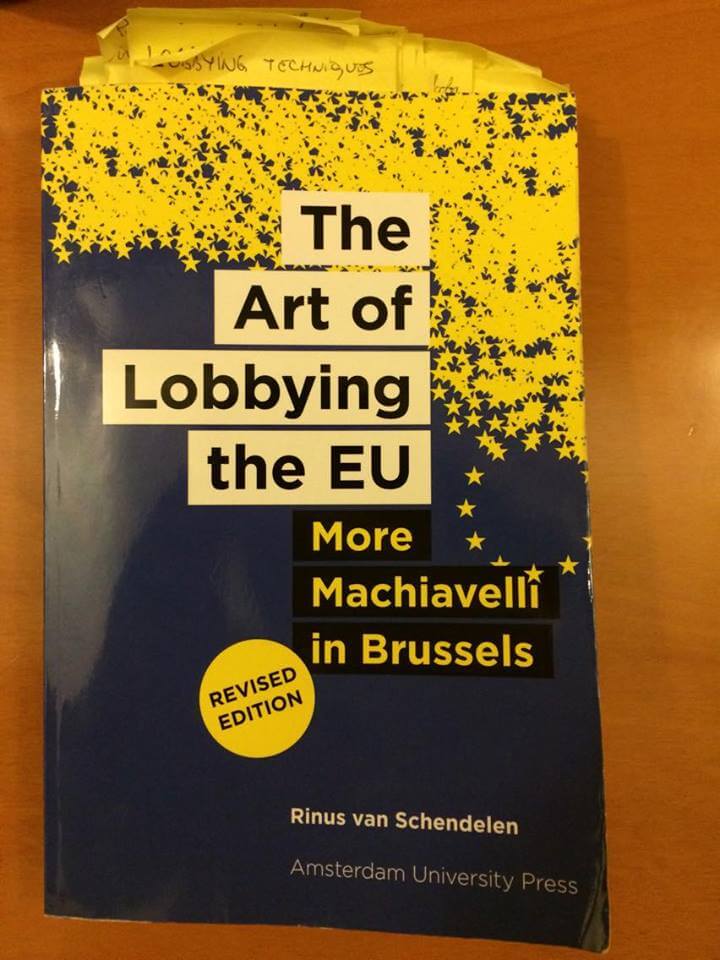
The Art of Lobbying the EU – Rinus van Schendelen

Two different skills deserve special attention. One is the ability to remain cool and calm during the game, in short unagonized, in spite of all the tricks played by the opponents. Whatever happens during it, an interest group must always remain concentrated on its target in the arena, like the football player challenged by various tricks (like spitting, scolding, tackling) must keep watching only the ball, as otherwise the ball is lost. This difficult skill of remaining unagonized gives highly competitive advantage. The second special skill regards the PA research and development (R&D) for useful new resources. Many resources are so general and widespread that they hardly make a difference. The art is to develop new ones that surprise competitors and attract EU officials, thus making a difference.

The Art of Lobbying the EU – More Machiavelli in Brussels is dedicated to professionals of EU affairs, A slow, but fascinating read for the ones working in EU policies: lobbyists, officials, contractors, PermReps, NGOs, interest groups.

The author nicely summarizes, orders and analyses the techniques, tactics and strategies happening in EU politics. While it looks Machiavellian, this kind of interconnections can only happen in a democracy.

lobbying
How much of your earnings goes into taxes, set by politics? Still not interested?

A drawback is the rather poor narrative and choice of words. The text looks like it hasn’t been proofread by a good English speaker. There are  too many business words (U-turn; windows in, windows out) and some acronyms look forced.

It was fascinating to read some behind-the-door stories, see who was behind some incredible outcomes, how some political battles were taken, what mistakes were done. Framing, astro-surfing, narrowing access, influencing the right players were remainders of some realpolitik tactics used for specific outcomes, of which the professional should be aware and counter-act.

Prof. van Schendelen describes quite accurately the political process and how legislation is made, in a practical way. The numerous official and unofficial players and interactions are presented, to each given a special attention. The legislative process is followed, each step presented with the opportunities to influence.

To sum up, the book is quite technical and of interest only to those doing their bidding in EU politics.

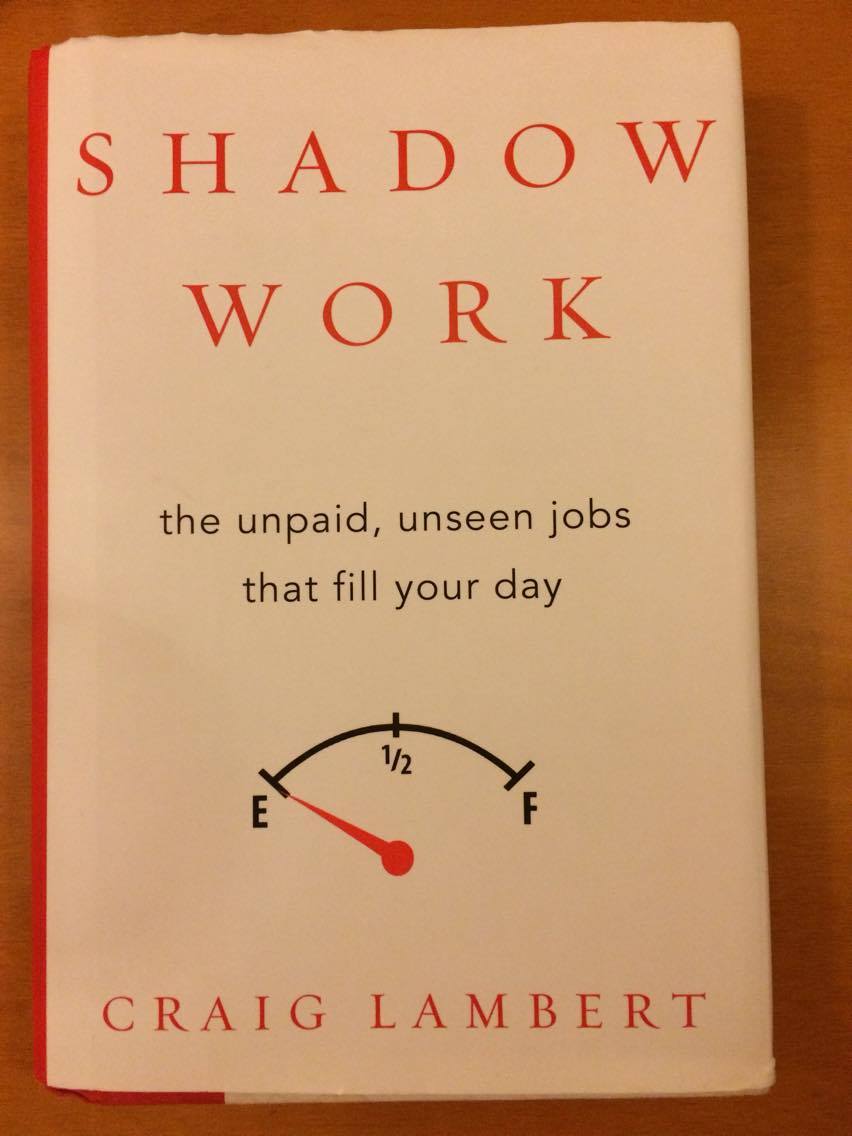
Shadow work-the unpaid, unseen jobs that fill your day – Craig Lambert

Shadow work will grow. It rewards businesses and organizations in ways that are irresistible. No capitalist can refuse a chance to cut those heavy personnel costs by transferring jobs to customers who work for free. As shadow work merges into our daily routines, it will affect social habits, economic patterns, and lifestyles.

This amazing book by Craig Lambert discusses the many small jobs that fill the day, uselessly tiring a person and keeping it in constant stress. From the self-check out to cleaning your own table , from the meaningless coupons and small reduction cards to freely creating content by posting reviews (TripAdvisor, GoodReads), the author gives many examples of work that keeps us busy, without actually creating significant value-added.

The phrase that I loved most was: if you are not paying for the product, you are the product. Think of Facebook, Twitter, Instagram and others.

shadow-work
Is your time precious?

The book has some parts where the author rather rants and does not make clear that some of this work is to save money. Nonetheless, it is often forgotten that time is the most precious resource and the author correctly notes that people prefer giving time for money rather than money for time.

Craig Lambert makes the reader think of how much content and personal information, he/she is giving for free. Reviews, grading, customer experience surveys, likes, are all commercial information freely given. It has a huge success: Facebook, Uber, AirBnb, Quora, Booking.com thrive on the free work done by customers, giving their own time.

The book is a good read for everyone tired at the end of the day and wondering why. Some enjoy doing the volunteering job, others just get caught in a whirlpool of small tasks.

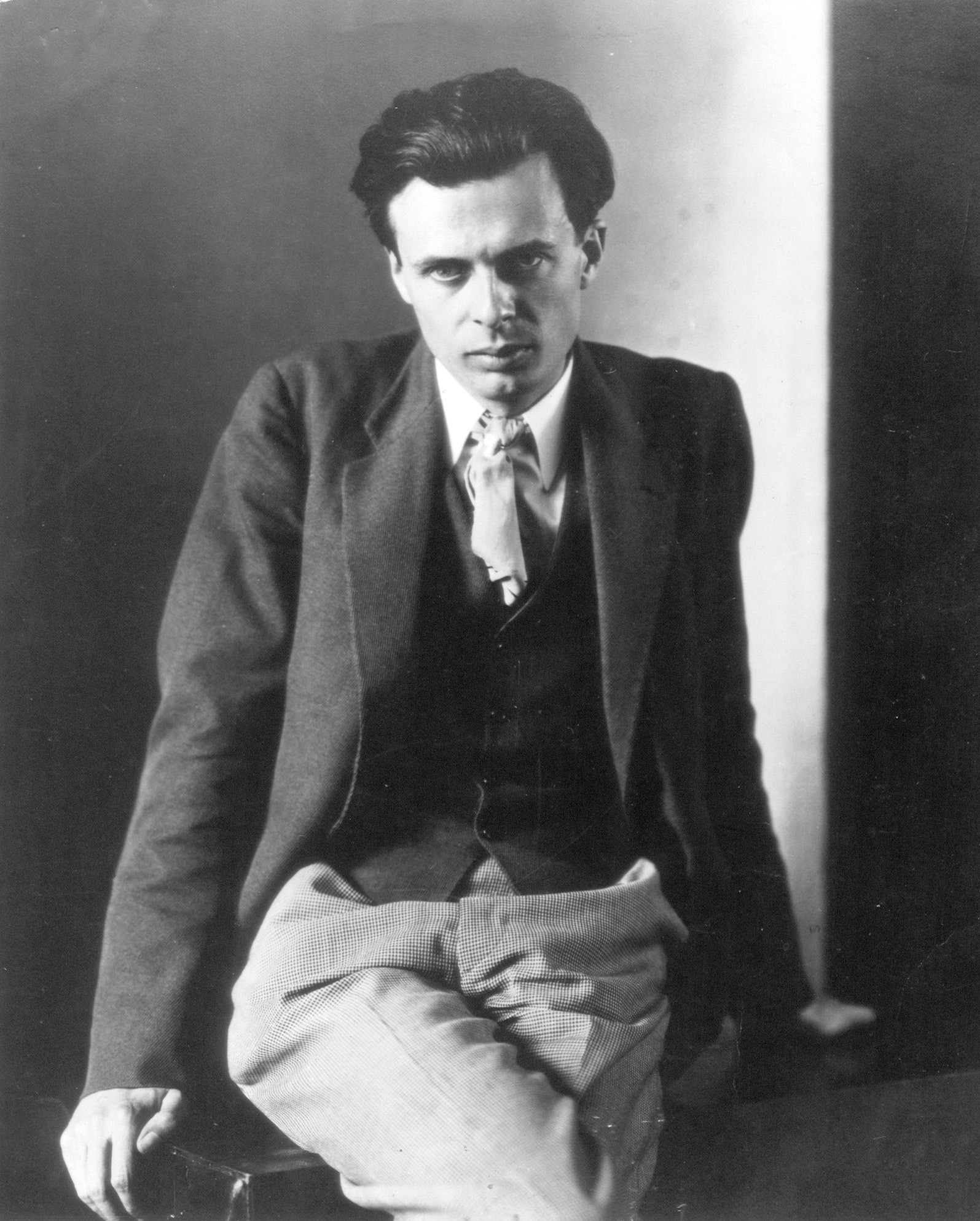
Brave New World – Aldous Huxley

Above them, in ten successive layers of dormitory, the little boys and girls who were still young enough to need an afternoon sleep were as busy as every one else, though they did not know it, listening unconsciously to hypnopædic lessons in hygiene and sociability, in class-consciousness and the toddler’s love-life. Above these again were the playrooms where, the weather having turned to rain, nine hundred older children were amusing themselves with bricks and clay modelling, hunt-the-zipper, and erotic play.Buzz, buzz! the hive was humming, busily, joyfully. Blithe was the singing of the young girls over their test-tubes, the Predestinators whistled as they worked, and in the Decanting Room what glorious jokes were cracked above the empty bottles! But the Director’s face, as he entered the Fertilizing Room with Henry Foster, was grave, wooden with severity.

I read this book as a recommendation from my boss. You can read for free at this link. I was mesmerized, I read the book in just a couple of long nights.

The book was written in 1932, but it seems so contemporaneous, 80 years later. It is a classic, in the same vein as 1984 by George Orwell.

Aldous_Huxley
Would you go in a golden cage? Money, sex, drugs, elitism, but no free will. This is the question that Huxley proposes.

Huxley’s writes about a future dystopia, where genetic engineering, recreational sex, drugs, hypnotic messages and brainwashing create a world were everyone thinks is happy. But this world lacks any deep meaning, no family, religion or art. A system of castes, heavily brainwashed, is ingrained in the texture of society.

The system seems to me very Soviet-like, were science is praised, family and religion is destroyed, but economy can only exists through a system of slavery and elites.

Some can see through the veil, as Bernard, and they are given sanctuary or prison, as you like, in some of the isles. The faults of the society are expressed by the life and dialogue of a men called the Savage, born in a so-called reservation and unwilling to bend to the wrong rules and be brainwashed.

I loved the book because it makes you think, it makes you ask questions. How many people make an opinion by just reading a title of news on Facebook? How many people good in the field, pretend with arrogance knowledge in other fields? How many people go to the original source and skip interpretations? How many people filter the information that comes to them?

In my own field, energy, I see people holding strong views, one way or the other, without knowing too much of how the system works.

It is a book recommended for high school reading in many countries. It makes you think.

The Chimp Paradox – Steve Peters

Whenever you want to stop the Chimp, always actively slow your thinking down. This will work in ALL situations. It is another excellent way to manage the Chimp (The Chimp Paradox).

TheChimpParadox
The book cover of a thoroughly read book

The Chimp Paradox is a great book on human psychology, written with the intent to explain how the mind and the psychological processes work.

Dr. Steve Peters is a psychiatrist, particularly involved in sports. He worked with the British cycling team (14 medals at the Beijing Olympics, while Peters was mental coach), with the snooker champion Ronnie O’Sullivan (helping him win his 4th and 5th World Snooker titles), with the football club Liverpool F.C and with the England National Football Team.

The author talks about self-motivation, happiness, understanding and dealing with others. But most of all, the book is about patience. We all have a chimp inside, strong and taking childish decisions. The book teaches how to deal with our and others’ chimp, in a fascinating journey through human psychology.