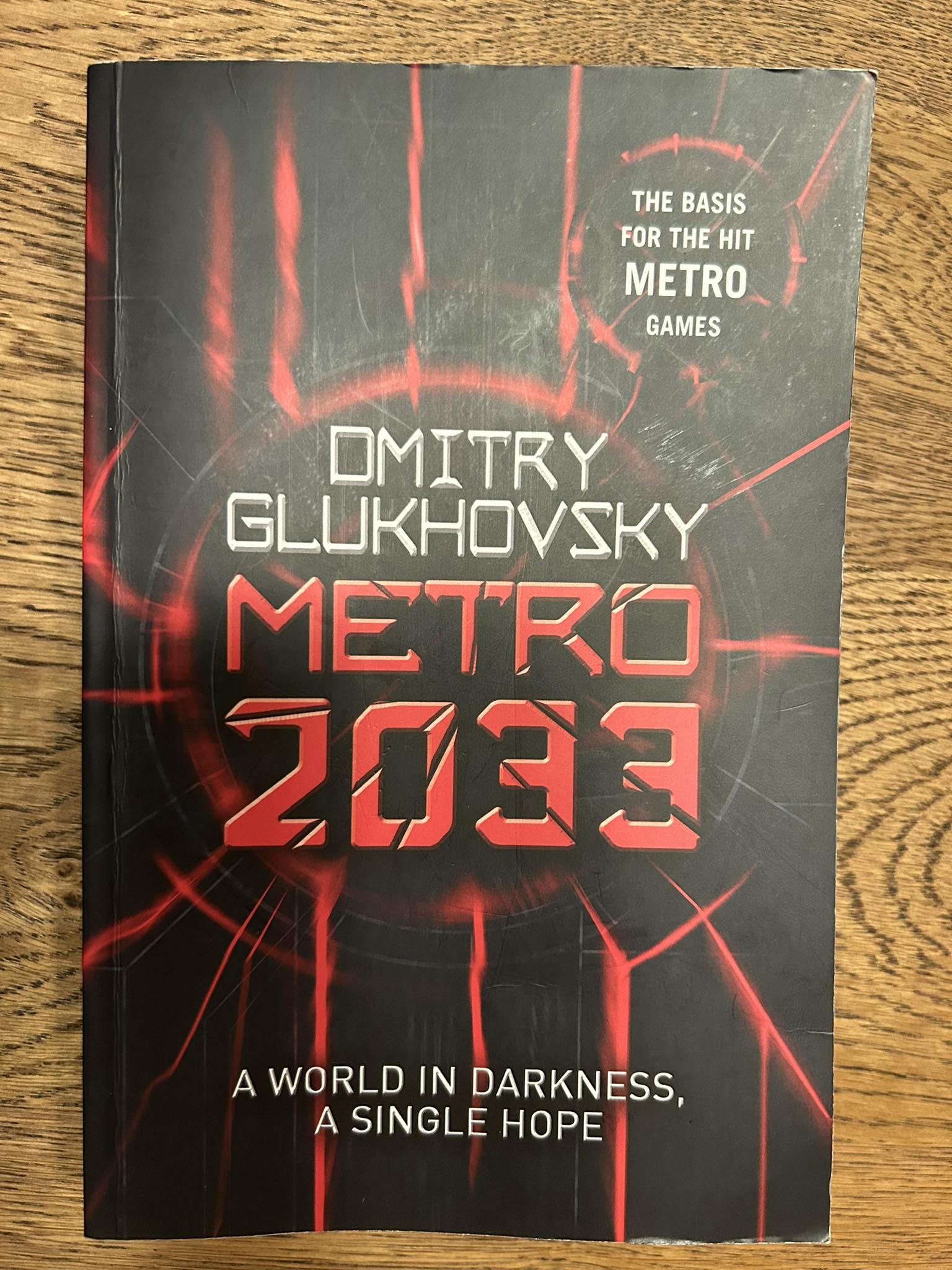
Metro 2033 – Dmitry Glukhovsky

Why was he doing this? So that life could continue in the metro? Right. So that they could grow mushrooms and pigs at VDNKh in the future, and so that his stepfather and Zhenkina’s family lived there in peace, so that people unknown to him could settle at Alekseevskaya and at Rizhskaya, and so that the uneasy bustle of trade at Byelorusskaya didn’t die away. So that the Brahmins could stroll about Polis in their robes and rustle the pages of books, grasping the ancient knowledge and passing it on to subsequent generations. So that the fascists could build their Reich, capturing racial enemies and torturing them to death, and so that the Worm people could spirit away strangers’ children and eat adults, and so that the woman at Mayakovskaya could bargain with her young son in the future, earning herself and him some bread. So that the rat races at Paveletskaya didn’t end, and the fighters of the revolutionary brigade could continue their assaults on fascists and their funny dialectical arguments. And so that thousands of people throughout the whole metro could breathe, eat, love one another, give life to their children, defecate and sleep, dream, fight, kill, be ravished and betrayed, philosophize and hate, and so that each could believe in his own paradise and his own hell . . . So that life in the metro, senseless and useless, exalted and filled with light, dirty and seething, endlessly diverse, so miraculous and fine could continue.

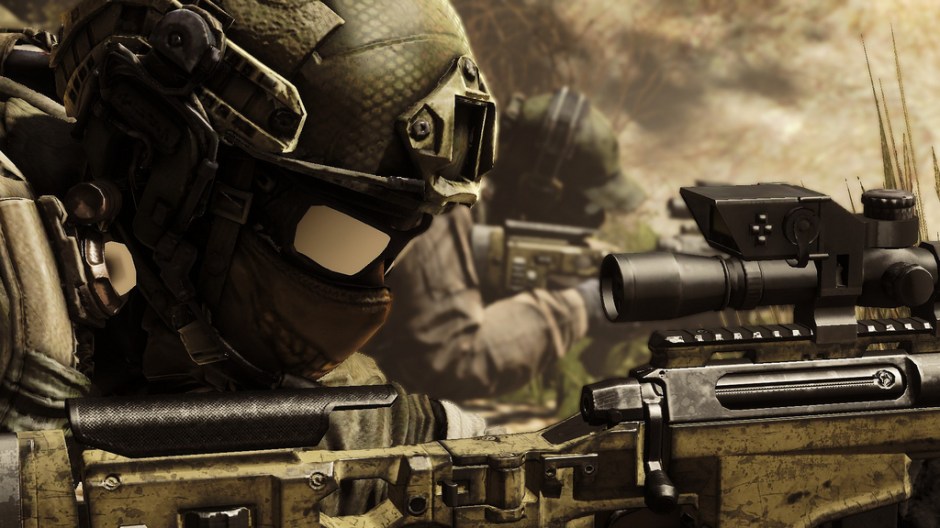
In a post-apocalyptic world, humans eke out their existence in the depths of several Moscow metro stations, surrounded by horrors, radiation, mutants, rats and their own fears. The protagonist, Artyom, engages in a journey to deliver a vital message that would inform and allow people to react to an external threat. In his odyssey, traders, mystics, hunters, idealists help or hinder him in various societies, often extreme, that survive in the metro stations. In a world where bullets are currency, humans cling to life in the underground and surface travels are mortally dangerous, the will to fight and survive, the thoughts of an existence close to the abyss is explored by the Russian author, in a compelling and creative story.

The book was later translated in a successful series of horror video games. For some readers, the exploration of human mind in a post-apocalyptic and grim survival story by Dmitry Glukhovsky could look monotonous; for others, it may a fascinating dive into what gives the survivors the grit to face all the horrors and the grim future.

The story of creating this book is unusual, as Glukhovsky wrote it and publish it on his website as an interactive experiment, when he was 18. It was later published on paper three years later, in 2005. Two more volumes in the series continued in 2009 and 2015,

Overall, a creative, diverse exploration of human mind and society in a post-apocalyptic, grim world, via a fulfilling odyssey.

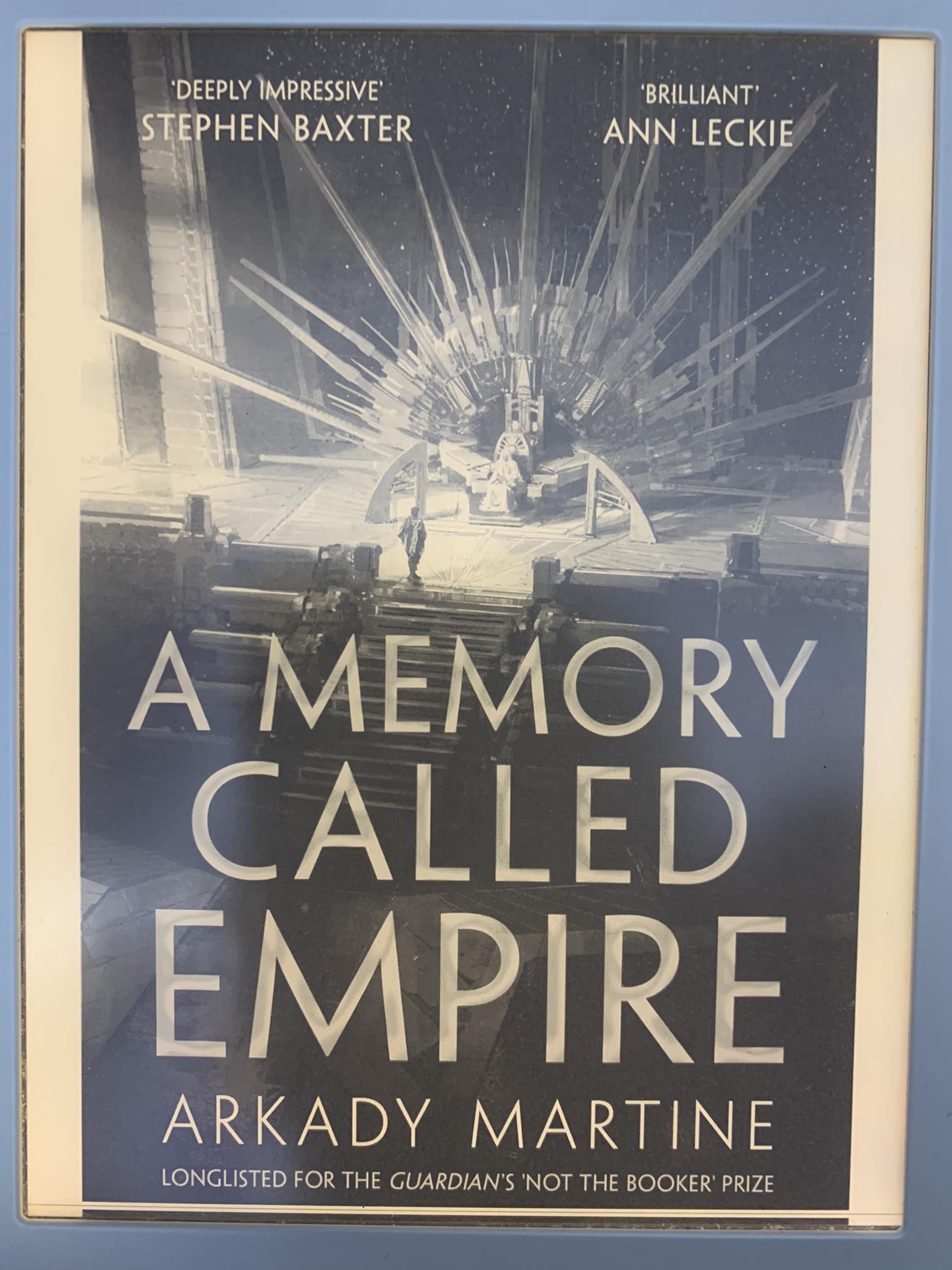
A Memory Called Empire – Arkady Martine (Teixcalaan, book 1)

You pump the dead full of chemicals and refuse to let anything rot—people or ideas or … or bad poetry, of which there is in fact some, even in perfectly metrical verse,” said Mahit. “Forgive me if I disagree with you on emulation. Teixcalaan is all about emulating what should already be dead.” “Are you Yskandr, or are you Mahit?” Three Seagrass asked, and that did seem to be the crux of it: Was she Yskandr, without him? Was there even such a thing as Mahit Dzmare, in the context of a Teixcalaanli city, a Teixcalaanli language, Teixcalaanli politics infecting her all through, like an imago she wasn’t suited for, tendrils of memory and experience growing into her like the infiltrates of some fast-growing fungus.

The book follows the arrival of the new ambassador, Mahit Dzmare, from the independent Lsel station to the empire of Teixcalaan, and her adventures following the murder of the previous ambassador, all while trying to preserve the independence of a her small station. This is a detective thriller, intertwined with imperial intrigue and friendship, on the streets of the monumental capital of the largest interstellar empire.

This is the debut novel for the author AnnaLinden Weller, writing under the pseudonym Arkady Martine. The novel won the Hugo Award and was a finalist for the Nebula Award for Best Novel of 2019.

What is impressive in this book is the quality of prose, exceptional world-building, relatively uncomplicated plot and the memorable characters. The names chosen are unique and the book creates a new vocabulary for this glorious empire of Teixcalaan. One of the profound themes explored is of self and multiple identities, via a device called imago machine, which preserves the memory of the deceased and allows to be incorporated in a new person. The results are generally positive, the deceased being of help, but not without risks.

While usually not my type of book (it was more fiction than science), the quality of prose was undeniable and the story engaging. It is a long book, but hours of reading passed unnoticed, showing the grip that the book makes on the reader. At the no point the story stagnated or paragraphs felt unneeded, despite it’s considerable length. A highly entertaining book.

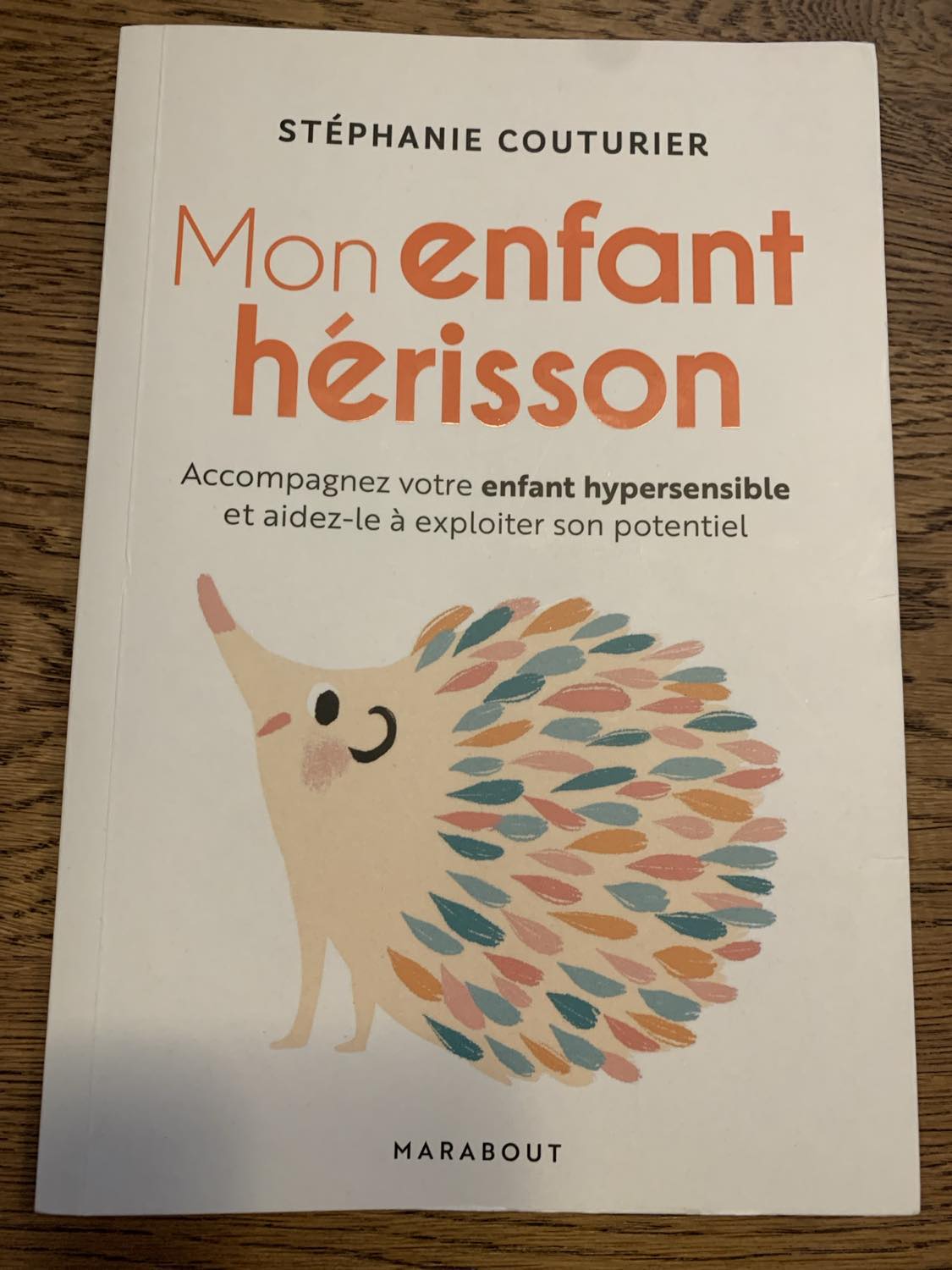
Mon enfant hérisson – Stéphanie Couturier

Lors d’une crise émotionnelle, prenez l’habitude de réagir en trois étapes :

1. Ecoutez sans jugement ce que votre enfant a à dire.Votre enfant a besoin d’une oreille attentive. N’essayez pas de rétablir des vérités.–> L’enfant hérisson se sent considéré.

2. Répétez ce que vient de vous dire votre enfant en parlant de son émotion.”Tu es profondément triste parce que…”, “Tu es en colère car…”Même si cela vous paraît anodin ou exagéré, cela ne l’est pas pour l’enfant. Le fait d’entendre son parent le dire est une forme de reconnaissance de ce qu’il vit.–> L’enfant hérisson se sent compris.

3. Interrogez-le et proposez-lui votre aide.”Que puis-je faire, que pouvons-nous faire pour t’aider en respectant la consigne initiale ?”L’enfant participe ainsi aux solutions.–> L’enfant hérisson devient acteur de son apaisement.

Ces trois étapes contribuent à la construction d’une image positive de soi. L’enfant se sent ici soutenu, compris, respecté et considéré. Cela désamorce de nombreuses situations et l’aide à se construire dans la sérénité, ce qui est un réel investissement pour son bien-être futur. Un ticket d’or pour sa confiance en lui et son estime de lui-même !

Le livre est une exploration de la façon d’identifier et de gérer les enfants émotifs. Il suit les différentes étapes d’un enfant émotif, du bébé à l’adolescent, en offrant des solutions et de nombreux exemples.

L’auteur, Stéphanie Couturier, est thérapeute spécialisée dans l’accompagnement de la sphère émotionnelle des enfants. Elle présente ainsi un passé d’enfant émotif et parle de son vécu et de celui de ses enfants.

Le livre est extrêmement utile pour identifier et comprendre les raisons pour lesquelles un enfant se comporte d’une certaine manière, parfois apparemment irrationnelle. Il guide les parents dans la compréhension et la gestion de leurs enfants et montre comment un enfant émotif peut s’épanouir. même si le livre ne dit rien d’inhabituel, la façon dont il est structuré et écrit aide le lecteur à mieux comprendre le comportement de l’enfant.

Un livre vraiment utile pour tous les parents, en particulier pour ceux qui ont des enfants émotifs.

Rogue Protocol (The Murderbot Diaries, book 3) – Martha Wells

I stared straight ahead. If there was one thing good about this situation, it was reinforcing how great my decisions to (a) hack my governor module and (b) escape were. Being a SecUnit sucked. I couldn’t wait to get back to my wild rogue rampage of hitching rides on bot-piloted transports and watching my serials.

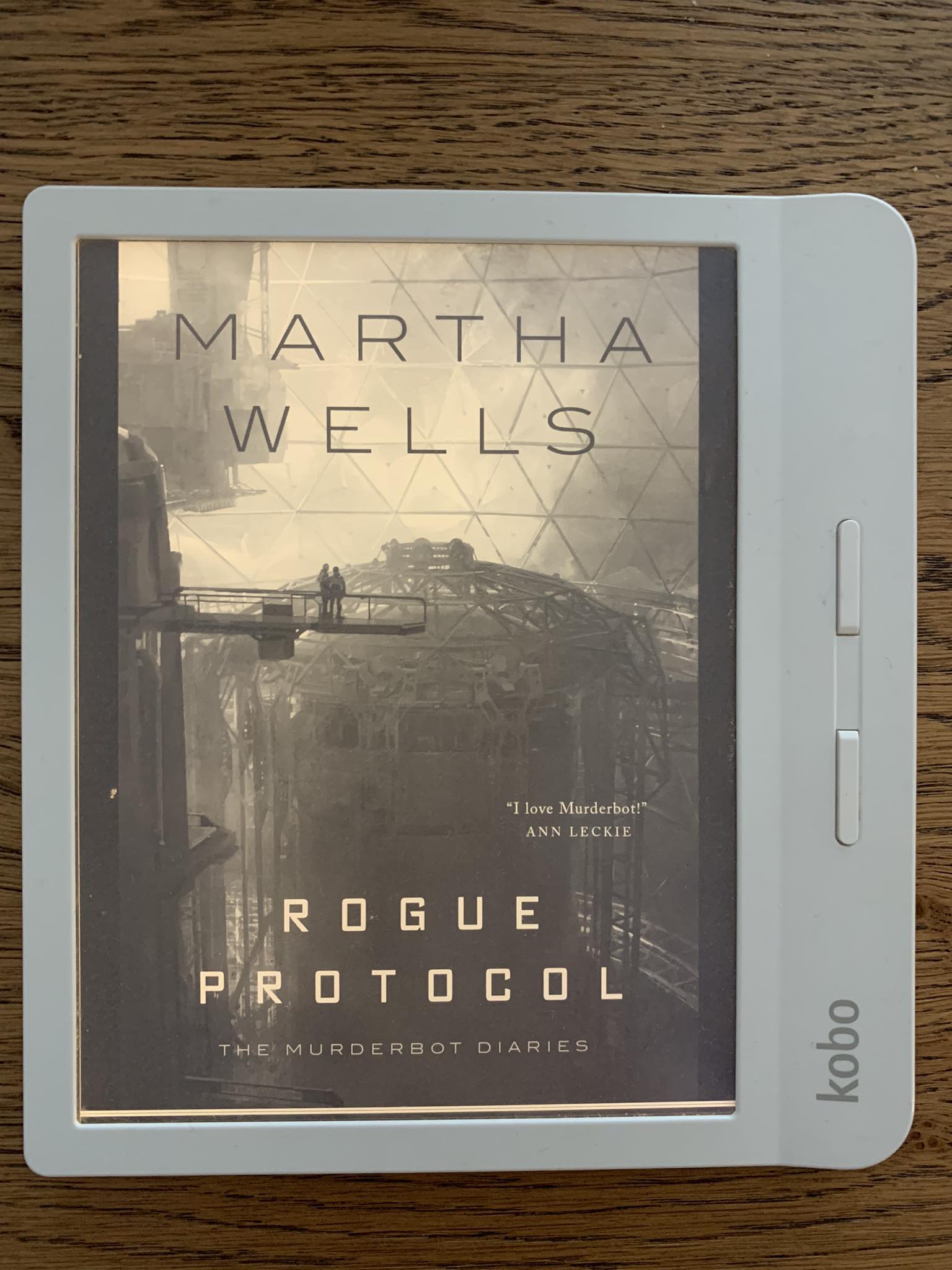
In the third book of the series (diaries because the protagonist presents the story in a first-person narrative), our rogue robot heads to a mining outpost to discover more about the past of the company that created it and mysteriously deleted some of its memory. It’s purpose is to investigate some of the stories related to this backwater, semi-abandoned outpost.

Again, the story is immersive and the investigation presents itself as a highly entertaining detective story. What is unique in this series, but particularly in this book, is how the author, Martha Wells, enters in the mind of the reader, asking questions that the reader asks as well, but in comical, ironical way.

The novella (indeed a rather short book) feels lean and the plot is tight, following a protagonist who is gradually developing while learning of the world. Few passages feel over-written, but the best of it, is that there is no endearing impression that part of the plot are missing or that some characters are under-developed. The book feels complete, despite being a novella. Additionally, the way the previous books of the series are referenced is done in short paragraphs, with well-chosen words, with excellent prose and humour.

Again, a lovely book, for a short read in the evening. What a series!

A Closed and Common Orbit (Wayfarers Book 2) – Becky Chambers

What was the difference between strung-together neurons and a simple bundle of if/then code, if the outward actions were the same? Could you say for certain that there wasn’t a tiny mind in that bot, looking back at the world like a beetle might?

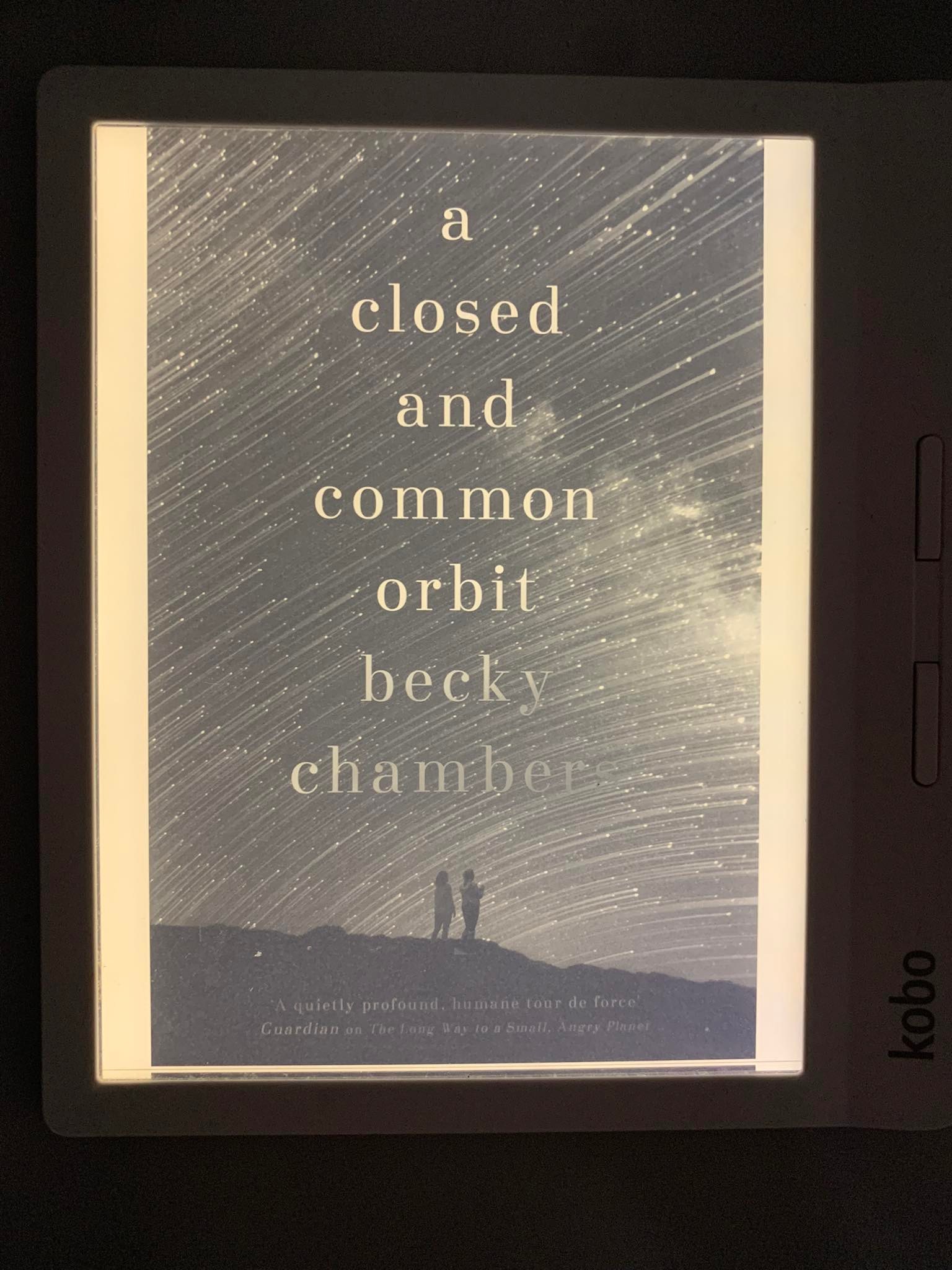
The book presents in two separate, but interlinked stories, the survival and friendship adventures of an artificial intelligence (AI) and a clone on the run, sometime in the far future. A Close and Common Orbit is the stand-alone second book of the Wayfarers series.

The impressive world-building and memorable characters remain the strong-points of the series, but this time the story goes in a new direction compared with the first book. If the first book followed a motley crew, this volume is more about personal discovery, grit and friendship. The author explores the consciousness of an AI and how it evolves and interacts with sapient organics, through two separate stories (will not spoil how they are linked).

The book is captivating and fulfilling in its climax, with a good pace, creating a rich world, but unburdened by long descriptions. It is excellent storytelling. The plot is rather straightforward, but the introspection of the main characters makes a fascinating read.

An AI and a clone on the run, in two separate, but interlinked stories.

The author, Becky Chambers, is a well recognized and award-winning sci-fi writer, and these were the books that made her fame, the Wayfarers series being her most accoladed prose so far.

Overall, the second book of the series is an engaging and captivating read that has plenty of food for thought.

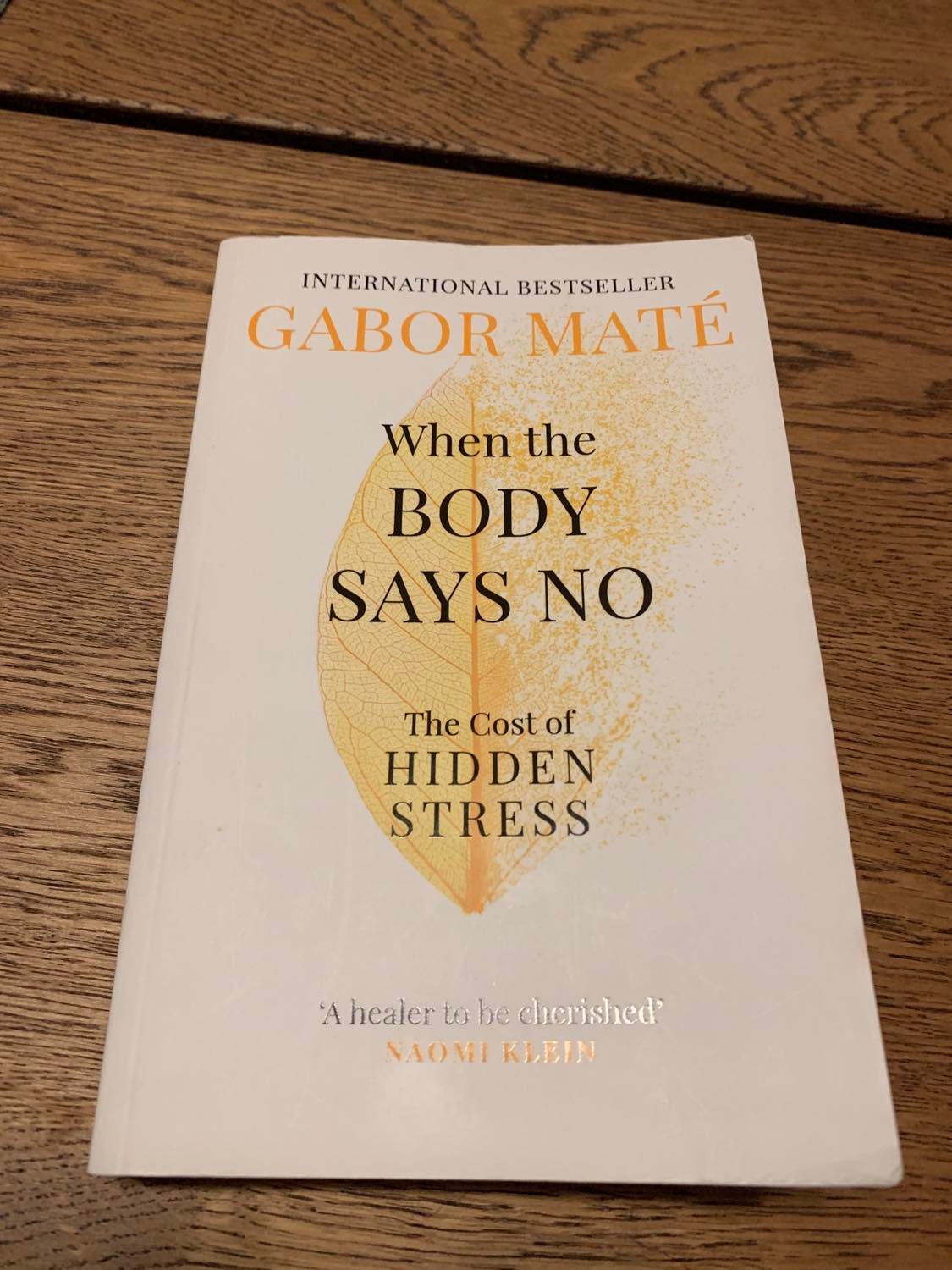
When the Body Says No: The Cost of Hidden Stress – Gabor Maté

When we have been prevented from learning how to say no, our bodies may end up saying it for us.

While it is common knowledge that stress is affecting one’s health, Dr Gabor Mate takes it a step further and analyses the impact of stress on body by looking into a patient’s childhood, relationship with partners, work and life in general.

The book is bold in its suggestion that body is over mind, considering that a person cannot accumulate stress and tension without effect. Dr Mate goes as far as saying that there is a “cancer” profile, where physicians can increase the chances of confirming cancer by looking at a patient’s personality. The ones who always try to help others, cannot say no to demands and are always smiling, those people simply bottle up negative emotions that would surface as an autoimmune disease.

An interest concept put forward by the author is the difference between rage and anger. He promotes the idea that it is ok to be angry and let tension exit the body. An angry person relaxes its body, takes a long breath and lets tension out. This comes in contrast with rage, which is uncontrolled violence (physical, verbal, behavioural). A person in a rage has all muscles contracted, does not breath correctly and accumulates tension.

The cost of hidden stress

The book is full of various medical cases and draws heavily on medical research, making it a somewhat dry reading. Nevertheless, this does not draw from the appeal of understand how our choices are affecting us.

It finishes with Seven A’s of Healing: principles of healing and the prevention of illness from hidden stress:

    • Acceptance – accepting us how we are
    • Awareness – of our bodies and what they are telling us
    • Anger – in Dr. Mate’s view, anger has cognitive value and works as a way to release tension and negative emotions
    • Autonomy – independent thoughts and actions
    • Attachment – being connected with others is healing
    • Assertion – speak up for ourselves
    • Affirmation – affirming our creating selves, and also our connection to something bigger.

    The book is really wonderful and warmly recommend to read, whenever we feel that life takes over us.

    Les 50 règles d’or de l’éducation positive – Bénédicte Péribère, Solenne Roland-Riché

    Sachez que les violences éducatives (physiques, verbales ou “simplement” émotionnelles) laissent une trace sur un IRM cérébrale. Certaines zones du cerveau sont alors insuffisamment développées, notamment celle permettant de réguler les émotions.

    ( Règle 22 : Évitez les punitions)

    Ce petit livre propose 50 conseils sur la parentalité. Les règles mêlent des règles de bon sens à des arguments scientifiques, donnant une bonne vue d’ensemble.

    Les règles évitent les conseils controversés et le lecteur peut facilement suivre les différentes principes. Le livre est conçu pour être souvent consulté et relu, avec des règles faciles à trouver, une bonne vue d’ensemble et un petit format.

    J’ai lu le livre en quelques jours et j’y suis toujours revenu avec plaisir. C’est un excellent livre à lire pour tous les parents qui veulent apprendre quelque chose de nouveau sur la parentalité ou simplement apprendre plusieurs règles de base.

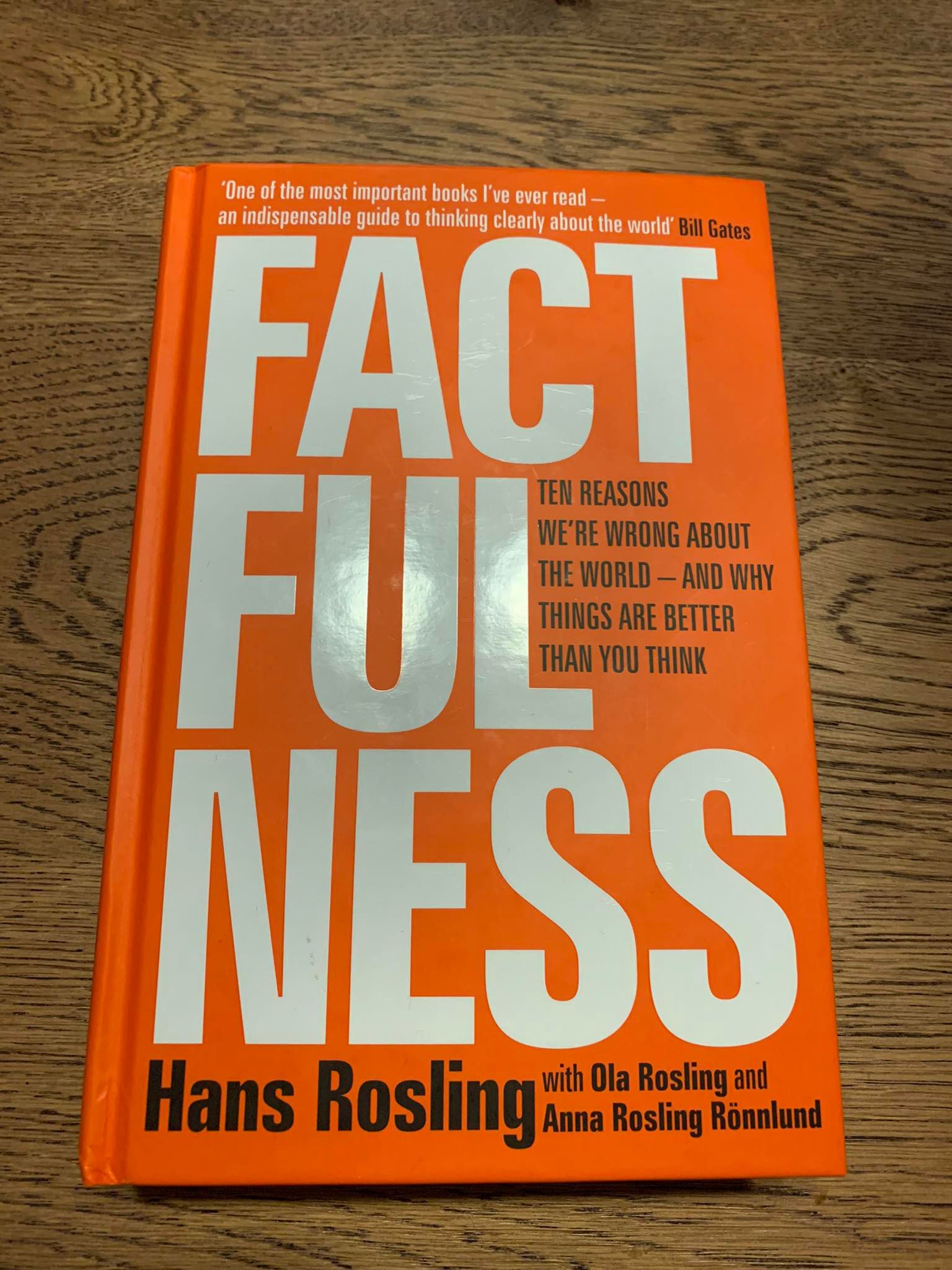
    Factfulness – Hans Rosling

    This is data as you have never known it: it is data as therapy. It is understanding as a source of mental peace. Because the world is not as dramatic as it seems. Factfulness, like a healthy diet and regular exercise, can and should become part of your daily life. Start to practice it, and you will be able to replace your overdramatic worldview with a worldview based on facts. You will be able to get the world right without learning it by heart. You will make better decisions, stay alert to real dangers and possibilities, and avoid being constantly stressed about the wrong things.

    The central idea of the book is that world is much better than you think and it is getting better. Hans Rosling presents with data how world improved over time and shows with surveys how pessimistic without cause the reader is. While not perfect, the world is indeed getting better and the author presents the pessimistic biases we have.

    The book is structured in 10 chapters, presenting an instinct that we must be aware from:

    1. The Gap Instinct
    2. The Negativity Instinct
    3. The Straight Line Instinct Exercise: Question Your Assumptions
    4. The Fear Instinct
    5. The Size Instinct
    6. The Generalization Instinct Exercise: Getting the Full Picture
    7. The Destiny Instinct
    8. The Single Perspective Instinct
    9. The Blame Instinct
    10. The Urgency Instinct

    The book was written in the last months of life of Doctor Hans Rosling and seems to encompass his last message to the world: that we should leave bias and look for data, which will help us to create a better world and be more successful in medicine, business and development.

    The book is thoroughly entertaining, full of imagines and survey questions that make the read a pleasure. It challenges the reader to rethink the world around. What is really the masterstroke is presenting data in a way that is easy to understand and delivers a clear message.

    One of the most thought-provoking, well-written books on the world and developing trends currently on the shelves.

    The Virus in the Age of Madness – Bernard-Henri Lévy

    They knew that Pascal’s room, Thoreau’s hut, and especially their own den was a dark chamber, an unhealthy space full of resentment; they knew that one is nothing when alone, that one thinks most often of nothing at all, and that hell is not other people, but the self.

    This short book is a collection of thoughts regarding the Covid-19 pandemic from the French philosopher Bernard-Henri Lévy. Originally in French, the essay discusses the politics of the pandemic, wondering if the measures taken by governments are good or bad, the reaction of the media, and what we, humanity, should do collectively and individually in these circumstances.

    The references to French literature and influential philosophers betray the cultural range and depth of Lévy , without being didactic. The media referenced is rather balanced, neither progressive or conservative, and covers both sides of the Atlantic.

    The message of the book is a caution against human atomisation, using all the benefits of isolation, made possible by current technology. Food, clothes, items, can be ordered with a simple click. Communication can be done virtually. But the essential human touch cannot be ordered online. Staying at home cannot be praised, it is essentially anti-humane.

    Furthermore, individual liberties are disappearing, in face of distancing and confinement measures. Once taken away, it is hard to restate them. The democratic model itself is at stake, with other socioeconomic models vying for top spot. Media is focusing too much on the virus, while other grave problems remain in the dark: global warming, refugee crises, dictatorships, feeble democracies sliding into authoritarianism. But also good news are fewer in the pages of journals and screens of TVs, we know less about the good in the world.

    Lévy also warns about future pandemics. Humanity has lived with major pandemics all its history. What do we do if we another pandemic hits in five years time? Do we close again the economy? Measures against the spreading are needed, such as social distancing, but need to be debated, rationalized and lessons of the pandemic need to be learn. Because another pandemic is around the corner.

    The book invites to reflection, to think about what makes us human. It is a book about courage, in face of illness. And finally, it is a warning for the human isolation that technology now allows. Isolation cannot be praised, as if we do, we lose our humanity, the French philosopher argues.

    Six Wakes – Mur Lafferty

    I’m so sick of that argument. I’ve been hearing it for centuries. Playing God. Wolfgang, we played God when people believed they could dictate their baby’s gender by having sex in a certain position. We played God when we invented birth control, amniocentesis, cesarean sections, when we developed modern medicine and surgery. Flight is playing God. Fighting cancer is playing God. Contact lenses and glasses are playing God. Anything we do to modify our lives in a way that we were not born into is playing God. In vitro fertilization. Hormone replacement therapy. Gender reassignment surgery. Antibiotics.

    Six Wakes is hard scifi detective story taking place on a start ship headed for a new planet. Six clones, the entire crew of the ship, wake up, their earliest memory being from the start of the journey, 25 years ago. They are surrounded by their murdered bodies.

    We follow the stories and point of view of each character, all having great character development and good motivations.

    The novel debates the effects of cloning, in a masterful piece of suspense and mystery. The storytelling is compelling and the world building feels giving sufficient detail, without overwhelming the reader.

    The book was widely appreciated, being a finalist for both Hugo and Nebula scifi competitions, the most important book competitions of the genre.

    It took me less than a day to finish the book, I could not leave it down. A great detective story in space.