
other presidential strategy that might have worked as effectively, noted Fred Greenstein. Ike was bitterly criticized for failing to take McCarthy on directly, but Eisenhower’s refusal to do so in this case was based on his belief that it would have produced counterproductive results.40 The president knew he had been the one holding the cards. He had the power over the thing McCarthy had most deeply desired—to engage Eisenhower in this circus, thus legitimizing his own status as an important leader while raising himself and his shameful shenanigans to the level of a coequal branch of government. Eisenhower’s approach eventually ended McCarthy’s power, and in that process, avoided the senator tarnishing and belittling the very office of the presidency itself.
The book presents how the US President and Supreme Allied Commander, Dwight Eisenhower, made his decisions, from an internal perspective, as the book was written by his granddaughter. Ike’s story is structured in chapters around an issue, in a more or less chronological order.
What is impressive is the range of changes and long term impacts that Ike’s decisions made over time. He was a master strategist, managing to build structures so that he would have the time and resources (people) to think ahead and profoundly over the issues. He tried very hard to have strategy dominate decisions, and not have crises dictate his tempo.
I was impressed how Ike deliberately created structures in order to get the best advice and time, in order to not act pressured by time. Ike created the system of presidential advisers, who would work to give the president thinking time and options. Ike preferred to always have contingency plans, so there would be already a basis of thinking to many crises. This comes besides the famous quadrant (matrix by importance and urgency), which was his merit in conception, but popularized by others.
I learned that he had to fight hard for the Republication nomination as president, and he could only do it because of his tremendous supporters. He started the internal party nomination vote in disadvantage; he was not the strong choice of the party. However, his great and sharp quotes (you haven’t won in decades!) made also a difference.
An introverted, he always smiled when meeting people or entering a room, as he felt strongly that a leader has to show supported confidence in the plan and ultimate victory. This is why he developed a great popularity, which led to his presidential candidature slogan: I like Ike.
I was also impressed by the long term and persevering strategy to not mention senator McCarthy by name (during the McCarthiasm days, where we learn that McCharthy was strongly supported by a great part of the US political establishment). Ike was extremely patient to not put the senator as the same level as his presidential level, and waiting for McCarthy to make a mistake, as the senator had to act increasingly erratic to get attention.
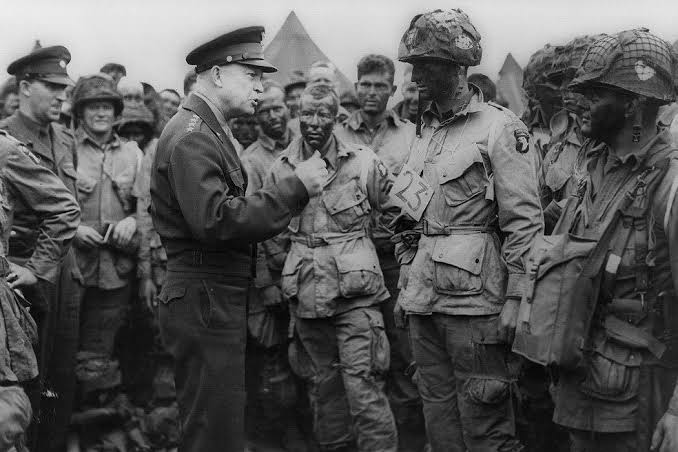
To not forget that Ike was the mastermind and the push in school desegregation in US of the 50s. It was his decision to bring the US army (the famous 101th airborne, veterans from Normandy), to show the determination of presidential resolve.
Ike preferred strongly to work through others, and work behind the scenes, in solving many issues. He showed great restraint in many crises, thinking of the practicalities and military logistics: soviet invasion of Hungary (where he understood he could not help military a country in the middle of the Iron Curtain, but allowed many Hungarian refugees to come to US), the Sputnik crises (Ike could have won de race, but prioritized the developing of the much more important ICBMs), and the Suez canal (feeling that the European allies acted without the usual military coordination following WW2).
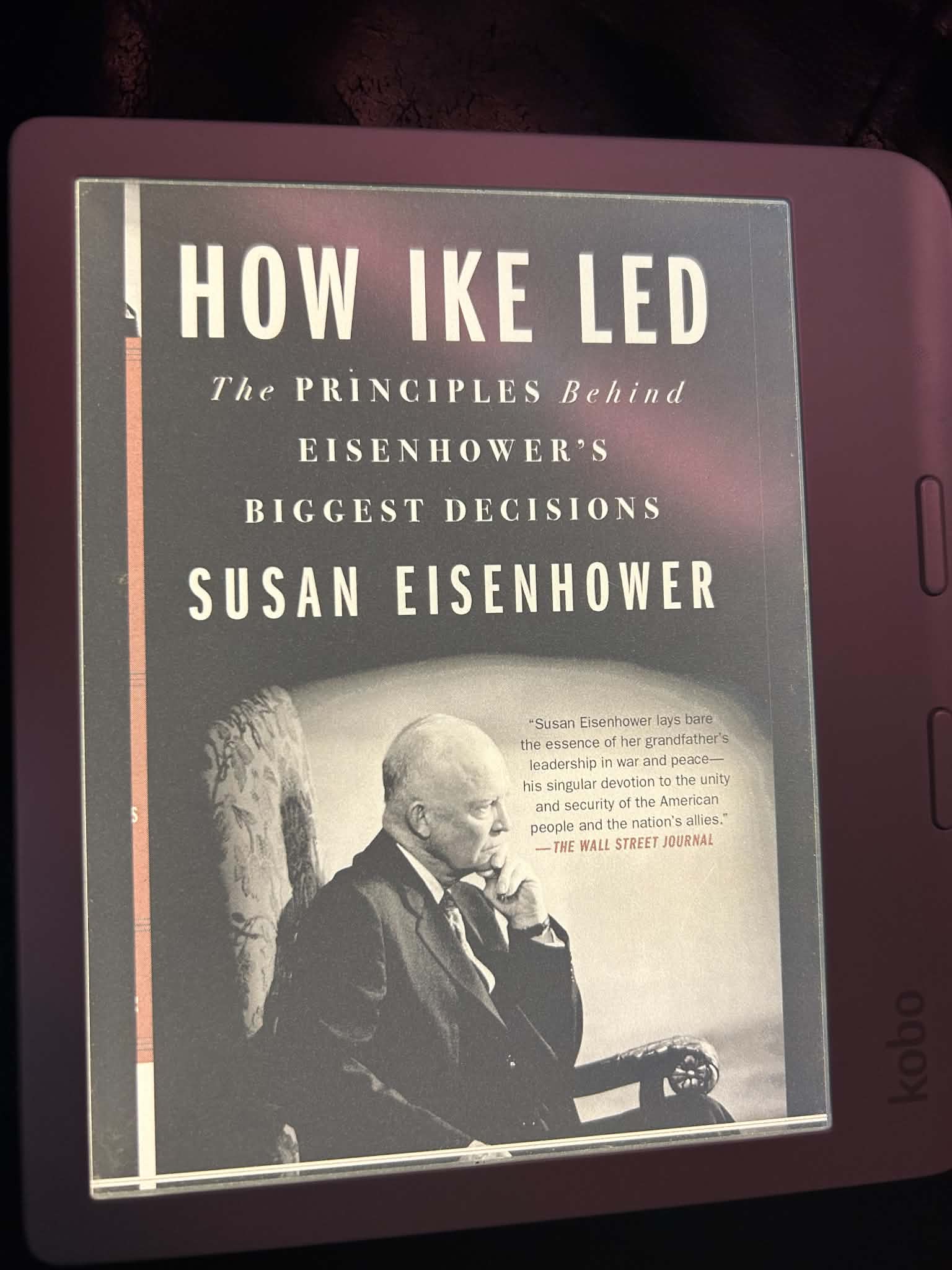
Susan Eisenhower shows in depth how Ike arrived to decisions for different crises, but it doesn’t present only that, she looks also at the character, the family man, the friend, his hobbies. This without trying to wash, or being apologetic over his policy choices.
It remains a wonder how such solder, with integrity, little political ambition, humble, with perseverance, patient, collected, strategic – was chosen to lead the US military effort in Europe and elected as US president. It shows how were people at the time in the States to allow such undoubtedly competent and great strategist, but not a life politician – to prosper and lead. As a conclusion: Ike – the textbook leader and strategist.

