
How We Got Here: A Slightly Irreverent History of Technology and Markets – Andy Kessler

In 1642, 18-year-old Blaise Pascal, the son of a French tax collector, tired of waiting for his dad to come play a game of “le catch”. Blaise’s dad was what is known as a tax farmer, sort of a 17th century version of a loan shark, threat of broken bones and all. Tax farmers advanced tax money to the government and then had a license to collect taxes, hopefully “harvesting” more than they advanced. Elder Pascal was constantly busy calculating and tabulating his potential tax haul. To help him out, Blaise envisioned a mechanical device with wheels and cogs and gears and numeric dials that could sum up numbers to eight digits long. That’s 10 million francs. Dad must have been a top tax guy.

The book explains the history of technology, from the Industrial Revolution to contemporaneity, through the lenses of capitals and stocks. The books is written in a simple way and without much depth, kind of like Wikipedia is explaining. However, the connections it makes are genius and really make the reader think.

Andy Kessler, the author, worked for two decades in the banking and investor sector, from research analyst to hedge fund manager.
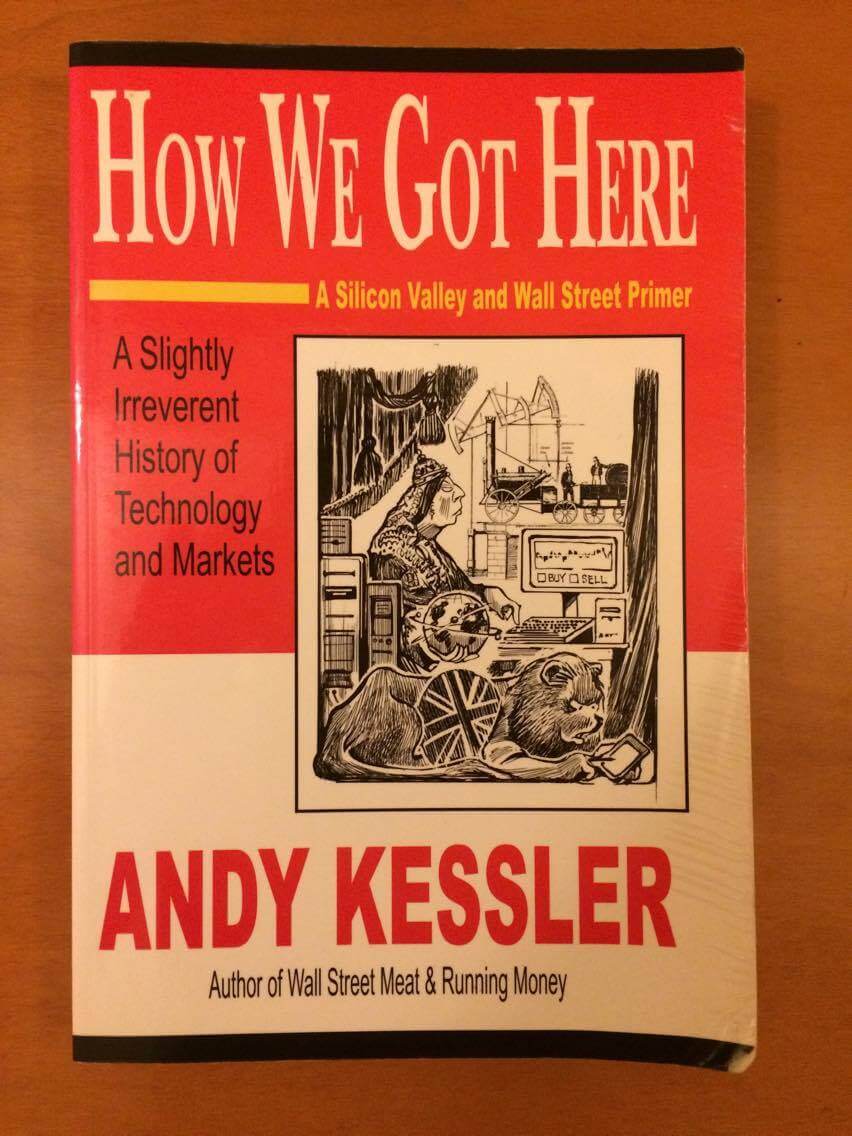
A brilliant and easy to follow history of technology, that connects the dots and makes you think.

The book is divided in 5 chapters: The Industrial Revolution; Early Capital Markets, Components Needed for Computing; Digital Computers and Modern Capital Markets.

Each chapter has small stories, linking to each other, explaining the creation and change of some concepts, laws, industries. The overall thematic is economics, trade and, partially, laws influencing trade, money, finance and national economies.

Andy Kessler explains in a simple and brilliant way very complex concepts, such as fractional reserve banking and the Corn Laws. While it doesn’t have depth, it has the right amount of detail to made the reader understand why things happened that way.

All those facts presented are freely available online, but Kessler put them together in a logical and consequential way. It is really a book that “connects the dots”.

It is rarely that a book has so much ingenuity, easiness of writing, clarity in thinking and presenting the facts. The book can be freely found on the author’s website. One of the few that I would read twice.
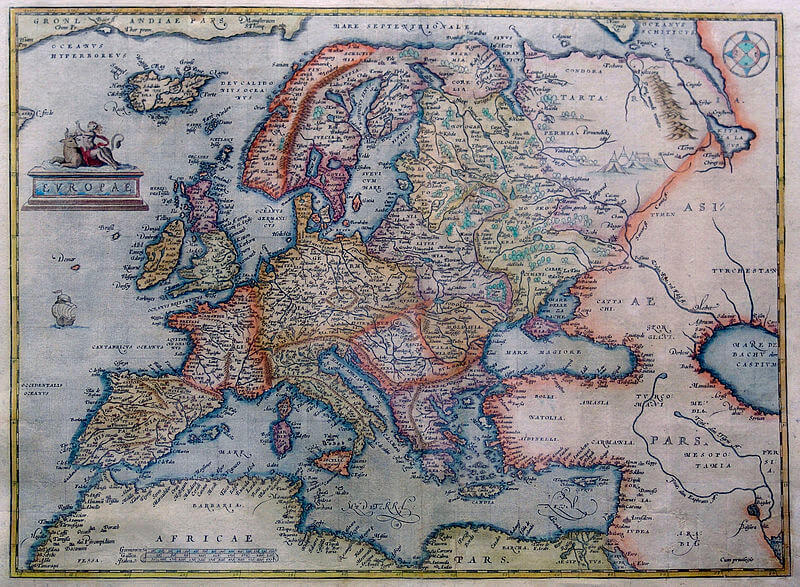
 

Europe: The Struggle for Supremacy 1453 to the present – Brendan Simms

The hatchet with France was slowly being buried, but there were still serious differences to be ironed out over North Africa. Russia remained a huge threat, and it was against her that Britain’s first major diplomatic initiative of the new century, the Anglo-Japanese alliance of 1902, was directed. The main worry, however, was Germany, which had shown unconcealed sympathy for the Boers and whose naval ambitions were seen as a direct challenge to British maritime supremacy.

At 550 pages, Europe is a very dense book of European history, mainly focusing on German lands, due to their position in the center of Europe. It follows the struggles between kingdoms and nations from an international relations perspective. The depth of detail is impressive, but the way the narration progresses and the events are presented keeps the reader engaged.

The book has everything, from the wars within the Holy Roman Empire to modern Germany, from conquest of Cyprus by Ottomans to Crimean war, from Ivan the Terrible to Putin. While Europe is the main focus, there are historical events from Afghanistan, China or the United Stated which get much attention as well.

Brendan Simms offers a thorough explanation of some crucial questions, such why Germany is so important and why Europe conquered the world. It explains brilliantly the motivations of why some countries acted in a specific way.

International relations in action

Brendan Peter Simms is Professor of the History of International Relations in the Department of Politics and International Studies at the University of Cambridge. He shows an impressive quality of understanding historical events, while not pinning down the reader in an infinite enumeration of details.

Just until the present day analysis, the book is a scholarly masterpiece. The present day  events are a lot less clear as the author wants them to be. Also, international relations and foreign policy are sometimes given too much weight, while other actors, such as technology, leaders at a specific time or culture, were important factors as well.

To sum up, this is a brilliant scholarly book on European history from a primacy of international relations viewpoint.