În istorie nu există miracole, ci, din când în când, întâmplări minunate; există, câteodată, în viața popoarelor clipe privilegiate când, într-o singură generație, destinul adună mai multe schimbări decât în câteva veacuri de toropeală.
Cartea urmărește societatea românească între 1800 și 1848, in Țara Românească și Moldova, pe câteva niveluri: oraș, tigani, țărănime, momente importante, boierime etc.
Ceea ce este impresionant este felul lui Djuvara de a scrie, este ca și cum ai vorbi cu un prieten, un stil foarte oral, fără fraze lungi sau dense. Asta face cartea, foarte bine documentat si voluminoasa, o plăcere de a citi, o lectură relaxantă pe un subiect greu.
Djuvara alege subiecte interesante pentru capitolele sale, dincolo de faptele mari politice sau istorice, cu istorisiri din viața oamenilor, în special a boierimii.
Un lucru deosebit este titlul cărții, ce răzbește din fiecare capitol, o evoluție a societății române în doar 2 generații. Deși nivelurile societății sunt analizate separat, impresia de evoluție, lentă, dar fără întoarcere, este clară.
Poate al doilea mare atu al cărții, după stilul de scris, sunt poveștile adunate, foarte picante si interesante, chiar și după secole.
Deși groasă și cu istoriile în niște decenii foarte grele pentru țările române (teren de război între marile puteri), cartea este relaxantă, memorabilă, plăcută și informativă. O recomand din toată inima și, în general, cărțile lui Neagu Djuvara.
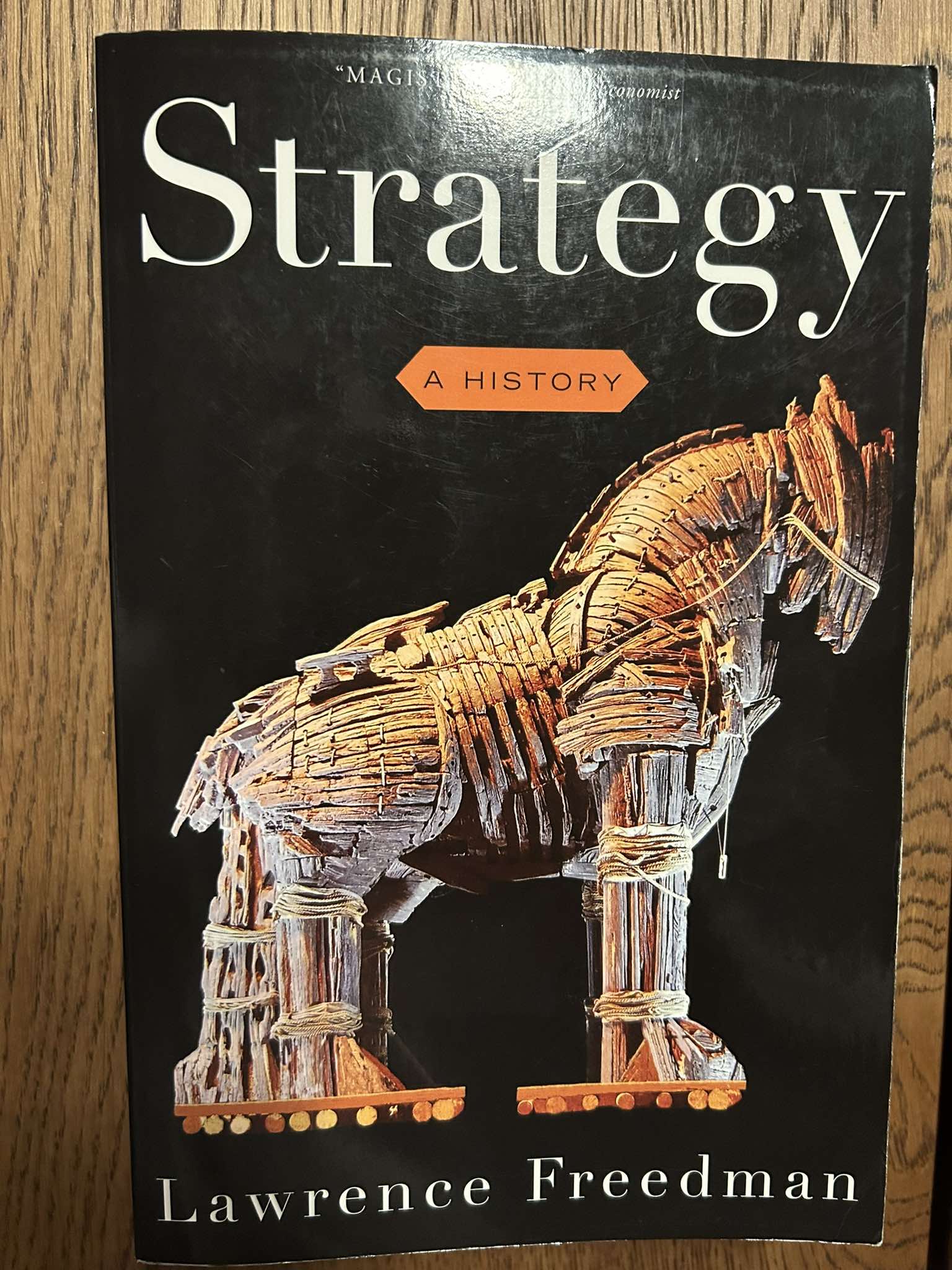
So the realm of strategy is one of bargaining and persuasion as well as threats and pressure, psychological as well as physical effects, and words as well as deeds. This is why strategy is the central political art. It is about getting more out of a situation than the starting balance of power would suggest. It is the art of creating power.
The book is a comprehensive history of strategy, starting from chimpanzees decision-making and going to military, business and political thought. Presented in a chronological order, the book covers all relevant points on what could be included in the topic of strategy: from nuclear war to guerilla tactics, from Cold War to deterrence strategy, from Sun Tzu to Jomini, from business Red Queen to Blue Ocean strategy, from political rational decisions to cooperation and coalition games.
The book feels like a compendium of all important ideas in this domain, describing and commenting on each of them. There is no single message of the book, but appears more like a textbook for those interested in the topic. At points it feels dry, almost academic, with long paragraphs and descriptions. Nevertheless, the ideas are presented in a clear and logic way, and chapters are flowing well one after the other.
The thinkers mentioned and analyzed are mostly American or West European, with few examples from other parts of the world, although the success of non-English thinkers or organizations is mentioned and praised. More examples to captivating theories, or some anecdotes (such as the one describing the movie Mr Smith is sent to Washington) would have elevated the book even further.
Sir Lawrence Freedman, the author of the volume, is an authority on the area, former Professor of War Studies at King’s College London, and largely considered the authority on British strategic studies.
It took me about 8 years to finish the book, which stands at about 700-plus pages, but it was always an interesting read, although slow at times, as profound ideas follow quickly one after the other, paragraph after paragraph.
A must-have book in the library for anyone interested in the topic of strategy from a political, military and business perspectives. This is a book that can stand the test of time, as it contains all influencing ideas and thinkers on strategy until early 2010s.
Mănescu mă întâmpină cu un zâmbet larg, îmi strânge mâna cu efuziune; se bucura, cică, să mă-ntânlească și deodată face un gest, îl cheamă pe fotograful oficial și, luându-mă de după umeri și trăgându-mă între el și Diori, zice în franțuzește: -Să facem o fotografie de familie… M-a trecut un fior, o nădușeală rece pe spinare: apare mâine în Scânteia o poză cu Corneliu Mănescu, măreț, triumfal, alături de un președinte negru și de… Neagu Djuvara, de care poate-și mai aduc aminte unii, că a vorbit cu anii la Radio Europa Liberă și era anticomunist focos, și-și vor zice: ,,Și ăsta s-a dat cu ei!…” Atunci, ca o inspirație de Sus, mi-a pornit o mișcare a mâinii pentru a astupa obiectivul aparatului și, părăsindu-i pe Mănescu și pe Diori, am zis: -Nu! Fotografiile-s numai pentru cei mari ai lumii!- și am ieșit din birou.
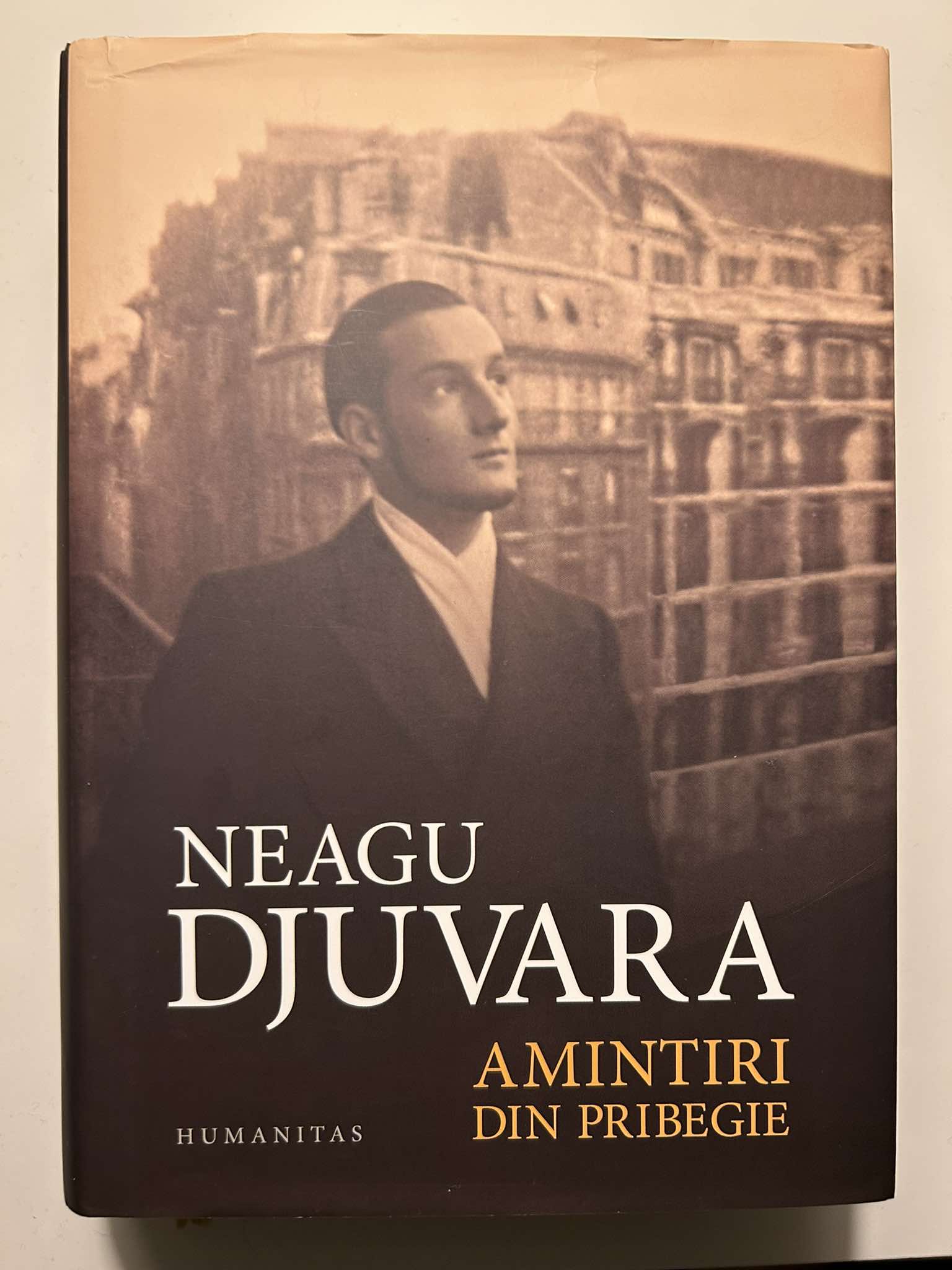
Neagu Djuvara isi povesteste amintirile intr-o proza captivanta si plina de cultura, de la plecarea sa la Stockholm ca atasat diplomatic in 1943, pana la revenirea in tara, dupa revolutia din 1989. Cu o viata fascinanta, de boier saracit, dar inca plin de nobilime, cultura si inteligenta, Djuvara trece de la diplomat roman, refugiat politic in Franta, diplomat in Republica Niger, pensionar la Paris si apoi, in sfarsit, revenit in tara.
Sunt atatea povesti si amintiri frumoase ce le prezinta, detasat, intim, plin de umor si finete. Un intelectual desavarsit, viseaza toata viata la o cariera profesorala si studiaza adanc istorie, drept si antropologie. Abia dupa 70 de ani ajunge profesor, in Romania, dar cartile sale il fac si mai apreciat.
Neagu Djuvara se plange mereu de lipsa de bani in cartea lui de memorii, dar in fotografiile si povestile ce le prezinta, arata din plin unde a investit: in educatie, prietenii, calatorii si lucruri de calitate. O viata traita din plin.
Ce se desprinde din carte in primul rand este calitatea scrierii, observatiile fine, extraordinarul compas moral si claritatea in gandire. Traind peste 100 de ani, Neagu Djuvara scrie cu intelepciunea unuia ce a trecut prin viata, a vazut multe, a inteles cate ceva si lasa invatatorile celor tineri. O extraordinara carte scrisa de unul dintre cei mai eruditi, intelepti si fermecatori scriitori romani.
Această Românie Mare e o ţară care se naşte cu dificultăţi uriaşe – trebuiau să se adune şi să se gospodărească împreună oameni care nu s-au aflat niciodată sub aceeaşi cârmuire. Ceea ce-i uneşte pe toţi românii este faptul de a vorbi aceeaşi limbă. Am mai spus că suntem poate singura ţară din Europa, în afară de micile ţări, al cărei sentiment naţional este exclusiv întemeiat pe faptul că vorbim aceeaşi limbă de la Nistru până la Tisa.
Neagu Djuvara prezintă într-un limbaj simplu și captivant istoria teritoriului unde este azi România și a românilor. Capitolele sunt organizate în funcție de clasicele epoci istorice, dar punând în evidență simboluri și momente importante. Uneori, detalii interesante sunt prezentate, de exemplu cum au reușit politicienii români ai vremii să găsească un domn străin (Carol).
Comentariile politice ale lui Neagu Djuvara dau de gândit. Uneori, autorul se întreabă cum ar fi fost cursul istoriei dacă s-ar fi luat alte decizii politice, la timpul lor. Profunzimea soluțiilor propuse de Djuvara, pe baza unor principii solide, mult bazate pe onoare și prestigiu internațional, deschid noi orizonturi. De exemplu, Djuvara se întreabă de ce am semnat armistițiul cu Germania în primul război mondial, când americanii tocmai debarcaseră în Europa (ceea ce a îngreunat mult negocierile cu aliații, căci noi promisesem să nu semnăm pace separată). Sau, bunăoară, de ce am cedat Basarabia în al doilea război mondial, fără să ne batem. Sigur am fi pierdut, dar am fi fost poate mai bine la masa negocierilor în timpul și după război.
Neagu Djuvara este un istoric cu o viață și experiență legendare. Născut dintr-o veche familie boierească, se luptă în al doilea război mondial, rănit la Odessa; intră în ministerul de externe, unde este plin de peripeții, emigrează în Franța, apoi în Niger; își ia doctorului la Sorbona; apoi se întoarce în România să predea, chiar după revoluția din 1989. Trăiește 101 ani, fiind lucid până la moarte.
Fascinant sunt prezentate cum se fac calculele politice la nivel înalt, cât de mult contează latura personală, familia, prieteniile, încrederea; totul foarte logic și uman.
Cartea lui Neagu Djuvara este una din puținele cărți pe care am recitit-o. Un volum extraordinar, ce păstrează perfect proporțiile a ceea ce se întâmplă pe teritoriile românești, în comparație cu evoluțiile mondiale.
He was not the most honest or pious of men, but he was courageous. His name was Diego Alatriste y Tenorio, and he had fought in the ranks during the Flemish wars. When I met him he was barely making ends meet in Madrid, hiring himself out for four maravedís in employ of little glory, often as a swordsman for those who had neither the skill nor the daring to settle their own quarrels. You know the sort I mean: a cuckolded husband here, outstanding gambling debts there, a petty lawsuit or questionable inheritance, and more troubles of that kind. It is easy to criticize now, but in those days the capital of all the Spains was a place where a man had to fight for his life on a street corner lighted by the gleam of two blades.
The book is a cloak and dagger novel, first in a series called “The adventures of Captain Alatriste”. We follow the protagonist’s story, presented mostly by his young page, in first person. The book is short and elegant, beautifully setting up the atmosphere of Madrid at the beginning of the 17th century (the story happens in the 1620s).
The plot is simple and the actions scenes are rare, the prose generally being concerned of presenting the Madrid in Spain’s golden century, with an air of melancholy, beautiful poems and introducing the language of the era. While it feels that it copies the story of the French musketeers of Dumas, it has a distinct plot and a superb setting up of the world.
The book reads for me like a young adult novel, with the simple plot and swashbuckling captain, who is, of course, a man of few words and invincible in sword combat. Nevertheless, the Spanish prose feels so well constructed that transpires even with an English translation. It has one of the best beginnings of a book, where we learn from the first phrases who are we dealing with and how it is going. It is a book that makes you want to learn Spanish, just to read it in original. One of the best pieces of Spanish literature, in my opinion.
Overall, a beautiful presentation of Madrid at the beginning of the Iberian empire’s golden century, a skillful prose that make you learn the original language and an introduction to the adventures of a memorable (fictional) Spanish soldier.
Bourguignonne, espagnole, autrichienne, française, hollandaise… la Belgique possède la plus singulière des histoires, aussi passionnante qu’un roman d’aventures. Des siècles de guerres, de mariages diplomatiques et de luttes religieuses qui ont semé la graine d’un royaume né d’une révolution romantique en 1830.
Le livre présents l’histoire du territoire qui fait maintenant la Belgique, en commencent avec la Belgique celtique jusqu’à contemporanéité. L’histoire a un point de vue classique, focussé sur la succession des chefs politiques, mais fait parfois des mentions aux développements sociales et économiques.
Patrick Weber fait une très compréhensive et entrainante présentation de l’histoire de ce pays. Tous les périodes sont présentes : la Belgique preféodale, féodale, bourguignonne, espagnole, autrichienne, la Belgique dans le sillage de la révolution française, la Belgique néerlandaise, la révolution belge, Leopold le Ier, Leopold le IIème, Albert le Ier, Leopold le IIIème, Baudoin, jusqu’à Albert le IIème.
Des petits sous-chapitres sont inclus avec des détails des différent provinces ou villes belge, dans la période que le chapitre présent.
On peut comprendre mieux maintenant la signification des nommes des stations de métro à Bruxelles : Toison d’Or, Joséphine-Charlotte, Mérode, Simonis et autres.
C’était un très bon livre, facile à lire, en sélectant les détails importants de l’histoire belge, en essayent d’être neutre politique (même que l’auteur parait être wallon), je recommande à tous.
It was painful to consider that the nation which could produce the world’s greatest battleships was unable under pressure to produce a single satisfactory torpedo boat.
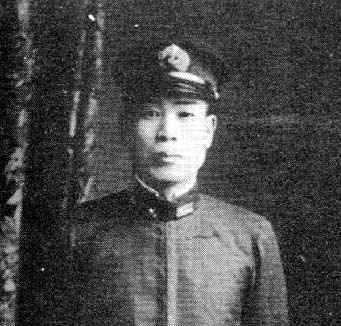
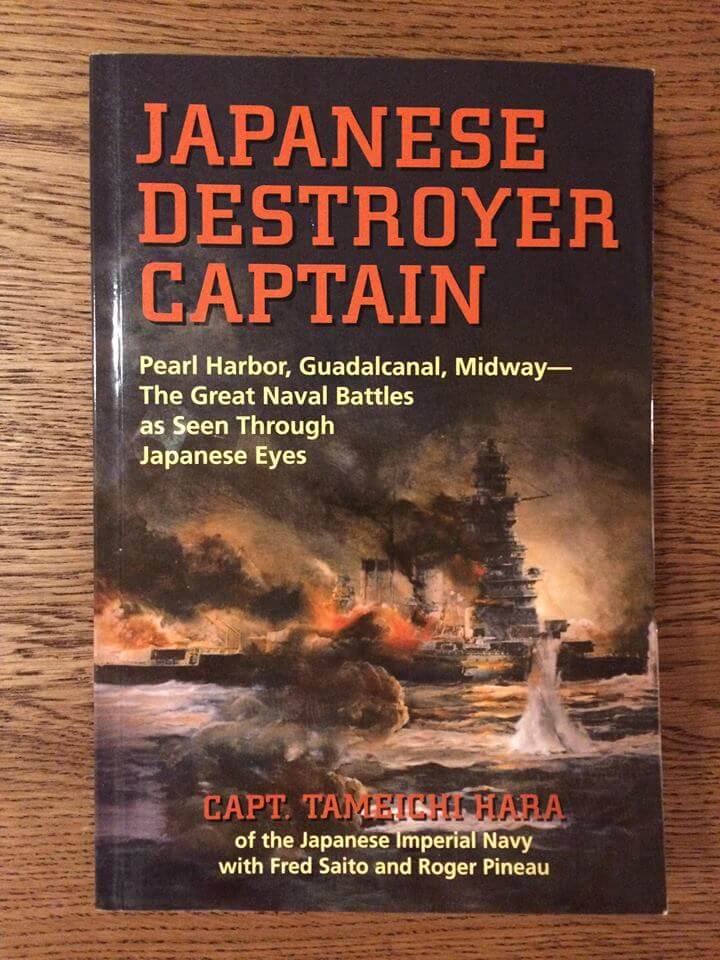
These are the memoirs of the only Imperial Japanese Navy destroyer captain at the start of World War II to survive the entire war. Tameichi Hara presents his memoirs, with the help of journalist Fred Saito and translator Roger Pineau.
The book focuses on the navy battles of the Pacific in 1942 and 1943 while captain Hara was fighting the US Navy in Guadalcanal and the Philippines, being involved in over a dozen major actions.
The stories are an unique view of the Imperial Japanese Navy, their tactics, problems, morale and weaponry. The writing is engaging, and the pace is surprisingly good for a memoirs book.
Tameichi Hara, a great mind, navigating difficult waters
Captain Hara is not just as simple captain. He wrote the Japanese manual for torpedo tactics, the most advanced in the world at the time. He managed to keep his ship intact with no crew loses, in several military engagements, when Japanese destroyers where sunk or damaged at a high rate.
The book practically shows how the power of air took over the power of navy, how warplanes gradually got the upper hand over warships.
Towards the end of the war, he accepted a suicide mission, as captain of the light cruiser Yahagi, accompanying battleship Yamato in its last attack.
What logic can make a human being to accept almost certain death, when everything else is lost? Captain Hara beautifully describes the situation and the facts with great precision.
The book is superbly researched, the Japanese actions being verified with accounts from the Allies. Those are some great memoirs, on par with the ones of Heinz Guderian, another great innovative mind. While Hara was the master of torpedo, Guderian was master of tanks, both ending on the same during and after the war.
The arguments in Whitehall concerning the weight of the rocket lasted throughout July and well into August. Herbert Morrison was near panic: on 27th July he was wanting the War Cabinet to plan immediately for the evacuation of a million people from London…
The book is a World World II memoir of Reginald V. Jones, responsible to anticipate and counter the German science applications in warfare, mainly air, and create new technical aids. Those weapons included radio navigation, radar, navigation for the Allied Bomber Offensive, and the V-1 and V-2 rockets.
R.V. Jones’ position in the British war effort, both in the Intelligence Section of Britain’s Air Ministry and in the MI-6, allowed him to be at the forefront of the technical war between NAZI Germany and the United Kingdom. He is now considered the father of technical and science intelligence and CIA has an award with his name.
The author’s account reveals much of the battles’ details fought with the technical minds in Germany, but also the experience of the war, the bureaucratic fights inside the various British ministries and his interactions with the British Prime Minister, of whom he was a great admirer.
British Scientific Intelligence 1939-1945
The memoir is read as a wartime scientific detective story, with a strong espionage background. For example, he reveals how the V-1 (flying bomb) and V-2 rockets were assessed in terms of warhead capability and production. He fought with his own expert councils and with some ministers panicked of a possible mass attack over London. By looking at aerial photographs, the messages from the ultra secret decipher service at Bletchley Park; the spy reports; prisoners’ interrogations and others, he was able to correctly put together the puzzle of the V-1 and V-2 rockets and find counter-measures for them.
His battle was different than the ones with tanks and land offensives, but not less important. Without him and his counter-measures, the bombing of Britain in 1940 would have been a lot more accurate and the German air force would not have sustain the crippling losses.
This book is widely acclaimed as one of the best memoirs of the World World II, from one of the highest ranked positions in the British intelligence. I sincerely recommend it to all readers interested in history and science.
Henry begins with a text listing his view of what the objectives of any man’s life are…First of all is man’s duty to secure salvation for his soul. This is by definition the most important goal of human life. Next is the pursuit of honour for himself, his name, his lineage and his nation. Honour, declares the prince, is passed on by inheritance from generation to generation and so concerns the very essence of worldly existence. If he possesses honour, a man’s name and reputation will endure until the world’s end…He dismisses as worthless most of the activities necessary either to make life tolerable or, indeed, to keep going at all.
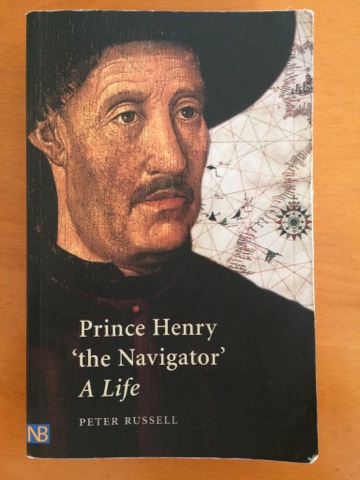
Prince Henry “The Navigator” is a detailed biography by Peter Russell of the famous Portuguese prince who started the Portuguese maritime discoveries of the 15th century.
The Prince was obsessed by his crusading destiny and, under his pressure, the Portuguese conquered Ceuta. He then goes against everyone, seasoned sailors and common knowledge, to fund expeditions going beyond Cape Bojador, a place after which sailing was considered impossible. This was a crucial moment that defined the destiny of Portugal.
A splendid expeditions and commerce organizer.
Prince Henry also organized and pushed the discoveries for decades, until his death, despite the fact he was constantly struggling with bankruptcy. The trade with Guinea (mainly slaves) and, principally, the riches from Madeira (wood, dyes, sugar) brought much wealth to the country and showed that profit could be made from maritime discoveries.
He was open to people of skill, hiring foreigners in his service, mainly Genoese to develop trade. Rusell suggests that some of the funds to finance the expeditions were coming from the Genoese merchant houses in Portugal.
The ascetic Prince was very close to his retinue, always trying to help them and give them positions. Maybe his court was not always paid in time, but he tried to take care of his knights and servants.
The biographer is a balanced writer of Price Henry’s life. The debacle of Tangier, when the Portuguese attacked the Marinid Morocco’s port, again at the Prince’s pressure, shows a darker side of the noble. To be allowed to leave, the Prince agreed to give back Ceuta, leaving his brother as guarantee. He never returned the city to the Moroccans and his brother died in prison.
While the Prince always presented his expeditions as religious attempts to christianize Africa, the purpose looks more likely to be profit. Putting the cross of the Order of Christ, where he was leader, on the sails certainly helped to boost this image. In practice, no churches were built in Africa and he cruelly defended his monopoly of trade to Guinea, especially against the Castilians.
But, why was he starting the expeditions? Why not others? Maybe the answer lies on two aspects: first, he was conditioned to go towards the sea, there was nothing of enough value, or too costly to get if North Africa was attacked; secondly, he wanted more than others to become famous. The biographer suggests that the Prince strongly believed that he could get by sea to the mythical kingdom of Preacher John, a Christian kingdom full of riches in Africa. Of course, the conditions were set for discovery: internal stability in Portugal, with Castile fighting internal wars, no threat from Africa, ships that could travel such long distances, enough wealth to finance the expeditions, skilled and courageous sailors, etc..
The books is lengthily, still not enough detailed as it could have been. However, it is a classic, maybe the best biography of the famous Portuguese prince.
[Featured photo by André Luís from Lisbon, Portugal]
In 1642, 18-year-old Blaise Pascal, the son of a French tax collector, tired of waiting for his dad to come play a game of “le catch”. Blaise’s dad was what is known as a tax farmer, sort of a 17th century version of a loan shark, threat of broken bones and all. Tax farmers advanced tax money to the government and then had a license to collect taxes, hopefully “harvesting” more than they advanced. Elder Pascal was constantly busy calculating and tabulating his potential tax haul. To help him out, Blaise envisioned a mechanical device with wheels and cogs and gears and numeric dials that could sum up numbers to eight digits long. That’s 10 million francs. Dad must have been a top tax guy.
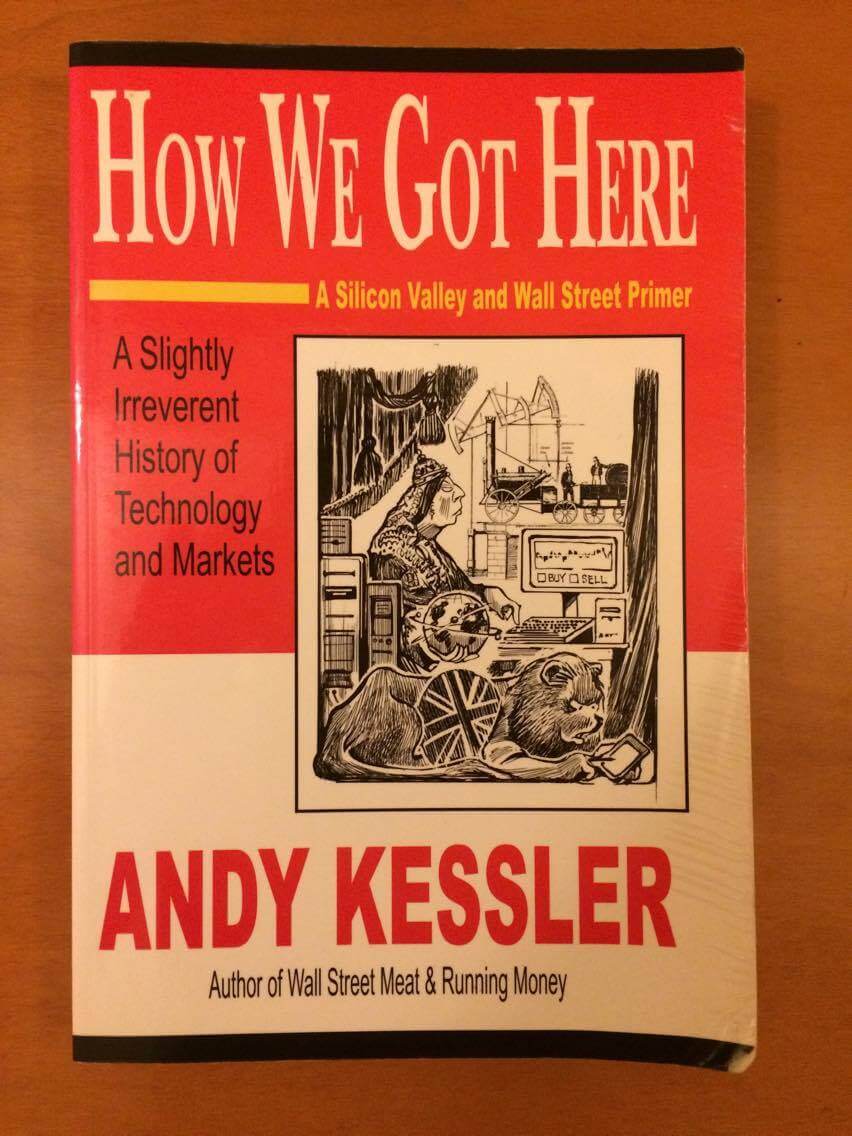
The book explains the history of technology, from the Industrial Revolution to contemporaneity, through the lenses of capitals and stocks. The books is written in a simple way and without much depth, kind of like Wikipedia is explaining. However, the connections it makes are genius and really make the reader think.
Andy Kessler, the author, worked for two decades in the banking and investor sector, from research analyst to hedge fund manager.
A brilliant and easy to follow history of technology, that connects the dots and makes you think.
The book is divided in 5 chapters: The Industrial Revolution; Early Capital Markets, Components Needed for Computing; Digital Computers and Modern Capital Markets.
Each chapter has small stories, linking to each other, explaining the creation and change of some concepts, laws, industries. The overall thematic is economics, trade and, partially, laws influencing trade, money, finance and national economies.
Andy Kessler explains in a simple and brilliant way very complex concepts, such as fractional reserve banking and the Corn Laws. While it doesn’t have depth, it has the right amount of detail to made the reader understand why things happened that way.
All those facts presented are freely available online, but Kessler put them together in a logical and consequential way. It is really a book that “connects the dots”.
It is rarely that a book has so much ingenuity, easiness of writing, clarity in thinking and presenting the facts. The book can be freely found on the author’s website. One of the few that I would read twice.









 Mike Bostan - personal blog on book reviews and energy studies