Man was, therefore, still a prisoner on his own planet. It was much fairer, but a much smaller, planet than it had been a century before. When the Overlords abolished war and hunger and disease, they had also abolished adventure.
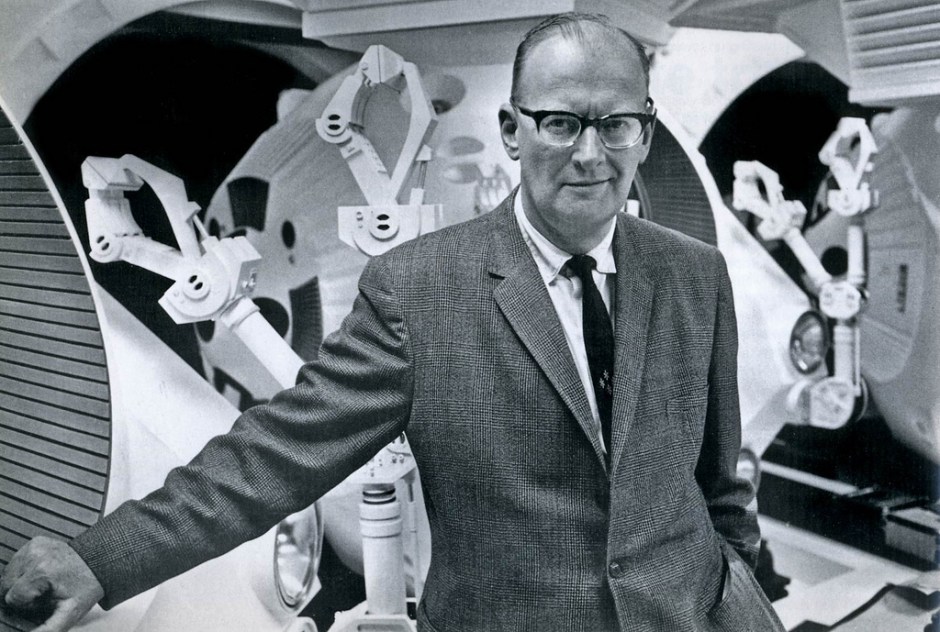
Childhood’s End is a good scifi from the accomplished author Arthur C Clarke. It starts with a sudden arrival of some aliens, just after the second world war. They bring peace and prosperity, but never disclose their reason to come to Earth. The book ends somewhat surprisingly, into a kind of transcendence for humankind.
Quality scifi writing
Although written in 1953, the book keeps pace with current development and innovations, which shows the, what proved to be correct, vision of the author for the future.
The plot has several twists, a couple of stories being intermingled, but the narrative is kept straight and easy to follow. The anchor of the book are the aliens and the slow progress towards the inevitable end. It reminded me of the more recent series of Harry Turtledove (Colonization – also on this website).
The book is an easy read and imaginative enough to be an entertaining scifi almost 70 years after writing.
While I enjoyed reading the book, I think it could have explored more the excellent plot lines developed. A solid reading overall.
Over $5.3 trillion of currencies are traded every day, yet nations like the Philippines, Peru, Poland or the UK hold less than $80bn in reserves to defend against speculators. Enough to last only a few days.
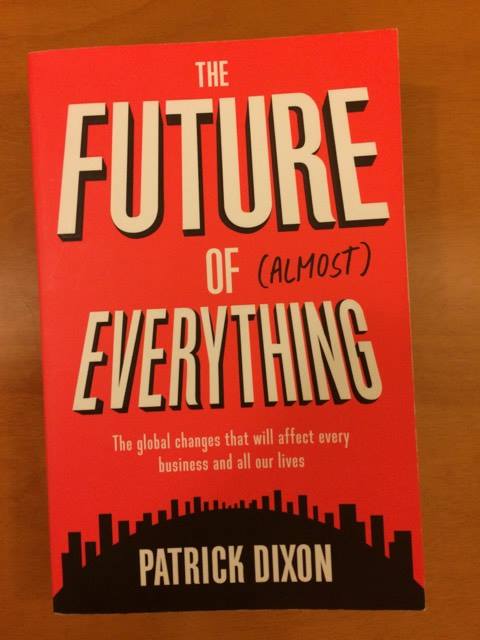
The book is trying to identify future trends, developments that human society might take. Dixon considers that there are six main future trends, conveniently named: Fast, Urban, Tribal, Universal, Radical and Ethical (FUTURE).
Patrick Dixon has a lot of guessing and the arguments he shows are shallow. There are so many statements that some will certainly turn true.
Guessing the future
Nonetheless, he is intriguing and has a good grasp of what is happening in the world. It makes a good overall read and challenges the reader. However, I did not feel that he bring anything new, all being trends that exist already and are extrapolated into the future.
Patrick Dixon is a professional futurologist, having a company specialized in this niche, with many reputable international clients. He writes often, on various subjects.
The style of reading is very fluid and it follows very neatly the logic of each chapter or trend. It make a good read overall, but not exceptional.
New contact!” Lieutenant Kasparov announced from the Sensors Station. “Infrared and mass detection, bearing three-five-seven mark zero-six-eight. Designating as Hotel eleven. Classified as definite hostile. No effort at stealth.” Then, under his breath, he added, “Arrogant bastards.”
“Very well.” Lieutenant Commander Max Robichaux, Union Space Navy, Captain of the Khyber class destroyer USS Cumberland, acknowledged the contact report but let the comment pass, not because it was appropriate–which it was not–but because he heartily concurred. Judging by the quiet murmurs of agreement from the dozens of men at their General Quarters stations in the Cumberland’s Combat Information Center, he wasn’t the only one.
The destroyer’s Executive Officer, Lieutenant Eduardo DeCosta, leaned toward Max and said in a low voice, “No stealth. Looks like disdain. We’re not a threat to them, so they don’t need to waste effort making themselves hard to detect.”
Max shook his head and answered at the same volume—his voice would not carry beyond the Command Island, the platform in the center of CIC where the Commander’s and Executive Officer’s Stations, as well as an additional console known as the Commodore’s Station, were located. “That’s not it, XO. Krag disdain for us ‘blaspheming monkeys’ is a given. Their goal is intimidation. They want to make sure we know they’re here and how many of them are hunting us. They want us cowed. Too scared to think. Believing we’re already dead so we’ll stop fighting to survive.” [Book 3 – Brothers in Valour]
The series follows the adventures of Max Robichaux, captain of a war spaceship engaged in the war with an alien empire, some 300 years in the future.
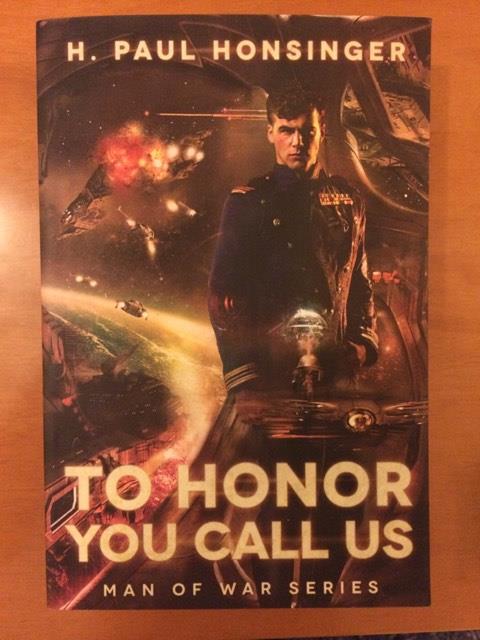
There are three books in the series: To Honor You Call Us, For Honor We Stand and Brothers in Valour. Interestingly, the first two were self-published (this means there was no publishing house behind them) and enjoyed an immense success.
The series are classical in the sense of story building. Captain Robichaux gradually earns his success and military victories, while training and giving confidence to his destroyer’s crew. On his side, there is his best friend, Dr Sahin, and a reliable council of advisers. The victories follow one after the other, but not without losses. The focus is on the hero and his crew, less on the ship itself.
A nice, relaxed reading.
There are writers who like to introduce convoluted psychological plots and mind games. However, the author, Paul Honsinger, likes his story clean; the focus is on the fight itself, on the universe around it and on the crew. This makes the story easy to follow and engaging.
There is no hard scifi in those books, but the plot is imaginative, with nice twists. Also, every decision from the universe (such as why no women on board) is given a credible explanation (a genophage virus sent by aliens to kill human females, due to the low reproductive rate of human species in comparison with aliens).
The battles are very creative and well described. The evolution of the hero and the crew is impressive. The captain is just an ordinary guy (not a prince or the son of a general), with a lot more grit, common sense and willingness to win that others. This type of character makes the reader to identify him/herself with the hero and follow his decisions.
I loved the series, it was easy to read. It was not a big, convoluted plot where you have to make notes in order to remember what is happening. One of the most relaxing reads of military scifi.
In the evolution of every sentient race, there is a turning point when the species achieves transcendence through technology. The warlike Sh’daar are determined that this monumental milestone will never be achieved by the creatures known as human. On the far side of known human space, the Marines are under siege, battling the relentless servant races of the Sh’daar aggressor. With a task force stripped to the bone and the Terran Confederation of States racked by dissent, rogue Admiral Alexander Koenig must make the momentous decision that will seal his fate and the fate of humankind. A strong defensive posture is futile, so Koenig will seize the initiative and turn the gargantuan Star Carrier “America” toward the unknown. For the element of surprise is the only hope of stalling the Sh’daar assault on Earth’s solar system-and the war for humankind’s survival must be taken directly to the enemy.
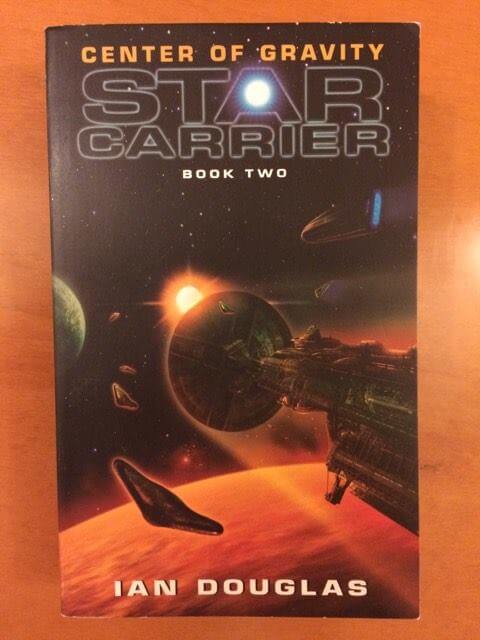
Center of Gravity is the second book of Ian Douglas in the Star Carrier series. The story revolves around the struggle of humanity to battle technologically superior races of allies, in distant future. The main protagonists are Commander Koenig, admiral of a human fleet, and Trevor Grey, pilot on one of the ships from Koenig’s command group.
Battles around the stars
Koenig allows the reader to see things at the strategic level, why the fleet retreats or attacks and the overall plan. Grey’s narrative level is more emotional and tactical, about simple people and how the war affects them.
The main ship of Koenig’s command group is kind of a spaceship carrier, where Grey’s spaceship is allotted to, hence the name of the series, Star Carrier.
Humans battle an alien species called Sh’daar which fight through various other alien species under their control. In the first book, the aliens attacked Earth and humans barely succeeded to repulse the attack, through the efforts of Grey and Koenig.
In the second book, humans strike back, The pace is fast and the star battles and the ship to ship action are dynamic and engaging. While not as innovative in new technologies and ideas as the first book, the story still reads well. Overall, it is a good piece of military scifi.
Back in 1972, the computer modelers for The Limits to Growth calculated 42 years ago that known world copper reserves would be entirely depleted in 36 years, lead in 26 years, mercury in 13 years, natural gas in 38 years, petroleum in 38 years, silver in 16 years, tin in 17 years, tungsten in 40 years, and zinc in 23 years.
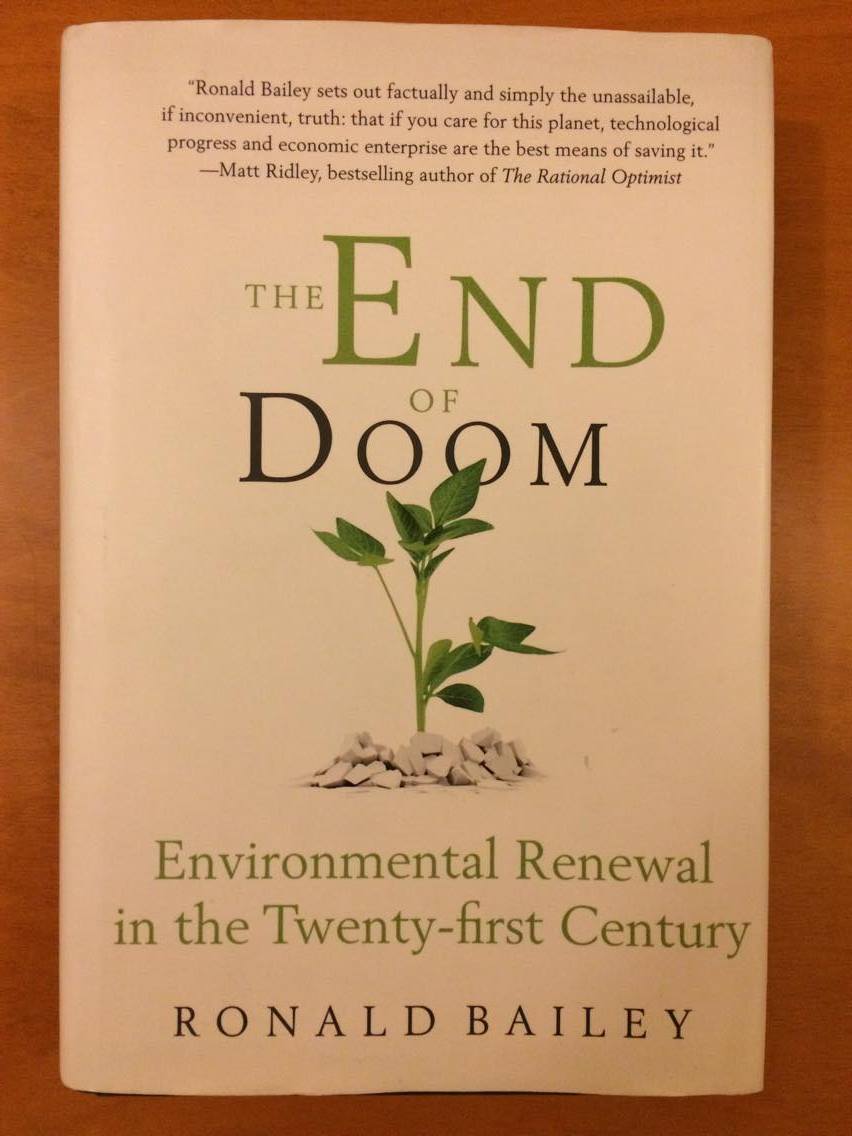
The book from Ronald Bailey is a skeptical view of doom prophets, reminding readers how many predictions turned out to be false. Bailey gives several examples, such as the Club of Rome’s Limits to Growth, agriculture or the Swedish sperm count, among others.
Books predicting future become old quickly, so it is more constructive to look at books analyzing available data. His book is a well research argument for a libertarian view of the world, putting in place the notion that we live the best lives in the history of human kind. However, the book challenges one’s beliefs and it is difficult to read by an environmentalist.
Questions on risk aversion
The author argues that never do anything for the first time also known as the precautionary principle will never allow innovations and the society having this as principle evolve (kind of the Chinese society in the 15-19 centuries).
Bailey’s interestingly notices the concept of pathological science, when researchers become blinded by their own moral beliefs.
On climate change, he notes, quoting Dan Kahan and the Yale cultural cognition project, that the debate is chiefly not about science, but about a clash of strongly held values, between mainly Individualist/Hierarchical and Communitarian/Egalitarian set of beliefs, both having different risk aversion. The more educated each person from this division, the more empirical evidence is found consistent with own beliefs, hence a confirmation bias.
On environment protection in general, Bailey’s notices that rich nations protect nature better, for example forest surface re-growing and air quality.
Between Malthusian doomsters and cornucopian optimists, the book tries to strike a balance and the author is conscious about his own potential biases.
Nonetheless, he correctly highlights that the environment discussion is a clash of ideas rather than a scientific debate, both sides having good, solid arguments. Linking with a previous book I just read, Guns, Germs and Steel, which has a liberal view in the US politics sense, environment protection is important: human societies in the Americas, for example, likely killed all large fauna (over 100 kg) crippling their future development. On the other hand, excessive risk aversion and a view of a perfect past (such as a pristine nature) could hinder and eventually destroy a society with this view.
It is a good book that I would recommend reading in balance with Guns, Germs and Steel by Jared Diamond, so the reader can make its own opinion.
I created the OASIS because I never felt at home in the real world. I didn’t know how to connect with the people there. I was afraid, for all of my life, right up until I knew it was ending. That was when I realized, as terrifying and painful as reality can be, it’s also the only place where you can find true happiness. Because reality is real.
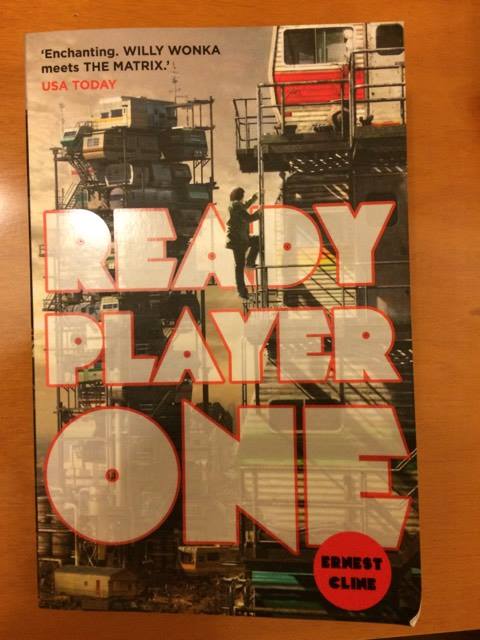
This is a book with one of the most creative, nerd scifi narratives, exploring the possibilities of virtual reality in a dystopian close future world.
The book follows the story of Wade Watts, a normal teenager fully immersed in a virtual reality called OASIS (a kind of Sims), while the world is slowly decaying around him, economically and politically.
The creator of the OASIS, a multi-billionaire nerd, leaves his entire fortune and ownership of the programme for the player who manages to pass his in-game trials. Obsessed by the 1980s culture, all trials are related to those years, with music, gaming and movie references. Hence, a 1980s renaissance takes place, billions of players being after this prize, an escape from the dying world around them. The protagonist is one of those seekers.
The seller of illusions
A rival company pours monumental resources with the same purpose of getting the prize and the ownership of this virtual reality. This company slowly develops as the antagonist of the story.
Five years have passed since the creator died and no progress was noticed on the scoreboard towards the prize, a scoreboard available for everyone to see. Until the Wade’s avatar makes the first breakthrough.
The story gradually gains pace. mingled with love, friendship, courage, real life tragedies and perseverance. It is a story that transforms the teenager into a man. It is a kind of a Harry Potter in a dystopian future, but without family references.
The virtual reality, OASIS, looks like a drug, people giving their life and freedom for a world where they can be anything they want to be. The real world is slowly decaying around them, civil duty (like voting) is neglected, allowing some form of slavery to exist. However, the message of the author is that the virtual reality cannot replace the real world: things like a kiss, a touch are unique and cannot to be replicated.
The book is catchy for everyone who played a computer game in their life, so I recommend it as a good reading. I couldn’t put the book down.
Thanks to this availability of suitable wild mammals and plants, early peoples of the Fertile Crescent could quickly assemble a potent and balanced biological package for intensive food production. That package comprised three cereals, as the main carbohydrate sources; four pulses, with 20—25 percent protein, and four domestic animals, as the main protein sources, supplemented by the generous protein content of wheat; and flax as a source of fiber and oil (termed linseed oil: flax seeds are about 40 percent oil). Eventually, thousands of years after the beginnings of animal domestication and food production, the animals also began to be used for milk, wool, plowing, and transport. Thus, the crops and animals of the Fertile Crescent’s first farmers came to meet humanity’s basic economic needs: carbohydrate, protein, fat, clothing, traction, and transport.
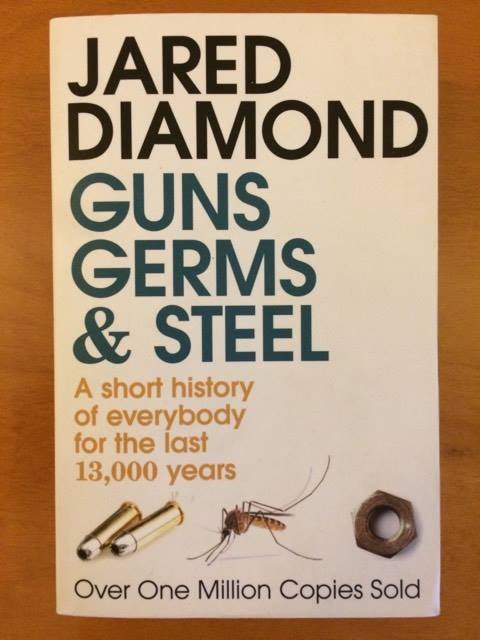
Jared Diamond tries to explain why some societies developed better than others. For example, why 168 Spaniards led by Francisco Pizarro could conquer in 1532 the million-large Inca Empire and not the other way around? Why some societies evolved to guns and others are still hunter-gatherers?
In short, Diamond considers that simple geographical luck, such as proximity to domesticable plants and animals (quite few worldwide) created centers of innovation. Those centers spread, if not stopped by natural obstacles like mountains or seas, their innovations.
Good book on early human development
The book follows the anthropological theory of cultural materialism, which says that environment shaped societies. It sounds a bit deterministic: no matter what you do, geographical luck determines your progress. For example, the Incas were doomed, mainly because they had no defense against the germs brought by Europeans.
Another lesson from this book is that, no matter the society, sooner or later, best innovations will prevail. For example, in the fragmented Europe, even if some societies refused some innovation for cultural or other reasons, the neighboring societies that adopted the innovation had a technical advantage that would make the laggard society to either adapt or be conquered.
Innovations drive the society forward, the society very existence depending on that, such as it is the case with Native Indians. This is a very strong argument for trade. For example, being constantly exposed to others through trade and competition, makes a society seeing what is best and allows the opportunity to adopt the new. This explains, for example, why competing and trading Europeans managed to surpass the bigger and earlier advanced Chinese. The Chinese closed up to trade and their earlier political integration worked in their detriment, the closing up happening to the entire center of innovation which was China.
To sum up, Jared Diamond considers that Europeans are no smarter than Australian Aborigines, they were just luckier to be closer and with easier access to early centers of human innovation.
On the down side of the book, Jared Diamond talks very little about guns and steel, as advertised on the title, and mostly about germs and farming. The book reads like an anthropology book with some detailed history from early human settlements to Antiquity.
Overall, a book with some very interesting ideas and with a strong call for open societies and humanity as whole.
(Featured image by John Doebley – A possible evolution of corn)
Two there should be; no more, no less. One to embody the power, the other to crave it. The Rule of Two.
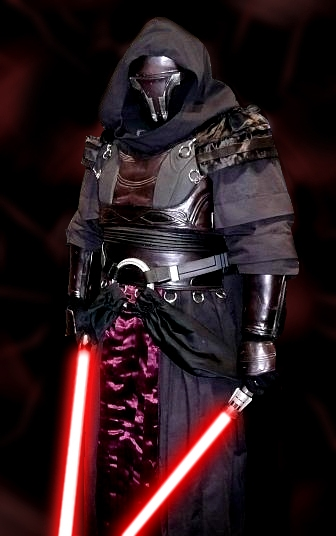
The Darth Bane trilogy is part of the expanded Star Wars Universe and likely a nice read only for the fans. Darth Bane is the one that installed the rule that only two Sith Lords can exist, otherwise, they will always fight each other, instead of fighting the Jedi.
The trilogy is divided into three parts: Darth Bane: Path of Destruction, Darth Bane: Rule of Two and Darth Bane: Dynasty of Evil.
A dark lord you don’t want to mess with.
The books present the story of an evil lord, which starts as a miner on a desolate colony. After an incident, he has to run and joins the Sith army, where he is noticed as Force-sensitive. Trained at the Sith Academy, he quickly climbs ranks and becomes powerful and convinced that only letting two Siths to live could ensure the victory over Jedi.
He manages to trick the other Siths to fall in his trap and kills them all, taking a little girl as apprentice, Darth Zannah. Numerous other adventures follow the two, which lead to their final duel, where Bane is defeated.
The book is imaginative and a real pleasure for the Star Wars fans, while a bit dull for others. The story expands the Star Wars universe and fills some gaps in the original story. The writing has many gems of wisdom, from an evil perspective. The writing style of Karpyshyn is engaging, but not fast-paced or bursting with action. The action scenes are controlled, violent and short.
The trilogy is ok, but not recommended unless for die hard fans.
Une étoile s’était éclipsée, abandonnant mon passé dans le noir, égaré quelque part entre les ombres. Et personne ne peut vivre sans son passé.
Là dehors se cachait le coupable de deux meurtres, au moins: celui d’une personne et celui de mes souvenirs.
Et ce salaud allait le payer.
Blacksad est une exceptionnelle série de bande dessinée, anthropomorphiste, en cinq volumes (2016) de Juan Díaz Canales (écrivant) et Juanjo Guarnido (dessinateur).
Blacksad, l’héro.
Le héro est John Blacksad, un chat noir, détective privé aux États-Unis dans les années 1950. L’atmosphère a l’empreinte d’un film noir et est parfaitement exprimé par les dessines. Le graphisme de Guarnido est monumental: les personnages animalières sont superbe choisis, la coloration à l’aquarelle donne un timbre spécial, précis et vivant au action.
Le dialogue est fluide, les mots sont bien choisi. La narration est souple, avec aucune bagage de mots inutile, une qualité rare dans la littérature. C’est un plaisir de lire les histoires de Blacksad, regarder les dessines et être part de cette atmosphère noir crée par Canales et Guarnido.
Les cinq volumes sont : Quelque part entre les ombres (2000); Arctic-Nation (2003); Âme rouge (2005); L’Enfer, le silence (2010) et Amarillo (2013).
John Blacksad n’a pas des qualités incroyable, exceptionnelles, mais il est honnête, courageux et obstiné. Blacksad est sombre et solitaire, mais il reste sociable. Le lecteur se peut identifié facilement avec le héro. Son ami est Weekly, une fouine, journaliste, très bien informé, qui partage les même valeurs, mais pas la même personnalité réservé que Blacksad. John travaille souvent avec Smirnov, un berger allemand, commissaire de police, aussi honnête et incorruptible.
La intrigue est toujours fraiche, plaine des surprises, mais réaliste. Les options disponible pour le héro ne sont pas simple. Les volumes sont avec mafia, assassinats, racisme, femmes fatales, fume de cigares, anticommunisme. Chacun a une couleur dominante propre: noir, blanc, rouge, bleu et jaune.
La série de bande dessinée Blacksad reste une ouvre d’art, qui je recommande de voir et lire.
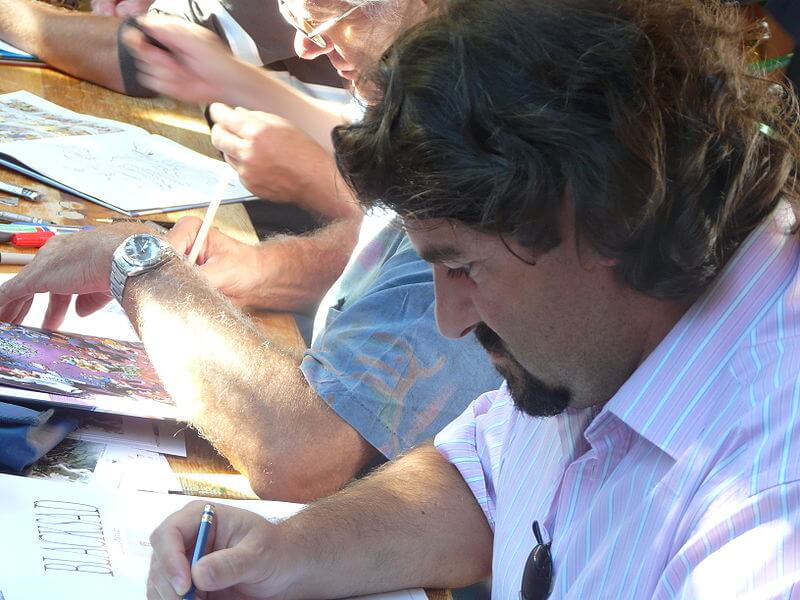
[Feature photo: Photographies prises lors du Festival International de la BD de Sollies Ville by Esby from Wikimedia]
Our next instruction was to traverse by night over many more miles of hostile territory, to find a shelter serving as base for a suspected terrorist cell. Once there, we were to infiltrate the premises and collect as much detailed information, “intelligence”, as we could.
We were exhausted, but we knew there was no choice but to press on. That day we managed, somewhat miraculously, to make the entire leg of the trip undetected by the bad guys, although we could hear them patrolling the roads with their noisy Mack trucks, engaging the other groups in firefights.
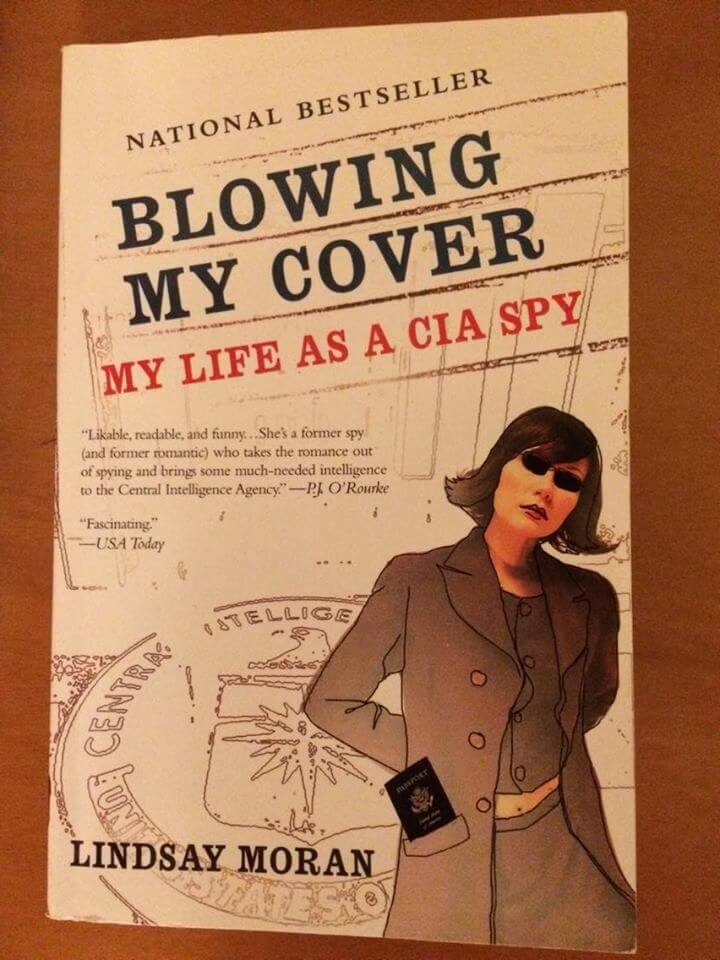
Blowing my cover – My life as a CIA spy is a memoir of a former CIA operative, who ended up resigning the Agency after 5 years. Moran carefully describes her training and her motives to join (and to resign) from CIA. The style of writing is rather cynical, but entertaining in the same time.
I was interested in the book because she operated in the Balkans, but the former spy doesn’t dwell on her missions.
Memoirs of a 5-years spy
The book presents in great detail how the CIA training for operatives takes place, such as escaping tails, noticing details, gathering intelligence, making contacts. This part was practical and quick-paced.
The other part, intertwining with her training and missions, was a psychological analysis of her reasons to work for the Agency. She considered her job a lonely, difficult, rather boring job, with little solace. However, the analysis does not go very deep. To provide a context, Moran worked in the Balkans around 2000-2003 and the 9/11 attacks were in 2001. In comparison with the CIA agents in Afghanistan, the Balkans must have been very boring.
The writing could have used more polishing, but it was an interesting reading.











 Mike Bostan - personal blog on book reviews and energy studies