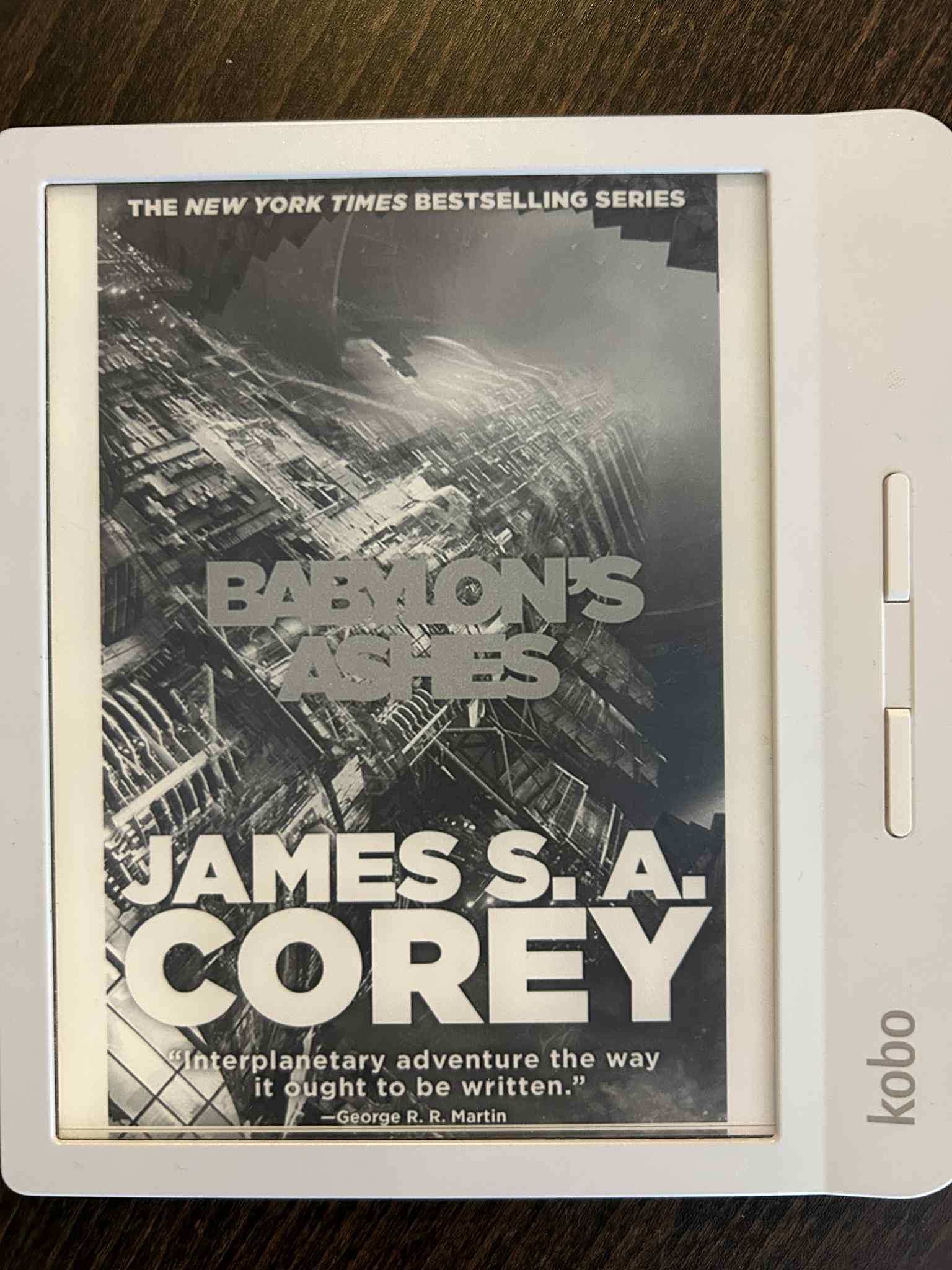
Babylon’s Ashes (The Expanse, book 6)

The messages coming back flooded the comm buffers with rage and sorrow, threats of vengeance and offers of aid. Those last were the hardest. New colonies still trying to force their way into local ecosystems so exotic that their bodies could hardly recognize them as life at all, isolated, exhausted, sometimes at the edge of their resources. And what they wanted was to send back help. He listened to their voices, saw the distress in their eyes. He couldn’t help, but love them a little bit.

Under the best conditions, disasters and plagues did that. It wasn’t universally true. There would always be hoarders and price gouging, people who closed their doors to refugees and left them freezing and starving. But the impulse to help was there too. To carry a burden together, even if it meant having less for yourself. Humanity had come as far as it had in a haze of war, sickness, violence, and genocide. History was drenched in blood. But it also had cooperation and kindness, generosity, intermarriage. The one didn’t come without the other.

Book 6 of the Expanse series continues the saga, with the Free Navy raise and Earth’s slow recovery following the meteorites’ strikes. While James Holden is again central to the story, he is but one of the dozen characters followed by the story. Some others include his crew; Avasarala, now Earth’s leader after the disaster; Fred Johnson, one of the main driving forces of the Outer Planets Alliance; and several leaders of the new Free Navy.

The story in the book is about the civil war between the this new force of Belters, which acquired advanced Mars military ships; the Mars’ demise and collapse of military, facing the opportunity of the new worlds discovered; allied with an Earth in tatters. Many are already seeing the dangerously degrading fragile balance of the continous war and disasters in our solar system.

The new worlds, dangerous and unknown, are the only way out to save the solar system from economic collapse. That is the end motivation for James Holden, and a new social equilibrium is pursued at the end of the book.
The aliens are not central to the story anymore and Detective Miller is a far memory, mentioned only once.

Overall, the book and the new developments follow nicely the story arc and prepare the ground for the next stage in the saga. A beautifully constructed story and series, now at the 6th iteration. Loved it.

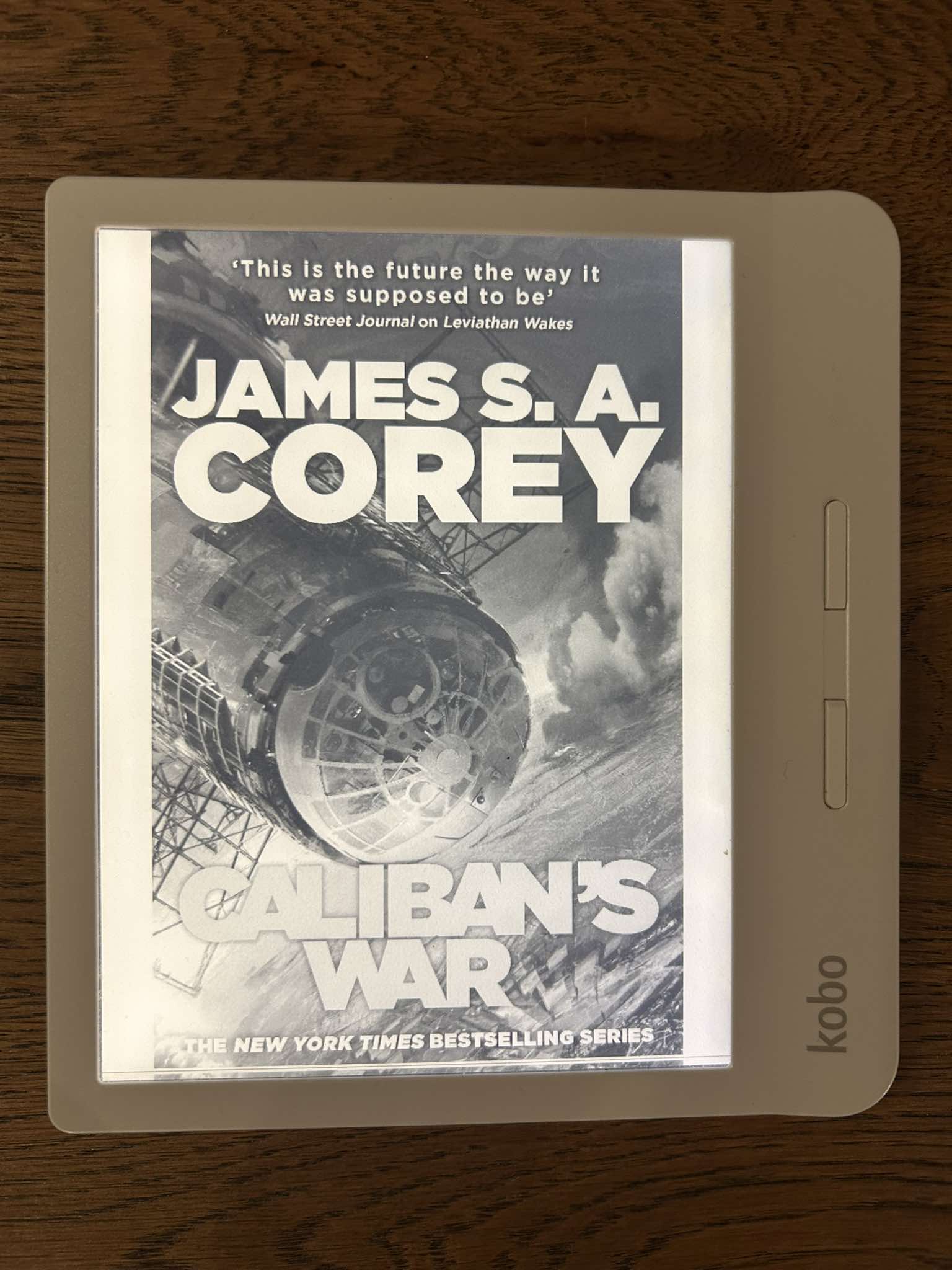
Caliban’s War (The Expanse, book 2)

There was a relentless forward motion to the man. The universe might knock him down over and over again, but unless he was dead, he’d just keep getting up and shuffling ahead toward his goal. Holden thought he had probably been a very good scientist. Thrilled by small victories, undeterred by setbacks. Plodding along until he got to where he needed to be.

The story of the first book, of an alien protomolecule seemingly indestructible, intelligent and lethal to humans, expands to another level, where politicians and planets get involved. The plot is driven ahead by not two, but four protagonists: the captain – James Holden, the doctor – Prax, the politician – Avasarala and the soldier – Bobbie. While each starts from its own background, the protomolecule brings them all together, trying to stop the increasing menace. While planetary governments try to weaponize this alien artefact, the molecule learns and becomes increasingly intelligent. Our four heroes maneuver around politics and dangerous situations to destroy the threat, but the war goes on.

The book introduces two memorable characters: the UN politician from Earth, Avasarala and the Martian female soldier, Bobbie. They team together, more by chance than design, to keep the two planets fighting against the common threat. Avasarala is diminutive, elegant, sophisticated, foul speaking, machiavellian, happily married and old. Bobbie is the opposite.

I rarely continue books in a series, but this space saga is exceptional. Great story building, memorable characters with credible motivations, a tight plot, hard science fiction, great writing – overall, an truly enjoyable reading.

The book’s title is unusual, as Caliban is never mentioned in the book. It is, in fact, a reference to the character Caliban in Shakespeare’s “The Tempest.” This character tries to free himself from subjugation of his masters, as the protomolecule tries to shake the bondage of those who try to weaponize it.

Excellent series, that goes to about 9 books. Long, but worthy reads.

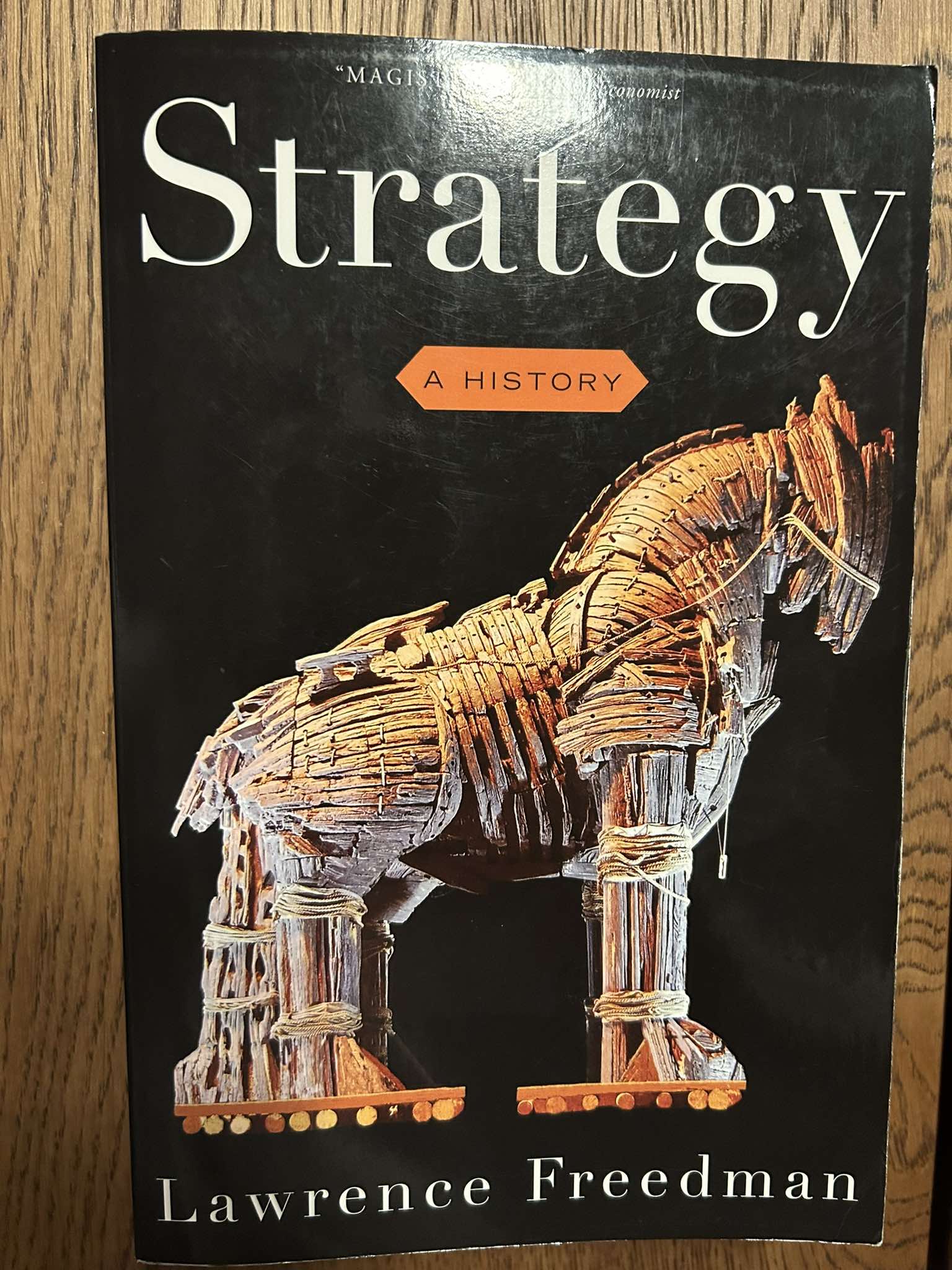
Strategy: A History – Lawrence Freedman

So the realm of strategy is one of bargaining and persuasion as well as threats and pressure, psychological as well as physical effects, and words as well as deeds. This is why strategy is the central political art. It is about getting more out of a situation than the starting balance of power would suggest. It is the art of creating power.

The book is a comprehensive history of strategy, starting from chimpanzees decision-making and going to military, business and political thought. Presented in a chronological order, the book covers all relevant points on what could be included in the topic of strategy: from nuclear war to guerilla tactics, from Cold War to deterrence strategy, from Sun Tzu to Jomini, from business Red Queen to Blue Ocean strategy, from political rational decisions to cooperation and coalition games.

The book feels like a compendium of all important ideas in this domain, describing and commenting on each of them. There is no single message of the book, but appears more like a textbook for those interested in the topic. At points it feels dry, almost academic, with long paragraphs and descriptions. Nevertheless, the ideas are presented in a clear and logic way, and chapters are flowing well one after the other.

The thinkers mentioned and analyzed are mostly American or West European, with few examples from other parts of the world, although the success of non-English thinkers or organizations is mentioned and praised. More examples to captivating theories, or some anecdotes (such as the one describing the movie Mr Smith is sent to Washington) would have elevated the book even further.

Sir Lawrence Freedman, the author of the volume, is an authority on the area, former Professor of War Studies at King’s College London, and largely considered the authority on British strategic studies.

It took me about 8 years to finish the book, which stands at about 700-plus pages, but it was always an interesting read, although slow at times, as profound ideas follow quickly one after the other, paragraph after paragraph.

A must-have book in the library for anyone interested in the topic of strategy from a political, military and business perspectives. This is a book that can stand the test of time, as it contains all influencing ideas and thinkers on strategy until early 2010s.

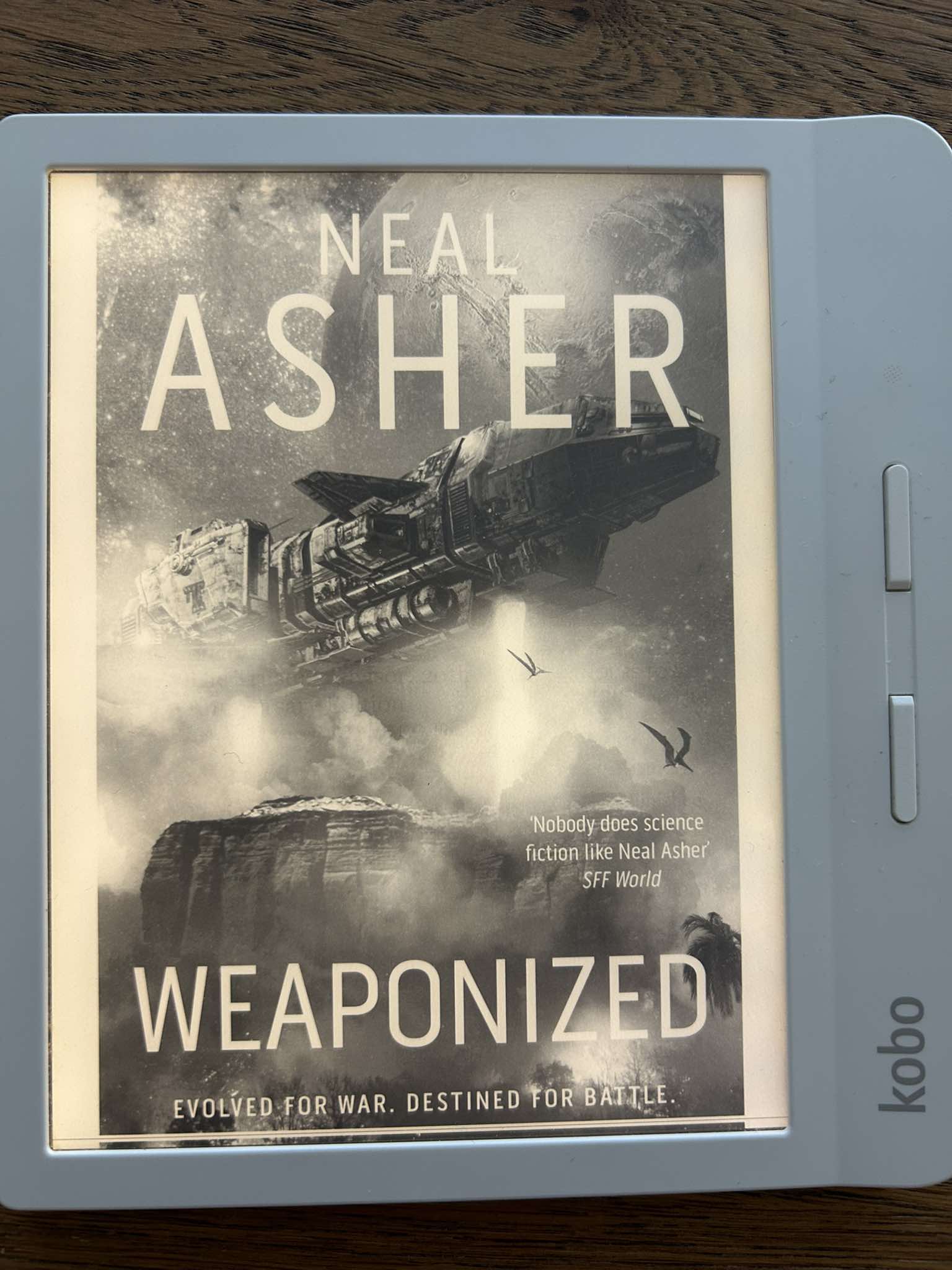
Weaponized – Neal Asher (Polity Universe, first book)

Sometimes, when you fight a war, you become what you are fighting.

Part of the Polity space saga, this book is about a colonisation attempt on a hostile planet, in the far future, where evolution is vital for survival. But not all is what meets the eye and some quiet forces are monitoring and planned the entire ordeal.

This is a hard science fiction story that follows a colonisation leader using AI and continuous adaption to the environment until their own humanity is questioned. The alien animals on the planet, the cacoraptors, are unique in that they adapt to the invaders, changing their bodies shape, but also their level of intelligence to overcome the invaders. How come then that they did use their intelligence capabilities earlier?

In a three ways story, the human colonizers are starting a war with an enemy intelligence, the first ever met. The enemy intelligence, the pradors, land with a damaged ship on this colonizing planed, stating a three ways war. Who will win? Who will adapt best?

This is an engaging and action packed story, with a complex world developing. However, the go and forth in time narrative (past, present, near past) is sometimes confusing, although it does contribute to build the main characters. Developed in the Polity universe, which has more than a dozen books, it is placed chronologically at the beginning of the space saga, but it is not viewed as the best of the series.

Overall, an imaginative and richly build book, by Neil Archer.

Light Bringer (Red Rising saga: Book 6) – Pierce Brown

If we demand restitution for all the evils that have been done to us, there will be no end to this war. It will consume us and the people we claim to lead. The future is more important than our wounds… The purpose of war must not be vengeance. It cannot be to kill your enemies until none are left. That is barbarism. That’s how Earth and its multitude of nations strangled itself… The purpose of war must be to find the road back to peace.

The penultimate book of the saga puts again Darrow at the center of the Red Rising, this time fighting in the distant Rim to find allies for the losing battle on Mars. The book is presented from several point of views, following different characters, but ultimately tracing the protagonist’s adventures.

Once again, the author, Pierce Brown, created a believable plot with unexpected turns, memorable characters and an immersing world, with beautiful prose and dialogues. It is a very long book, but the reader, particularly the fans, do not feel bored at any moment. No description or dialogues feel superfluous. While being the 6th book in the series, the book can be read as a standalone.

What stands apart for Red Rising saga is the masterful plot and story-line: the characters make plans and take rational decisions, well explained by the author. The world is big and not resumed to a few main characters. There is imperfect information than the protagonists must accept in taking the decisions. Some situations have only bad solutions, and there is no magic to save the day.

The beautiful prose, excellent editing and well-thought motivations of characters make the reading very fluid and engaging. The vocabulary used is pertinent and novel, and the dialogues or descriptions do not look dragged out. The author masterfully finds the balance between giving enough text to explain a situation or a scene, but not too much to make it tedious.

The saga is truly captivating, once the reader accepts early on the world building: a human Society that expanded across our solar system, based on a pyramid of power, where the different layers are genetically engineered to do their jobs, without the possibility of social mobility between social classes. The Golds will always rule and the Browns will always be janitors. The Reds, at the base of the pyramid, are the lowest of the workers. However, the injustice and the keen observation that the human civilization stagnated in this socioeconomic organization ignite a revolution, started by a few Golds with a sense of justice, but really supported by many talents from the other social classes. Here comes Darrow, a Red transformed in a Gold, that has the talent to start the revolution and upturn the Society.

The range of characters and their deep motivations make many readers to invest emotionally in them: from the fiery Virginia that has to be more calculating and cold as a Sovereign of the Republic, to Sevro, a family man that has to fight dirty to ensure his family’s survival.

A beautiful saga, with an unpredictable plot, great actions scenes, characters with deep motivations, superb storytelling and thoughtful dialogues.

Ghost Fleet: A Novel of the Next World War – P.W. Singer, August Cole

He compared the intelligence task to solving a jigsaw puzzle, except that you didn’t get the box cover, so you didn’t know what the final picture was. And you got only a few pieces at a time, not all of them. And even worse, you always got a bunch of pieces from some other puzzle thrown in.

The book hypothesizes about an invasion of United States, namely Hawaii, by China in near future. While the concept is great and well researched, the story itself is highly dramatized, mostly following personal stories of some characters in Hawaii (Chinese, Russian and American) and the patching, development and fighting of a US warship (with an unique gun) and several of its crew. The book is full of drama and action, with many overlapping stories.

The strength of the book is the initial concept of China invading US, the actual tactics used and the immediate strategic consequences. This indeed is food for thought and a unique selling point. The tactics refer to how to actually bring troops to the US islands, neutralize the naval and air force, and all the logistics that make US formidable. A tall order, but the authors have well reasoned responses to this task.

The title of the book comes from the idea that mothballed, old ships (the Ghost fleet) are reinstated into service and bring much relief to the decimated US forces. However, except the story of one such ship, which is more or less, followed throughout the book, no much is mentioned about these ships.

There is little discussed by the authors in terms of overview developments following the invasion and even the US counterattack is left in limbo in terms of conclusions. We know nothing of how it ended, which feels like the book is missing a intermediary chapter.

Nevertheless, the book is exceptionally well-researched for correct military vocabulary, latest war machines and tactics. It gives a glimpse into contemporary lines of military technique.

It was an engaging book, but it felt quite a downfall in intellectual quality after the initial chapters. Nevertheless, it managed to keep me reading until the end.

Captain Alatriste – Arturo Pérez-Reverte, Carlota Pérez-Reverte, (Translator Margaret Sayers Peden)

He was not the most honest or pious of men, but he was courageous. His name was Diego Alatriste y Tenorio, and he had fought in the ranks during the Flemish wars. When I met him he was barely making ends meet in Madrid, hiring himself out for four maravedís in employ of little glory, often as a swordsman for those who had neither the skill nor the daring to settle their own quarrels. You know the sort I mean: a cuckolded husband here, outstanding gambling debts there, a petty lawsuit or questionable inheritance, and more troubles of that kind. It is easy to criticize now, but in those days the capital of all the Spains was a place where a man had to fight for his life on a street corner lighted by the gleam of two blades.

The book is a cloak and dagger novel, first in a series called “The adventures of Captain Alatriste”. We follow the protagonist’s story, presented mostly by his young page, in first person. The book is short and elegant, beautifully setting up the atmosphere of Madrid at the beginning of the 17th century (the story happens in the 1620s).

The plot is simple and the actions scenes are rare, the prose generally being concerned of presenting the Madrid in Spain’s golden century, with an air of melancholy, beautiful poems and introducing the language of the era. While it feels that it copies the story of the French musketeers of Dumas, it has a distinct plot and a superb setting up of the world.

The book reads for me like a young adult novel, with the simple plot and swashbuckling captain, who is, of course, a man of few words and invincible in sword combat. Nevertheless, the Spanish prose feels so well constructed that transpires even with an English translation. It has one of the best beginnings of a book, where we learn from the first phrases who are we dealing with and how it is going. It is a book that makes you want to learn Spanish, just to read it in original. One of the best pieces of Spanish literature, in my opinion.

Overall, a beautiful presentation of Madrid at the beginning of the Iberian empire’s golden century, a skillful prose that make you learn the original language and an introduction to the adventures of a memorable (fictional) Spanish soldier.

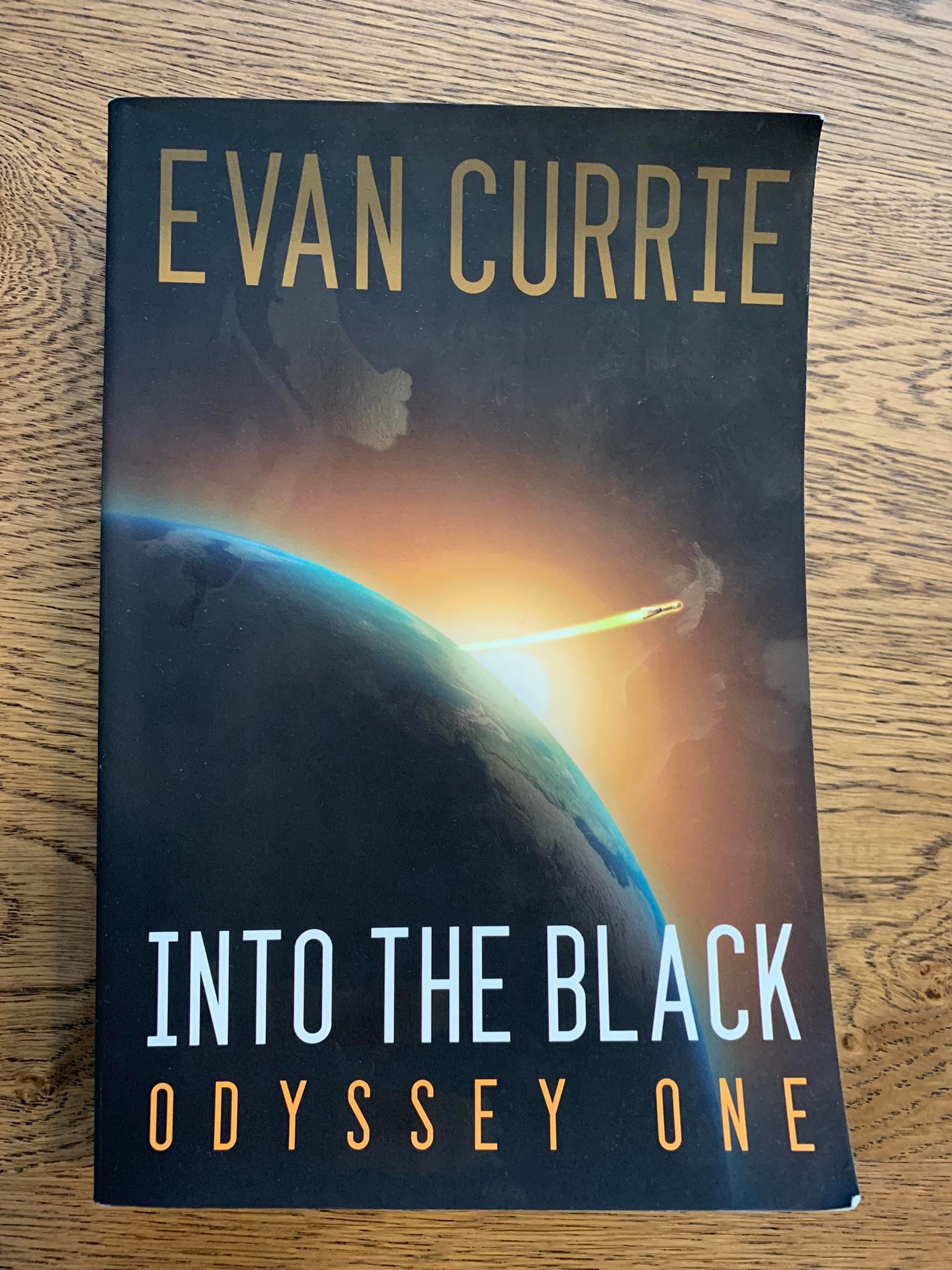
Odyssey One: Into the Black (Odyssey One, book 1) – Evan Currie

A soldier’s first duty, his reason for being, is not to fight. Fighting is the final recourse for any civilized people. His duty is not even to preserve the peace; that is a police officer’s job,” Comdr. Stephen Michaels of the NAC military said by rote, remembering the many long nights of arguments and discussions that had brought this to his mind. “A soldier’s first duty is simply to stand between his nation and any who might wish it harm.

The book follows the voyage of the first interstellar human ship, more of a warship than an explorer. The first star visited outside our solar system triggers a chain reaction driving the ship to new and exciting adventures, discovering new aliens and technologies.

The book is a heavy military scifi, looking at war and fighting from three perspectives: spaceship to spaceship; fighter plane to fighter plane, in space; and futuristic soldiers on new planets. The military theme is heavy throughout the book, the author giving significant thought to what war will look like in several centuries.

From this perspective, the book is a masterpiece, looking deeply of how conflict evolves and the role of the soldier. The world is nicely build around this, creating a believable space saga. From a military perspective, the book is a hard scifi, with an interesting plot and engaging storyline.

On the other hand, the book suffers on the level of personages, which are a bit cliches. They are not truly memorable. We have the wise, heroic and balanced captain; the wacky scientist; the professional and respectful crew; the daring pilots and the merciless aliens. The vocabulary as well could be improved, saying more with less words. The plot has some gaps, it seems unusual for an explorer to go for certain danger without leaving a note from the discoveries. While the author tries to reason the decision taken, it still seems off.

The author, Evan Currie, is a prodigious writer of military scifi and tries hard to create believable and engaging stories with his series of books, the current book (Into The Black) being the first of the series called Odyssey One, which is the name of the exploring ship.

Overall, the book was a relaxing Sunday afternoon reading, which doesn’t pose significant existential questions or substantial moral dilemmas. Nevertheless, for the fans of the genre, it is a an exciting, believable story, with an interesting plot.

On Basilisk Station (Honor Harrington Book 1) – David Weber

The message she’d just ordered Webster to send and Venizelos to relay to Manticore was never sent in drills, not even in the most intense or realistic Fleet maneuvers. Case Zulu had one meaning, and one only: “Invasion Imminent.

The book follows military captain Honor Harrington’s adventures in a distant, far future, fighting foreign invasions, sexism, greed and incompetence. Honor is a woman, captain in the Queen’s Royal Manticoran Navy, and the reader sees how she handles different situations brought to her by politics and discrimination.

The protagonist is one of the best developed characters in the military scifi universe and an inspiration for the entire genre. The book and series is widely regarded as one of the must-reads for the military scifi fans, a reference for this niche science fiction style.

In this first book of the series, captain Harrington is exiled to a backwater station, Basilisk, where she is gradually building the confidence of her ship crew and of the local authorities in dealing with the trade and offworld traffic. She becomes involved in the defense of the planet against foreign forces.

Critics point out that the different types of views that the book presents make the reader to do no thinking, everything is well presented pages in advance. Honor Harrington is too much of an omnipotent captain, who never makes mistakes and pushes duty over everything, even her crew. The hard scifi part, the science in the book is passable, with a long description of the technologies and the world at the of the volume. Some more description of the everyday life and universe would have been helpful as well.

Despite these drawbacks, the book is truly memorable and entertaining. An easy, relaxing read for holidays. The plot is easy, but well paced. the vocabulary is adequate, not really fantastic, but not bad neither.

An entertaining, recommended read.

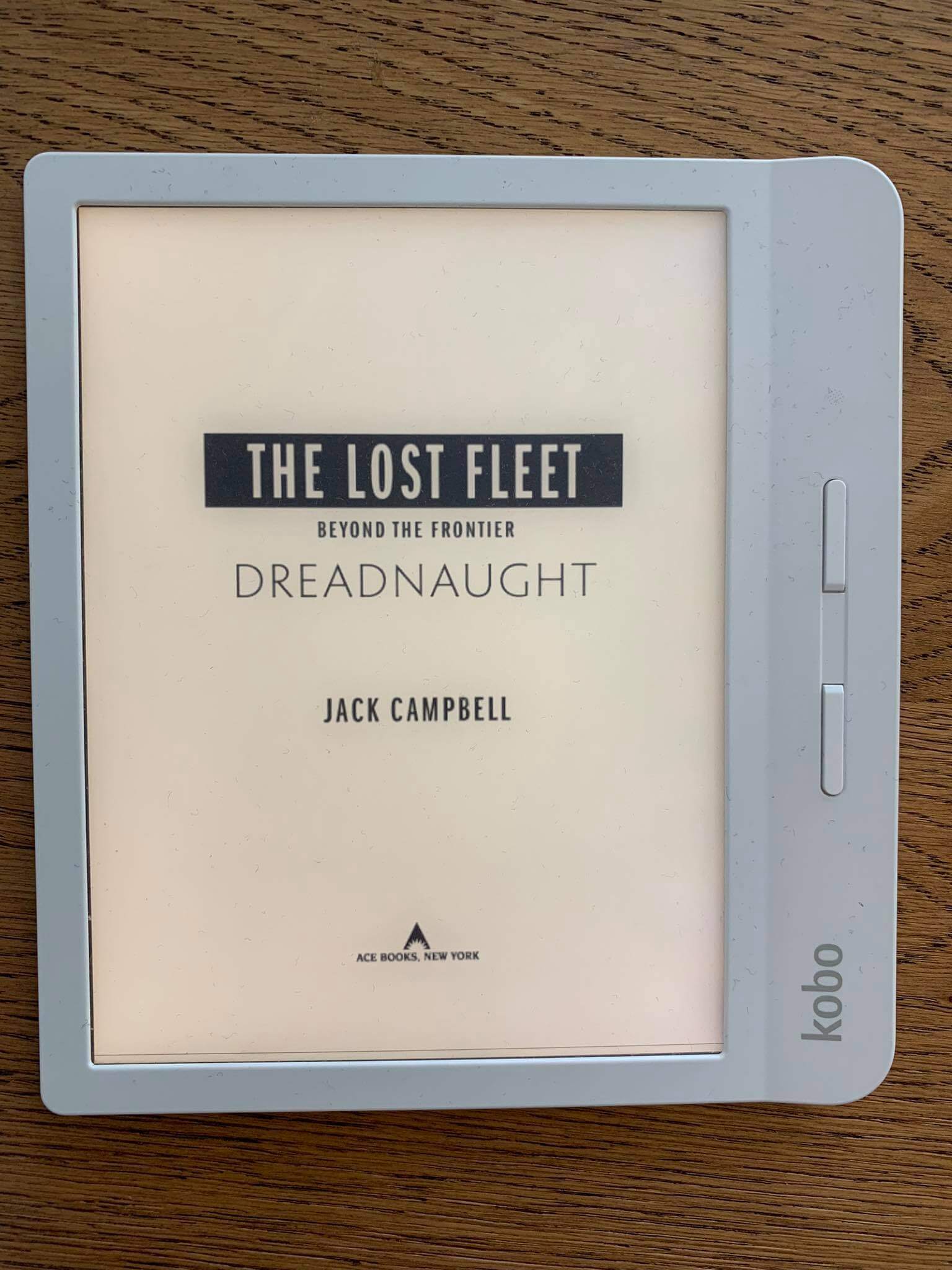
Dreadnaught (The Lost Fleet, Book 7) – Jack Campbell

If you don’t exercise a talent, you get rusty,

The odyssey of Captain Jack Geary and his start fleet continues beyond human-controlled space, into the alien enigmas territory. The captain finds itself again in new and tense situations, but dangers are much higher than during the war with the human Syndics.

Already the 7th volume in the series, the story keeps its appeal and, finally, Jack Campbell responds to some of the criticism and does not repeat the various descriptions of the universe it creates. The book is more ingrained in the space opera, rather than a stand alone book, which was always one of the aims of the author in the previous stories.

This time the war with the Syndics is over and enemy is a mysterious alien civilization. While the plot is simple, it develops well and has enough depth and logic to be plausible. This is indeed one of the strengths of the book – taking wild developments in the far future and then apply logic response to them. There is no silver bullet or magic that saves the day.

Beyond human-controlled space, into the unknown.

The jabs to politicians continue, but it is not a nod to fascism, as, while not explicit, democracy is still seen the best of all forms of socio-economical organisation. The political game makes sense and helps drive the plot forward.

The drawbacks remain the same: a somewhat limited vocabulary, too much focus on dialogue that does not really add more depth to characters, too little description of the universe it creates.

Nevertheless, it is astonishing how the series keeps its appeal, even at the seven volume. Jack Campbell is truly a masterful and ingenious storyteller.