Sometimes, when you fight a war, you become what you are fighting.
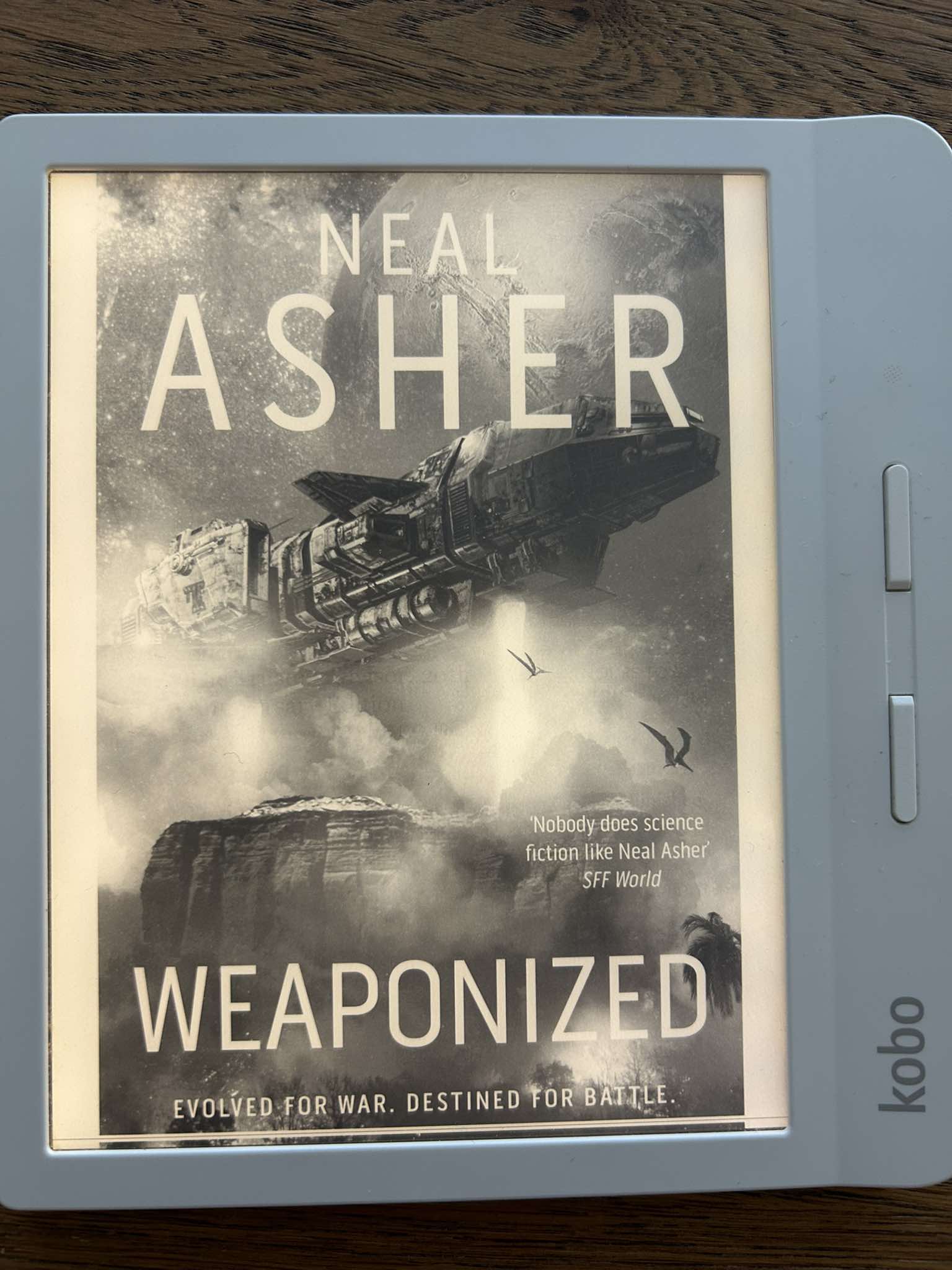
Part of the Polity space saga, this book is about a colonisation attempt on a hostile planet, in the far future, where evolution is vital for survival. But not all is what meets the eye and some quiet forces are monitoring and planned the entire ordeal.
This is a hard science fiction story that follows a colonisation leader using AI and continuous adaption to the environment until their own humanity is questioned. The alien animals on the planet, the cacoraptors, are unique in that they adapt to the invaders, changing their bodies shape, but also their level of intelligence to overcome the invaders. How come then that they did use their intelligence capabilities earlier?
In a three ways story, the human colonizers are starting a war with an enemy intelligence, the first ever met. The enemy intelligence, the pradors, land with a damaged ship on this colonizing planed, stating a three ways war. Who will win? Who will adapt best?
This is an engaging and action packed story, with a complex world developing. However, the go and forth in time narrative (past, present, near past) is sometimes confusing, although it does contribute to build the main characters. Developed in the Polity universe, which has more than a dozen books, it is placed chronologically at the beginning of the space saga, but it is not viewed as the best of the series.
Overall, an imaginative and richly build book, by Neil Archer.
Why was he doing this? So that life could continue in the metro? Right. So that they could grow mushrooms and pigs at VDNKh in the future, and so that his stepfather and Zhenkina’s family lived there in peace, so that people unknown to him could settle at Alekseevskaya and at Rizhskaya, and so that the uneasy bustle of trade at Byelorusskaya didn’t die away. So that the Brahmins could stroll about Polis in their robes and rustle the pages of books, grasping the ancient knowledge and passing it on to subsequent generations. So that the fascists could build their Reich, capturing racial enemies and torturing them to death, and so that the Worm people could spirit away strangers’ children and eat adults, and so that the woman at Mayakovskaya could bargain with her young son in the future, earning herself and him some bread. So that the rat races at Paveletskaya didn’t end, and the fighters of the revolutionary brigade could continue their assaults on fascists and their funny dialectical arguments. And so that thousands of people throughout the whole metro could breathe, eat, love one another, give life to their children, defecate and sleep, dream, fight, kill, be ravished and betrayed, philosophize and hate, and so that each could believe in his own paradise and his own hell . . . So that life in the metro, senseless and useless, exalted and filled with light, dirty and seething, endlessly diverse, so miraculous and fine could continue.
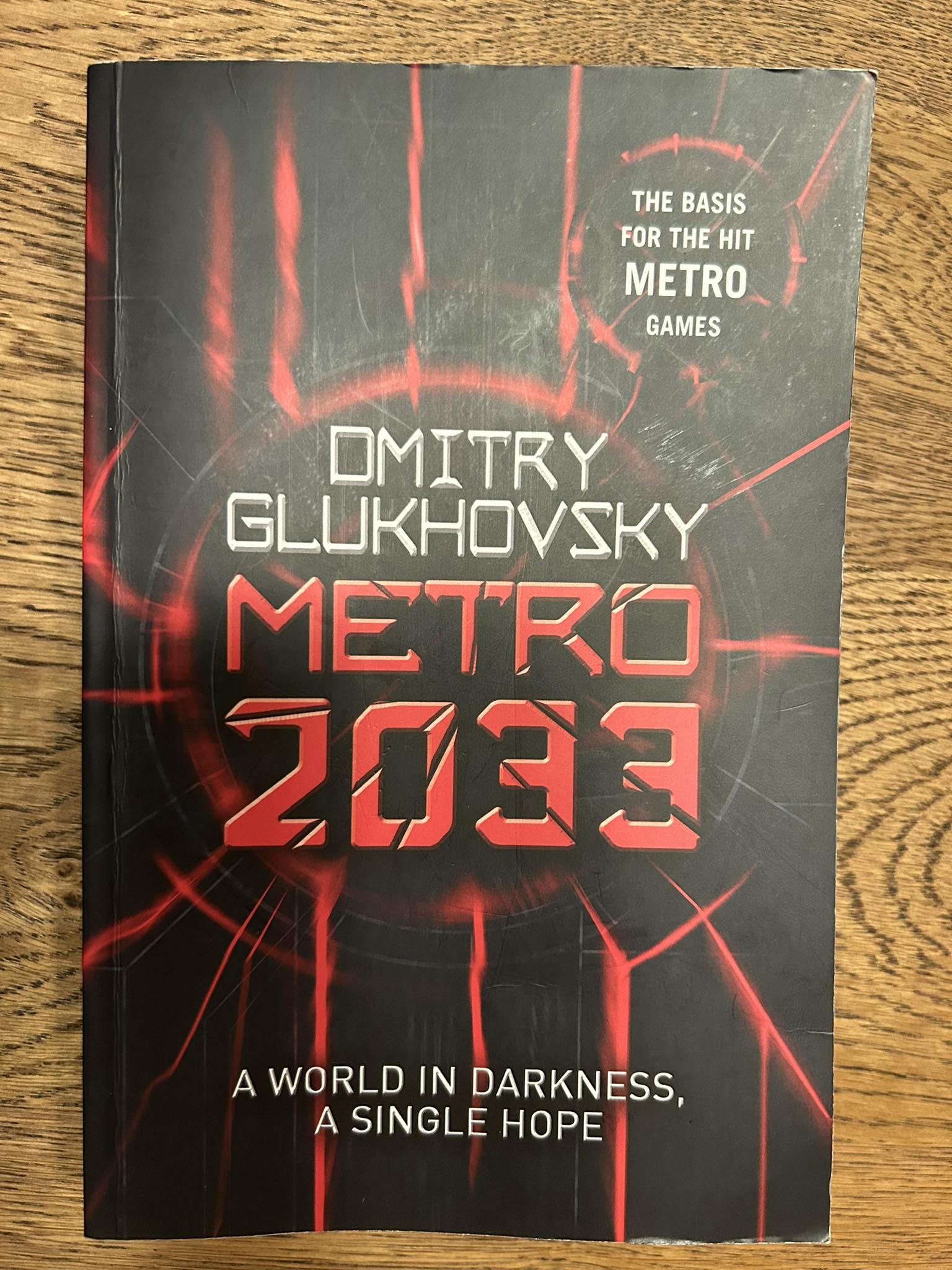
In a post-apocalyptic world, humans eke out their existence in the depths of several Moscow metro stations, surrounded by horrors, radiation, mutants, rats and their own fears. The protagonist, Artyom, engages in a journey to deliver a vital message that would inform and allow people to react to an external threat. In his odyssey, traders, mystics, hunters, idealists help or hinder him in various societies, often extreme, that survive in the metro stations. In a world where bullets are currency, humans cling to life in the underground and surface travels are mortally dangerous, the will to fight and survive, the thoughts of an existence close to the abyss is explored by the Russian author, in a compelling and creative story.
The book was later translated in a successful series of horror video games. For some readers, the exploration of human mind in a post-apocalyptic and grim survival story by Dmitry Glukhovsky could look monotonous; for others, it may a fascinating dive into what gives the survivors the grit to face all the horrors and the grim future.
The story of creating this book is unusual, as Glukhovsky wrote it and publish it on his website as an interactive experiment, when he was 18. It was later published on paper three years later, in 2005. Two more volumes in the series continued in 2009 and 2015,
Overall, a creative, diverse exploration of human mind and society in a post-apocalyptic, grim world, via a fulfilling odyssey.
There had been those back on Earth who claimed the universe cared, and that the survival of humanity was important, destined, meant . They had mostly stayed behind, holding to their corroding faith that some great power would weigh in on their behalf if only things became so very bad. Perhaps it had: those on the ark ship could never know for sure. Holsten had his own beliefs, though, and they did not encompass salvation by any means other than the hand of mankind itself.
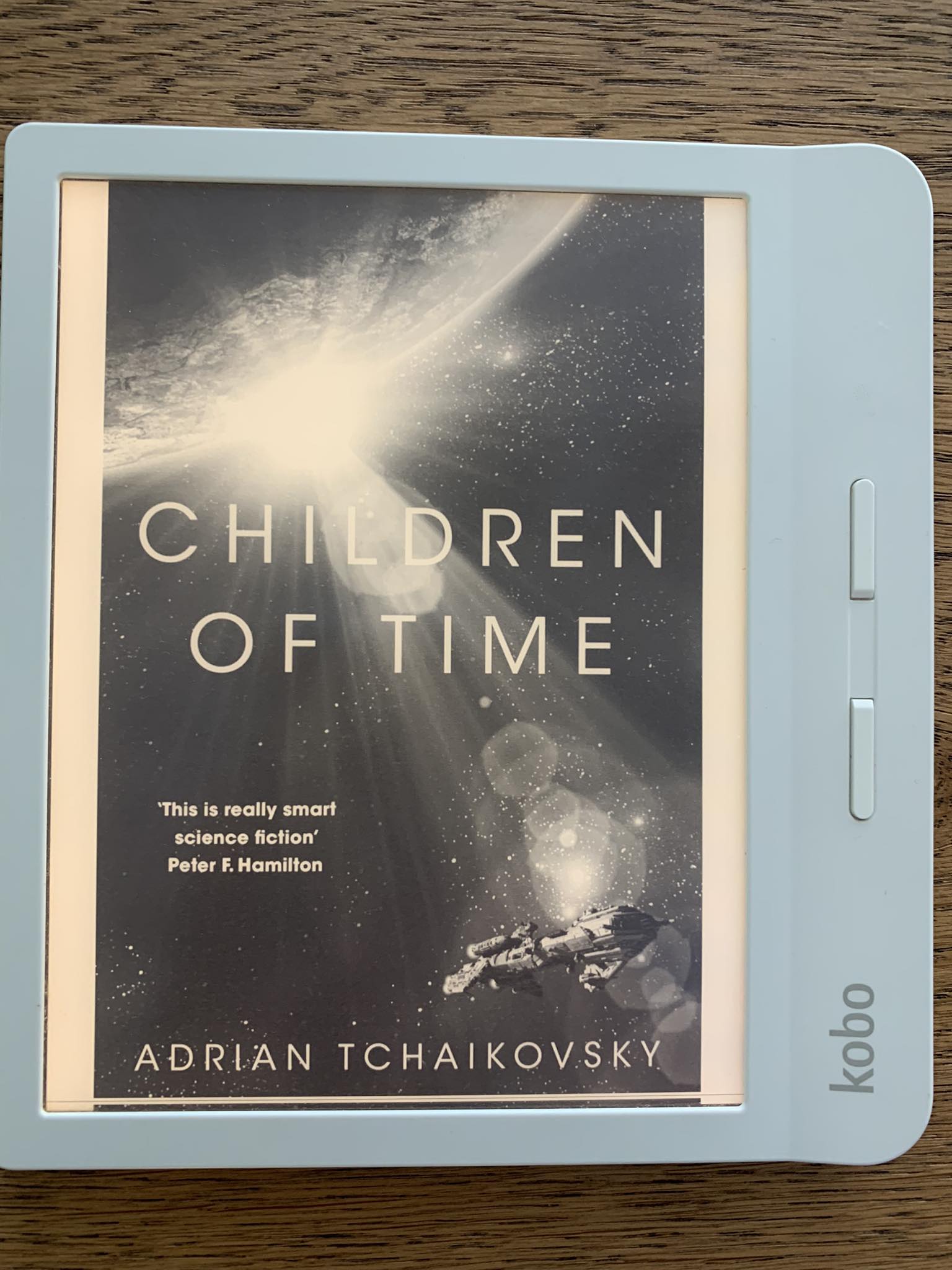
This science fiction book is a grappling story of a race for survival for humanity, escaping a poisoned Earth, in an ark traveling the stars towards a new home. The terraforming process that the old, tech advanced Earth has started elevates a species to unprecedented cognitive levels. The human, ark-traveling, last refugees and the legacy of old Earth are heading for a clash.
Children of Time started the series with the homonym name. The book, from 2015, is widely acclaimed and was awarded the Arthur C Clarke book prize.
The themes explored by the author Adrian Tchaikovsky, alienness, star travel, species evolution, disaster, artificial intelligence, survival, cryo sleep, display profound thinking of how these themes may occur in the future and what would be the effects.
A gem of classic science fiction literature.
Well-paced plot, fluid writing, memorable characters, an engaging story, an unpredictable plot and profound themes explored – make the ingredients of a milestone setting book. A truly enjoyable and captivating read, on par with Alaistair Reynolds and Kim Stanley Robinson.
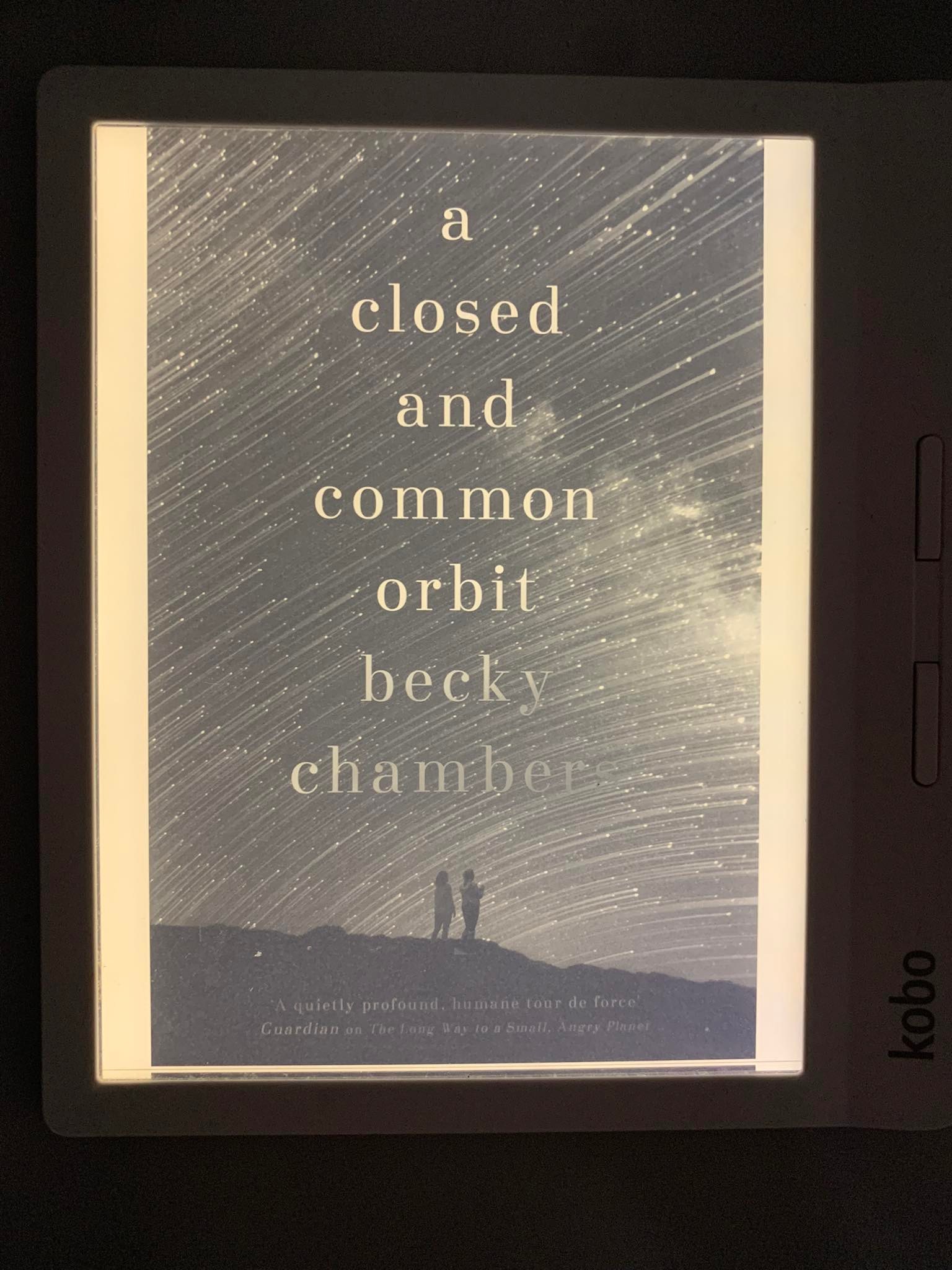
What was the difference between strung-together neurons and a simple bundle of if/then code, if the outward actions were the same? Could you say for certain that there wasn’t a tiny mind in that bot, looking back at the world like a beetle might?
The book presents in two separate, but interlinked stories, the survival and friendship adventures of an artificial intelligence (AI) and a clone on the run, sometime in the far future. A Close and Common Orbit is the stand-alone second book of the Wayfarers series.
The impressive world-building and memorable characters remain the strong-points of the series, but this time the story goes in a new direction compared with the first book. If the first book followed a motley crew, this volume is more about personal discovery, grit and friendship. The author explores the consciousness of an AI and how it evolves and interacts with sapient organics, through two separate stories (will not spoil how they are linked).
The book is captivating and fulfilling in its climax, with a good pace, creating a rich world, but unburdened by long descriptions. It is excellent storytelling. The plot is rather straightforward, but the introspection of the main characters makes a fascinating read.
An AI and a clone on the run, in two separate, but interlinked stories.
The author, Becky Chambers, is a well recognized and award-winning sci-fi writer, and these were the books that made her fame, the Wayfarers series being her most accoladed prose so far.
Overall, the second book of the series is an engaging and captivating read that has plenty of food for thought.
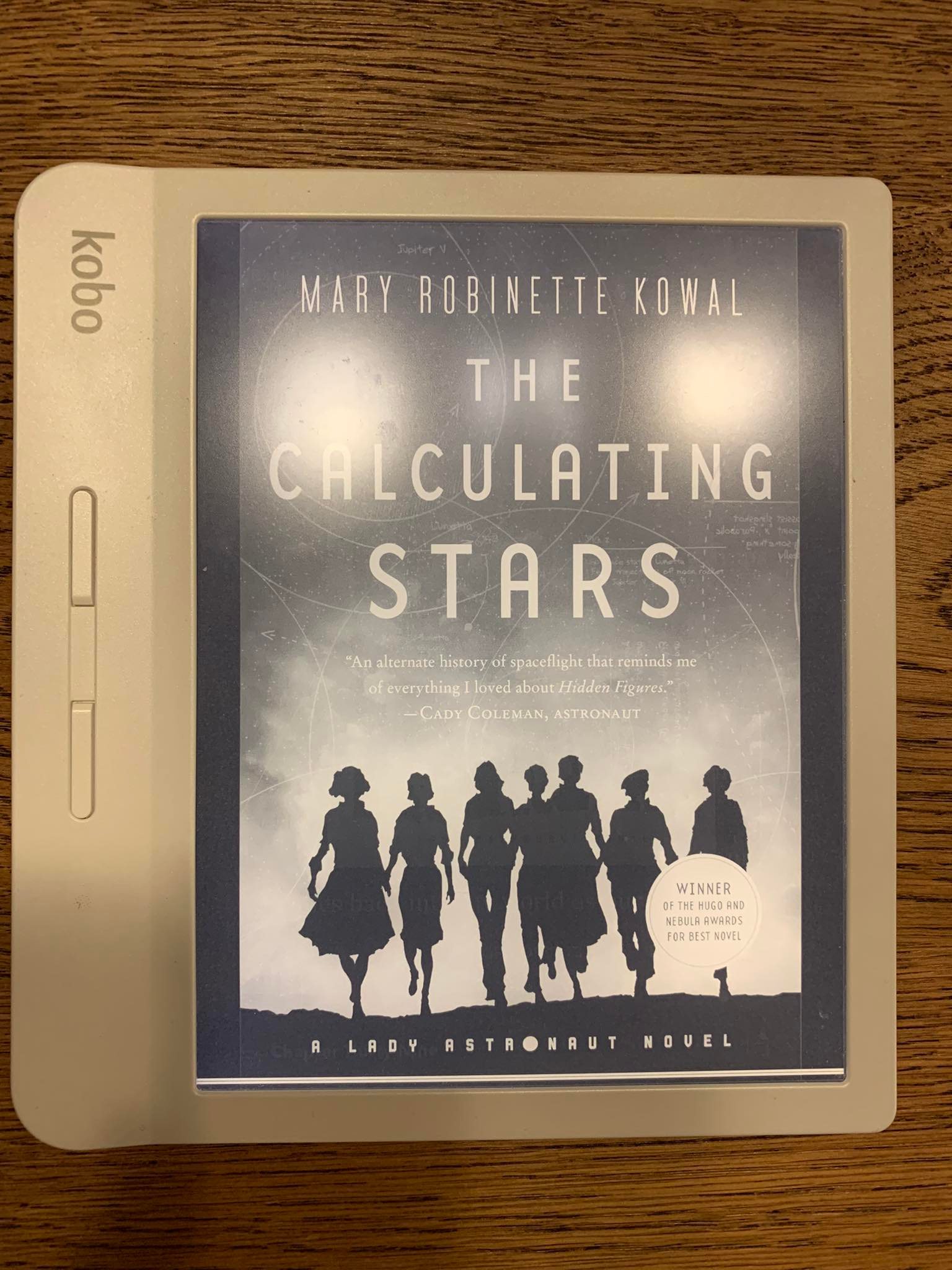
There is something magic about takeoffs. I know people who are afraid of flying who say that the takeoffs and landings are the only hard parts, perhaps because that’s when the act of flying is most apparent. I love the way you get pushed back into your seat. The weight and the sense of momentum press against you and the vibrations from the tarmac hum through the yoke and into your palms and legs. Then, suddenly, everything stops and the ground drops away.
A meteorite hits Earth in the 1950s and, in its aftermath, the planet will gradually become uninhabitable. Humanity realizes that it is in danger and looks for stars. Under such entertaining context, the book follows Elma York, a female pilot and mathematician, and her struggle to be accepted in the space programme, as astronaut.
The story is well narrated and the little news headlines at the beginning of each chapter, showing the worsening of the situation on Earth, offer a nice background. The book is overwhelmingly composed by the dialogue of the protagonist and various personages. It nicely presents the prejudice that women had to bear at the time.
The book was a huge hit, with awards from Hugo, Nebula and Locus prizes. It developed into a series called “Lady Astronaut”. It is well written and has an engaging background. The first 100 pages of the book are a marvel.
On the other side, there are some attributes that make the story less convincing. The protagonist has all the cards possible in her hand: father is a general, she is a genius with a PhD in mathematics, her husband is the best rocket scientist in the world, at the exact moment that this science become the most important thing, she is an ace pilot, well-connected and beautiful. In a bit of cliche, she fights sexism, racism and religious discrimination (she is a Jew), and wins.
Nevertheless, an interesting, engaging, well written and multi-awarded book.
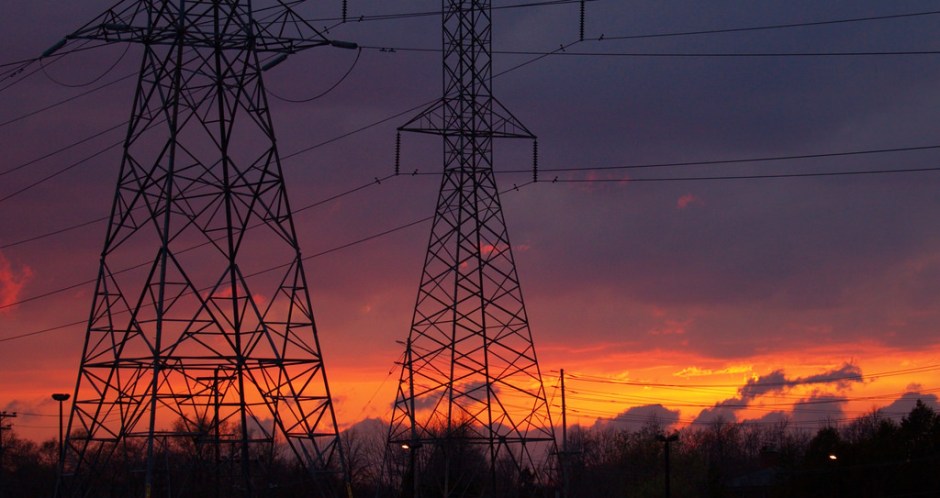
When the lights go out one night, no one panics. Not yet. The lights always come back on soon, don’t they? Surely it’s a glitch, a storm, a malfunction. But something seems strange about this night. Across Europe, controllers watch in disbelief as electrical grids collapse. There is no power, anywhere. A former hacker and activist, Piero investigates a possible cause of the disaster. The authorities don’t believe him, and he soon becomes a prime suspect himself. With the United States now also at risk, Piero goes on the run with Lauren Shannon, a young American CNN reporter based in Paris, desperate to uncover who is behind the attacks. After all, the power doesn’t just keep the lights on―it keeps us alive.
The book is a dystopian thriller starting from a cyber attack on the EU electricity grid. The protagonist, an Italian IT specialist, tries to solve the crisis by finding how the system was affected and going to authorities. The pace of the book is fast, by quickly changing the locations.
The premise of the book is jaw-dropping: a EU-wide electricity blackout. The Austrian author carefully researched the subject and the potential outcomes of such a crisis. The book is full of excellent logical consequences of such an event.
What if the electricity grid collapses?
However, the quality of the writing itself is not great. The translation from German is not perfect and there is too much said and too little shown. There are also some plot holes, the solution focusing too much on individual characters, while in reality there is more of a team work.
I really enjoyed the book, despite its drawbacks. A great analysis showing the vulnerabilities of a vital system, our electricity.
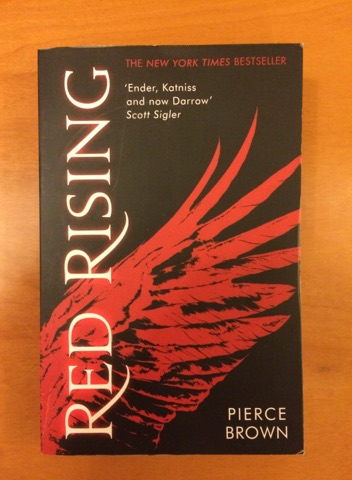
I live for the dream that my children will be born free. That they will be what they like. That they will own the land their father gave them.’
‘I live for you,’ I say sadly.
She kisses my cheek. ‘Then you must live for more.
Red Rising is the first book and the eponym of the scifi trilogy by Pierce Brown. The saga follows the story of Darrow, a miner in the Mars deep-mines, some 700 years in the future. His kind has a hard life, toiling to extract precious minerals to terraform the world above, that they never see. However, is there more that meets the eye?
Humanity has evolved to colonize the solar system, but not beyond. The society is organized on a hierarchical caste-based system, colours being given by the role they fulfill in the society. Harsh life in the first colonisation of the Moon, centuries ago, made humans to specialize on different tasks and later being genetically modified to better fulfill their tasks. For example, Greys are policeman and soldiers, Blues are pilots are spaceships personnel, Yellows are doctors, and, on top of all, Golds, the leaders. On the bottom of the pyramid are the Reds, the miners and low jobs in general.
Darrow is a Red in the society’s hierarchical caste-based system, skilled in his job, young in age, but old according to his colour. His wife dreams of more, for her children to be free and have a better life, and she is killed by the society. She passes her dream to Darrow, who starts an epic struggle of guile, force and grit for a new society.
This is one of the best series of scifi saga, right next to Ender’s Game and The Hunger Games. Great ideas and plot, excellent writing, characters with depth and motivations, unpredictable plot and excellent pace.
Thinking bigger than the world he is.
Most impressive is the plot, which moves quickly, but with just enough detail to get to keep the reader immersed in the story. So many things are happening, but they are linear enough to be easily tracked by the reader. There are no parallel stories, the reader sees the world only through the eyes of the protagonist, which makes the complex story easy to follow.
Secondly, the motivations, the actions, the plot is credible and realistic. The protagonist is not the perfect guy, with the perfect plan. He sometimes loses, sometimes is out-foxed and out-maneuvered, with real consequences for him. Rarely there are plots with so few holes. Indeed, plot holes exist in the book, but they are few and far apart.
Finally, the writing style is head and shoulders over similar novels, with great grammar, well-researched Latin references and excellent use of English vocabulary. It is clear that the book had a great editor, helping the writer to identify weak points of the story and keep the plot progressing steadily.
No wonder the book was Goodreads choice for 2014. There was a bid war for film rights between some of the largest film corporations around (which made the author a multi-millionaire in the process) and likely there will be a movie in the making. A book to read, even if not a scifi fan.
I hit play on the CD player to fully set my trap, and Lady Gaga burst forth. A little bit of me died right then. I’m not saying she sucks or anything, I just think she’s a tad bit overplayed. Flavor of the month if you will. That’s not a pun regarding her likely fate as zombie food somewhere out there either.
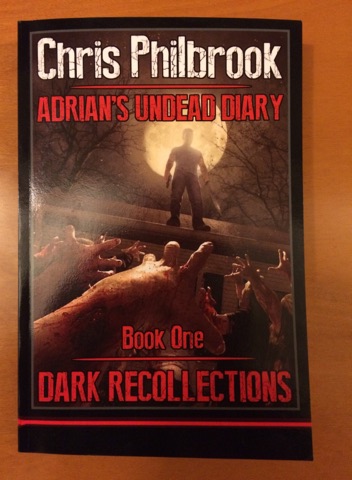
Dark Recollections is the first book in a zombie series, following the adventures of the protagonist, Adrian, after a zombie apocalypse. The first book is a survivalist story, where Adrian, a former soldier, manages to escape the zombie rage and fortify a school campus as a strongpoint and safe house against zombies. He is alone, but has plans to contact other survivors, story that follows in the next book.
The volume reads as a journal, where Adrian presents the events or recalls how he got into and cleared the campus of zombies. The action sequences are beautifully paced, with several chapters presenting the view of other characters as well.
Journal of a survivor during a zombie apocalypse
The survival of Adrian is based on planning, luck, pragmatism and optimism. In the immediate aftermath, many people commit suicide in the face of a crumbling world and civilization. Adrian’s first kill was his mother, so the need to quickly adapt to the new reality was a prerequisite for survival from the beginning. Adrian also conscientiously decides to go alone for a while, with no other people in his compound; he would have accepted friends or acquaintances, but no newly-met people.
The drawbacks of the book is that the plot is quite straight-forward: in essence, a positive story during a catastrophe, where the protagonist survives almost unscathed to everything and has virtually perfect conditions, including physicality, to survive. He even has the prescience to buy guns in the same day as the zombie outbreak. No one invades his campus while he is away. The book is quite immersive, with detailed presentations of the world after the zombie apocalypse, but it could go even further, for example, what happened to the governmental structure, such as the army. Also, the protagonist has no hard moral decisions, except one: not looking for his girlfriend, but even there, there are arguments for his decision. Finally, there is no hard science. While, indeed, a zombie-based story is a quite a stretch of imagination, more detailed data on the aftermath, like One second after, could have brought greater depth to the book.
Overall, an entertaining book for those evenings when the reader wants a relaxing time. For the fans of the genre, one of the best zombie books after World World Z.
His octet was to be limited to the same weapons these humans were given. A very detailed video of the compound’s terrain was furnished. This he shared with his octet, because every Krall had an inborn ability to memorize such details for a mission. Repetition was unnecessary.
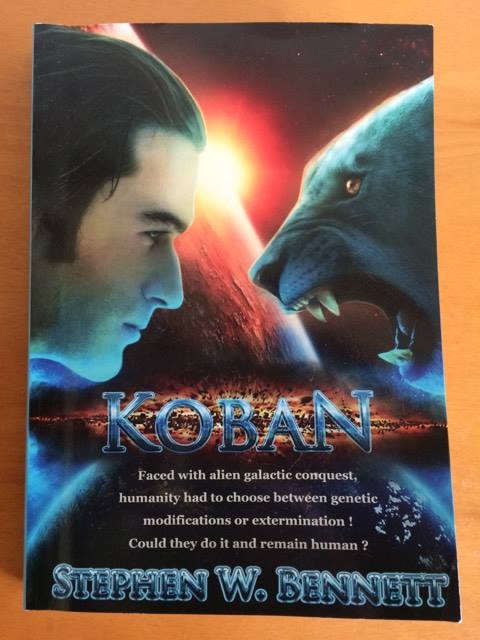
Koban is a very imaginative and action-packed military survival sci-fi. The story revolves around Captain Mirikami, who is transporting in a passenger spaceship scientists to a far colony, when he is attacked by an unknown and far more advanced alien species. Captain Mirikami and all on board is then isolated on a dangerous planet, Koban, where he has to prove to alien war race that humanity deserve to be treated as worthy opponents.
The author creates an entire universe with this book, with a new planet and a new alien species. The Krall are very advanced military, highly physical, destroyed or enslaving every other intelligent species they met so far. They use those wars to enhance their military abilities. Humans are considered weak and very low technologically speaking, but they are still put to trial. If they succeed, aliens plan to destroy humans gradually, rather then in a one big stroke, hence the struggle of Captain Mirikami.
Scifi survival story
Stephen Bennett creates a future where genetic warfare almost killed the entire male population and changed ways of society. The men are subservient to women and the first part of the book is full with sexist situations. After the genetic war. humanity is not fighting internally nor meeting any other intelligent species in 300 years.
The narrative is captivating, some chapters are looking at events through the eyes of predators on Koban, some others through the Krall aliens. It makes the story a lot more interesting.The book has some fantastic ideas, but with others it went overboard. The sexism is interesting, but not adding to the story. The genetic enhancement done in days leave too many logical holes.
Nonetheless, it is a solid scifi survival book, imaginative, well paced, action-packed and entertaining.
She’d always talk about how great Gandhi was. I’d tell her the only reason Gandhi survived after his first protest was that he was dealing with the Brits. If Stalin had been running India, he’d been dead in a second, his name forgotten.
Have you wondered what will happen if electricity suddenly stops coming? This book replies exactly at that questions, under a fictional story following an ex-military history professor, in a small town in the mountains in the United States.
Loss of electricity (not a blackout, in a blackout you kind of expect electricity to return) can have several reasons. In this book, there is an electromagnetic pulse that fries the grid and everything electric (circuitry). This threat is actually possible, and the guy in the US Army looking at this problem (asymmetrical threats) was an advisor for the book.
In case electricity stops coming, the very fiber of society disintegrates: no communications (no phones, television, internet, newspapers), no commerce (no card readers, only cash for a while, then only barter), no food (no refrigeration, no trucks to bring food to supermarkets, no machinery to harvest, no trucks to bring food from silos to animal farms), government loses the monopoly of violence (how can you announce the police of a robbery, crime, rape, if communications are down?), no medicines for the needy (diabetics and others). Also, no hygiene products for women.
Without electricity
Electricity allows to increase tremendously the efficiency of agriculture and food production. Therefore, as soon as it disappears, human population reduces to the efficiency of food production before electricity. This means mass starvation, which the book painfully describes.
The story takes place in the United States, in a mountain town. Hence, some features are present, which might be specific to the country, such as : numerous people have guns that can hunt with and many citizens have military experience. This comes as an advantage, because, as society breaks, individuals usually kept in check by police, re-surge as organized bands, taking food by force and killing. Police can’t quickly intervene, without the instant communications. Also, many officers and hospital staff might be wanting to return home, at their loved ones, until some form of community protection is realized.
William R. Forstchen is asking many interesting, deep questions about the vulnerabilities of our society. The literary value of the book is quite low, writing is ok, fluid, but not fantastic; however, the strength of the book is coming from the really good questions that it asks. This is kind of hard fiction, from politically conservative perspective.
There are many low chance, high threat events that could destroy civilization. Supervolcanoes, meteorites, robots, plagues, but it is not a lot you can do if a meteorite comes. On the other hand, just blowing a nuclear bomb at high-altitude, for example 50 km up over a continent, the US Army colonel specialized in this issue argues, is enough to destroy a country. In the book, they don’t even know who launched the nuclear bomb. All that they know was that the launch was from a freighter out in the sea and they speculate that maybe a terrorist group or a country not friendly to US or even a large power that covered their tracks really well.
A report from nine scientists was published, unluckily in the day of the 9/11 attacks and, seemingly, a US Congress inquiry was made over this, but overridden by the terrorists attacks.
Overall, a must-read book for the interesting questions it asks.