The longstanding thorn in your side Captain Numos is stupid. In fact, Numos is so dense that I’m surprised he doesn’t have his own event horizon.
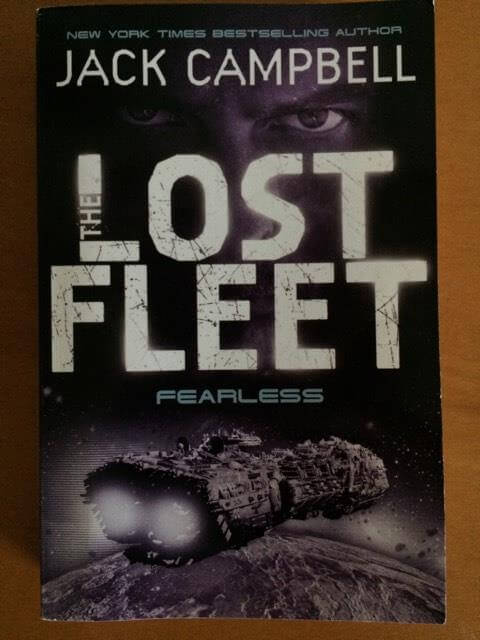
The second book of the series continued the adventures of Captain Jack “Black Jack” Geary in his quest to save the Alliance fleet from the enemy in Syndic space. This time around, Captain Geary has to deal with unexpected mutiny as well, having to fight internal and external enemies at once.
Military scifi book, for the fans of the genre.
The protagonist is now better defined, Captain Geary having to work on the politics of his own fleet, as well as dealing with the continuing enemy pursuit. The story universe is given more depth and there is even more action than in the first book. However, the book manages to keep the main story straight and introduces some very unexpected twists, on several levels.
The second book is at least as better as the first one, with a bit more creative narrative and better described space battles. The effort put in imagining scientifically coherent space battles is impressive.
There is little psychological monologue and soul-searching, which makes the book uncomplicated and easy to read. For military scifi fans, it is a quite rewarding read.
His octet was to be limited to the same weapons these humans were given. A very detailed video of the compound’s terrain was furnished. This he shared with his octet, because every Krall had an inborn ability to memorize such details for a mission. Repetition was unnecessary.
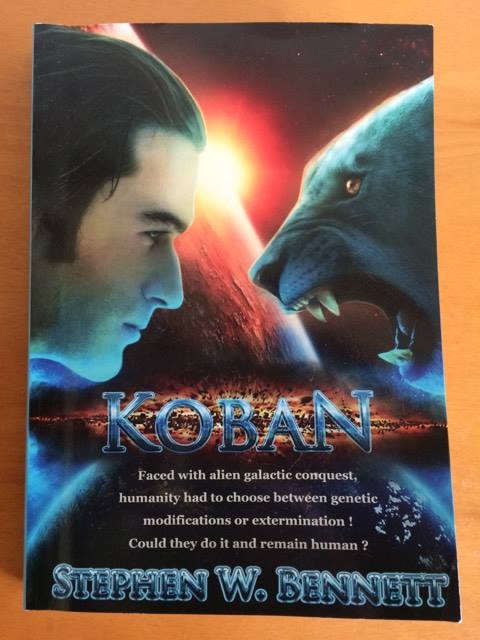
Koban is a very imaginative and action-packed military survival sci-fi. The story revolves around Captain Mirikami, who is transporting in a passenger spaceship scientists to a far colony, when he is attacked by an unknown and far more advanced alien species. Captain Mirikami and all on board is then isolated on a dangerous planet, Koban, where he has to prove to alien war race that humanity deserve to be treated as worthy opponents.
The author creates an entire universe with this book, with a new planet and a new alien species. The Krall are very advanced military, highly physical, destroyed or enslaving every other intelligent species they met so far. They use those wars to enhance their military abilities. Humans are considered weak and very low technologically speaking, but they are still put to trial. If they succeed, aliens plan to destroy humans gradually, rather then in a one big stroke, hence the struggle of Captain Mirikami.
Scifi survival story
Stephen Bennett creates a future where genetic warfare almost killed the entire male population and changed ways of society. The men are subservient to women and the first part of the book is full with sexist situations. After the genetic war. humanity is not fighting internally nor meeting any other intelligent species in 300 years.
The narrative is captivating, some chapters are looking at events through the eyes of predators on Koban, some others through the Krall aliens. It makes the story a lot more interesting.The book has some fantastic ideas, but with others it went overboard. The sexism is interesting, but not adding to the story. The genetic enhancement done in days leave too many logical holes.
Nonetheless, it is a solid scifi survival book, imaginative, well paced, action-packed and entertaining.
I respect you far too much to think that empty pride is the only motivator you could call on. I think what you call pride is something much more than that. Belief in yourselves, perhaps, or perseverance in the face of adversity. Those are things to be proud of. That’s not the same as being proud. (Admiral Geary)
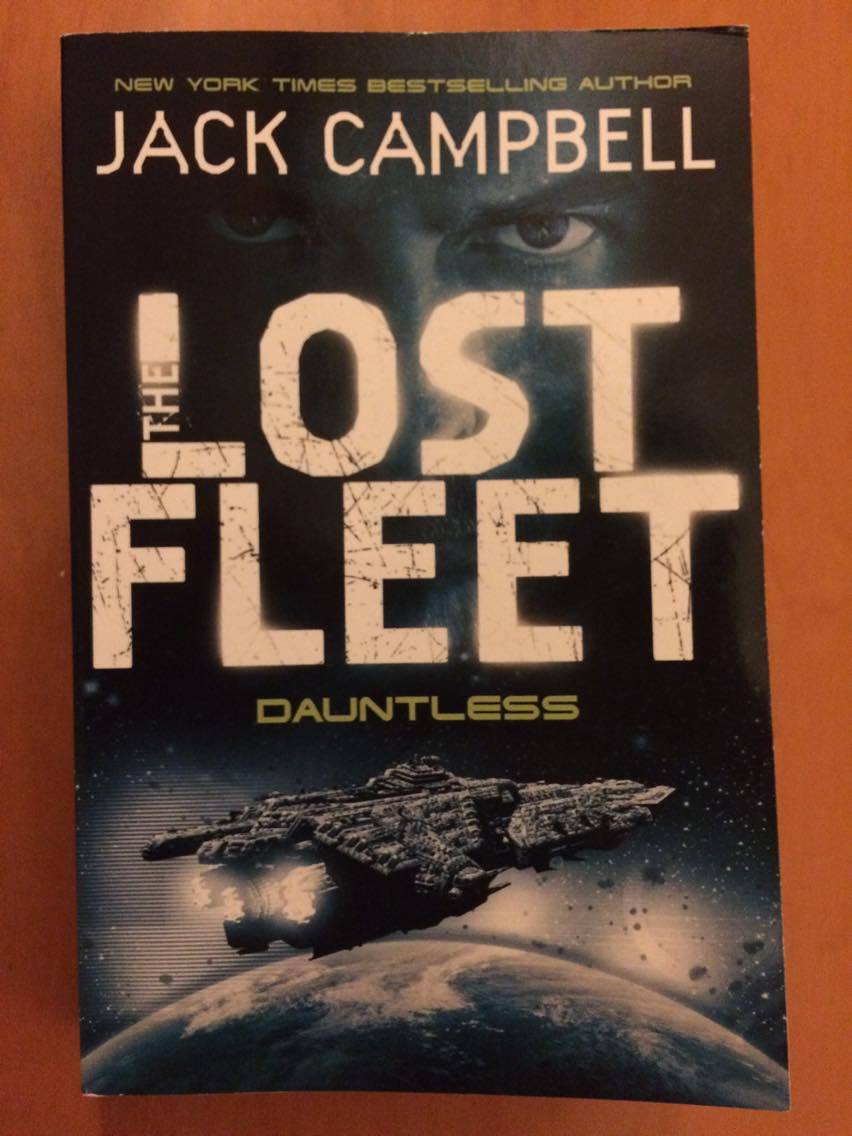
The book is a solid military scifi, telling the adventures of Admiral Geary (nicknamed Black Jack Geary), while he commands his fleet, battling the Syndics, a human empire. In this first book, the fleet is running from a trap and tries to hold together as a fleet.
Highly appreciated military scifi.
What is special about Geary is that he was found by mistake, while in cryo-sleep, after about 100 years. The century-long war with Syndics made high losses in the ranks of officers and now almost everyone is getting experience and promotion in the field, making them losing organisational and team spirit skills. Here comes Black Jack Geary, who knows the old ways, and starts teaching the brave, but rash, commanders how it’s done.
This is the first book in a series called the Lost Fleet, which has several other expansions as well. The author, under the pen name Jack Campbell, is a former US Marine.
The book has everything you can expect from a classic military scifi: space ships, Marines, ship to ship engagements, alien words, faster-than-light transportation. This particular book has little politics, just some jockeying for positions, or psychological considerations. It is clear cut, focusing a lot on dialogue, which is quite good, and dynamic space battles.
Jack Campbell is creating convincingly the fast-paced atmosphere of a space war, trying to cover with explanations various logical holes. It could have gone deeper in describing physically the ships, the weapons, how the characters look like, why they are how they are. It is true that it draws from the action, but it creates more bonding with the characters and it adds further immersion.
A book in a similar fashion is the “Man of War” Series by Paul Honsinger. Those books are easy, relaxing, action packed scifis; good reads for the fans.
Man was, therefore, still a prisoner on his own planet. It was much fairer, but a much smaller, planet than it had been a century before. When the Overlords abolished war and hunger and disease, they had also abolished adventure.
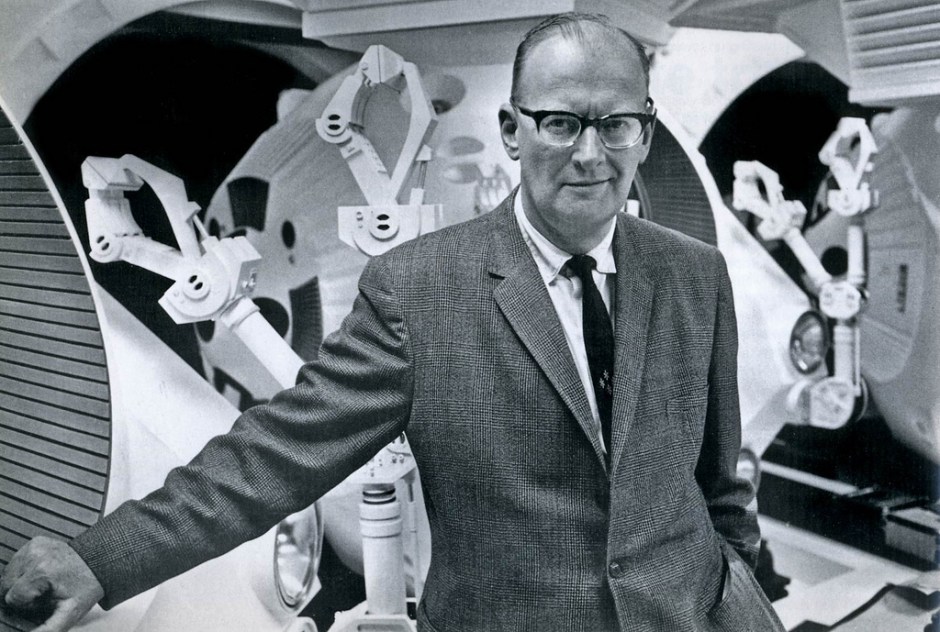
Childhood’s End is a good scifi from the accomplished author Arthur C Clarke. It starts with a sudden arrival of some aliens, just after the second world war. They bring peace and prosperity, but never disclose their reason to come to Earth. The book ends somewhat surprisingly, into a kind of transcendence for humankind.
Quality scifi writing
Although written in 1953, the book keeps pace with current development and innovations, which shows the, what proved to be correct, vision of the author for the future.
The plot has several twists, a couple of stories being intermingled, but the narrative is kept straight and easy to follow. The anchor of the book are the aliens and the slow progress towards the inevitable end. It reminded me of the more recent series of Harry Turtledove (Colonization – also on this website).
The book is an easy read and imaginative enough to be an entertaining scifi almost 70 years after writing.
While I enjoyed reading the book, I think it could have explored more the excellent plot lines developed. A solid reading overall.
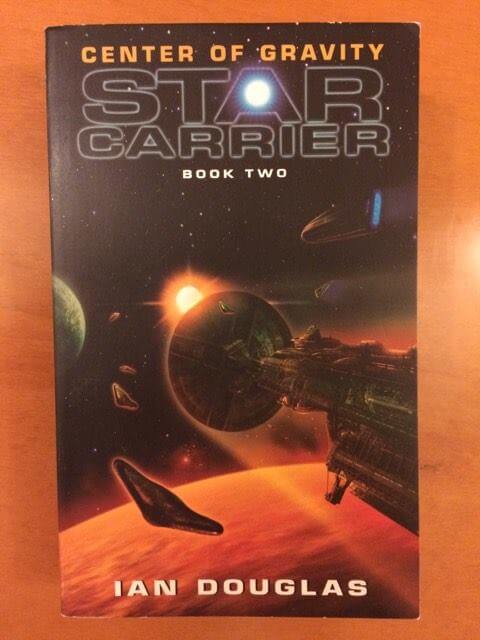
In the evolution of every sentient race, there is a turning point when the species achieves transcendence through technology. The warlike Sh’daar are determined that this monumental milestone will never be achieved by the creatures known as human. On the far side of known human space, the Marines are under siege, battling the relentless servant races of the Sh’daar aggressor. With a task force stripped to the bone and the Terran Confederation of States racked by dissent, rogue Admiral Alexander Koenig must make the momentous decision that will seal his fate and the fate of humankind. A strong defensive posture is futile, so Koenig will seize the initiative and turn the gargantuan Star Carrier “America” toward the unknown. For the element of surprise is the only hope of stalling the Sh’daar assault on Earth’s solar system-and the war for humankind’s survival must be taken directly to the enemy.
Center of Gravity is the second book of Ian Douglas in the Star Carrier series. The story revolves around the struggle of humanity to battle technologically superior races of allies, in distant future. The main protagonists are Commander Koenig, admiral of a human fleet, and Trevor Grey, pilot on one of the ships from Koenig’s command group.
Battles around the stars
Koenig allows the reader to see things at the strategic level, why the fleet retreats or attacks and the overall plan. Grey’s narrative level is more emotional and tactical, about simple people and how the war affects them.
The main ship of Koenig’s command group is kind of a spaceship carrier, where Grey’s spaceship is allotted to, hence the name of the series, Star Carrier.
Humans battle an alien species called Sh’daar which fight through various other alien species under their control. In the first book, the aliens attacked Earth and humans barely succeeded to repulse the attack, through the efforts of Grey and Koenig.
In the second book, humans strike back, The pace is fast and the star battles and the ship to ship action are dynamic and engaging. While not as innovative in new technologies and ideas as the first book, the story still reads well. Overall, it is a good piece of military scifi.
I created the OASIS because I never felt at home in the real world. I didn’t know how to connect with the people there. I was afraid, for all of my life, right up until I knew it was ending. That was when I realized, as terrifying and painful as reality can be, it’s also the only place where you can find true happiness. Because reality is real.
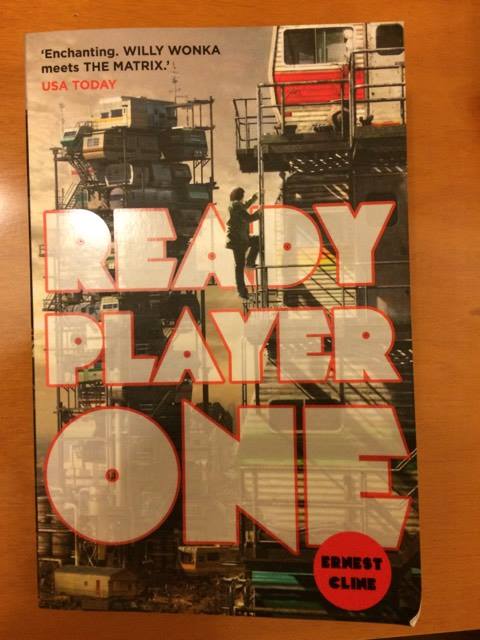
This is a book with one of the most creative, nerd scifi narratives, exploring the possibilities of virtual reality in a dystopian close future world.
The book follows the story of Wade Watts, a normal teenager fully immersed in a virtual reality called OASIS (a kind of Sims), while the world is slowly decaying around him, economically and politically.
The creator of the OASIS, a multi-billionaire nerd, leaves his entire fortune and ownership of the programme for the player who manages to pass his in-game trials. Obsessed by the 1980s culture, all trials are related to those years, with music, gaming and movie references. Hence, a 1980s renaissance takes place, billions of players being after this prize, an escape from the dying world around them. The protagonist is one of those seekers.
The seller of illusions
A rival company pours monumental resources with the same purpose of getting the prize and the ownership of this virtual reality. This company slowly develops as the antagonist of the story.
Five years have passed since the creator died and no progress was noticed on the scoreboard towards the prize, a scoreboard available for everyone to see. Until the Wade’s avatar makes the first breakthrough.
The story gradually gains pace. mingled with love, friendship, courage, real life tragedies and perseverance. It is a story that transforms the teenager into a man. It is a kind of a Harry Potter in a dystopian future, but without family references.
The virtual reality, OASIS, looks like a drug, people giving their life and freedom for a world where they can be anything they want to be. The real world is slowly decaying around them, civil duty (like voting) is neglected, allowing some form of slavery to exist. However, the message of the author is that the virtual reality cannot replace the real world: things like a kiss, a touch are unique and cannot to be replicated.
The book is catchy for everyone who played a computer game in their life, so I recommend it as a good reading. I couldn’t put the book down.
Two there should be; no more, no less. One to embody the power, the other to crave it. The Rule of Two.
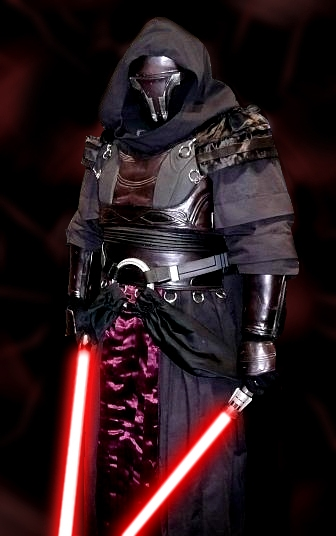
The Darth Bane trilogy is part of the expanded Star Wars Universe and likely a nice read only for the fans. Darth Bane is the one that installed the rule that only two Sith Lords can exist, otherwise, they will always fight each other, instead of fighting the Jedi.
The trilogy is divided into three parts: Darth Bane: Path of Destruction, Darth Bane: Rule of Two and Darth Bane: Dynasty of Evil.
A dark lord you don’t want to mess with.
The books present the story of an evil lord, which starts as a miner on a desolate colony. After an incident, he has to run and joins the Sith army, where he is noticed as Force-sensitive. Trained at the Sith Academy, he quickly climbs ranks and becomes powerful and convinced that only letting two Siths to live could ensure the victory over Jedi.
He manages to trick the other Siths to fall in his trap and kills them all, taking a little girl as apprentice, Darth Zannah. Numerous other adventures follow the two, which lead to their final duel, where Bane is defeated.
The book is imaginative and a real pleasure for the Star Wars fans, while a bit dull for others. The story expands the Star Wars universe and fills some gaps in the original story. The writing has many gems of wisdom, from an evil perspective. The writing style of Karpyshyn is engaging, but not fast-paced or bursting with action. The action scenes are controlled, violent and short.
The trilogy is ok, but not recommended unless for die hard fans.
On his status board, a section of the Chimaera’s shield schematic went red. “Get that starboard shield back up,” he ordered, giving the sky in that direction a quick scan. There were half a dozen warships out there, all of them firing like mad, with a battle station in backstop position behind them.
If their sensors showed that the Chimaera’s starboard shields were starting to go—
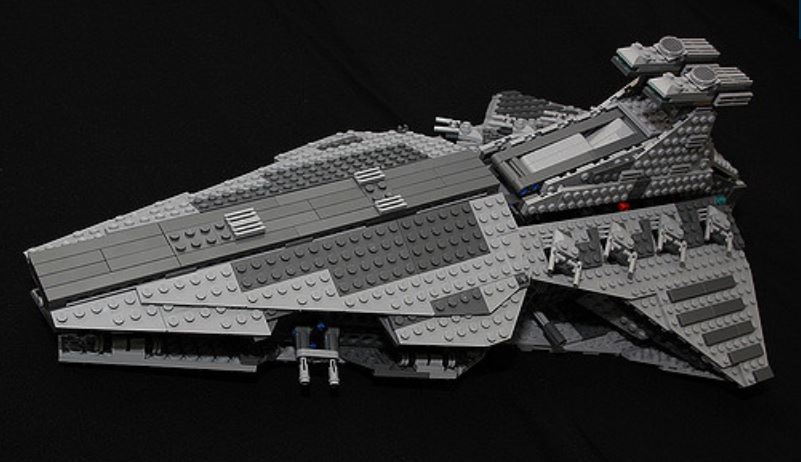
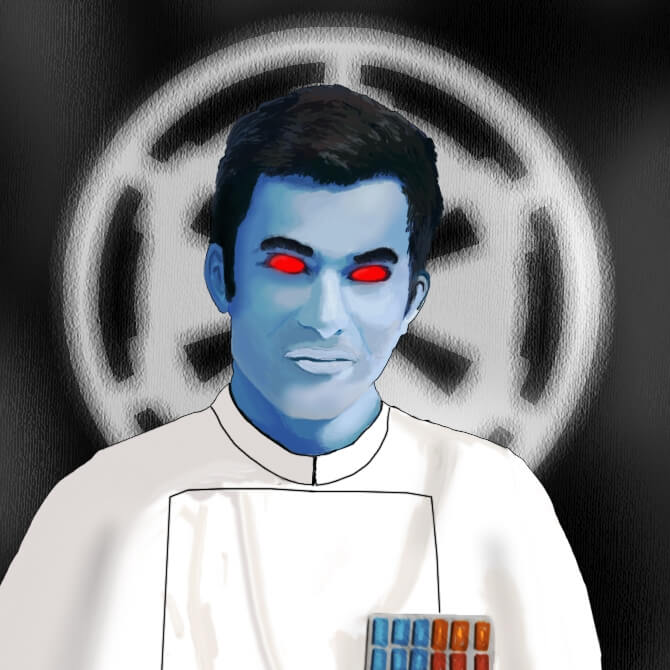
“Starboard turbolasers: focus all fire on the Assault Frigate at thirty-two mark forty,” Thrawn spoke up calmly. “Concentrate on the starboard side of the ship only.”
The book is part of the Star Wars expanded universe and takes place after the Emperor and Darth Vader are defeated. Five years have passed since the Alliance destroyed the Death Star and killed the Emperor and Darth Vader. Han Solo and Leia Organa are now married with twins coming and Luke Skywalker is starting the new Jedi Order.
Under those premises, the author, Timothy Zahn, creates a new antagonist, Grand Admiral Thrawn, a military genious and great psychologist, leader of the reminding of the Empire’s fleet.
What is impressive of the plot and the narrative is that Zahn doesn’t rely on old cliches, but creates new personages. The plot is logical and tight, without the fantastic and illogical actions happening in the films. The new personages are solid, deep, credible and the reader is interested in their fate and actions. Their reasoning is sound and you, as a reader, would consider the same actions given their circumstances. There is little hocus-pocus, due to the Force. Logic and work are more important.
Admiral Thrawn, a brilliant mind, but on the wrong side.
Timothy Zahn credibly starts the plot. If you are an Admiral, in command of several fleets and planets, why would you surrender over some rebels in shambles, badly organised and with little resources?
The reader then follows the events and actions happening in the universe, which revolve around the plans of Admiral Thrawn to increase his power and weaken the Alliance. The Admiral has no other power than his mind and his keen understanding of things. As he notices as some point: ” When you understand a species’ art, you understand that species. ” Several other gems of wisdom are voiced by him.
However, Thrawn is not the only memorable character. Mara Jade, the strong and complex character with a secret past; Talon Karrde, the smuggler; Joruus C’baoth, the Dark Jedi clone; the Noghri, the skilled, but honorable assassins and others, they are all unforgettable.
The story sticks for serious readers because it involves no magic; it is all a battle of the minds, with the Force, the battleships, the armies, just tools to achieve an objective, not game-changers. The real change is made by the actions of people. This is the message of the author throughout the book.
Both sides possessed weapons that could blow a planet’s atmosphere right off or radiate the place so badly that no one could live there, but the goal of gaining a habitable planet took those weapons off the table. Instead it set the engineers from both sides working on devices that delivered their terrible effect but didn’t permanently alter the ground where they were used.
The tech had become visibly disturbed when he reached the logical conclusion that the limited war calculus would no doubt be dropped the day either side found the enemy’s home planets.
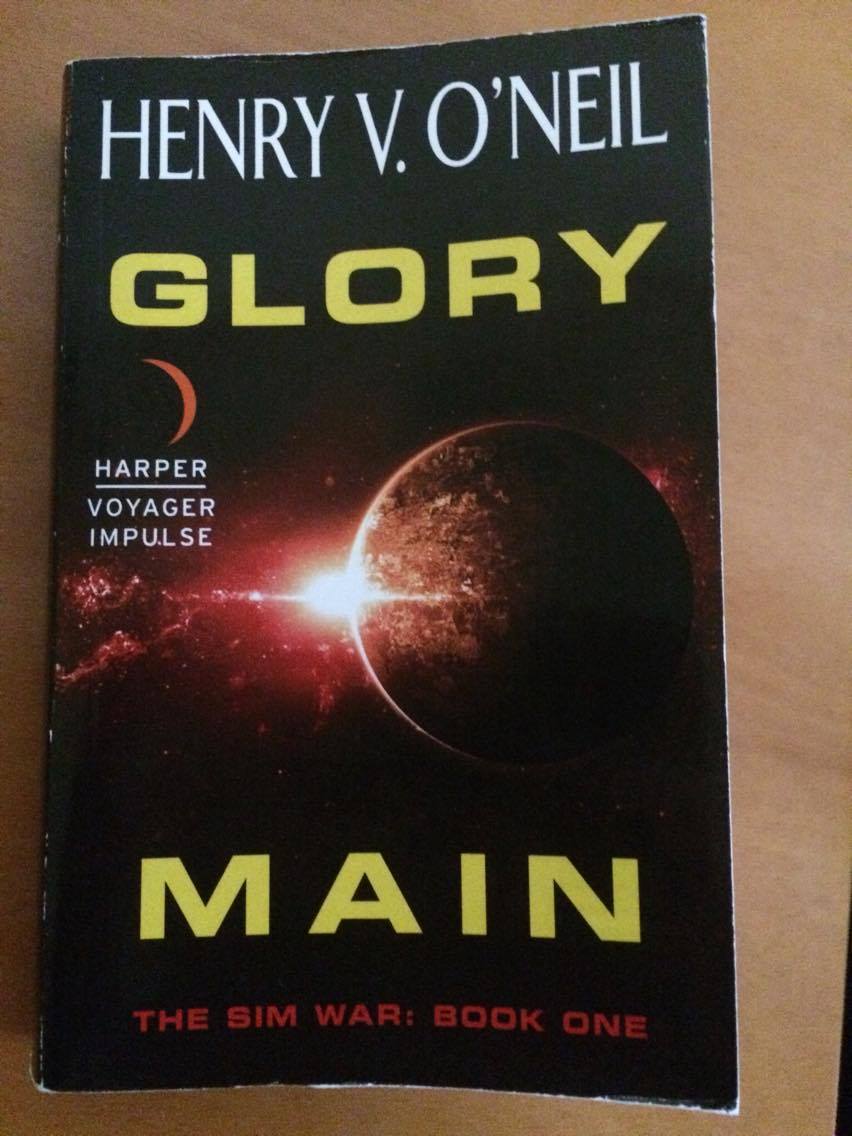
The book is a survival story during the Sim war, a war between humans and similarly-looking aliens. Lieutenant Mortas and three others crash on a desolate planet and fight to survive.
Survival scifi, could have used more imagination.
The four characters are nicely constructed, the infantryman, the scout, the tech and the psychoanalyst, and their struggle is believable and interesting. While less action-packed than other series, the pace of the story is fast enough to keep the reader engaged. The plot is nicely constructed with many twists and turns. The end is fantastic and unexpected. An original military sci fi overall.
The survival story could have been better developed and more imaginative, but it was interesting enough to keep the reader engaged. The narrative is focusing rather on characters then on the surroundings or the events. Nonetheless, it was a pleasure to follow the four in their fight.
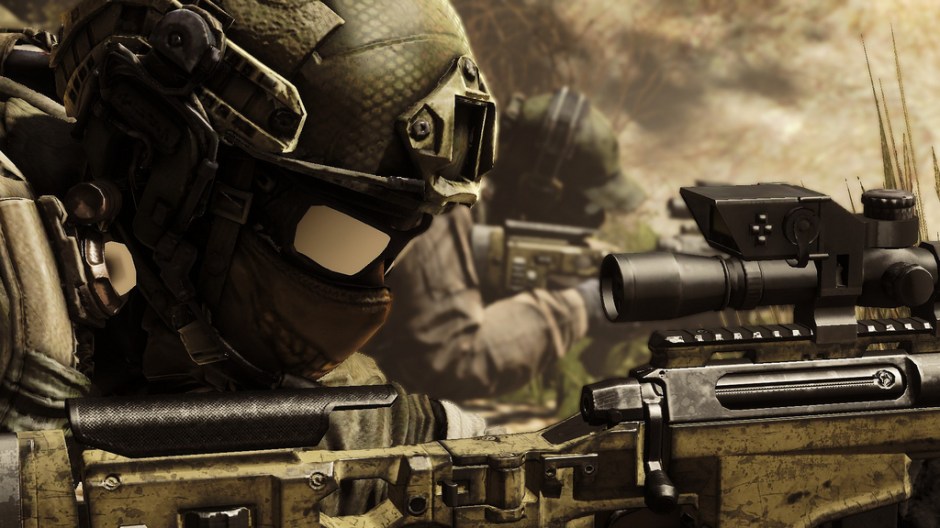
Felix took the blaze-rifle, the blazer, from the slot in the long row which had a number to match the one pulsing inside his helmet. He checked it for charge, attached it to his back. Scout suits, much smaller than standard issue, had no blazer capacity built in. Scouts carried rifles used by open-air troops for thirty years. Also, they had fewer blaze-bombs-only nine as opposed to the two dozen the warriors carried. Scouts must be fleet, must be able to realize their much greater potential for speed and agility. And, where warrior suits bore different colors for rank and group, all scouts were black. Flat black. Dull, non-shiny, space black.
The book by John Steakley is a classic military sci-fi, written in 1984. Unlike many other military sci-fis enjoying success, it is a stand alone book, not part of a series. Steakley was working on a second book, when he died in 2010.
Felix is a loner, a hero, a veteran and a broken man.
The story is divided into three parts. In the first part, we find Felix, a scout in the Earth’s military, orbiting Banshee, a hostile planet infested by giants aliens called Ants, very similar in behavior with the Earth’s ones. Against all odds, he survives twenty or so drops on the planet, invasions aimed at eradicating the alien infestation. Felix manages to survive, by allowing a kind of a second personality, the Engine, to take his place during the battle.
The second storyline follows a space pirate called Jack Crow. He strikes a deal with a mutineer captain to infiltrate and subvert a research colony, where he finds Felix’s armour, many years after Felix’s storyline.
The third part, the ending, is moving. It is intensely emotional, when Jack Crow finds the story of Felix, his loneliness, desperation and hopelessness during the Antwar and his motivations. The closing scenes are heart-wrenching.
The book takes some elements from Starship Troopers, but remains a beautiful narrative, at times melancholic, at times bursting with action. I finished it in the early hours of a morning, but it left me empty and sad. I think a story is good if it touches the reader and this book touched me.








 Mike Bostan - personal blog on book reviews and energy studies