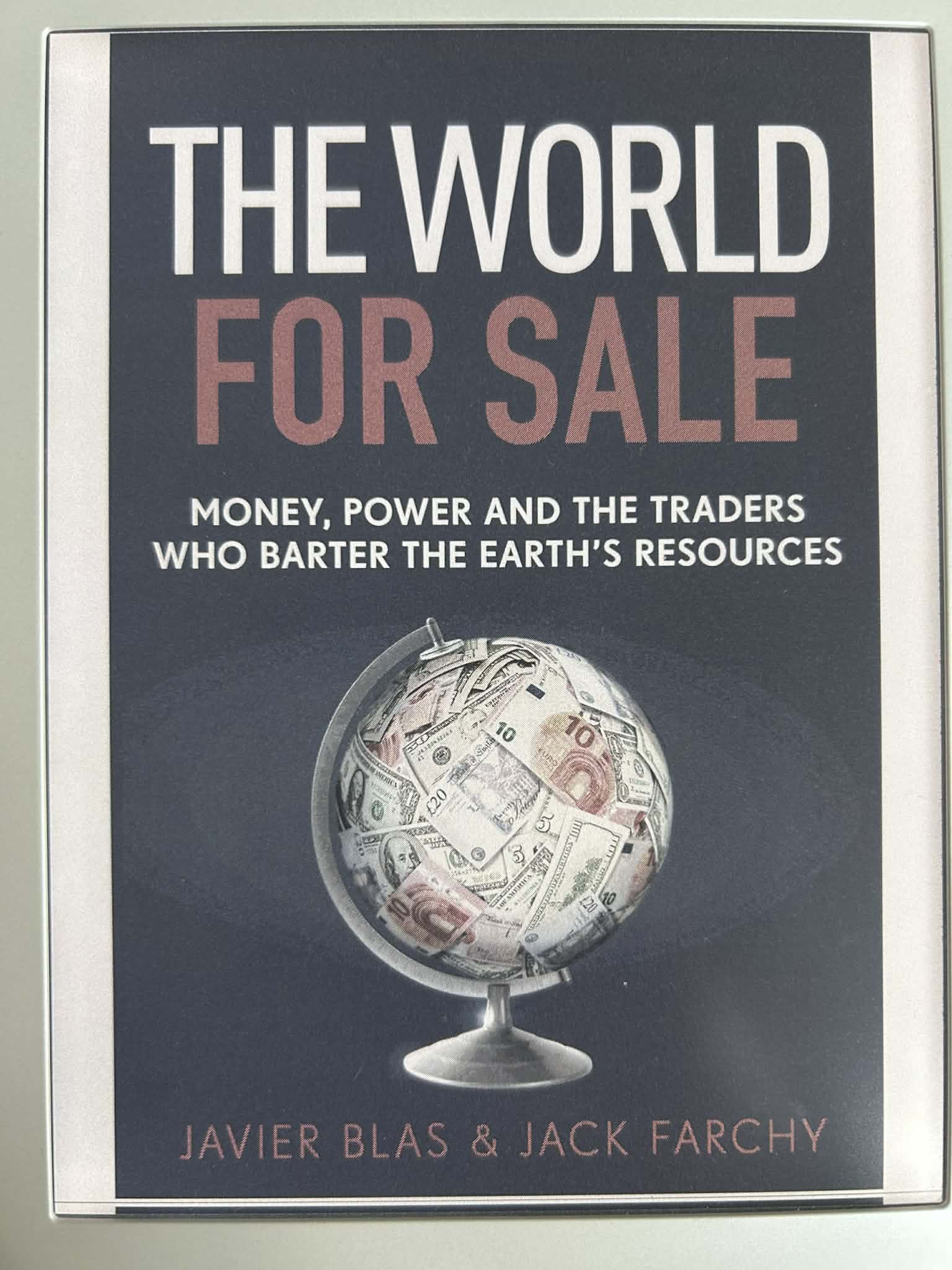
The World for Sale – Javier Blas, Jack Farchy

The commodity traders are arbitragers par excellence, trying to exploit a series of differences in prices. Because they’re doing deals to buy and to sell all the time, they are often indifferent to whether commodity prices overall go up or down. What matters to them is the price disparity – between different locations, different qualities or forms of a product, and different delivery dates. By exploiting these price differences, they help to make markets more efficient, directing resources to their highest value uses in response to price signals. They are, in the words of one academic, the visible manifestation of Adam Smith’s invisible hand.

There are companies richer that big countries, that you never heard about. The book presents the history of commodity trading firms, from their start in early 60s to present day. Commodities are energy, metals and agricultural products that we commonly use. As trading grew and become global, these firms picked up, increased the trend and developed the global flows of products that fuel our lives and industries and feed ourselves.

Starting from trading oil, the global commodity traders, overwhelmingly European and based in Switzerland, become global power houses, not only in trading, but also in producing goods, owning warehouses and financing industries and countries.

On the good side, global commodity trading dramatically decreased prices for costumers, using every opportunity to create a better deal, a better price. In this endeavors, traders because rich, with profits in the billions.

On the bad side, those firms bought from and financed dictators, morals or international sanctions having little to do with a good deal.

What makes the book interesting is that it’s exceptionally well researched, dynamic and manages to present all major global commodity traders in an un liniar way. There is a plethora of stories and characters.
Also memorable is how some of the richest companies in the world grew quietly, outside press or magazines. Only an IPO in the early 2010s started to shed some light on their fabulous incomes, all of them being private before that and even now.

This is an exceptional, real world, contemporary, well researched, well written, engaging and memorable book. What a read!

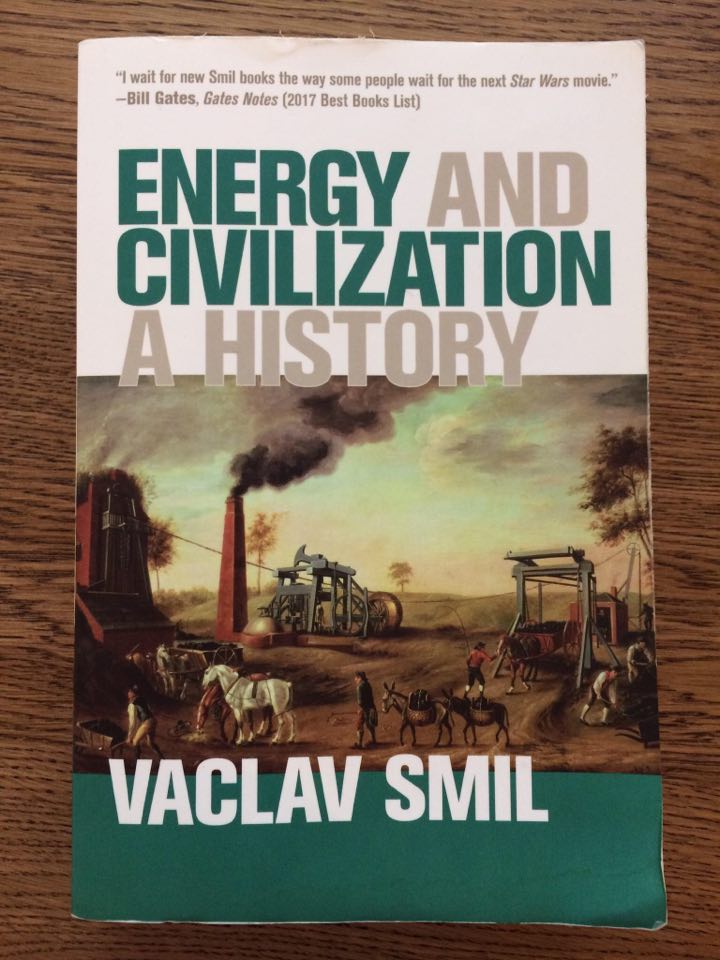
Energy and Civilization: A History – Vaclav Smil

Despite many differences in agronomic practices and in cultivated crops, all traditional agricultures shared the same energetic foundation. They were powered by the photosynthetic conversion of solar radiation, producing food for people, feed for animals, recycled wastes for the replenishment of soil fertility, and fuels for smelting the metals needed to make simple farm tools.

The books from Vaclav Smil are a trove of knowledge on energy evolution. This book discusses the evolution of human energy advances over time, from agriculture to weapons.

The book reads more as an academic article, with a plethora of references and sources. One sixth of the book is just references. Very dense in knowledge and explanations, it overwhelms the reader with the sheer depth of analysis.

Smil tries to use largely a single energy unit, joules, to measure everything, from the various techniques to harness animals to work to the different ways to pass water through the watermills. The purpose is to quantify the evolution of human energy efficiency over time.

The book is encyclopedic in its depth and range, truly a history. The book dryness of writing and data is broken by very informative and engaging boxes, explaining various facts and developments.

The only downside is the grammar errors found here and there sometimes.

I was impressed by the precision and correct analysis of energy sources and transformations, missed by many pundits.

Also impressive is the general neutral tone regarding various sources that the author manages to impose.

Overall, an incredible book, THE book on energy history.

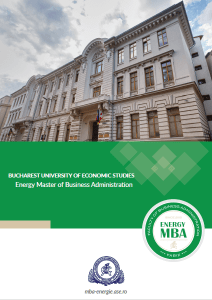
PROMO: Energy MBA in Bucharest

The MBA in Energy at the Academy of Economic Studies (ASE) in Bucharest starts the registrations for prospective candidates between 23-25 July 2018.

Organized by the Faculty of Business Administration in Foreign Languages (FABIZ), the Energy Master is the best in Romania and is done in collaboration with representatives of the energy business environment (OMV Petrom, Siemens, CEZ, Electrica, Transgaz etc.).

Join the new challenges and be a part of the Energy Business!

The programme is open to all bachelor degree graduates, but candidates need one year experience in energy. Of course, a good command of English is required, as it is taught in English.

It is a flexible MBA, held during weekends, for 4 semesters. The courses range from “EU Policy in Energy” to “Energy Trading”. The professors and experts’ team is excellent, including one of Romania’s best energy professionals, Corina Popescu.

Please find below the brochure of the programme.

Brosura_MBA-Energie_6.2018

More information also at the following link: mba-energie.ase.ro.

Sources of electricity – oil

Oil or petroleum was once a key player in the electricity sector, but now it is used only marginally, usually as back-up reserve in diesel generators for major consumers, such as factories, hospitals, airports or as an electricity source in islands (for example in Greece).

Oil lost its share because of price, it is far more expensive to burn oil than burning coal or gas.

Merits of oil include high energy density, easy to transport and very stable composition, remaining liquid in most climatic conditions. Drawbacks of oil are price are environmental concerns (Webber, 2014).