Strategy: A History – Lawrence Freedman

So the realm of strategy is one of bargaining and persuasion as well as threats and pressure, psychological as well as physical effects, and words as well as deeds. This is why strategy is the central political art. It is about getting more out of a situation than the starting balance of power would suggest. It is the art of creating power.

The book is a comprehensive history of strategy, starting from chimpanzees decision-making and going to military, business and political thought. Presented in a chronological order, the book covers all relevant points on what could be included in the topic of strategy: from nuclear war to guerilla tactics, from Cold War to deterrence strategy, from Sun Tzu to Jomini, from business Red Queen to Blue Ocean strategy, from political rational decisions to cooperation and coalition games.

The book feels like a compendium of all important ideas in this domain, describing and commenting on each of them. There is no single message of the book, but appears more like a textbook for those interested in the topic. At points it feels dry, almost academic, with long paragraphs and descriptions. Nevertheless, the ideas are presented in a clear and logic way, and chapters are flowing well one after the other.

The thinkers mentioned and analyzed are mostly American or West European, with few examples from other parts of the world, although the success of non-English thinkers or organizations is mentioned and praised. More examples to captivating theories, or some anecdotes (such as the one describing the movie Mr Smith is sent to Washington) would have elevated the book even further.

Sir Lawrence Freedman, the author of the volume, is an authority on the area, former Professor of War Studies at King’s College London, and largely considered the authority on British strategic studies.
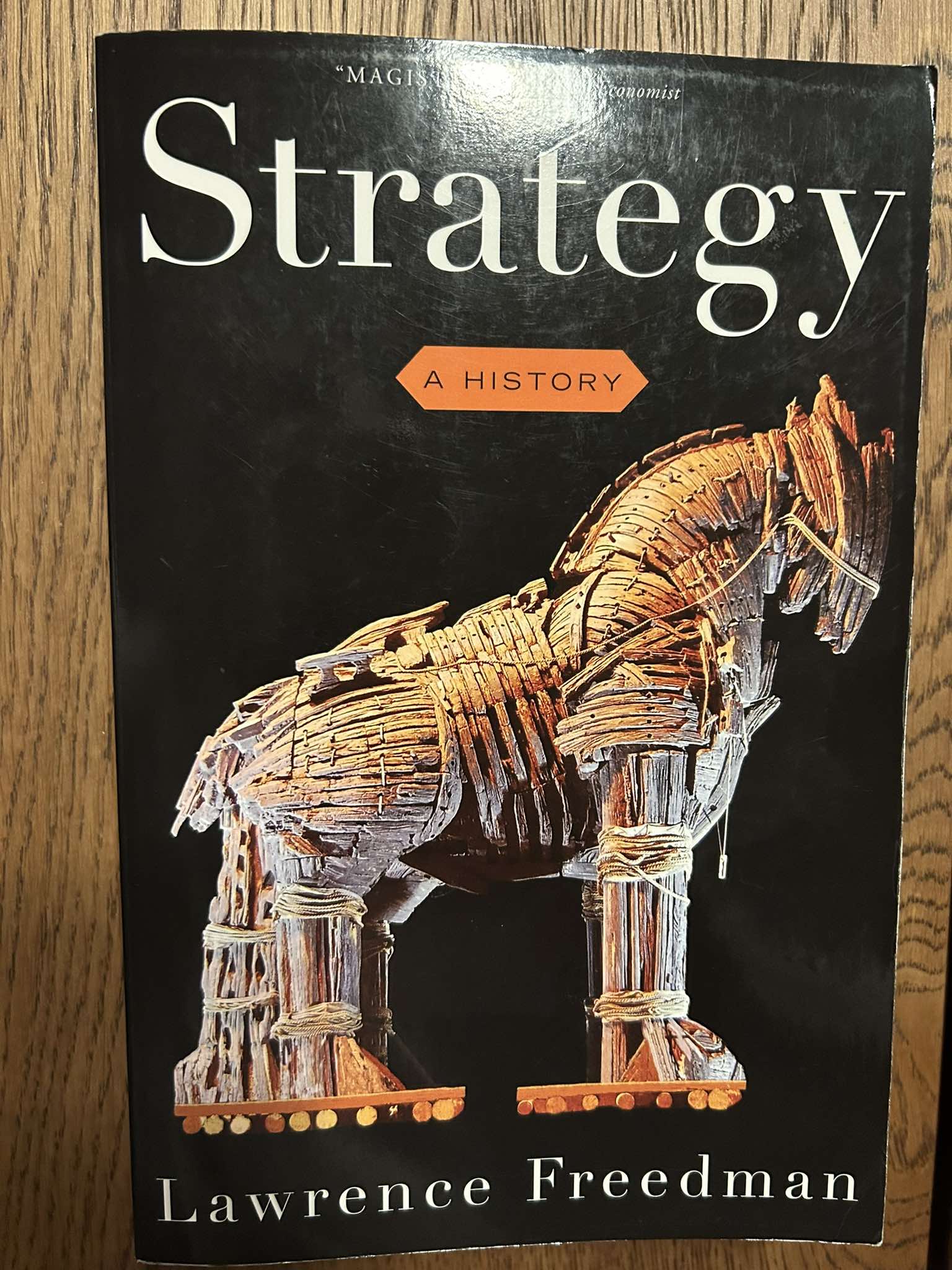
It took me about 8 years to finish the book, which stands at about 700-plus pages, but it was always an interesting read, although slow at times, as profound ideas follow quickly one after the other, paragraph after paragraph.

A must-have book in the library for anyone interested in the topic of strategy from a political, military and business perspectives. This is a book that can stand the test of time, as it contains all influencing ideas and thinkers on strategy until early 2010s.

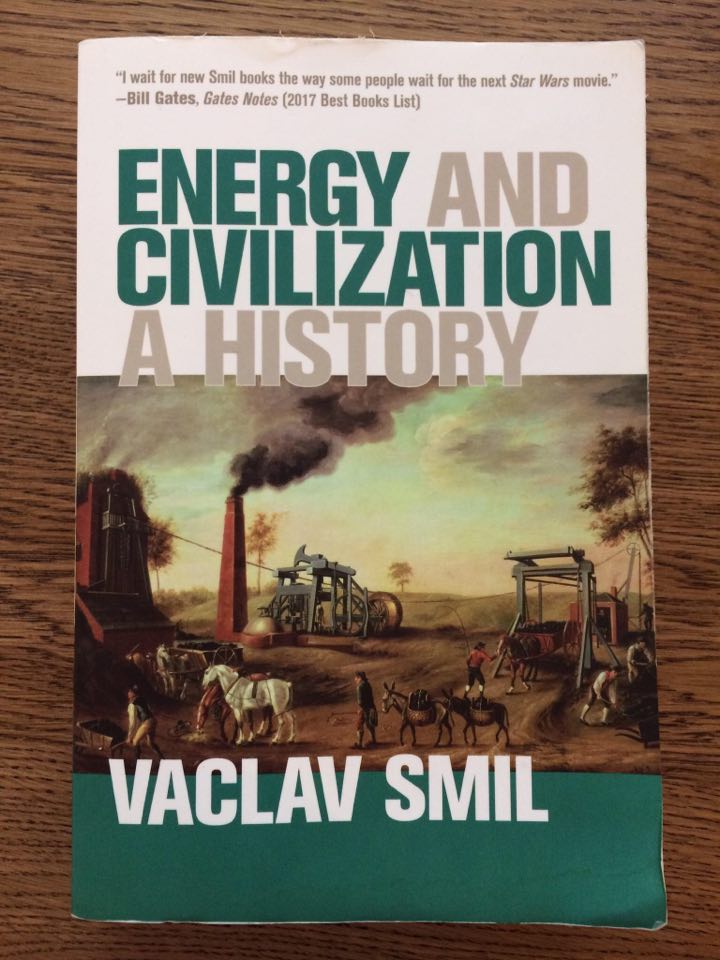
Energy and Civilization: A History – Vaclav Smil

Despite many differences in agronomic practices and in cultivated crops, all traditional agricultures shared the same energetic foundation. They were powered by the photosynthetic conversion of solar radiation, producing food for people, feed for animals, recycled wastes for the replenishment of soil fertility, and fuels for smelting the metals needed to make simple farm tools.

The books from Vaclav Smil are a trove of knowledge on energy evolution. This book discusses the evolution of human energy advances over time, from agriculture to weapons.

The book reads more as an academic article, with a plethora of references and sources. One sixth of the book is just references. Very dense in knowledge and explanations, it overwhelms the reader with the sheer depth of analysis.

Smil tries to use largely a single energy unit, joules, to measure everything, from the various techniques to harness animals to work to the different ways to pass water through the watermills. The purpose is to quantify the evolution of human energy efficiency over time.

The book is encyclopedic in its depth and range, truly a history. The book dryness of writing and data is broken by very informative and engaging boxes, explaining various facts and developments.

The only downside is the grammar errors found here and there sometimes.

I was impressed by the precision and correct analysis of energy sources and transformations, missed by many pundits.

Also impressive is the general neutral tone regarding various sources that the author manages to impose.

Overall, an incredible book, THE book on energy history.

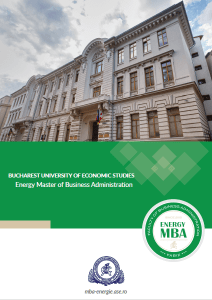
PROMO: Energy MBA in Bucharest

The MBA in Energy at the Academy of Economic Studies (ASE) in Bucharest starts the registrations for prospective candidates between 23-25 July 2018.

Organized by the Faculty of Business Administration in Foreign Languages (FABIZ), the Energy Master is the best in Romania and is done in collaboration with representatives of the energy business environment (OMV Petrom, Siemens, CEZ, Electrica, Transgaz etc.).

Join the new challenges and be a part of the Energy Business!

The programme is open to all bachelor degree graduates, but candidates need one year experience in energy. Of course, a good command of English is required, as it is taught in English.

It is a flexible MBA, held during weekends, for 4 semesters. The courses range from “EU Policy in Energy” to “Energy Trading”. The professors and experts’ team is excellent, including one of Romania’s best energy professionals, Corina Popescu.

Please find below the brochure of the programme.

Brosura_MBA-Energie_6.2018

More information also at the following link: mba-energie.ase.ro.

Sources of electricity – nuclear

Nuclear energy is based on heat released by atomic (uranium) fission reactions which proceed via a chain reaction. Various technologies compete in the sector, mainly divided into light water reactors (LWRs), more popular, and heavy water reactors (HWRs). The main difference between them is that LWRs need enriched uranium, while HWRs can use natural uranium.

The development is now at the third plus generation, focusing mainly on safety measures, such as simplified core design and natural convection-driven cooling in case of loss-of-coolant (LOCA) incident.

Simplifying, core design measures include: natural convention air design (uses air cooling), gravity drain water tank (moved water on top of reactor, so no need for pumps), water film evaporation, outside cooling air intake (another measure to use external atmospheric temperature for cooling) and steel containment vessel (better protection). Simplified core design is aimed to reduced complexity and consequently increase reliability.

The main problem for nuclear resides mainly in the economics of a project, needing high capex and having long rate-of-investment; spent fuel handling and storage; and nuclear proliferation (atomic bombs). Fusion can be a player in the future, mainly due to better safety measure (there cannot be a core melt-down) and shorter (10s-100s) lived activated reactor components (Tynan, The future of Nuclear Energy: Future of Energy, 2014)