Cronica de Cotroceni – Adriana Saftoiu

Prima mea zi la capatul a zece ani de colaborare cu Traian Basescu a fost vineri, 30 martie. Dimineata a sunat telefonul. Nu imi era greu sa-mi imaginez cine ar fi putut sa fie. N-am raspuns. In sfirsit, eram libera de contract. Apoi, telefonul a sunat din nou. «Te cauta Presedintele», m-a informat bine cunoscuta voce de la secretariat. «Nu mai lucrez la Cotroceni. Poti sa-i spui ca nu am raspuns la telefon.»

Cum promiteam cu cateva post-uri inainte, scriu in limba in care am citit cartea.

Adriana Saftoiu a fost consilier prezidential si purtator de cuvint al Presedintelui Romaniei, in timpul mandatului lui Traian Basescu. Ca fost purtator de cuvant si fost ziarist, Saftoiu are verva si stil. Am citit cartea intr-o seara, nu puteam sa o las din mana.

Cartea, publicata in 2015, vorbeste in principal de Presedintele la acel moment, dar nu dezvaluie prea multe, majoritatea faptelor sunt deja publice. Totusi confirma o serie de zvonuri, de exemplu relatia Presedintelui cu Elena Udrea. Memoriile incep si se termina cu activitatea Adrianei Saftoiu la Palatul Cotroceni, doar cative ani, dar sunt destul de savuroase si pline de evenimente.

poarta_cotrocenilor
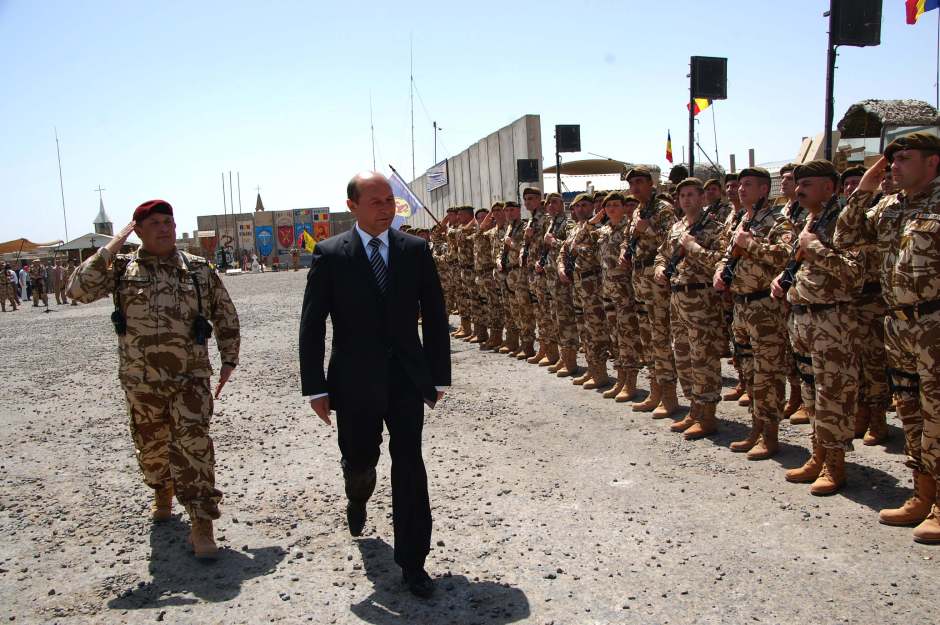
La Poarta Palatului Cotroceni

Presedintele mi se pare prezentat ca un om furios, frustat, dar determinat; majoritatea lucrurilor sunt improvizatii si se intampla alandala; gastile de mediocri ii imping pe competenti sa plece. Pare destul de gri, insa sa nu uitam ca Romania a intrat in UE, iar ANI si DNA si-au pus bazele in perioada aceia.

Este o lectura usoara, pentru cei vag interesati de politica si o ofera o imagine in timp a Cancelariei Prezidentiale in timpul mandatului lui Traian Basescu.

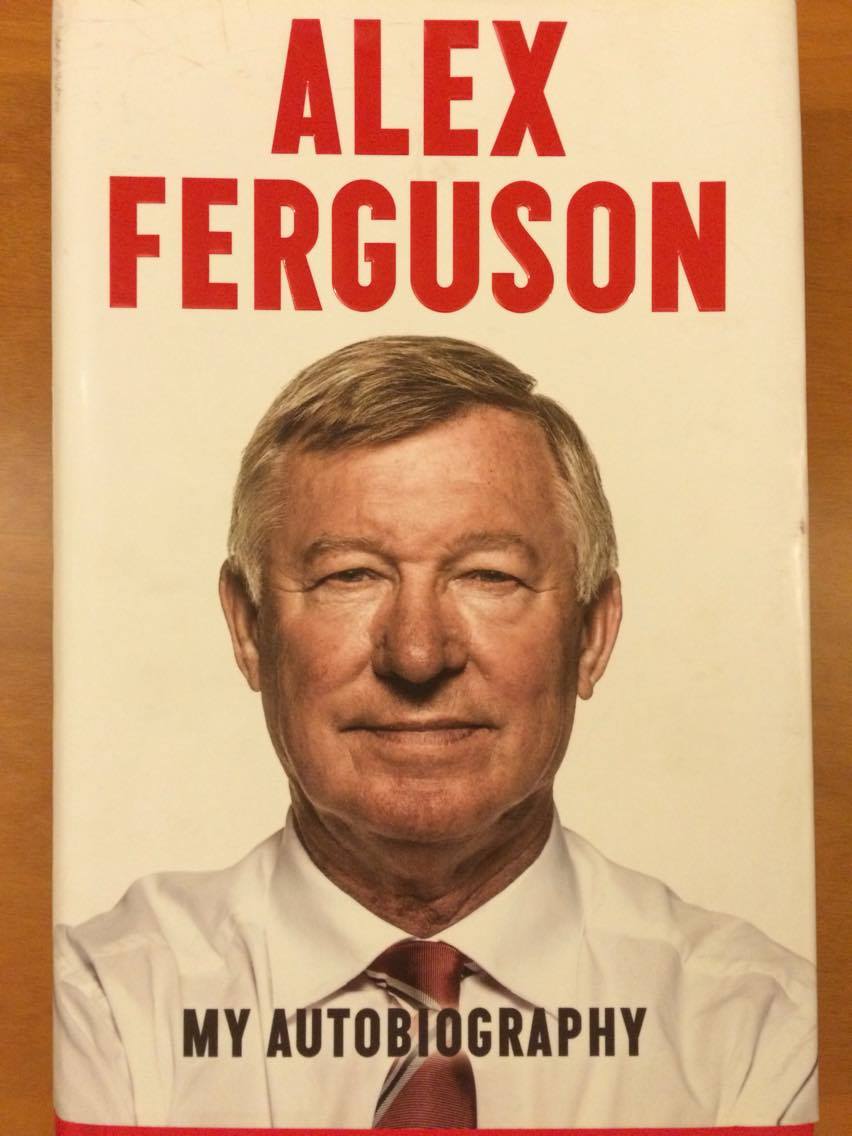
Autobiography – Alex Ferguson

I made an error at half-time. I was still focusing on winning the game and told Rooney he needed to keep running into those gaps behind the full-backs. “We’ll win the game if you keep doing that”, I urged him. I forgot the big issue with playing Barcelona. So many of their games were effectively won in the first 15 minutes of the second half. I should have mentioned that to my players. I might have been better asking Park to mark Messi for the first 15 minutes and pushing Rooney wide left. If we had employed those tactics, we might just have sneaked it. We would still be able to counter-attack.[…]

Alex Ferguson, the legendary manager of Manchester United, tells the story of his successes. He talks about his teams and players, Beckham, Rio Ferdinand, Keane, Van Nistelrooy, Rooney and, of course, Cristiano Ronaldo. He presents rival teams and coaches, such as Liverpool and Barcelona, Mourinho and Wenger.

Ferguson recalls with great clarity the big games and transfers he made over the years. The reader can see that he developed a plan for the long term, but it was not without mistakes.

Alex_FergusonAutobiography
An inspiration for long term planning

He presents, for example, the after-training of great players, like Ronaldo and Giggs, who took great care of their bodies, lengthening their football careers. He shows how players grow, perform and then have to leave the team. It is not always about tactics, but also human psychology, dealing with powerful personalities, young players in their teens, reliable players that had to go.

The United coach mentions “confidence” a lot , players with confidence will fight further, perform and recover after disasters.

While his successes, players and rivalries will fade over time, his advice, ranging from player scouting, politics and media handling to player psychology and long term team planning, remain a lesson for life.

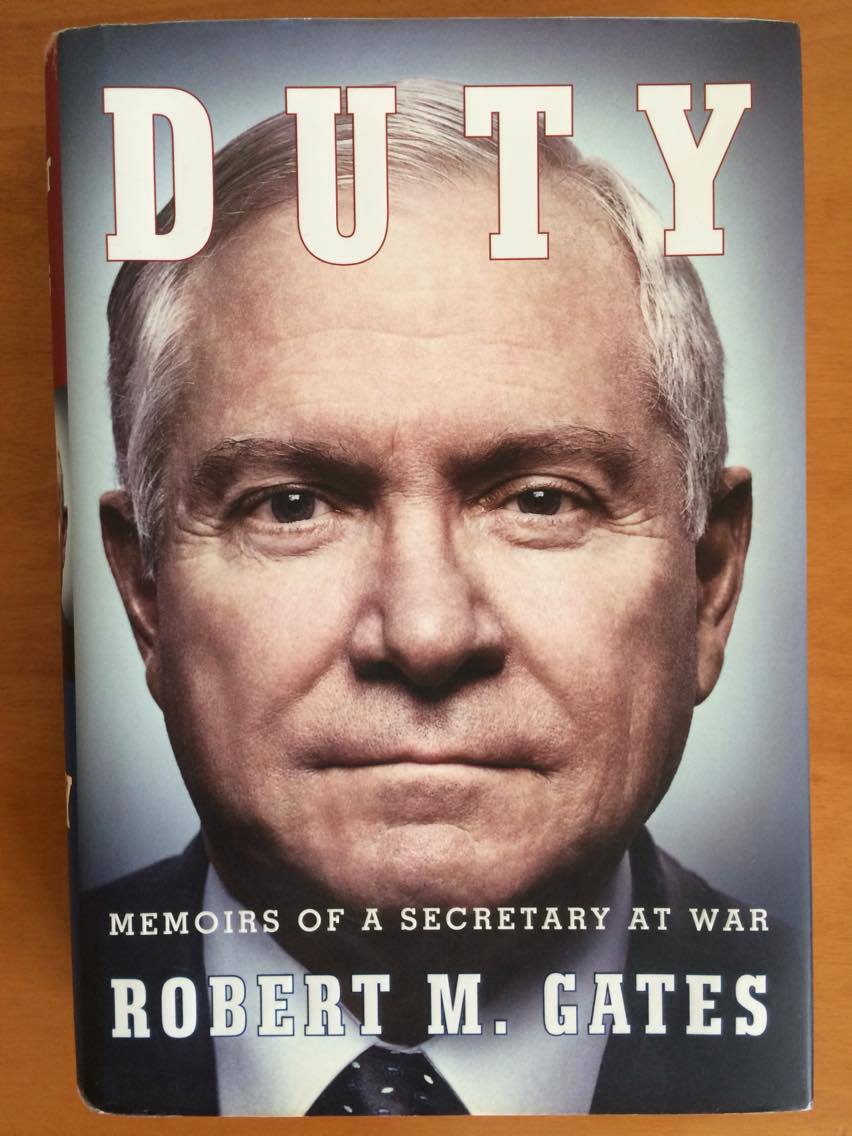
Duty – Robert Gates

I concluded by saying that the SEALs in the room truly gave meaning to George Orwell’s observation that “people sleep peaceably in their beds at night only because rough men stand ready to do violence on their behalf.”

[…]Lessons learned from the disaster in Iran in 1980 led to the creation of the Joint Special Operations Command and development of the training and equipment that undergirded the success at Abbottabad. In 1986, as deputy director in charge of analysis at CIA, I agreed to provide more than a dozen analysts to the new Counterterrorism Center in the clandestine service, an unprecedented and controversial assignment of analysts to help inform and plan counterterrorist operations. […] (Duty)

In a surprisingly open and detailed memoirs book, Robert Gates, the former U.S. Secretary of Defense, unveils his struggles and challenges while leading the U.S. Military in two wars, in Iraq and Afghanistan.

Obama_and_Biden_await_updates_on_bin_Laden
Gates, on the left, during Operation Neptune Spear, that killed bin Laden.

The ex CIA Director reveals the strings between the Pentagon, the Congress, the White House and the Joint Chiefs, within two administrations, Bush 43 and Obama. A lengthy volume that hides candid comments and many gems of wisdom. A great read.