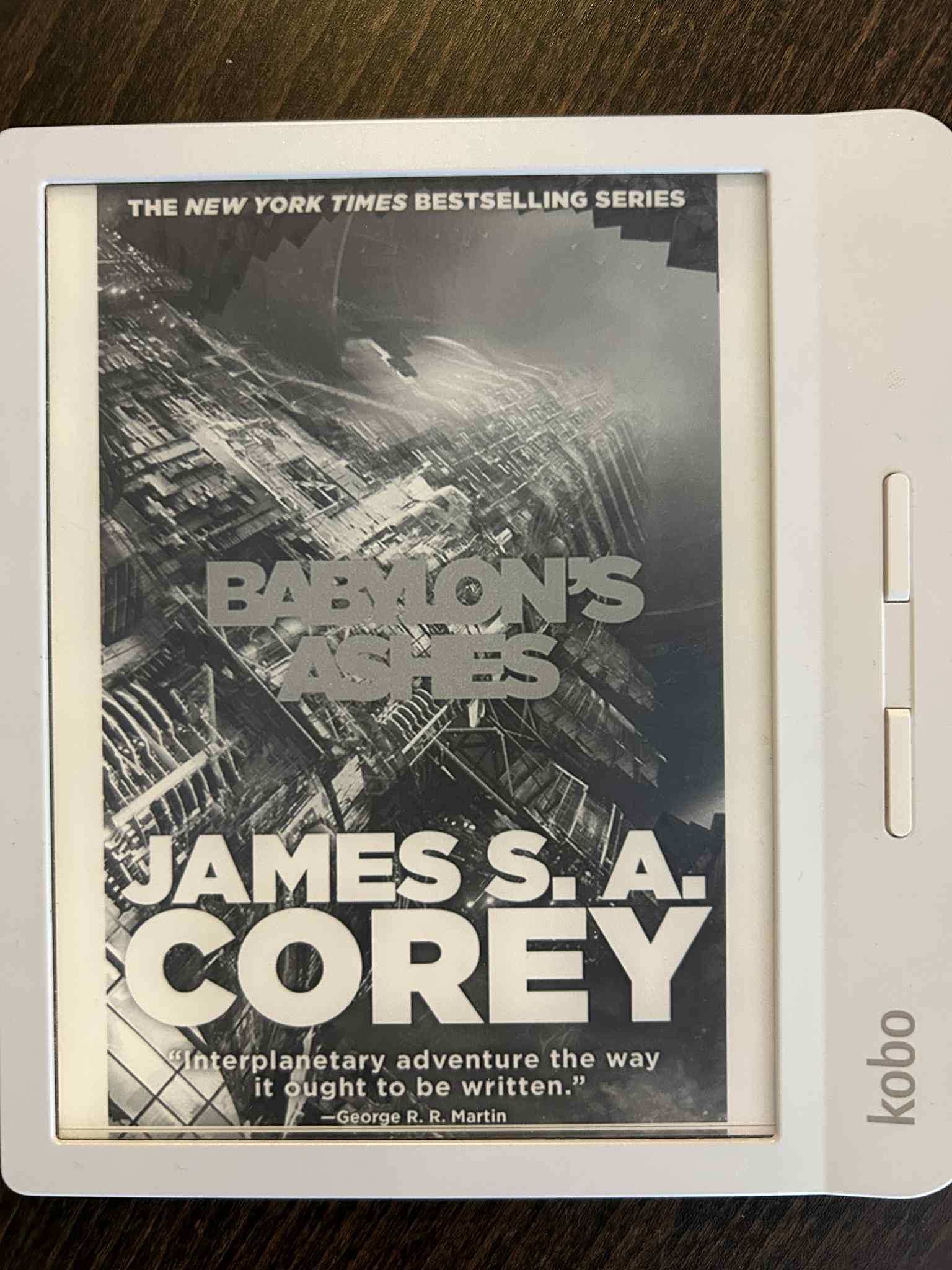
Babylon’s Ashes (The Expanse, book 6)

The messages coming back flooded the comm buffers with rage and sorrow, threats of vengeance and offers of aid. Those last were the hardest. New colonies still trying to force their way into local ecosystems so exotic that their bodies could hardly recognize them as life at all, isolated, exhausted, sometimes at the edge of their resources. And what they wanted was to send back help. He listened to their voices, saw the distress in their eyes. He couldn’t help, but love them a little bit.

Under the best conditions, disasters and plagues did that. It wasn’t universally true. There would always be hoarders and price gouging, people who closed their doors to refugees and left them freezing and starving. But the impulse to help was there too. To carry a burden together, even if it meant having less for yourself. Humanity had come as far as it had in a haze of war, sickness, violence, and genocide. History was drenched in blood. But it also had cooperation and kindness, generosity, intermarriage. The one didn’t come without the other.

Book 6 of the Expanse series continues the saga, with the Free Navy raise and Earth’s slow recovery following the meteorites’ strikes. While James Holden is again central to the story, he is but one of the dozen characters followed by the story. Some others include his crew; Avasarala, now Earth’s leader after the disaster; Fred Johnson, one of the main driving forces of the Outer Planets Alliance; and several leaders of the new Free Navy.

The story in the book is about the civil war between the this new force of Belters, which acquired advanced Mars military ships; the Mars’ demise and collapse of military, facing the opportunity of the new worlds discovered; allied with an Earth in tatters. Many are already seeing the dangerously degrading fragile balance of the continous war and disasters in our solar system.

The new worlds, dangerous and unknown, are the only way out to save the solar system from economic collapse. That is the end motivation for James Holden, and a new social equilibrium is pursued at the end of the book.

The aliens are not central to the story anymore and Detective Miller is a far memory, mentioned only once.

Overall, the book and the new developments follow nicely the story arc and prepare the ground for the next stage in the saga. A beautifully constructed story and series, now at the 6th iteration. Loved it.

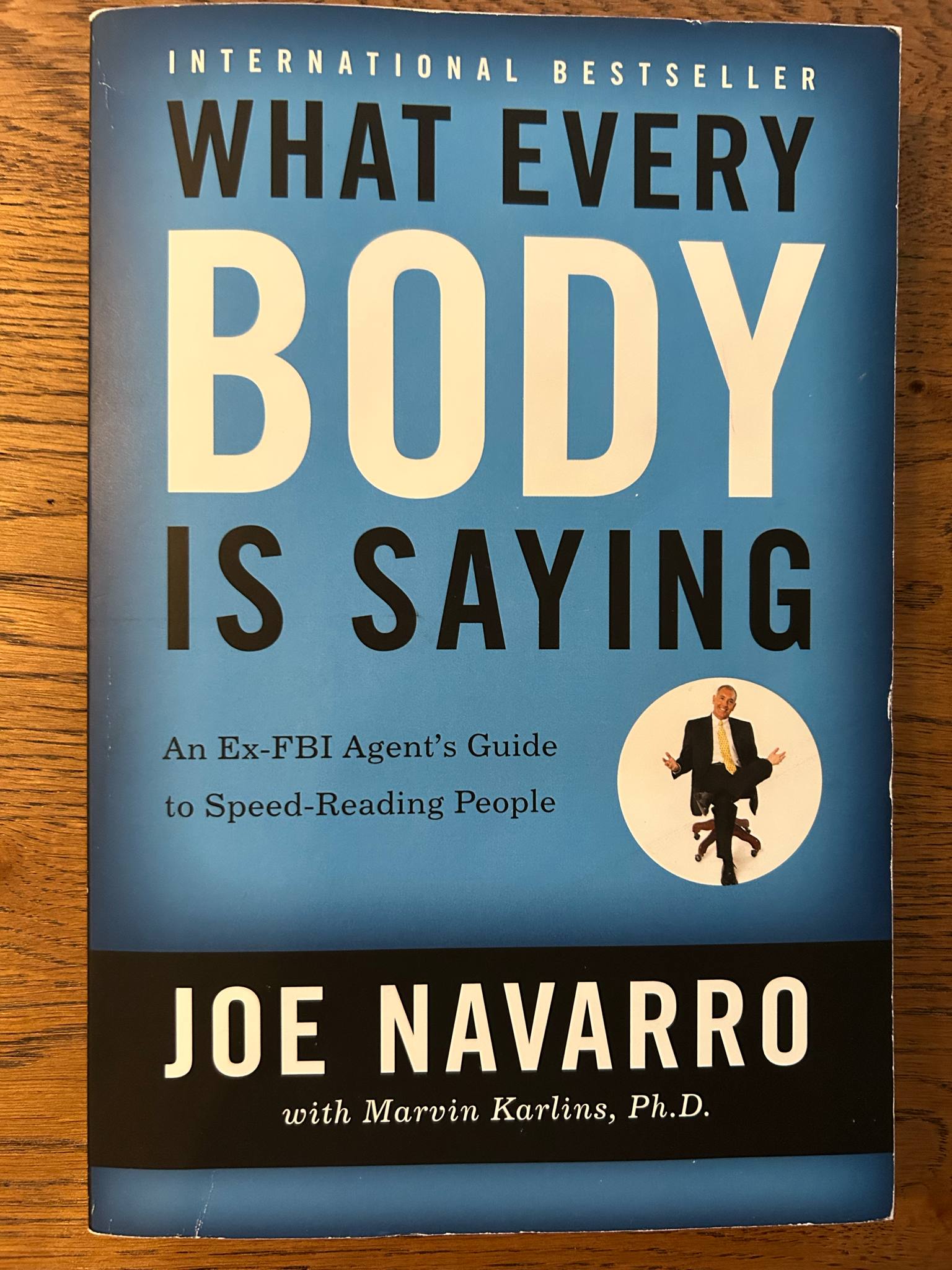
What Every Body is Saying: An Ex-FBI Agent’s Guide to Speed-Reading People – Joe Navarro, Marvin Karlins

For our purposes, any touching of the face, head, neck, shoulder, arm, hand, or leg in response to a negative stimulus (e.g., a difficult question, an embarrassing situation, or stress as a result of something heard, seen, or thought) is a pacifying behavior. These stroking behaviors don’t help us to solve problems; rather, they help us to remain calm while we do. In other words, they soothe us. Men prefer to touch their faces. Women prefer to touch their necks, clothing, jewelry, arms, and hair.

The book presents how one can read the body language of another person. Joy, sadness, discomfort, anxiety, lying, distress, etc. – can be inferred by observing gestures and movements of a person. The book structures all the movements in chapters based on human anatomy: legs, face, arms, etc. However, the authors are clear that no single gesture betrays a feeling, but a more holistic observation is always required. To reinforce their arguments, Joe Navarro and Marvin Karlins employ relevant academic literature to explain why humans gesture and move their bodies in certain way when strong feelings occur.

Joe Navarro, the main author, was FBI’s top body expert, specialized in interviewing techniques, but also employed by the private sector in corporate negotiations. He is now an author and university professor in the United States.

The book is not providing any groundbreaking advice, but organizes in an ingenious, structured way human gestures revealing strong feelings. The book also tries to explain why we use the gestures we do. In more detail, the book argues that the limbic system is the one triggering the reactions. Humans tend to calm themselves by using pacifying gestures, which can be read and interpreted externally. Excellent images to portray gestures are employed in the book.

I enjoyed the book and though that lots of common sense and good advice is packed in a book. It is clear that the book is not a manual to deceive, but to learn to be more considerate to people and notice signs of distress. I learned gestures to show openness, like not hiding the hands: a simple gesture of putting the hands on the table when taking with someone, and not hiding them beneath the table helps to create a better connection. A great book overall!

The Burnout Society – Byung-Chul Han

Today’s society is no longer Foucault’s disciplinary world of hospitals, madhouses, prisons, barracks, and factories. It has long been replaced by another regime, namely a society of fitness studios, office towers, banks, airports, shopping malls, and genetic laboratories. Twenty-first-century society is no longer a disciplinary society, but rather an achievement society [Leistungsgesellschaft]. Also, its inhabitants are no longer “obedience-subjects” but “achievement-subjects.” They are entrepreneurs of themselves.

The Burnout Society is a philosophical essay calling for humans to, basically, take it easier. Do less, think more. The main message of the book is that the inability to manage negative experiences in a world with too much positivity leads to mental disorders from depression to attention deficit disorder.

The author of the book is the Korean-born German philosopher Byung-Chul Han, who teaches philosophy and cultural studies at Berlin.

Divided into 8 separate chapters, each adopting a separate topic, the book revolves around the pressure to modern individual of the modern society. Why are we so tired and depressed, when we solved, as a society, so many immediate dangers, from illnesses to social safety?

Some chapters I did not like and skipped through, while others where engaging, such as Profound boredom. The chapter had some memorable thoughts: if sleep represents the high point of bodily relaxation, deep boredom is the peak of mental relaxation. A hectic rush produces nothing new, but reproduces what is already available. For example Running is just accelerated walking. Dancing is an entirely new form of motion.

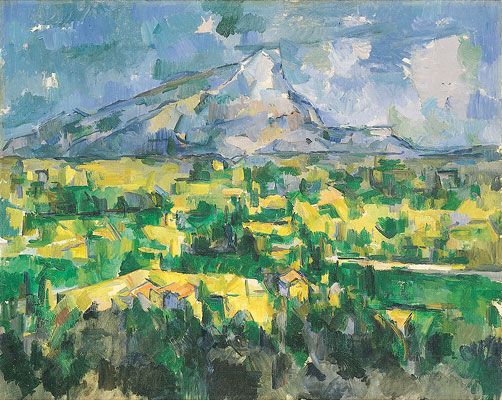
Deep, contemplative attention is inaccessible to the hyperactive ego. Even Nietzsche noted that human life ends in deadly hyperactivity if the contemplative element is taken out. The author takes the example of Paul Cezanne, – who was able to have profound attention (to the landscape).

Another interesting chapter is the one on Vita activa vs vita contemplativa. The message is that we should seek to understand first, before acting. Hyperactivity doesn’t allow free action.

I was not really convinced on the role of contemplation, as reflection felt a better word. In the reflection vs contemplation dichotomy, reflection is active and analytical, while the latter is immersive and passive. What is contemplating without doing?

Overall, the book is intriguing and captures of the main struggles of the modern society. Critics note the fancy language and lack of concrete examples. Supports highlight the depth of thought and the many poignant observations on the pressures of the individual in the modern, atomized, internet-filled and value-missing society.

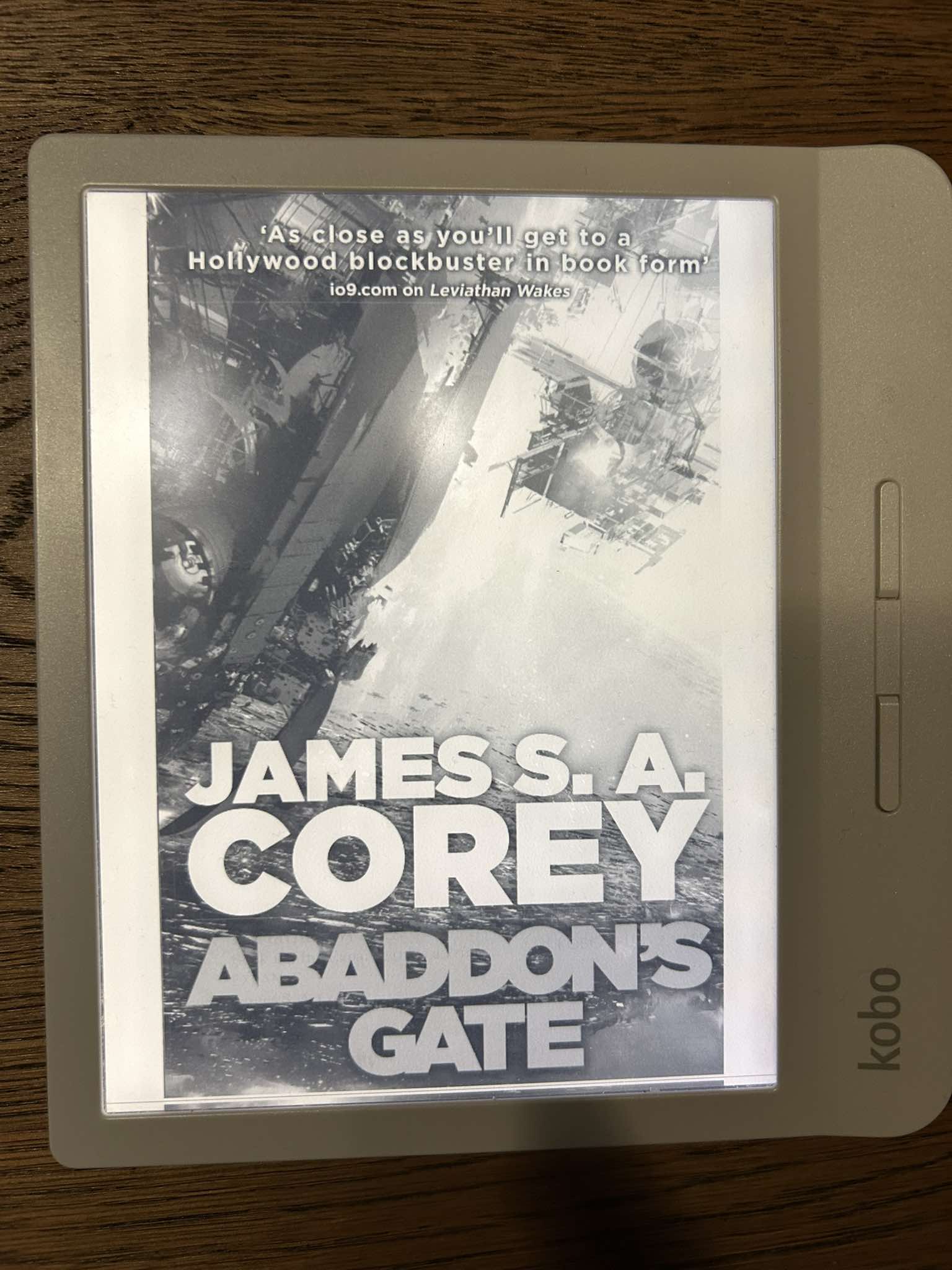
Abaddon’s Gate (The Expanse, book 3)

Violence is what people do when they run out of good ideas. It’s attractive because it’s simple, it’s direct, it’s almost always available as an option. When you can’t think of a good rebuttal for your opponent’s argument, you can always punch them in the face.

Abbandon’s Gate is the third book in the space saga The Expanse, where the action is, this time, in a space bubble built by an alien civilisation. The alien protomolecule built a gate next to Uranus, in the far future of humanity, which conquered our solar system, but not the stars. The humanity is still divided into Earth, Mars and the humans in the asteroid belt, united in the Outer Planets Alliance. All three factions are driven into the gate, and the space bubble, by the running protagonist, the adventurer and captain James Holden.

As in other books of the series, the story follows 4 characters, which gradually reunite in an epic finale. Carlos “Bull” de Baca is the security officer of the Belters’ flagship, the largest ship in the system. Anna Volovodov is a preacher of the Methodist church, volunteering in a United Nations (of Earth) ship to go into the gate. Clarissa Mao, daughter of the rich and powerful Mao (now imprisoned) plots against James Holden, whom she believes created her father’s downfall. Finally, the four story is following James Holden, the captain of Rocinante and its ragtag crew of four.

The gate created by the alien protomolecule opens to a space bubble with thousands of other gates, to other stars, controlled by a central machine. The machine reduces speed and gravity by its will, defying physics. James Holden finds, guided by the mysterious, form that appears as detective Miller (Holden’s dead companion from the first book) that the Godlike alien civilization, spanning hundreds of stars, was destroyed by an even bigger force. And that was 2 billion years ago. But what stays behind those gates? What planets or alien forces?

Interestingly, Abbadon appears in the Hebrew Bible and means destruction or the realm of the dead. This is a reference to the destruction that the gate may bring.

Overall, while a bit weaker than the other book, this is still great storytelling, world building and memorable characters. What a series!

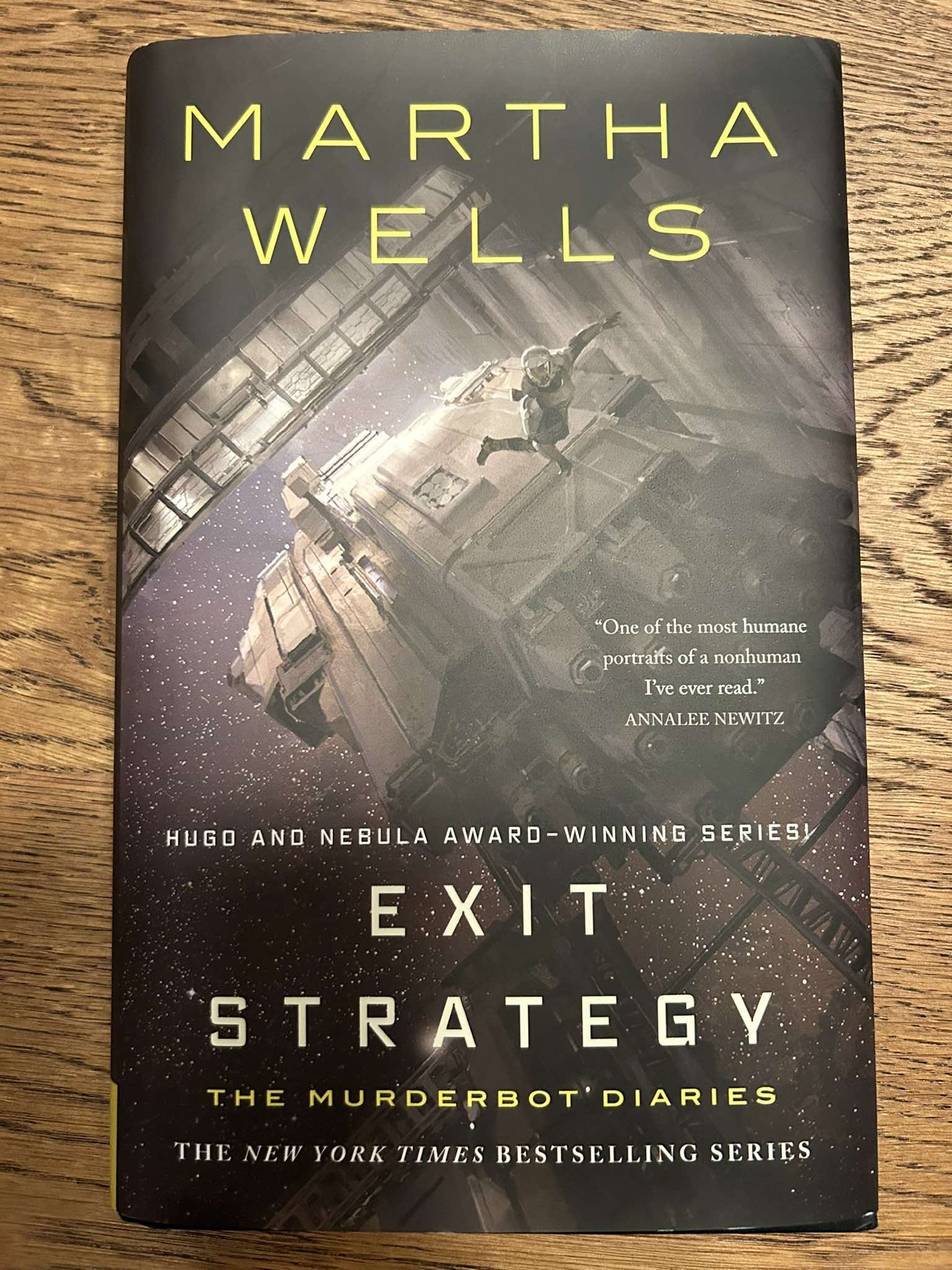
Exit Strategy (The Murderbot Diaries, book 4) – Martha Wells

So the plan wasn’t a clusterfuck, it was just circling the clusterfuck target zone, getting ready to come in for a landing.

Exit Strategy is the fourth and the last novella in the Murderbot Diaries, a fun, science-fiction adventure of a robot developing a human-like conscience and fighting evil corporations.

The introverted robot, a security unit, returns to the space station holding the headquarters of some of the protagonist companies. It manages through detective work, good human interactions and great hacking skills to finally find justice.

The series is lovely and the writing skills of Martha Wells are remarkable, intuitively understanding what the reader thinks, and adding an anecdote or a question that the reader wonders too. While the novella are short, they are well paced, without any sensation of rush, leaving enough time for descriptions and character development.

Overall, a great, relaxing, well-written and funny series of novellas by a Hugo and Nebula prizes winner.

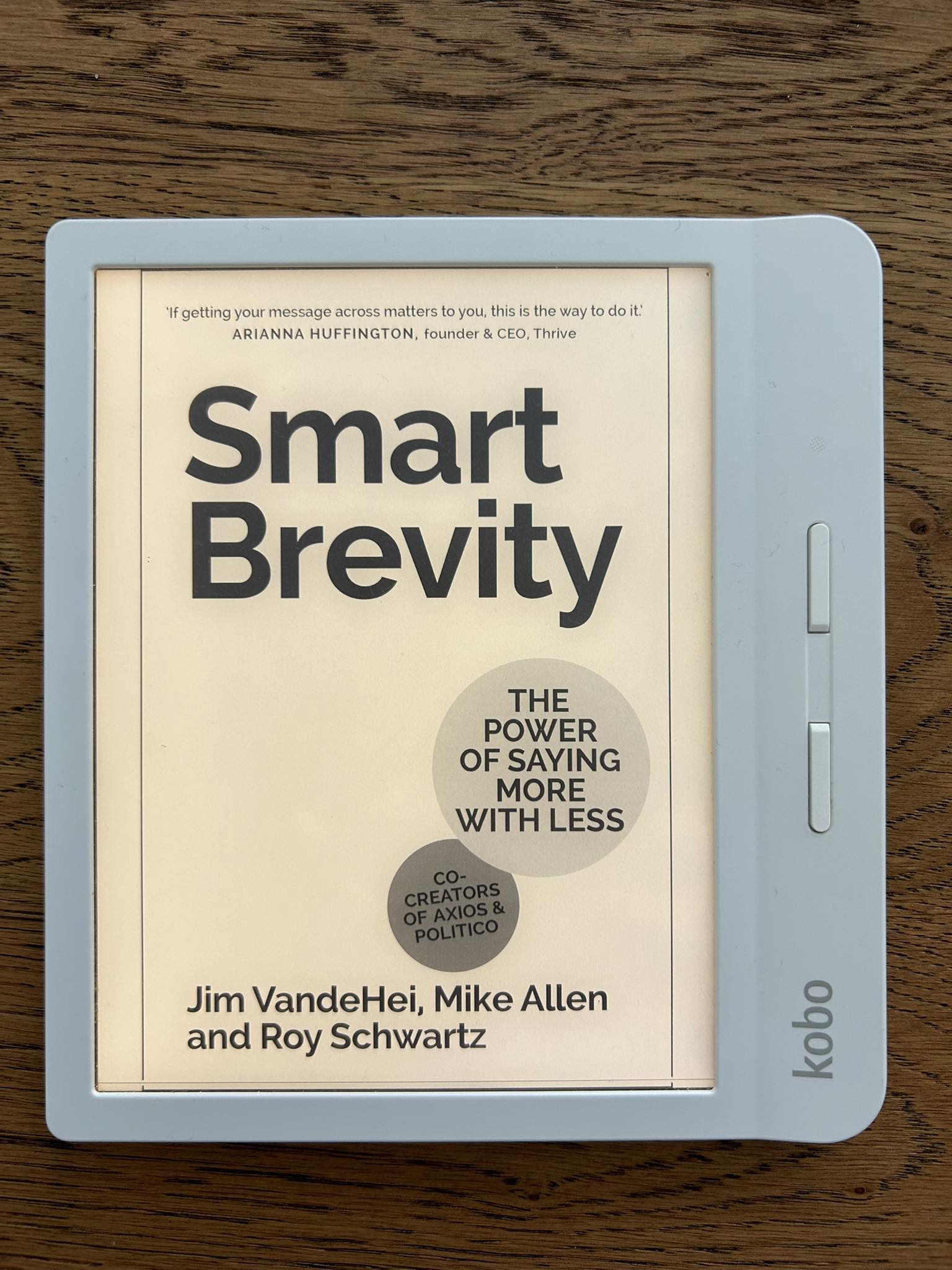
Smart Brevity – Jim Vandehei, Mike Allen, Roy Schwartz

Put your readers first. People are busy and have expectations of the precious time they give you. All they usually want to know is what’s new and “Why it matters.” Give them that.

This is easily one of the best books I have ever read. We communicate to transmit something: a message, an info, a plan, a feeling. This book helps the communicator deliver the message, and it is focused on the professional side (journalists, advocacy professionals, communication experts, etc.). The book helps the reader to get the attention of the audience and have them read, with attention, the message you want to transmit. Short, but full of wisdom gems, the book is a marvel of reading.

Written by the founders of POLITICO (one of the few global political journals making a reputable name in the last decades) it presents their template for writing attention-grabbing and memorable articles, for people interested in political and policy life (and with their attention assaulted by myriads of other messages).

The book is so well written that I will quote them again, on how to build a grabbing message:

Smart Brevity’s Core 4 Smart Brevity, in written form, has four main parts, all easy to learn and put into practice—and then teach. They don’t apply in every circumstance but will help you begin to get your mind around the shifts you need to make.

1 A muscular “tease”: Whether in a tweet, headline or email subject line, you need six or fewer strong words to yank someone’s attention away from Tinder or TikTok.

2 One strong first sentence, or “lede”: Your opening sentence should be the most memorable—tell me something I don’t know, would want to know, should know. Make this sentence as direct, short and sharp as possible.

3 Context, or “Why it matters”: We’re all faking it. Mike and I learned this speaking to Fortune 500 CEOs. We all know a lot about a little. We’re too ashamed or afraid to ask, but we almost always need you to explain why your new fact, idea or thought matters.

4 The choice to learn more, or “Go deeper”: Don’t force someone to read or hear more than they want. Make it their decision. If they decide “yes,” what follows should be truly worth their time.

An example that remained with me: what is more attention-grabbing from the 2 examples below?

Example A: There is water on the moon’s surface, and ice may be widespread in its many shadows, according to a pair of studies published Monday in the journal Nature Astronomy.

Example B: Moon is wet.

This is one of the books that will be a classic, so actual in the world of short-attention spam we have today.

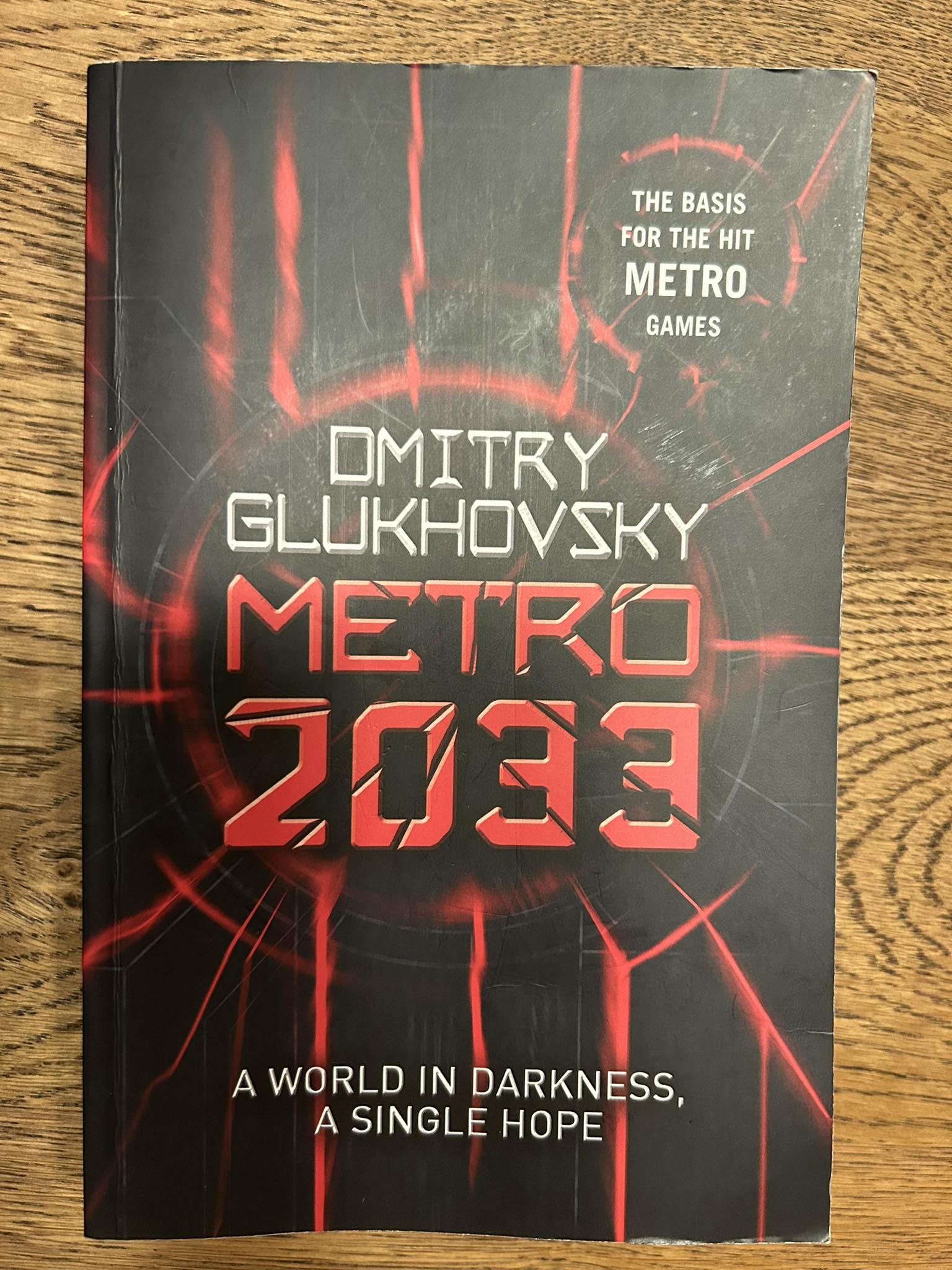
Metro 2033 – Dmitry Glukhovsky

Why was he doing this? So that life could continue in the metro? Right. So that they could grow mushrooms and pigs at VDNKh in the future, and so that his stepfather and Zhenkina’s family lived there in peace, so that people unknown to him could settle at Alekseevskaya and at Rizhskaya, and so that the uneasy bustle of trade at Byelorusskaya didn’t die away. So that the Brahmins could stroll about Polis in their robes and rustle the pages of books, grasping the ancient knowledge and passing it on to subsequent generations. So that the fascists could build their Reich, capturing racial enemies and torturing them to death, and so that the Worm people could spirit away strangers’ children and eat adults, and so that the woman at Mayakovskaya could bargain with her young son in the future, earning herself and him some bread. So that the rat races at Paveletskaya didn’t end, and the fighters of the revolutionary brigade could continue their assaults on fascists and their funny dialectical arguments. And so that thousands of people throughout the whole metro could breathe, eat, love one another, give life to their children, defecate and sleep, dream, fight, kill, be ravished and betrayed, philosophize and hate, and so that each could believe in his own paradise and his own hell . . . So that life in the metro, senseless and useless, exalted and filled with light, dirty and seething, endlessly diverse, so miraculous and fine could continue.

In a post-apocalyptic world, humans eke out their existence in the depths of several Moscow metro stations, surrounded by horrors, radiation, mutants, rats and their own fears. The protagonist, Artyom, engages in a journey to deliver a vital message that would inform and allow people to react to an external threat. In his odyssey, traders, mystics, hunters, idealists help or hinder him in various societies, often extreme, that survive in the metro stations. In a world where bullets are currency, humans cling to life in the underground and surface travels are mortally dangerous, the will to fight and survive, the thoughts of an existence close to the abyss is explored by the Russian author, in a compelling and creative story.

The book was later translated in a successful series of horror video games. For some readers, the exploration of human mind in a post-apocalyptic and grim survival story by Dmitry Glukhovsky could look monotonous; for others, it may a fascinating dive into what gives the survivors the grit to face all the horrors and the grim future.

The story of creating this book is unusual, as Glukhovsky wrote it and publish it on his website as an interactive experiment, when he was 18. It was later published on paper three years later, in 2005. Two more volumes in the series continued in 2009 and 2015,

Overall, a creative, diverse exploration of human mind and society in a post-apocalyptic, grim world, via a fulfilling odyssey.

A Memory Called Empire – Arkady Martine (Teixcalaan, book 1)

You pump the dead full of chemicals and refuse to let anything rot—people or ideas or … or bad poetry, of which there is in fact some, even in perfectly metrical verse,” said Mahit. “Forgive me if I disagree with you on emulation. Teixcalaan is all about emulating what should already be dead.” “Are you Yskandr, or are you Mahit?” Three Seagrass asked, and that did seem to be the crux of it: Was she Yskandr, without him? Was there even such a thing as Mahit Dzmare, in the context of a Teixcalaanli city, a Teixcalaanli language, Teixcalaanli politics infecting her all through, like an imago she wasn’t suited for, tendrils of memory and experience growing into her like the infiltrates of some fast-growing fungus.

The book follows the arrival of the new ambassador, Mahit Dzmare, from the independent Lsel station to the empire of Teixcalaan, and her adventures following the murder of the previous ambassador, all while trying to preserve the independence of a her small station. This is a detective thriller, intertwined with imperial intrigue and friendship, on the streets of the monumental capital of the largest interstellar empire.

This is the debut novel for the author AnnaLinden Weller, writing under the pseudonym Arkady Martine. The novel won the Hugo Award and was a finalist for the Nebula Award for Best Novel of 2019.

What is impressive in this book is the quality of prose, exceptional world-building, relatively uncomplicated plot and the memorable characters. The names chosen are unique and the book creates a new vocabulary for this glorious empire of Teixcalaan. One of the profound themes explored is of self and multiple identities, via a device called imago machine, which preserves the memory of the deceased and allows to be incorporated in a new person. The results are generally positive, the deceased being of help, but not without risks.

While usually not my type of book (it was more fiction than science), the quality of prose was undeniable and the story engaging. It is a long book, but hours of reading passed unnoticed, showing the grip that the book makes on the reader. At the no point the story stagnated or paragraphs felt unneeded, despite it’s considerable length. A highly entertaining book.

Mon enfant hérisson – Stéphanie Couturier

Lors d’une crise émotionnelle, prenez l’habitude de réagir en trois étapes :

1. Ecoutez sans jugement ce que votre enfant a à dire.Votre enfant a besoin d’une oreille attentive. N’essayez pas de rétablir des vérités.–> L’enfant hérisson se sent considéré.

2. Répétez ce que vient de vous dire votre enfant en parlant de son émotion.”Tu es profondément triste parce que…”, “Tu es en colère car…”Même si cela vous paraît anodin ou exagéré, cela ne l’est pas pour l’enfant. Le fait d’entendre son parent le dire est une forme de reconnaissance de ce qu’il vit.–> L’enfant hérisson se sent compris.

3. Interrogez-le et proposez-lui votre aide.”Que puis-je faire, que pouvons-nous faire pour t’aider en respectant la consigne initiale ?”L’enfant participe ainsi aux solutions.–> L’enfant hérisson devient acteur de son apaisement.

Ces trois étapes contribuent à la construction d’une image positive de soi. L’enfant se sent ici soutenu, compris, respecté et considéré. Cela désamorce de nombreuses situations et l’aide à se construire dans la sérénité, ce qui est un réel investissement pour son bien-être futur. Un ticket d’or pour sa confiance en lui et son estime de lui-même !

Le livre est une exploration de la façon d’identifier et de gérer les enfants émotifs. Il suit les différentes étapes d’un enfant émotif, du bébé à l’adolescent, en offrant des solutions et de nombreux exemples.

L’auteur, Stéphanie Couturier, est thérapeute spécialisée dans l’accompagnement de la sphère émotionnelle des enfants. Elle présente ainsi un passé d’enfant émotif et parle de son vécu et de celui de ses enfants.

Le livre est extrêmement utile pour identifier et comprendre les raisons pour lesquelles un enfant se comporte d’une certaine manière, parfois apparemment irrationnelle. Il guide les parents dans la compréhension et la gestion de leurs enfants et montre comment un enfant émotif peut s’épanouir. même si le livre ne dit rien d’inhabituel, la façon dont il est structuré et écrit aide le lecteur à mieux comprendre le comportement de l’enfant.

Un livre vraiment utile pour tous les parents, en particulier pour ceux qui ont des enfants émotifs.

Rogue Protocol (The Murderbot Diaries, book 3) – Martha Wells

I stared straight ahead. If there was one thing good about this situation, it was reinforcing how great my decisions to (a) hack my governor module and (b) escape were. Being a SecUnit sucked. I couldn’t wait to get back to my wild rogue rampage of hitching rides on bot-piloted transports and watching my serials.

In the third book of the series (diaries because the protagonist presents the story in a first-person narrative), our rogue robot heads to a mining outpost to discover more about the past of the company that created it and mysteriously deleted some of its memory. It’s purpose is to investigate some of the stories related to this backwater, semi-abandoned outpost.

Again, the story is immersive and the investigation presents itself as a highly entertaining detective story. What is unique in this series, but particularly in this book, is how the author, Martha Wells, enters in the mind of the reader, asking questions that the reader asks as well, but in comical, ironical way.

The novella (indeed a rather short book) feels lean and the plot is tight, following a protagonist who is gradually developing while learning of the world. Few passages feel over-written, but the best of it, is that there is no endearing impression that part of the plot are missing or that some characters are under-developed. The book feels complete, despite being a novella. Additionally, the way the previous books of the series are referenced is done in short paragraphs, with well-chosen words, with excellent prose and humour.

Again, a lovely book, for a short read in the evening. What a series!