Abaddon’s Gate (The Expanse, book 3)

Violence is what people do when they run out of good ideas. It’s attractive because it’s simple, it’s direct, it’s almost always available as an option. When you can’t think of a good rebuttal for your opponent’s argument, you can always punch them in the face.

Abbandon’s Gate is the third book in the space saga The Expanse, where the action is, this time, in a space bubble built by an alien civilisation. The alien protomolecule built a gate next to Uranus, in the far future of humanity, which conquered our solar system, but not the stars. The humanity is still divided into Earth, Mars and the humans in the asteroid belt, united in the Outer Planets Alliance. All three factions are driven into the gate, and the space bubble, by the running protagonist, the adventurer and captain James Holden.

As in other books of the series, the story follows 4 characters, which gradually reunite in an epic finale. Carlos “Bull” de Baca is the security officer of the Belters’ flagship, the largest ship in the system. Anna Volovodov is a preacher of the Methodist church, volunteering in a United Nations (of Earth) ship to go into the gate. Clarissa Mao, daughter of the rich and powerful Mao (now imprisoned) plots against James Holden, whom she believes created her father’s downfall. Finally, the four story is following James Holden, the captain of Rocinante and its ragtag crew of four.

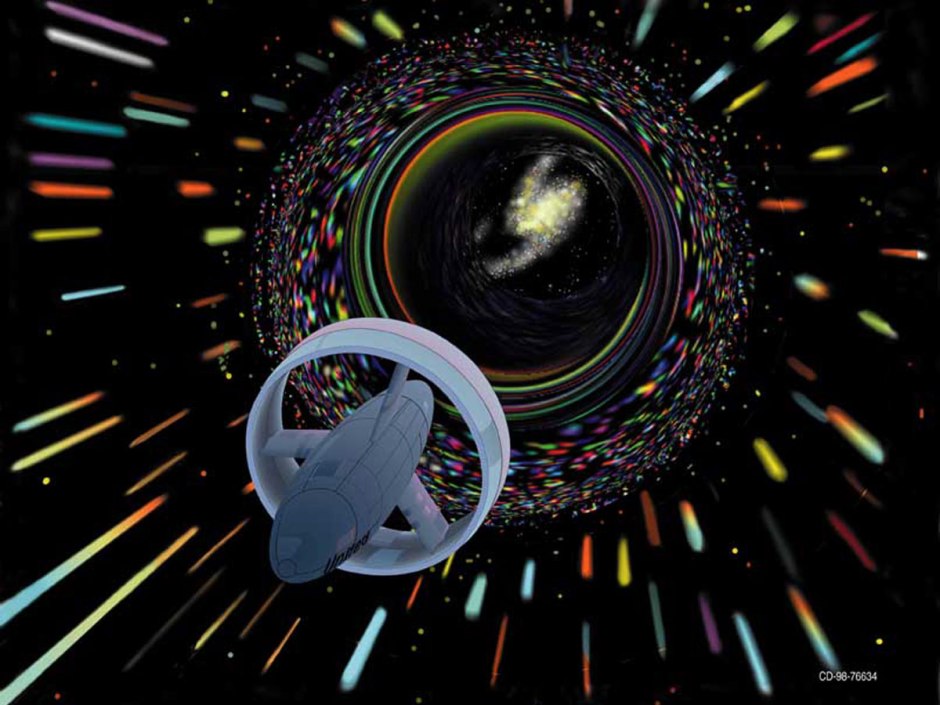
The gate created by the alien protomolecule opens to a space bubble with thousands of other gates, to other stars, controlled by a central machine. The machine reduces speed and gravity by its will, defying physics. James Holden finds, guided by the mysterious, form that appears as detective Miller (Holden’s dead companion from the first book) that the Godlike alien civilization, spanning hundreds of stars, was destroyed by an even bigger force. And that was 2 billion years ago. But what stays behind those gates? What planets or alien forces?
Interestingly, Abbadon appears in the Hebrew Bible and means destruction or the realm of the dead. This is a reference to the destruction that the gate may bring.

Overall, while a bit weaker than the other book, this is still great storytelling, world building and memorable characters. What a series!
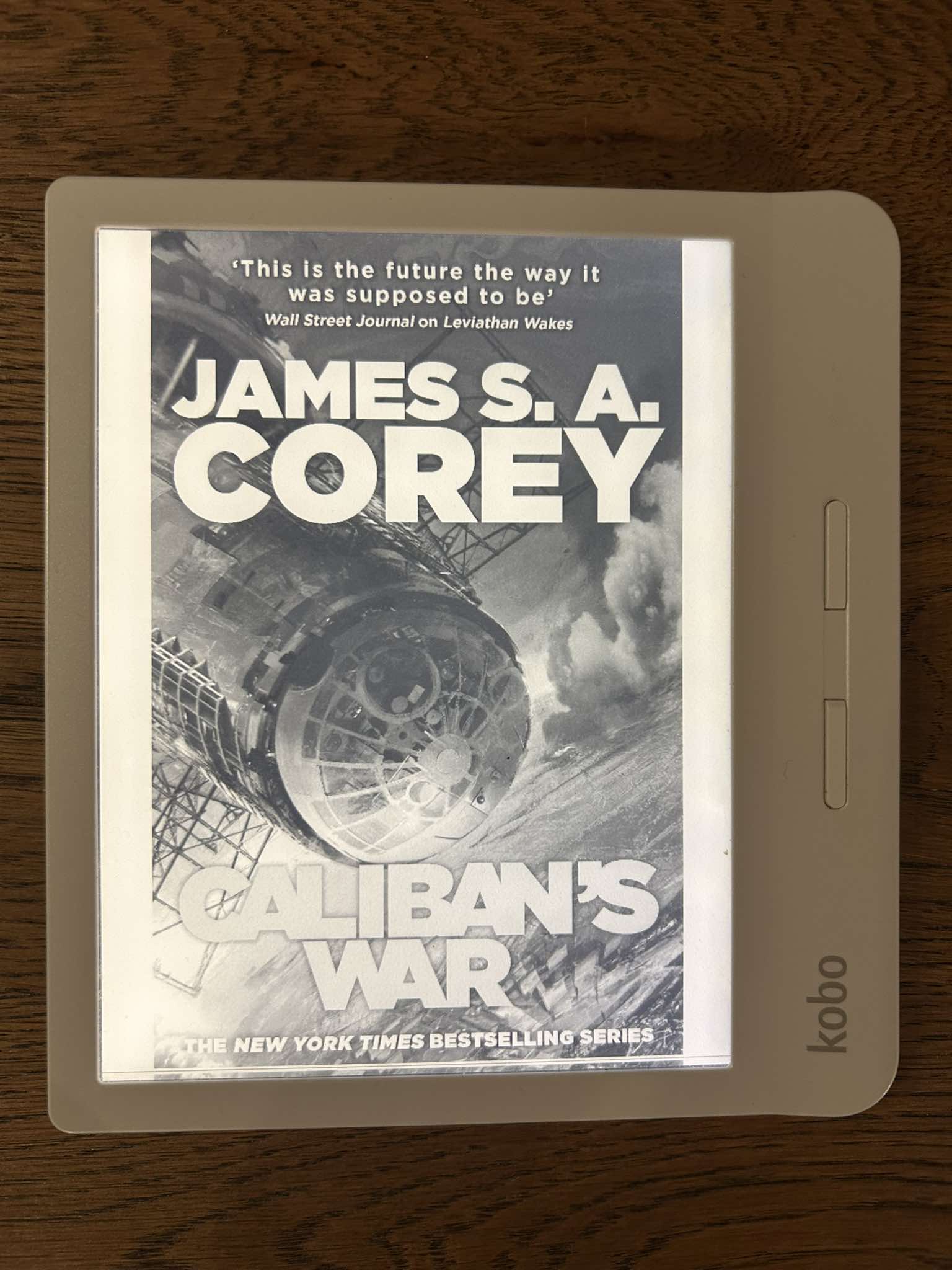
Caliban’s War (The Expanse, book 2)

There was a relentless forward motion to the man. The universe might knock him down over and over again, but unless he was dead, he’d just keep getting up and shuffling ahead toward his goal. Holden thought he had probably been a very good scientist. Thrilled by small victories, undeterred by setbacks. Plodding along until he got to where he needed to be.

The story of the first book, of an alien protomolecule seemingly indestructible, intelligent and lethal to humans, expands to another level, where politicians and planets get involved. The plot is driven ahead by not two, but four protagonists: the captain – James Holden, the doctor – Prax, the politician – Avasarala and the soldier – Bobbie. While each starts from its own background, the protomolecule brings them all together, trying to stop the increasing menace. While planetary governments try to weaponize this alien artefact, the molecule learns and becomes increasingly intelligent. Our four heroes maneuver around politics and dangerous situations to destroy the threat, but the war goes on.

The book introduces two memorable characters: the UN politician from Earth, Avasarala and the Martian female soldier, Bobbie. They team together, more by chance than design, to keep the two planets fighting against the common threat. Avasarala is diminutive, elegant, sophisticated, foul speaking, machiavellian, happily married and old. Bobbie is the opposite.

I rarely continue books in a series, but this space saga is exceptional. Great story building, memorable characters with credible motivations, a tight plot, hard science fiction, great writing – overall, an truly enjoyable reading.

The book’s title is unusual, as Caliban is never mentioned in the book. It is, in fact, a reference to the character Caliban in Shakespeare’s “The Tempest.” This character tries to free himself from subjugation of his masters, as the protomolecule tries to shake the bondage of those who try to weaponize it.

Excellent series, that goes to about 9 books. Long, but worthy reads.

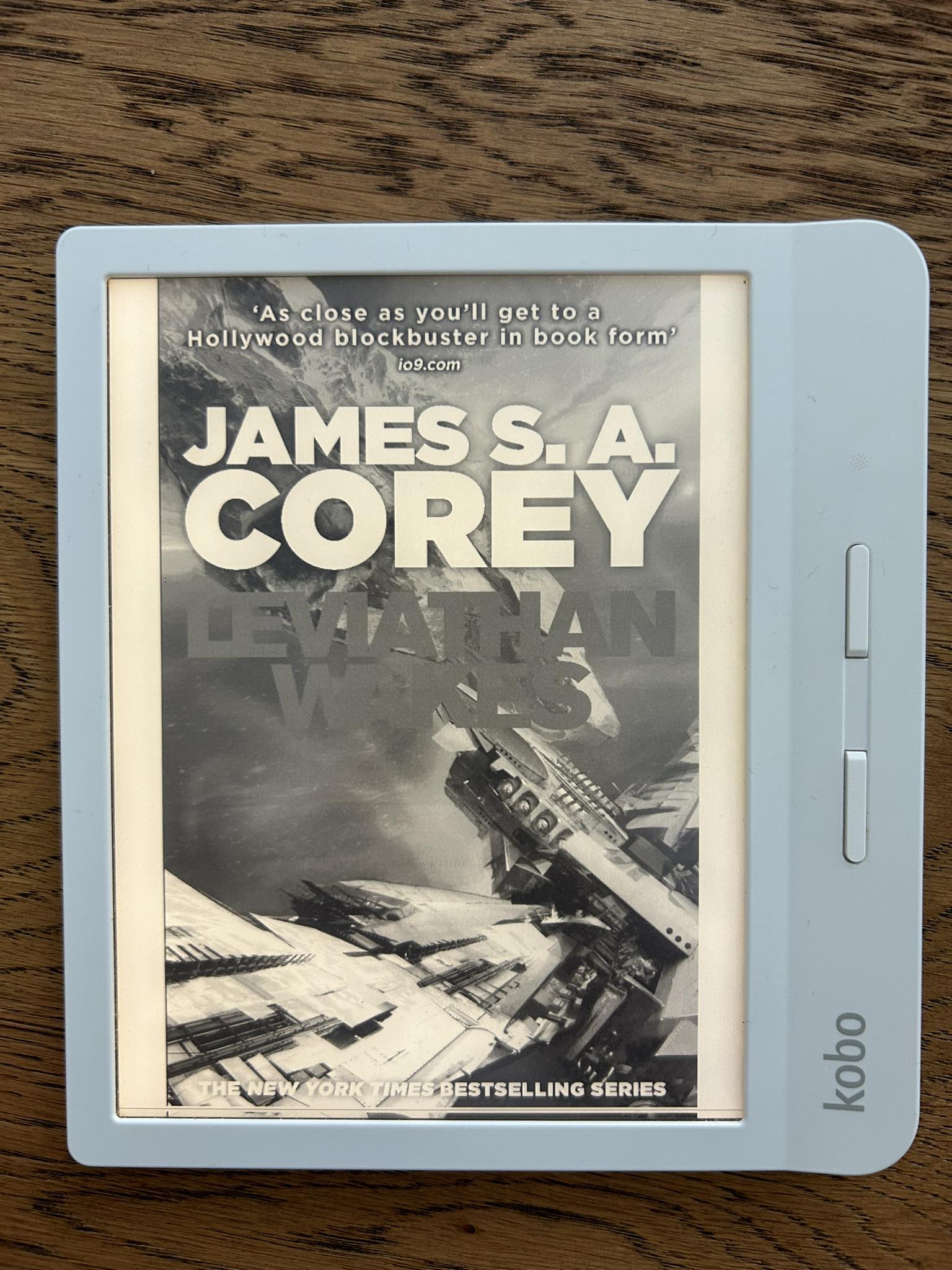
Leviathan Wakes – James S.A. Corey (The Expanse, book 1)

A hundred and fifty years before, when the parochial disagreements between Earth and Mars had been on the verge of war, the Belt had been a far horizon of tremendous mineral wealth beyond viable economic reach, and the outer planets had been beyond even the most unrealistic corporate dream. Then Solomon Epstein had built his little modified fusion drive, popped it on the back of his three-man yacht, and turned it on. With a good scope, you could still see his ship going at a marginal percentage of the speed of light, heading out into the big empty. The best, longest funeral in the history of mankind. Fortunately, he’d left the plans on his home computer. The Epstein Drive hadn’t given humanity the stars, but it had delivered the planets.

This is space opera at it’s finest. Humanity has colonized Mars, the Moon and the asteroid belt. The socioeconomic interactions between the 3 main powers (Earth, Mars and the belt) are masterfully presented in a detective story through the eyes of a belt cop and an ice freighter crew. The world building is so well thought, presenting how society evolves in the new environments (including elements such the effects of gravity, economics, languages, slang, trade).

Jim Holden is a the executive officer of an ice transport freighter, who survives the unexplainable consecutive ambushes with several original survivors. Who is trying to push the Belt and Martians to war? Detective Miller is a depressed, but skilled cop, trying to do his job. His instincts tingle when a case of missing girl is given to him, he feels it is important and becomes obsessed with it. Why so many crime figures are disappearing from Ceres, the main port of the belt? Where is the missing girl, why is he told to drop it? Meanwhile, an alien artifact is discovered, but kept secret by Earth corporations. How are all those webbed together?

The detective story webbing together the plot is engaging, but the real appeal of the book is the world development, making such an innovative and creative narrative. This is hard science fiction at its best.

Interestingly, James S. A. Corey is not an author, but the pen name used by collaborators Daniel Abraham and Ty Franck, which used their middle names to create the pen name.

The series was exceedingly well received. Leviathan Wakes, the first book, was nominated in 2012 for the Hugo Award for Best Novel and Locus Award for Best Science Fiction Novel. The book series itself was nominated for the Hugo Award for Best Series in 2017 and won it in 2020. To top it off, it was adapted for television, for successful 6 seasons.

The Expanse has a total of 9 novels, plus a dozen or so additional novellas. This makes for pretty long reading, but of great quality. A great start for the series.

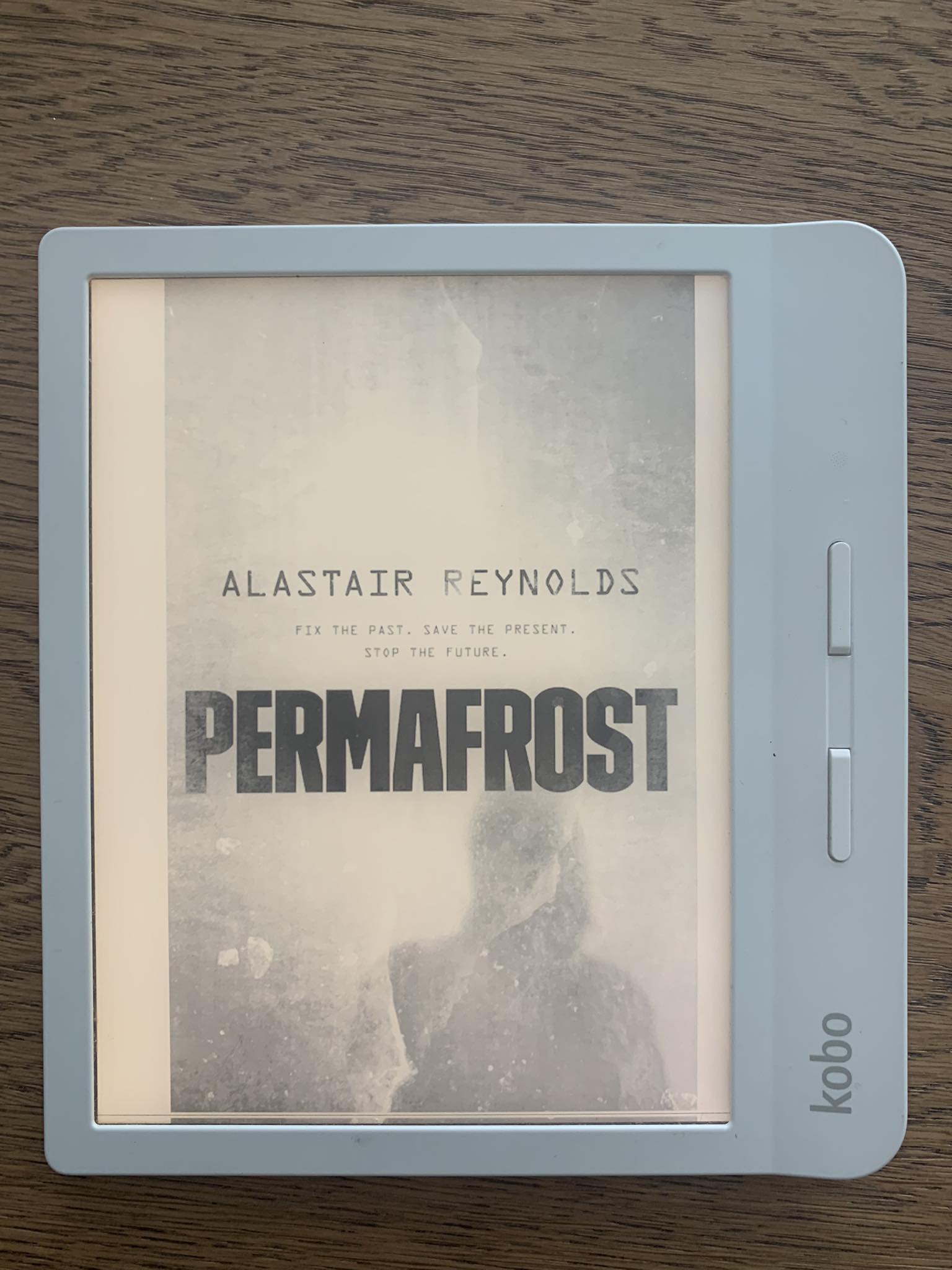
Permafrost – Alastair Reynolds

Time wasn’t a river, she said, and it wasn’t a circuit-diagram. Nor was it a tree with multiple branches. It was a block structure, more like a crystal lattice than any of those old dead-end paradigms. It was a lattice that spanned the entire existence of the universe, from beginning to end. There were no alternate histories, no branches where the Roman empire never fell or the dinosaurs were never wiped out. Just that single lattice, a single fixed structure. We were in it, embedded in its matrix.

The novella by the praised Welsh author Alastair Reynolds explores the theme of time traveling, looking at retro-causality (an effect precedes its cause in time) and grandfather paradox (a cause is eliminated by its own effect and so preventing its own cause). The world is on the brink of disaster in 2080, due to a virus that gradually infects different species of insects, killing them. The effect is the fall of crops and collapse of environmental chains. In this life-ending world, humanity desperately tries new, dangerous solutions, the main project being time-traveling. However, the limits of what can be done in the past are well understood and limited by the traveling technology itself.

While only a short story, the book is grappling the reader with its immersive plot and, as usual from Alastair Reynolds, the science is well-researched. There is no magic bullet or perfect protagonist. This makes the story credible, mature and thought-provoking.

Alastair Reynolds is a prodigious author and scientist, with a PhD in astrophysics from the University of St Andrews and worked for the European Space Agency. His books are dealing with science fiction, particularly a branch of the genre called hard scifi, meaning a concern for scientific accuracy and logic.

The title of the book is slightly misleading in my opinion, as the concepts explored in the book are not really dealing with a world of ice, but with time traveling, forced as a potential solution by an ecological disaster.

Nevertheless, overall, a good, thoughtful, grappling short book by a master of hard scifi.

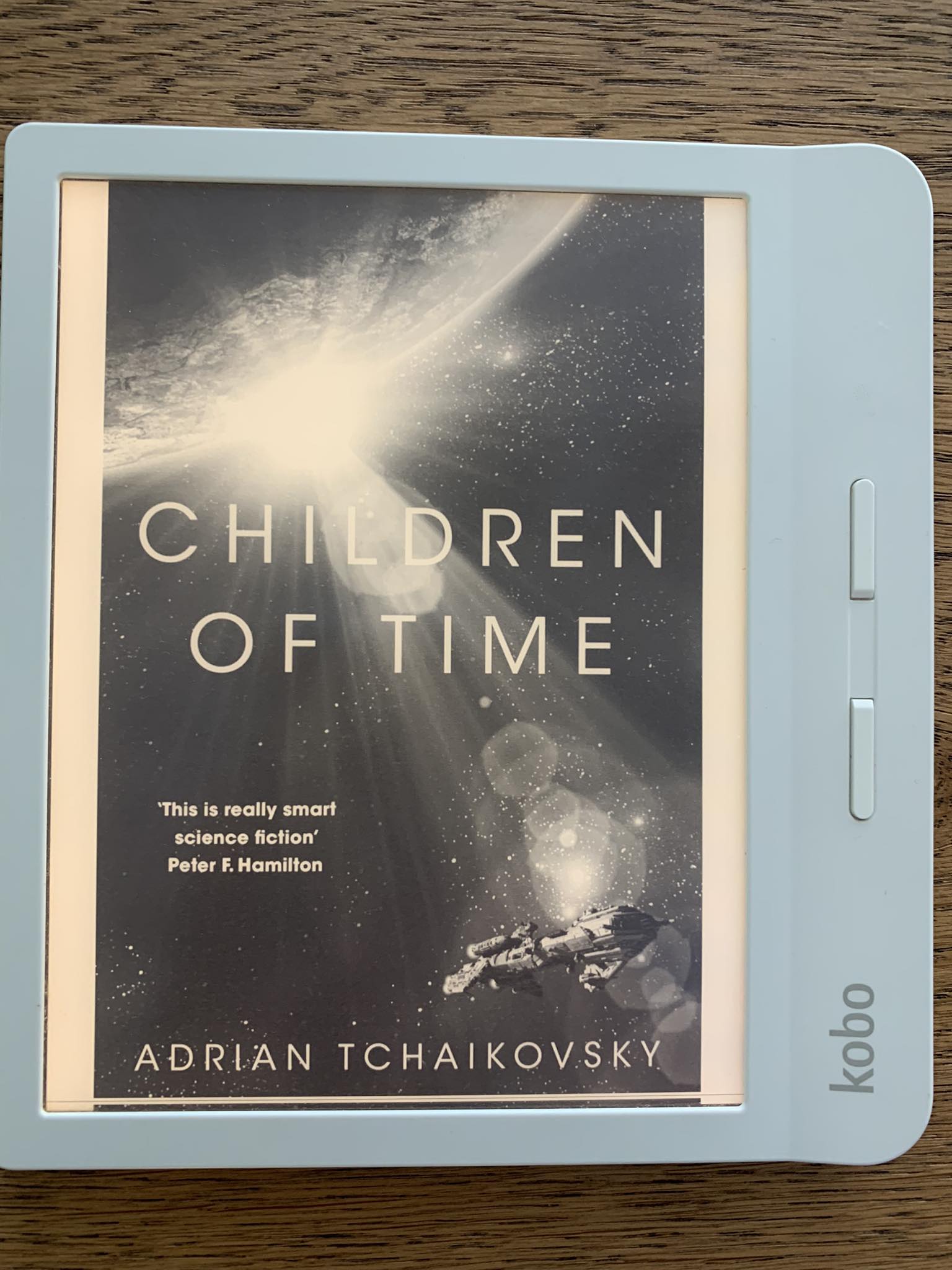
Children of Time – Adrian Tchaikovksy

There had been those back on Earth who claimed the universe cared, and that the survival of humanity was important, destined, meant . They had mostly stayed behind, holding to their corroding faith that some great power would weigh in on their behalf if only things became so very bad. Perhaps it had: those on the ark ship could never know for sure. Holsten had his own beliefs, though, and they did not encompass salvation by any means other than the hand of mankind itself.

This science fiction book is a grappling story of a race for survival for humanity, escaping a poisoned Earth, in an ark traveling the stars towards a new home. The terraforming process that the old, tech advanced Earth has started elevates a species to unprecedented cognitive levels. The human, ark-traveling, last refugees and the legacy of old Earth are heading for a clash.

Children of Time started the series with the homonym name. The book, from 2015, is widely acclaimed and was awarded the Arthur C Clarke book prize.

The themes explored by the author Adrian Tchaikovsky, alienness, star travel, species evolution, disaster, artificial intelligence, survival, cryo sleep, display profound thinking of how these themes may occur in the future and what would be the effects.

A gem of classic science fiction literature.

Well-paced plot, fluid writing, memorable characters, an engaging story, an unpredictable plot and profound themes explored – make the ingredients of a milestone setting book. A truly enjoyable and captivating read, on par with Alaistair Reynolds and Kim Stanley Robinson.

[Cover photo by AndreyC called River on Pixabay.]

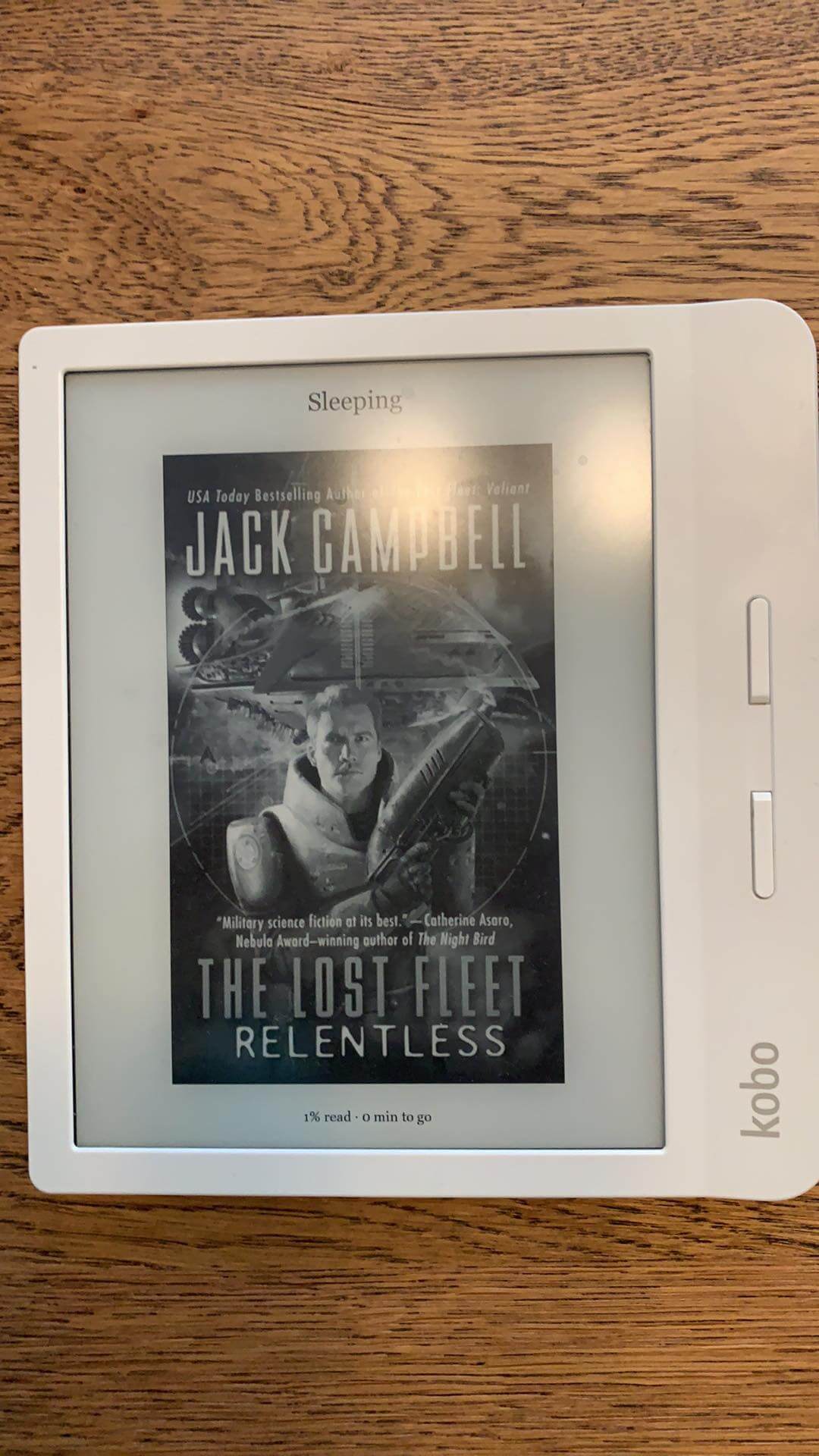
Relentless (The Lost Fleet, Book 5) – Jack Campbell

He felt the comfort of being part of an eternal cycle symbolized by the gold strips on either side of the black mourning band he wore. Light, dark, light. The dark was just an interval.

The fifth book in the Lost Fleet series continues the odyssey of Captain Jack Geary, leading the Alliance Fleet back to home territory. However, a bigger threat than the rival Syndics is looming beyond the stars, a devious alien intelligence.

Already far in the series, the story is still captivating and it is a tribute to the writing skills of author, Jack Campbell, that he can come with new and unexpected ways to marvel the reader. The adventure is still very much anchored in hard scifi and no magic bullet happens that solves everything. Every progress of the fleet is marred by dangers and potential mistakes. Captain Geary is still human and, despite his undoubted talent, he loses ships. He recognizes himself that he could have done better.

Nevertheless, the fleet advances, and the advantages that were at the beginning (surprise tactics) fade away, as the Syndic learn themselves how to deal with the Alliance movements. However, now the Alliance’s sailors are veterans and know well their ships and how to maneuver them. Furthermore, the captains act more like a team and cover each other way better than at the beginning of the odyssey.

The fifth book in the Lost Fleet series continues the odyssey of Captain Jack Geary, leading the Alliance Fleet back to home territory.

On the negative side, the editing of the book seems to slightly drop the quality, with some extra spaces or commas missing. The vocabulary is less rich than other similar scifi series and the hard scifi part does not expand more than the already established environment. It would have been nice to know more about life in 24th century. Finally, it feels that the story gives too much time to the protagonist’s love interest.

Nevertheless, the book remains captivating, very hard to leave the book (better saying the e-reader) from a reader’s hands. Let’s see what happens in the next book of the series!

Absolution gap (Revelation Space Book 3)- Alastair Reynolds

“When two or more of their lighthuggers met, they would compare and update their respective nomenclature tables. If the first ship had assigned names to a group of worlds and their associated geographical features, and the second ship had no current entries for those bodies, it was usual for the second ship to amend its database with the new names. They might be flagged as provisional, unless a third ship confirmed that they were still unallocated.”

A meandering, long and unexpected finish for the Revelation Space series. The characters from the last chapter are still followed by the Inhibitors, the civilization hunters and destroyers, but a mysterious, disappearing planet could give key answers.

Towering at almost 700 pages, this hard scifi book still comes with intriguing and though-provoking ideas, such as moving cathedrals, Gothic spaceships, religious viruses and many more. However, the changes seem more of style than substance, at least compared with the previous books.

It was an entertaining book and, despite its length and a falling flat ending, the writing, editing, vocabulary remained great.

The fight against the Inhibitors begins.

Redemption Ark (Revelation Space Book 2) – Alastair Reynolds

Is that what happened to Mercier?” “No—not quite. In so far as I understood Sukhoi’s work, it appeared that the zero-mass state would be very difficult to realise physically. As it neared the zero-mass state, the vacuum would be inclined to flip to the other side. Sukhoi called it a tunnelling phenomenon.” Clavain raised an eyebrow. “The other side?” “The quantum-vacuum state in which matter has imaginary inertial mass. By imaginary I mean in the purely mathematical sense, in the sense that the square root of minus one is an imaginary number. Of course, you immediately see what that would imply.” “You’re talking about tachyonic matter,” Clavain said. “Matter travelling faster than light.
This is the second book in the Revelation Space trilogy, following the first book with the same title, and one of the books from the Revelation Space universe.

Humanity in 26th century achieves a level of space traveling and technological development which triggers ancient machines called Inhibitors designed to detect and eliminate intelligent life. Inhibitors have their own, well thought reasons to these purges. They are not mindless, evil machines, but instruments intended to preserve life in the long term.

The plot follows the search for several doomsday weapons hidden on a lighthugger, the name for human spacefaring ships. The protagonist, Clavain, is a bit of an old maverick, crossing between human factions.

The book explores the question of why we are alone in the universe despite having a rather middle aged galaxy. The book and the overall series is an extremely well thought and well written universe. While the plot is good, but not exceptional, the profoundness of technological development and realism of astrophysical phenomena is astounding. This is an exceptional hard sci-fi and I am puzzled why it was not nominated for any sci-fi prizes.

As in the previous book, the vocabulary used is gargantuan, making it an educational reading, including a good introduction in astrophysics. Even more impressive, the wording is not hindering the pace of the story, which makes the novel a beautiful crafted and immersive reading.

On the downside, the length of the book is rather excessive and some more limitations on technology could be envisaged.

Overall, this is a fantastic hard sci-fi novel.


Revelation Space (Revelation Space Book 1)- Alastair Reynolds

I don’t know.” That was typical Sajaki; like all the genuinely clever people Sylveste had met he knew better than to feign understanding where none existed.

Revelation Space is a hard scifi novel, the first in the “Revelation Space” trilogy, where humans explore stars, alien civilizations and mysterious planets. An archeologist, an assassin and a ship lieutenant interlinked stories make the protagonists of a superb dystopian adventure, with realistic world building.

Imagining humanity in the 26th century is a difficult endeavor, but Alastair Reynolds does a fantastic job in creating an universe that is imaginative, bold, mind-blowing, but still respects the basic rules of science. It does help that Reynolds is a real scientist, who tries hard to create a believable, realistic universe.

The stories of the three protagonists start separately and the reader sometimes feels lost, but gradually the stories converge and create an entertaining and imaginative adventure.

The theme of why we are alone in the universe is explored, despite proofs of ancient civilizations being found. The novel presents itself as a space opera, but the technology does not burden the reader. The adventure focuses on human actions, not on incredible technology feats.

Humanity in 26th century is not an utopia, but, similar with today, it is has good and bad, factions, love, war, diseases, family, priests. The way those concepts are brought forward in 600 years is thought provoking and credible.

One of the biggest strengths of the book is the extensive vocabulary. It was one of those situations when I was happy reading it from an e-book, as I had to search for meaning of words.

While the writing suffers sometimes, the vocabulary, the universe creation, the characters, the story, the premises are all compelling arguments for a great trilogy. An amazing book to read.

The Future of Humanity: Terraforming Mars, Interstellar Travel, Immortality and Our Destiny Beyond Earth – Michio Kaku

The deep space transport uses a new type of propulsion system to send astronauts through space, called solar electric propulsion. The huge solar panels capture sunlight and convert it to electricity. This is used to strip away the electrons from a gas (like xenon), creating ions. An electric field then shoots these charged ions out one end of the engine, creating thrust. Unlike chemical engines, which can only fire for a few minutes, ion engines can slowly accelerate for months or even years.

The Future of Humanity is one of the best books on science and astrophysics published in English language. It is now already considered a classical book on futurism and cosmology.

The book starts imagining how humans may solve some of the technical challenges in exploring space. Transport, propulsion, habitats, the economics of trying to finance the space exploration, robots are discussed, using the latest scientific discoveries. A lesson in astrophysics is offered, explaining our sun system, galaxy and the universe at large. Towards the end of the book, the latest theories proposed to explain the universe as wee see it are described.

Michio Kaku is professor of theoretical physics in the City College of New York and a proponent of the string theory (theory in which the point-like particles of particle physics are replaced by one-dimensional objects called strings). He wrote several well-received books on futurism and physics.

It is an awe-inspiring call to try and reach the starts. The message of the book is to not forget the long term: expand beyond our native planet, otherwise the nature will overwhelm us. I am making an exception and will add another quote from this author, which I find revealing:

Looking back at those dark days, I am sometimes reminded of what happened to the great Chinese imperial fleet in the fifteenth century. Back then, the Chinese were the undisputed leaders in science and exploration. They invented gunpowder, the compass, and the printing press. They were unparalleled in military power and technology. Meanwhile, medieval Europe was wracked by religious wars and mired in inquisitions, witch trials, and superstition, and great scientists and visionaries like Giordano Bruno and Galileo were often either burned alive or placed under house arrest, their works banned. Europe, at the time, was a net importer of technology, not a source of innovation.

I devoured the book in about three days. It is easy to read, the concepts from physics are easy to follow, despite their complexity, and the ideas proposed feel innovative and optimistic. A great book, particularly for young adults, searching for a meaning in life.