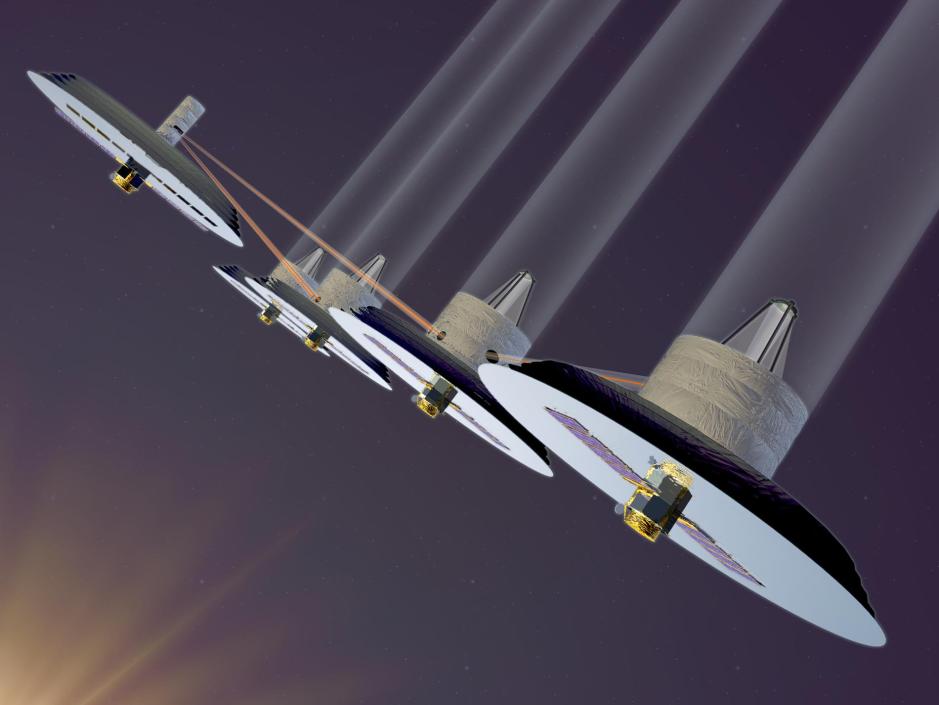
In the evolution of every sentient race, there is a turning point when the species achieves transcendence through technology. The warlike Sh’daar are determined that this monumental milestone will never be achieved by the creatures known as human. On the far side of known human space, the Marines are under siege, battling the relentless servant races of the Sh’daar aggressor. With a task force stripped to the bone and the Terran Confederation of States racked by dissent, rogue Admiral Alexander Koenig must make the momentous decision that will seal his fate and the fate of humankind. A strong defensive posture is futile, so Koenig will seize the initiative and turn the gargantuan Star Carrier “America” toward the unknown. For the element of surprise is the only hope of stalling the Sh’daar assault on Earth’s solar system-and the war for humankind’s survival must be taken directly to the enemy.
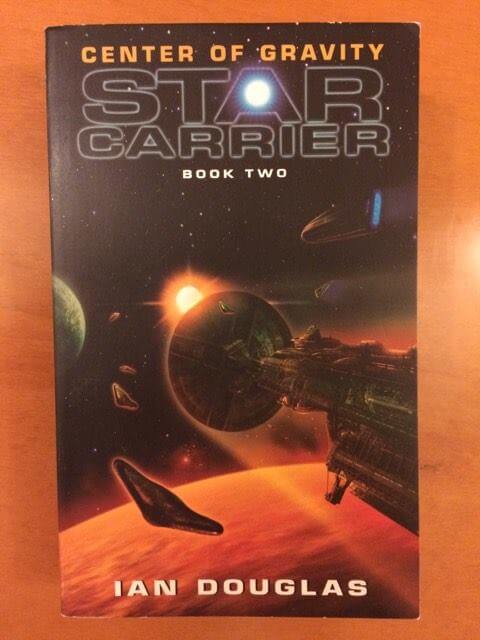
Center of Gravity is the second book of Ian Douglas in the Star Carrier series. The story revolves around the struggle of humanity to battle technologically superior races of allies, in distant future. The main protagonists are Commander Koenig, admiral of a human fleet, and Trevor Grey, pilot on one of the ships from Koenig’s command group.
Battles around the stars
Koenig allows the reader to see things at the strategic level, why the fleet retreats or attacks and the overall plan. Grey’s narrative level is more emotional and tactical, about simple people and how the war affects them.
The main ship of Koenig’s command group is kind of a spaceship carrier, where Grey’s spaceship is allotted to, hence the name of the series, Star Carrier.
Humans battle an alien species called Sh’daar which fight through various other alien species under their control. In the first book, the aliens attacked Earth and humans barely succeeded to repulse the attack, through the efforts of Grey and Koenig.
In the second book, humans strike back, The pace is fast and the star battles and the ship to ship action are dynamic and engaging. While not as innovative in new technologies and ideas as the first book, the story still reads well. Overall, it is a good piece of military scifi.
Felix took the blaze-rifle, the blazer, from the slot in the long row which had a number to match the one pulsing inside his helmet. He checked it for charge, attached it to his back. Scout suits, much smaller than standard issue, had no blazer capacity built in. Scouts carried rifles used by open-air troops for thirty years. Also, they had fewer blaze-bombs-only nine as opposed to the two dozen the warriors carried. Scouts must be fleet, must be able to realize their much greater potential for speed and agility. And, where warrior suits bore different colors for rank and group, all scouts were black. Flat black. Dull, non-shiny, space black.
The book by John Steakley is a classic military sci-fi, written in 1984. Unlike many other military sci-fis enjoying success, it is a stand alone book, not part of a series. Steakley was working on a second book, when he died in 2010.
Felix is a loner, a hero, a veteran and a broken man.
The story is divided into three parts. In the first part, we find Felix, a scout in the Earth’s military, orbiting Banshee, a hostile planet infested by giants aliens called Ants, very similar in behavior with the Earth’s ones. Against all odds, he survives twenty or so drops on the planet, invasions aimed at eradicating the alien infestation. Felix manages to survive, by allowing a kind of a second personality, the Engine, to take his place during the battle.
The second storyline follows a space pirate called Jack Crow. He strikes a deal with a mutineer captain to infiltrate and subvert a research colony, where he finds Felix’s armour, many years after Felix’s storyline.
The third part, the ending, is moving. It is intensely emotional, when Jack Crow finds the story of Felix, his loneliness, desperation and hopelessness during the Antwar and his motivations. The closing scenes are heart-wrenching.
The book takes some elements from Starship Troopers, but remains a beautiful narrative, at times melancholic, at times bursting with action. I finished it in the early hours of a morning, but it left me empty and sad. I think a story is good if it touches the reader and this book touched me.
“The Spirit of Confederation reports she is taking very heavy fire, Admiral,” Hughes told him. “Damage to aft shields, damage to primary broadside weapons, damage to two of three hab modules. Fire control is down.”
Koenig was watching the Confederation‘s struggle on a secondary tactical display, which was relaying the camera view from a battle drone pacing the retreating ships. Straight-edged patches of blackness kept popping on and off along the battleship’s length, responding to incoming fire. One set of aft shields was flickering on and off alarmingly, threatening complete failure. Several sections of her long, thin hull had been wreaked by energies leaking through the shields. The damage was severe, but she continued to fire back.
Earth Strike is the first part of the trilogy Star Carrier, by Ian Douglas. The book presents the war between humans and an alien species, some 400 years from now. The mysterious aliens have the upper hand in technology and intelligence, but humans have some stunning come-backs.
Ian Douglas presents two episodes of this war, following three main characters: Lieutenant Trevor Grey, pilot of a Starhawk (kind of fight plane in space), Commander Marissa Allyn, the wing leader and Admiral Alexander Koenig, commanding America, a large starship, equivalent of a carrier.
Starhawks leaving the carrier.
Their narratives interweave with the star carrier and the fight against the aliens, offering three different perspectives of the war. Koenig’s story presents a hawk’s eye vision, the grand scale of the war; Allyn’s plot is more tactical, allowing chapters busting with fast paced action; while Grey’s inner demons and questions beautifully describe the situation from the common man’s perspective.
The stories intertwine flawlessly, the pace of the plot is just right, the questions don’t seem out of the ordinary and the plot is believable and progresses entertainingly. The book doesn’t have the impressive science background of books such as Seveneves or Aurora, but as a military scifi, is full of action and credible.
There is no wonder that the book by Ian Douglas was well-received by readers and fans of the genre. It is sometimes rough on the edges, but it keeps the reader entertained and wondering what will happen next. A good piece of writing.
Atvar was glad to return to Australia. It was late summer in this hemisphere now, and the weather was fine by any standards, those of Home included. Even in Cairo, though, the weather has been better than bearable. What pleased him more was how far the colony has come since his last visit.
“Then, all we had were the starships,” he said to Pshing. “Now look! A whole thriving city! Streets, vehicles, shops, a power plant, a pipeline to the desalination center-a proper city for the Race.”
“Truth, Exalted Fleetlord,” his adjutant replied. “Before very much longer, it will be like any city back on Home.”
This is the first book that I review after an exchange of books with a friend.
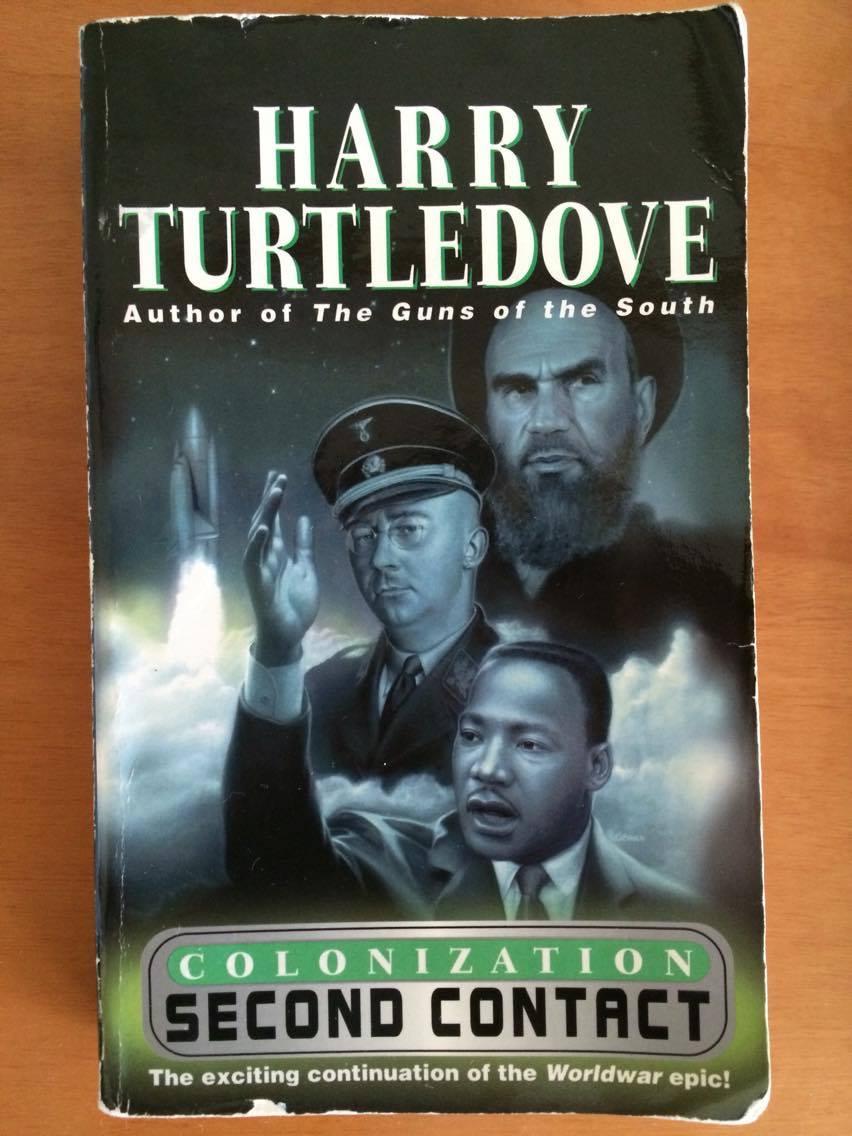
The book presents an alternate fictional history on Earth in the 1960s, when the world, finally at peace, is divided between a species of lizard-like aliens and several human world powers. The World War II was interrupted by the alien invasion, leaving the Third Reich, the Soviet Union and the United States as the leading human powers on Earth. Instead of fighting each other, they had to fought the aliens, loosing all the South, including Australia, South America, all Africa and parts of Middle East.
The book is the first in a series (Colonization), that follows a very successful tetralogy (Wordwar) where the fights between human powers are the aliens are described, during the World War II.
In Second Contact, the alien colonisation ships arrive, in the hundred of millions, creating a huge challenge for humans. Some revolt, but only the United States seems to do something, in space, which will find out in the second book of the series.
Are we alone in the universe?
The author patiently develops the stories and the characters, which come from all the regions, races and powers. Here we can see the Fleet Lord Atvar, the alien traitor, the life of a Jew in Alien-occupied Poland, the struggle of the communist Chinese for liberty against the Aliens and many other interlinked stories. While the stories and characters are numerous, they are easy to follow and understand. Turtledove beautifully reconstructs life after war. The pace of the book is slow, with many dialogues and character development situations, and the plot moves accordingly, leaving the impression that not much is happening. It seems that the book mostly prepares the ground for the series, rather than presenting a story, because many of the plot lines remain open.
An entertaining book to read for the fans of alternative history; definitely not-action packed, but carefully written, with good historical research.
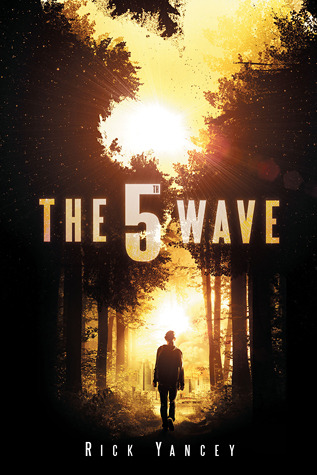
Lately I am sliding towards sci-fi, so I quickly finished the first book of the Fifth Wave trilogy by Rick Yancey. Whilst I am not totally convinced to buy the rest, I liked the story, the plot twists, the protagonists. A bit focused towards adolescents, which I found an unnecessary addition to the overall believable and well-thought scenario.