Koban – Stephen W. Bennett

His octet was to be limited to the same weapons these humans were given. A very detailed video of the compound’s terrain was furnished. This he shared with his octet, because every Krall had an inborn ability to memorize such details for a mission. Repetition was unnecessary.

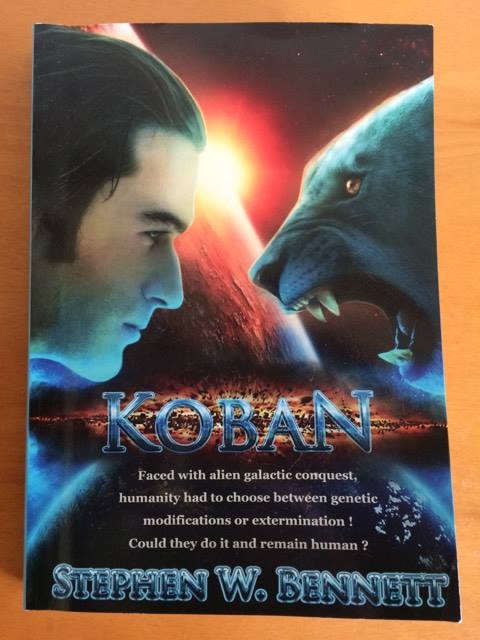
Koban is a very imaginative and action-packed military survival sci-fi. The story revolves around Captain Mirikami, who is transporting in a passenger spaceship scientists to a far colony, when he is attacked by an unknown and far more advanced alien species. Captain Mirikami and all on board is then isolated on a dangerous planet, Koban, where he has to prove to alien war race that humanity deserve to be treated as worthy opponents.

The author creates an entire universe with this book, with a new planet and a new alien species. The Krall are very advanced military, highly physical, destroyed or enslaving every other intelligent species they met so far. They use those wars to enhance their military abilities. Humans are considered weak and very low technologically speaking, but they are still put to trial. If they succeed, aliens plan to destroy humans gradually, rather then in a one big stroke, hence the struggle of Captain Mirikami.

Scifi survival story

Stephen Bennett creates a future where genetic warfare  almost killed the entire male population and changed ways of society. The men are subservient to women and the first part of the book is full with sexist situations. After the genetic war. humanity is not fighting internally nor meeting any other intelligent species in 300 years.

The narrative is captivating, some chapters are looking at events through the eyes of predators on Koban, some others through the Krall aliens. It makes the story a lot more interesting.The book has some fantastic ideas, but with others it went overboard. The sexism is interesting, but not adding to the story. The genetic enhancement done in days leave too many logical holes.

Nonetheless, it is a solid scifi survival book, imaginative, well paced, action-packed and entertaining.

Europe: The Struggle for Supremacy 1453 to the present – Brendan Simms

The hatchet with France was slowly being buried, but there were still serious differences to be ironed out over North Africa. Russia remained a huge threat, and it was against her that Britain’s first major diplomatic initiative of the new century, the Anglo-Japanese alliance of 1902, was directed. The main worry, however, was Germany, which had shown unconcealed sympathy for the Boers and whose naval ambitions were seen as a direct challenge to British maritime supremacy.

At 550 pages, Europe is a very dense book of European history, mainly focusing on German lands, due to their position in the center of Europe. It follows the struggles between kingdoms and nations from an international relations perspective. The depth of detail is impressive, but the way the narration progresses and the events are presented keeps the reader engaged.

The book has everything, from the wars within the Holy Roman Empire to modern Germany, from conquest of Cyprus by Ottomans to Crimean war, from Ivan the Terrible to Putin. While Europe is the main focus, there are historical events from Afghanistan, China or the United Stated which get much attention as well.

Brendan Simms offers a thorough explanation of some crucial questions, such why Germany is so important and why Europe conquered the world. It explains brilliantly the motivations of why some countries acted in a specific way.

International relations in action

Brendan Peter Simms is Professor of the History of International Relations in the Department of Politics and International Studies at the University of Cambridge. He shows an impressive quality of understanding historical events, while not pinning down the reader in an infinite enumeration of details.

Just until the present day analysis, the book is a scholarly masterpiece. The present day  events are a lot less clear as the author wants them to be. Also, international relations and foreign policy are sometimes given too much weight, while other actors, such as technology, leaders at a specific time or culture, were important factors as well.

To sum up, this is a brilliant scholarly book on European history from a primacy of international relations viewpoint.

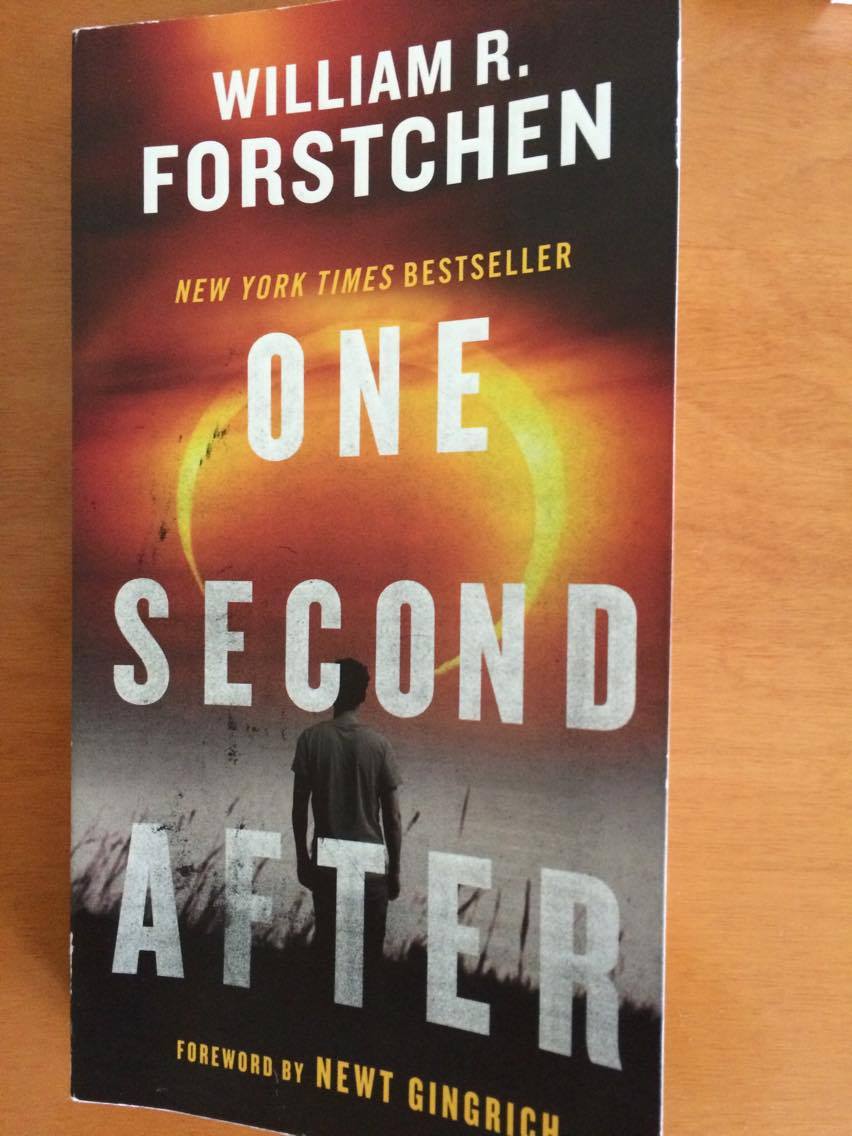
One Second After – William R. Forstchen

She’d always talk about how great Gandhi was. I’d tell her the only reason Gandhi survived after his first protest was that he was dealing with the Brits. If Stalin had been running India, he’d been dead in a second, his name forgotten.

Have you wondered what will happen if electricity suddenly stops coming? This book replies exactly at that questions, under a fictional story following an ex-military history professor, in a small town in the mountains in the United States.

Loss of electricity (not a blackout, in a blackout you kind of expect electricity to return) can have several reasons. In this book, there is an electromagnetic pulse that fries the grid and everything electric (circuitry). This threat is actually possible, and the guy in the US Army looking at this problem (asymmetrical threats) was an advisor for the book.

In case electricity stops coming, the very fiber of society disintegrates: no communications (no phones, television, internet, newspapers), no commerce (no card readers, only cash for a while, then only barter), no food (no refrigeration, no trucks to bring food to supermarkets, no machinery to harvest, no trucks to bring food from silos to animal farms), government loses the monopoly of violence (how can you announce the police of a robbery, crime, rape, if communications are down?), no medicines for the needy (diabetics and others). Also, no hygiene products for women.

Without electricity

Electricity allows to increase tremendously the efficiency of agriculture and food production. Therefore, as soon as it disappears, human population reduces to the efficiency of food production before electricity. This means mass starvation, which the book painfully describes.

The story takes place in the United States, in a mountain town. Hence, some features are present, which might be specific to the country, such as : numerous people have guns that can hunt with and many citizens have military experience. This comes as an advantage, because, as society breaks, individuals usually kept in check by police, re-surge as organized bands, taking food by force and killing. Police can’t quickly intervene, without the instant communications.  Also, many officers and hospital staff might be wanting to return home, at their loved ones, until some form of community protection is realized.

William R. Forstchen is asking many interesting, deep questions about the vulnerabilities of our society. The literary value of the book is quite low, writing is ok, fluid, but not fantastic; however, the strength of the book is coming from the really good questions that it asks. This is kind of hard fiction, from politically conservative perspective.

There are many low chance, high threat events that could destroy civilization. Supervolcanoes, meteorites, robots, plagues, but it is not a lot you can do if a meteorite comes. On the other hand, just blowing a nuclear bomb at high-altitude, for example 50 km up over a continent, the US Army colonel specialized in this issue argues, is enough to destroy a country. In the book, they don’t even know who launched the nuclear bomb. All that they know was that the launch was from a freighter out in the sea and they speculate that maybe a terrorist group or a country not friendly to US or even a large power that covered their tracks really well.

A report from nine scientists was published, unluckily in the day of the 9/11 attacks and, seemingly, a US Congress inquiry was made over this, but overridden by the terrorists attacks.

Overall, a must-read book for the interesting questions it asks.


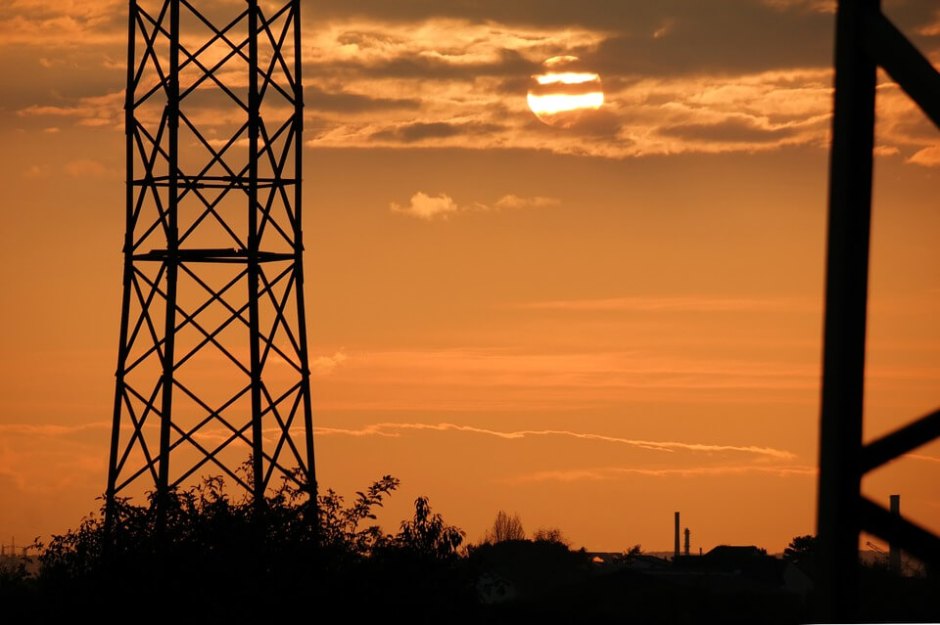
[Picture from http://maxpixel.freegreatpicture.com/Strommast-Current-Pylon-Steel-High-Voltage-Sunset-520008%5D

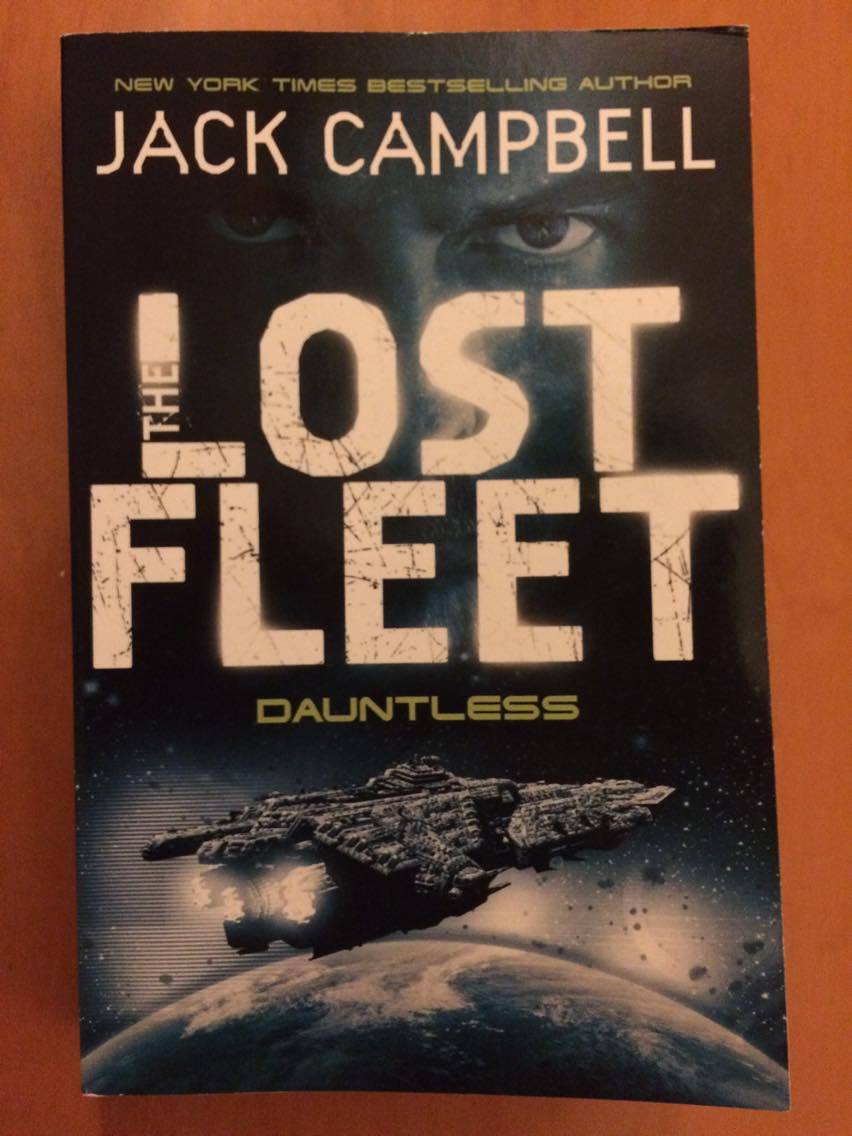
Dauntless (The Lost Fleet, Book 1) by Jack Campbell

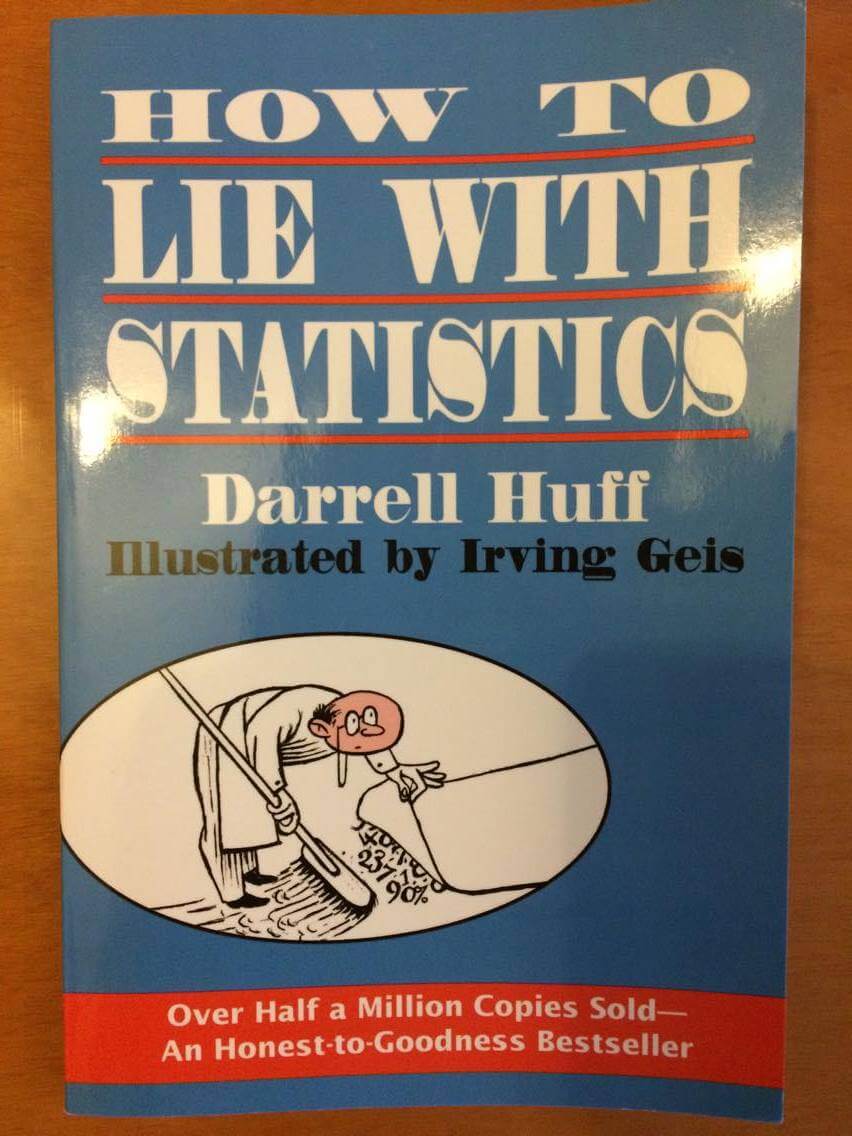
How to Lie with Statistics – Darrell Huff

Extrapolations are useful, particularly in that form of soothsaying called forecasting trends. But in looking at the figures or charts made from them, it is necessary to remember one thing constantly: The trend-to-now may be a fact, but the future trend represents no more than an educated guess. Implicit in it is “everything else being equal” and “present trends continuing.” And somehow everything else refuses to remain equal, else life would be dull indeed.

The book gives straightforward examples of how statistics may be used to deceive. Although written in 1954, it is actual and relevant. The writing is fluid and can be simply understood even from some who is not astute in mathematics.

Manual for critical thinking.

Each chapter presents a particular twist of facts through statistics, usually taking an example from a journal or an advert. Because it is assumed that people give more credibility to facts presented through figures (the more precise, the better), those figures are used to mislead and misinterpret what is really happening.

To mention just a few twists: sample biases (for example a conservative magazine asking readers who they think will win the presidency); inadequate sampling (only 3 or 9 cases); difference between mean and median (the block of apartments might have a different average salary if a very rich man moves in; this doesn’t mean you are richer, but the average goes up); statistical differences lower than than the statistical error presented as relevant differences (such as IQ tests); graphs with no axis measurements; small differences made great through graph manipulations; infographic manipulations (when the difference is, let’s say x2, but the two objects compared in the infographic have surfaces presented at square (x4)); semi-attached figures (when you prove a fact and associate a second one to the first, letting the second fact subtly draw its veracity from the proof of the first); difference between forecast and extrapolation; and many others.

Overall, this little book from Darell Huff is a great defense technique manual for a critical thinker and it is a particular good recommendation for honest journalists, wanting to get the facts from press releases.

Le Style Masculin, Guide a l’usage de l’homme moderne – Bernhard Roetzel

Le look business conventionnel

  1. Le costume foncé en fin lainage constitue la base du look business. Couleurs : bleu foncé ou gris foncé. Le marron et le noir sont interdits.
  2. Avec le costume, il faut une chemise à manches longues dotée de poignets classiques pour le quotidien et de poignets mousquetaires pour les occasions. Le col à pointes boutonnées, au col mou dont les pointes peuvent être boutonnées sue le devant de la chemise, est d’abord un col business, même si les experts en style et les vendeurs disent le contraire. Mais, en Europe, cette variant est souvent considérée comme trop sportive. Encore quelques mots sur un vêtement que beaucoup préfèrent pour le bureau : les chemises à manches courtes conviennent très bien aux chauffeurs d’autobus et aux policiers, mais pas au bureau.
  3. La combinaison veste-pantalon ne convient pas pour le business, mais seulement pour la transition vers le week-end, le vendredi. Exceptions : entreprises moyennes, travailleurs indépendants, collaborateurs sans contacts avec la clientèle. Le blazer bleu marine non plus n’est pas conçu pour le monde d’affaires.
  4. La cravate reste un must. Cela changera peut-être, mais pour le moment elle fait encore partie du costume d’homme affaires dont on ne peut se passer. C’est autre chose si nous parlons de branches dans lesquelles il est de bon ton d’être en tenue décontractée. Mais ce n’est pas ce dont il est question ici.
  5. Les chaussures doivent être noires. Les conventionnelles sont des modelés à lacets et avec peu de motifs perforés. Les derbys à double semelle de cuir sont trop grossiers pour être portes avec un costume raffiné. Les mocassins sont trop sportifs pour le puriste et les chaussures à boucles font trop dandy. La couleur est cependant plus importante que le modèle.

Parfois, je suis étonné de voir le manque d’attention aux vêtements que beaucoup de hommes matures ont. Ça veut dire pas d’habiller tout le temps à la cravate, mais juste une peu d’attention.

le-style
Homme ou garçon ?

Le livre parle des règles de base pour habiller, principalement au bureau, pour hommes, pour les métiers qui ont des contacts avec les clients : finance, politique, conseil, assurance, commerce, etc. Le livre a des chapitres sur Look casual et Tenue de cérémonie aussi.

Bernhard Roetzel couvre aussi les chaussures, les accessoires, le nettoyage et entretien, silhouette et les règles de la coupe. Il donne plusieurs conseils pratique pour construire une garde-robe flexible, de grande qualité et pas chère. Les sub-chapitres sur Combiner les couleurs sont particulièrement très bien écrits.

L’auteur est strict avec ses règles, mais c’est bien de leur lire, juste pour avoir une idée qu’elles sont les grandes fautes. Pour les connaisseurs, Mr Roetzel a quelques sub-chapitres sur les tissues, filature et juste une peu de connaissance générale pour reconnaître un vêtement de bonne qualité.

Je vous laisse avec quelques images des hommes bien habillés.

kingsman-the-secret-service-colin-firth-21
Regarde la différence, Source: http://collider.com/kingsman-the-secret-service-images/
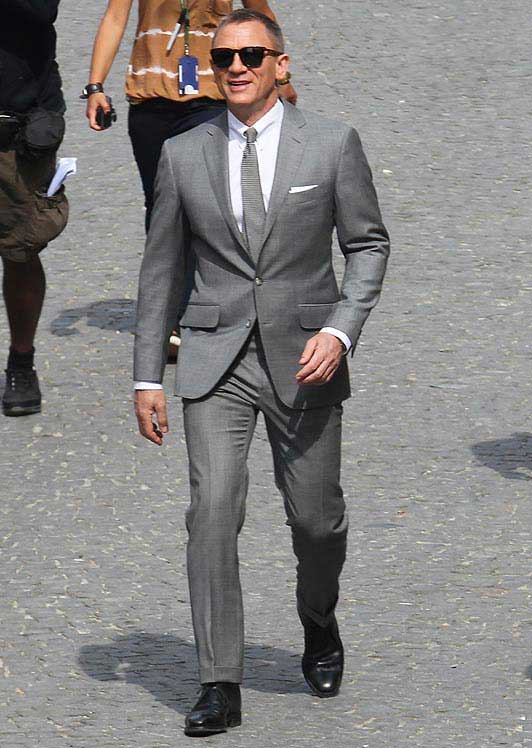
daniel-craig
Promenade au travail Source: https://www.pinterest.com/pin/492933121684658485/

Childhood’s End – Arthur C. Clarke

Man was, therefore, still a prisoner on his own planet. It was much fairer, but a much smaller, planet than it had been a century before. When the Overlords abolished war and hunger and disease, they had also abolished adventure.

Childhood’s End is a good scifi from the accomplished author Arthur C Clarke. It starts with a sudden arrival of some aliens, just after the second world war. They bring peace and prosperity, but never disclose their reason to come to Earth. The book ends somewhat surprisingly, into a kind of transcendence for humankind.

childhoods-end
Quality scifi writing

Although written in 1953, the book keeps pace with current development and innovations, which shows the, what proved to be correct, vision of the author for the future.

The plot has several twists, a couple of stories being intermingled, but the narrative is kept straight and easy to follow. The anchor of the book are the aliens and the slow progress towards the inevitable end. It reminded me of the more recent series of Harry Turtledove (Colonization – also on this website).

The book is an easy read and imaginative enough to be an entertaining scifi almost 70 years after writing.

While I enjoyed reading the book, I think it could have explored more the excellent plot lines developed. A solid reading overall.

[Featured picture by ITU Pictures]

The Future of Almost Everything – Patrick Dixon

Over $5.3 trillion of currencies are traded every day, yet nations like the Philippines, Peru, Poland or the UK hold less than $80bn in reserves to defend against speculators. Enough to last only a few days.

The book is trying to identify future trends, developments that human society might take. Dixon considers that there are six main future trends, conveniently named: Fast, Urban, Tribal, Universal, Radical and Ethical (FUTURE).

Patrick Dixon has a lot of guessing and the arguments he shows are shallow. There are so many statements that some will certainly turn true.

future-of-everything
Guessing the future

Nonetheless, he is intriguing and has a good grasp of what is happening in the world. It makes a good overall read and challenges the reader. However, I did not feel that he bring anything new, all being trends that exist already and are extrapolated into the future.

Patrick Dixon is a professional futurologist, having a company specialized in this niche, with many reputable international clients. He writes often, on various subjects.

The style of reading is very fluid and it follows very neatly the logic of each chapter or trend. It make a good read overall, but not exceptional.

[Feature photo by Kristian Bjornard]

Man of war (series) – H. Paul Honsinger

New contact!” Lieutenant Kasparov announced from the Sensors Station.  “Infrared and mass detection, bearing three-five-seven mark zero-six-eight.  Designating as Hotel eleven.  Classified as definite hostile.  No effort at stealth.”  Then, under his breath, he added, “Arrogant bastards.”

“Very well.”  Lieutenant Commander Max Robichaux, Union Space Navy, Captain of the Khyber class destroyer USS Cumberland, acknowledged the contact report but let the comment pass, not because it was appropriate–which it was not–but because he heartily concurred.  Judging by the quiet murmurs of agreement from the dozens of men at their General Quarters stations in the Cumberland’s Combat Information Center, he wasn’t the only one.

The destroyer’s Executive Officer, Lieutenant Eduardo DeCosta, leaned toward Max and said in a low voice, “No stealth.  Looks like disdain.  We’re not a threat to them, so they don’t need to waste effort making themselves hard to detect.”

Max shook his head and answered at the same volume—his voice would not carry beyond the Command Island, the platform in the center of CIC where the Commander’s and Executive Officer’s Stations, as well as an additional console known as the Commodore’s Station, were located.  “That’s not it, XO.  Krag disdain for us ‘blaspheming monkeys’ is a given.  Their goal is intimidation.  They want to make sure we know they’re here and how many of them are hunting us.  They want us cowed.  Too scared to think.  Believing we’re already dead so we’ll stop fighting to survive.” [Book 3 – Brothers in Valour]

The series follows the adventures of Max Robichaux, captain of a war spaceship engaged in the war with an alien empire, some 300 years in the future.

There are three books in the series: To Honor You Call Us, For Honor We Stand and Brothers in Valour. Interestingly, the first two were self-published (this means there was no publishing house behind them) and enjoyed an immense success.

The series are classical in the sense of story building. Captain Robichaux gradually earns his success and military victories, while training and giving confidence to his destroyer’s crew. On his side, there is his best friend, Dr Sahin, and a reliable council of advisers. The victories follow one after the other, but not without losses. The focus is on the hero and his crew, less on the ship itself.

to-honor-you-call-us
A nice, relaxed reading.

There are writers who like to introduce convoluted psychological plots and mind games. However, the author, Paul Honsinger, likes his story clean; the focus is on the fight itself, on the universe around it and on the crew. This makes the story easy to follow and engaging.

There is no hard scifi in those books, but the plot is imaginative, with nice twists. Also, every decision from the universe (such as why no women on board) is given a credible explanation (a genophage virus  sent by aliens to kill human females, due to the low reproductive rate of human species in comparison with aliens).

The battles are very creative and well described. The evolution of the hero and the crew is impressive. The captain is just an ordinary guy (not a prince or the son of a general), with a lot more grit, common sense and willingness to win that others. This type of character makes the reader to identify him/herself with the hero and follow his decisions.

I loved the series, it was easy to read. It was not a big,  convoluted plot where you have to make notes in order to remember what is happening. One of the most relaxing reads of military scifi.

Center of Gravity (Star Carrier, Book 2) – Ian Douglas

In the evolution of every sentient race, there is a turning point when the species achieves transcendence through technology. The warlike Sh’daar are determined that this monumental milestone will never be achieved by the creatures known as human. On the far side of known human space, the Marines are under siege, battling the relentless servant races of the Sh’daar aggressor. With a task force stripped to the bone and the Terran Confederation of States racked by dissent, rogue Admiral Alexander Koenig must make the momentous decision that will seal his fate and the fate of humankind. A strong defensive posture is futile, so Koenig will seize the initiative and turn the gargantuan Star Carrier “America” toward the unknown. For the element of surprise is the only hope of stalling the Sh’daar assault on Earth’s solar system-and the war for humankind’s survival must be taken directly to the enemy.

Center of Gravity is the second book of Ian Douglas in the Star Carrier series. The story revolves around the struggle of humanity to battle technologically superior races of allies, in distant future. The main protagonists are Commander Koenig, admiral of a human fleet, and Trevor Grey, pilot on one of the ships from Koenig’s command group.
center-of-gravity
Battles around the stars

Koenig allows the reader to see things at the strategic level, why the fleet retreats or attacks and the overall plan. Grey’s narrative level is more emotional and tactical, about simple people and how the war affects them.

The main ship of Koenig’s command group is kind of a spaceship carrier, where Grey’s spaceship is allotted to, hence the name of the series,  Star Carrier.
Humans battle an alien species called Sh’daar which fight through various other alien species under their control. In the first book, the aliens attacked Earth and humans barely succeeded to repulse the attack, through the efforts of Grey and Koenig.
In the second book, humans strike back, The pace is fast and the star battles and the ship to ship action are dynamic and engaging. While not as innovative in new technologies and ideas as the first book, the story still reads well. Overall, it is a good piece of military scifi.
Link to Book 1 review.