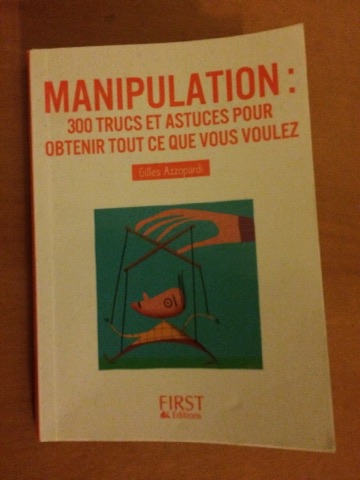
Manipulation : 300 trucs et astuces pour obtenir tout ce que vous voulez – Gilles Azzopardi

Les aînés, plus obéissants ?

C’est bien possible. Une étude menée par deux psys de Nouvelle-Zélande, Matthew Haley et Bruce Ellis, auprès de 350 frères et sœurs, montre que les aînés sont plus respectueux des règles et les cadets, plus rebelles. Cela serait dû au fait que les parents accordent systématiquement plus d’attention et de soin – 3 000 heures de câlins et d’attention en plus entre 4 et 13 ans – aux aînés qu’aux cadets.

Manipulation est un petit livre qui donne des conseils pour améliorer les relations interhumaines. Pour exemple, le livre parle de comment se faire obéir les enfants, même des plus coriaces ou s’imposer, même quand on n’est pas chef.

Petit livre pour être des meilleurs négociateurs

Les conseils sont généraux, mais ils sont souvent supporter par des références aux articles scientifiques. C’est un mix de conseil familiale et conseil de travail, pour trouver un lieu de travail ou pour faire mieux le lieu de travail existent.

Le livre est petit, mais mignon et utile. C’est un bon rappel pour  essayer d’être plus calmes and rationnelles dans la vie personnelle et professionnelle.

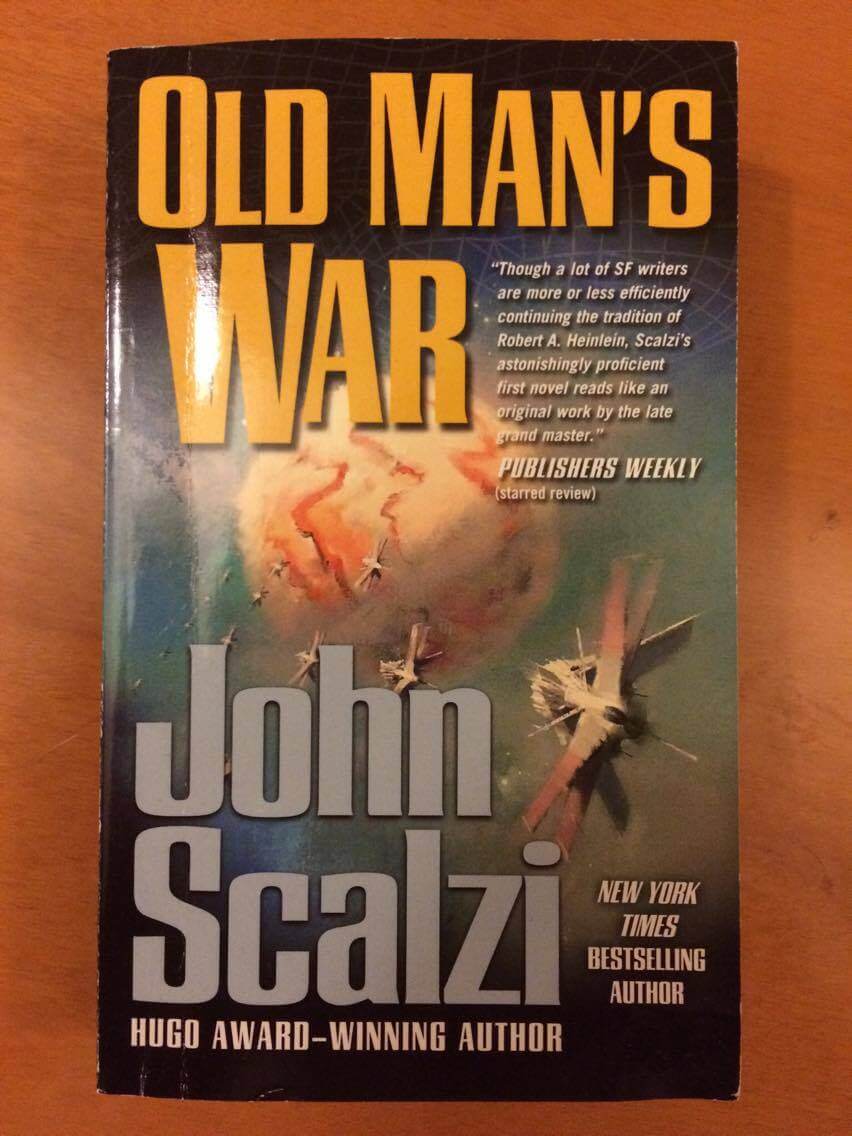
Old Man’s War – John Scalzi

I did two things on my seventy-fifth birthday. I visited my wife’s grave. Then I joined the army.
Visiting Kathy’s grave was the less dramatic of the two.

In a distant future, humanity developed, colonized different worlds and fights wars. The protagonist joins the Colonial Defense at 75 years old and finds that his conscience is transplanted in a new, young, augmented body. With that, he regains practically a second life, but the war he is about to embark and the Colonial Defense are a lot more sinister and mysterious than he thought.

Would you join army if you are given your youth again?

This book is a classical military sci, with an engaging premise and a good follow up. The ending is a bit open, more scifi than military. Overall, the book tilts towards a mystery scifi rather a military story.

Most of the book follows the transformations, physical and psychological, of the hero, John Perry, after the body transplant. After the training camp, the protagonist fight various aliens, gradually climbing ranks.

It was a good book, but not exceptional. Nonetheless, entertaining enough to finish it, but no continue with the series.


From Third World to First: the Singapore Story – Lee Kuan Yew

I was also troubled by the apparent over-confidence of a generation that has only known stability, growth and prosperity. I thought our people should understand how vulnerable Singapore was and is, the dangers that beset us, and how we nearly did not make it. Most of all, I hope that they will know that honest and effective government, public order and personal security, economic and social progress did not come about as the natural course of events.

Lee Kuan Yew is the person responsible for the rise of Singapore, from $400 GDP/capita in 1959 when he became Prime Minister to $12,200 GDP/capita in 1990 when he retired. In this book, he tells his memoirs.

When Lee Kuan Yew took charge, Singapore was part of the British Empire, 4.5 times richer per capita than the city-state. By 1990, a Singaporean was richer than a British. Singapore did not have any natural riches to sell, like oil or diamonds, or rich neighbors, not even security guarantees; it had nothing, but its people.

In a towering 750 pages book, Lee Kuan Yew presents chronologically how he achieved this amazing performance. The book is divided in three parts: internal, foreign affairs and legacy.

In first part, the Singaporean leader explains his policies to develop economically and socially the country. He also describes the struggle against the internal enemies: the Malayans and the communists. He took in 1959 an adamant libertarian, free market, pro-capitalism view, in a time where socialism and communism were seem to be on the right part of history. Even in the prosperous years, efficiency and individualism were not abandoned to socialist policies. Meritocracy and a world class civil service were his out-most concerns.

At some point, his views seem controversial, such as recommending marrying your equal in terms of studies. He himself was not though child of such parents and he proved successful.

Nonetheless, he understood that no policy is infallible and he was quick to adapt and abandon inefficient policies, including capitalist or libertarian ones. If it works was what mattered.

Lee Kuan Yew never lost the elections from his sight. He was not a despot, but an elected leader of a democratic country and he always had internal politics in mind. However, the public opinion was not driving his decisions; he pulled and convinced an entire country to follow him. And it followed, because it always came with solid arguments and it delivered.

His critics, however, remind him of his restrictions to several human rights in Singapore. Lee Kuan Yew tries to explain himself throughout the book, arguing that no former colonial territory erupted in a democracy; they all needed a steady hand.

In the second part, he recalls his experiences with different countries, leaders and parts of the world. The Great Britain, Europe, the USSR, the United States, ASEAN, Japan, Australia, India, the Commonwealth meetings are featuring in his chapters. But amongst them all, Lee Kuan Yew admires the most China and Deng Xiaoping.

The Singaporean leader is, of course, influenced personally by China, as son of Chinese immigrants. He visited often China and his leaders. He was most impressed by Deng Xiaoping, which he considered a giant among men. In Lee Kuan Yew’s words, Deng was the only leader that could gather the loyalty and respect of his fellow Chinese communist leaders in order to change the economic policies of China towards capitalism. Deng did the change in the smart way, gradually, unlike Gorbachev of USSR. Hence, the country did not collapse. Nevertheless, corruption remains a long-term problem in China, Lee Kuan Yew reckoned.

Th third part is the shortest and looks at the new generation of Singaporean leaders. Learning from Deng’s failure to have his appointees leaders of China, Lee Kuan Yew tasked his government to choose a leader.

Talking about his family in this chapter, he expresses his gratitude towards his wife, a keen reader of people and constant support, sharing the same views as him.

The memoirs of Lee Kuan Yew are truly incredible. He is not politically correct and he forcefully puts forward his arguments for what he thinks it is right. The book is a legacy of a man with keen intelligence, using the best examples life gave him: from the American capitalist policies to communist political tactics, from Chinese caution to the experiences of for colonies.

[Feature photo – Singapore by Nicolas Lannuzel]

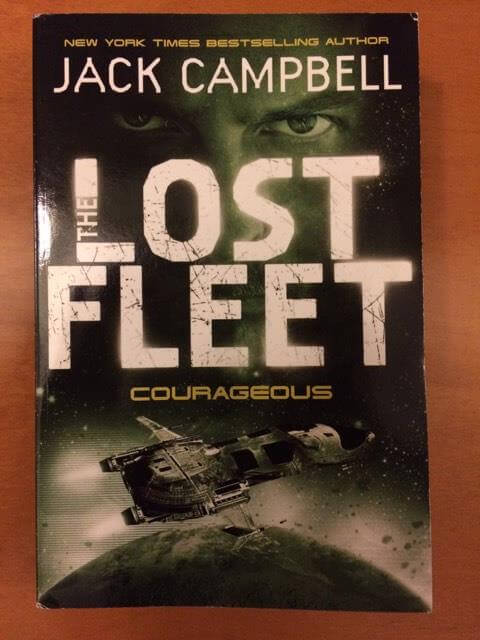
Courageous (The Lost Fleet, Book 3) – Jack Campbell

Deplorable practices adopted during the last century were repeatedly declared necessary if regrettable in order to win the war. Oddly enough, we’ve yet to win. You’d think somebody would have asked before this why the regrettable but necessary measures haven’t actually produced the promised results.

The star saga continue with the third book in the series, where Captain Jack Geary continues to lead the Alliance fleet in enemy space, trying to avoid the Syndics and get enough supplies to be able to combat.

Geary is avoiding enemy fleets, even if that means getting away of the Alliance-controlled space. However, that can’t last forever and  Geary has to fight some bloody battles. Those battles have real and impacting causalities, which makes the story credible.

Trying to outsmart the enemy, when an unexpected twist appears.

The protagonist is not a super-hero, with genious flair and incredible luck, but a leader with doubts, trying to make choices with the best information available.

The relations with Madam Co-President Victoria Rione and Captain Tanya Desjani of his flagship are subject to other people judgement, good or bad. But this does not distract from the main story, which is again full of space battles and military space tactics.

In this part, a new twist is added to the story, which makes it even more interesting, building on cues from the previous books.

This is a good book on its own, a relaxing and engaging read that I recommend for the fans of the genre.

Rich Dad Poor Dad – Robert Kiyosaki

I find so many people struggling, often working harder, simply because they cling to old ideas. They want things to be the way they were; they resist change. I know people who are losing their jobs or their houses, and they blame technology or the economy or their boss. Sadly they fail to realize that they might be the problem. Old ideas are their biggest liability. It is a liability simply because they fail to realize that while that idea or way of doing something was an asset yesterday, yesterday is gone.

“Rich Dad, Poor Dad” is a self-help, motivational and light financial education book. The author starts from an allegory: a poor (real) dad, with an education and a job, and a rich (adoptive) dad, with his own business. As a child, the author learns the mistakes of his real dad in making money and adopts the more successful ways of his rich dad.

Work for money or make money work for you?

Robert Kiyosaki tries to motivate the reader to have courage for his own path, not simply a job given by someone, but for creating his job. He encourages risk-taking, saying that without risk there is no reward. No one won big by playing safe. This advice I heard from other authors as well, such as Arnold Schwarzenegger in his book Total Recall.

Kiyosaki gives the example of real estate, where large sums of money can be made if enough attention and perseverance are given to an opportunity. Seen it as an allegory, or as an example, it makes sense. Taking literally, it could look as a symptom of the real estate bubble.

The author made a fortune after this book. Barnes and Noble considers it apparently the best sold Personal Finance book of all time. (source). It has a website, a game and dozens follow-up books. In 2006, he co-authored a book on advice on personal finance with Donald Trump, Why We Want You To Be Rich: Two Men, One Message.

For those books, usually you either like it or hate it. Taken literally, it doesn’t have much depth, just some advice that you can get anywhere. The book builds its legitimacy from the supposed wealth and financial success of the author. However, it has its moments with decent advice.

[Picture in the post by Gage Skidmore]

[Featured picture by Australia High Commission, Suva – Department of Foreign Affairs and Trade]

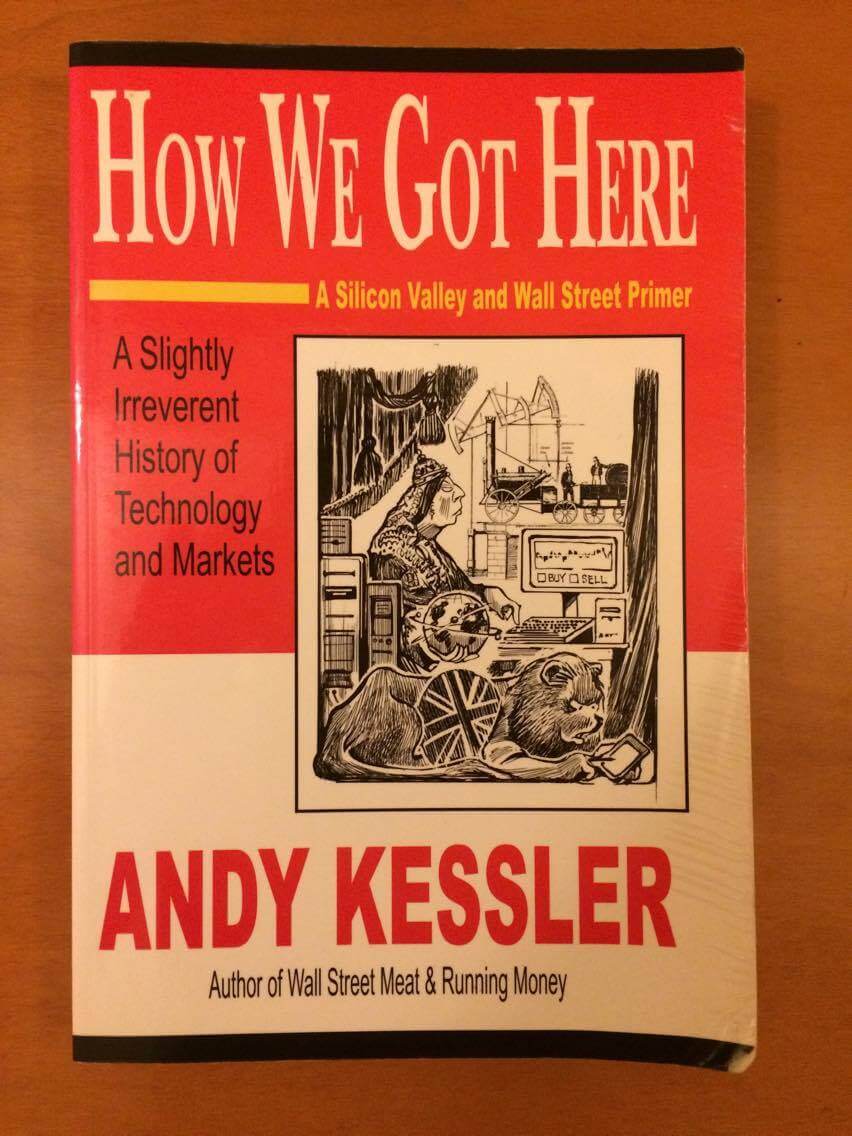
How We Got Here: A Slightly Irreverent History of Technology and Markets – Andy Kessler

In 1642, 18-year-old Blaise Pascal, the son of a French tax collector, tired of waiting for his dad to come play a game of “le catch”. Blaise’s dad was what is known as a tax farmer, sort of a 17th century version of a loan shark, threat of broken bones and all. Tax farmers advanced tax money to the government and then had a license to collect taxes, hopefully “harvesting” more than they advanced. Elder Pascal was constantly busy calculating and tabulating his potential tax haul. To help him out, Blaise envisioned a mechanical device with wheels and cogs and gears and numeric dials that could sum up numbers to eight digits long. That’s 10 million francs. Dad must have been a top tax guy.

The book explains the history of technology, from the Industrial Revolution to contemporaneity, through the lenses of capitals and stocks. The books is written in a simple way and without much depth, kind of like Wikipedia is explaining. However, the connections it makes are genius and really make the reader think.

Andy Kessler, the author, worked for two decades in the banking and investor sector, from research analyst to hedge fund manager.

A brilliant and easy to follow history of technology, that connects the dots and makes you think.

The book is divided in 5 chapters: The Industrial Revolution; Early Capital Markets, Components Needed for Computing; Digital Computers and Modern Capital Markets.

Each chapter has small stories, linking to each other, explaining the creation and change of some concepts, laws, industries. The overall thematic is economics, trade and, partially, laws influencing trade, money, finance and national economies.

Andy Kessler explains in a simple and brilliant way very complex concepts, such as fractional reserve banking and the Corn Laws. While it doesn’t have depth, it has the right amount of detail to made the reader understand why things happened that way.

All those facts presented are freely available online, but Kessler put them together in a logical and consequential way. It is really a book that “connects the dots”.

It is rarely that a book has so much ingenuity, easiness of writing, clarity in thinking and presenting the facts. The book can be freely found on the author’s website. One of the few that I would read twice.


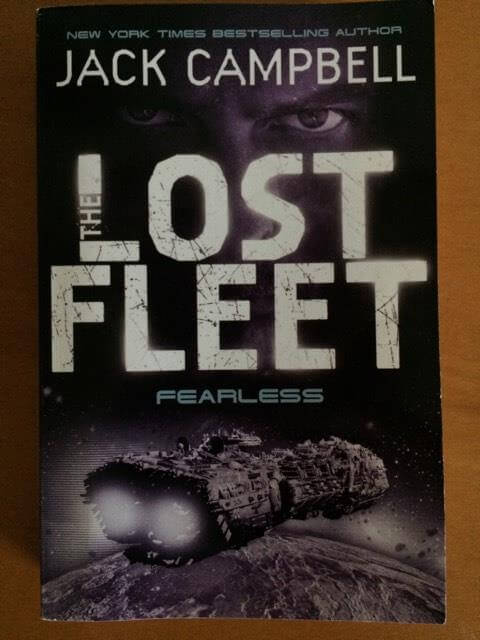
Fearless (The Lost Fleet, Book 2) – Jack Campbell

The longstanding thorn in your side Captain Numos is stupid. In fact, Numos is so dense that I’m surprised he doesn’t have his own event horizon.

The second book of the series continued the adventures of Captain Jack “Black Jack” Geary in his quest to save the Alliance fleet from the enemy in Syndic space.  This time around, Captain Geary has to deal with unexpected mutiny as well, having to fight internal and external enemies at once.

Military scifi book, for the fans of the genre.

The protagonist is now better defined, Captain Geary having to work on the politics of his own fleet, as well as dealing with the continuing enemy pursuit. The story universe is given more depth and there is even more action than in the first book. However, the book manages to keep the main story straight and introduces some very unexpected twists, on several levels.

The second book is at least as better as the first one, with a bit more creative narrative and better described space battles. The effort put in imagining scientifically coherent space battles is impressive.

There is little psychological monologue and soul-searching, which makes the book uncomplicated and easy to read. For military scifi fans, it is a quite rewarding read.

How to Win Friends and Influence People – Dale Carnegie

It isn’t what you have or who you are or where you are or what you are doing that makes you happy or unhappy. It is what you think about it.

Hands down, this is one of the best motivational books I have ever read: practical and full of wisdom gems. It is basically a self-development book which tries to teach the reader to be a better person with others, with pragmatic advance, encouragements and a positive attitude.

A very positive, helpful book, easy to read even for those who don’t like reading.

Written in 1936, the book is a classic, almost 80 years in print, a testament of its solid advice, timelessness, deep thinking and overall, just common sense. It feels like it was written last year.

It is true that the book is addressed foremost to a readership looking for improving speaking for sales and building self-confidence. However, it does not teach duplicity nor underhandedness. It looks a bit cheesy and superficial indeed, but that makes it easy to read, re-read and motivate for every reader, even the ones that don’t like reading.

The author, Dale Carnegie, had several selling jobs, quite successful, before trying teaching public speaking, which made him rich. He wrote several other books, but this one is the most famous.

From a political philosophy viewpoint, it presents the classical liberal argument that rationally helping others, you help yourself. In essence, even forgetting empathy, we help others for a virtual social safety net. A human being doesn’t need to be nice, it just need to be rational, in order to be kind, attentive to others, helpful and polite.

To conclude, this is an easy-to-read book with timeless advice for those who look for a better self and a better place in society. A short book that I recommend wholeheartedly.

[Featured image by BK, Flickr]

Koban – Stephen W. Bennett

His octet was to be limited to the same weapons these humans were given. A very detailed video of the compound’s terrain was furnished. This he shared with his octet, because every Krall had an inborn ability to memorize such details for a mission. Repetition was unnecessary.

Koban is a very imaginative and action-packed military survival sci-fi. The story revolves around Captain Mirikami, who is transporting in a passenger spaceship scientists to a far colony, when he is attacked by an unknown and far more advanced alien species. Captain Mirikami and all on board is then isolated on a dangerous planet, Koban, where he has to prove to alien war race that humanity deserve to be treated as worthy opponents.

The author creates an entire universe with this book, with a new planet and a new alien species. The Krall are very advanced military, highly physical, destroyed or enslaving every other intelligent species they met so far. They use those wars to enhance their military abilities. Humans are considered weak and very low technologically speaking, but they are still put to trial. If they succeed, aliens plan to destroy humans gradually, rather then in a one big stroke, hence the struggle of Captain Mirikami.

Scifi survival story

Stephen Bennett creates a future where genetic warfare  almost killed the entire male population and changed ways of society. The men are subservient to women and the first part of the book is full with sexist situations. After the genetic war. humanity is not fighting internally nor meeting any other intelligent species in 300 years.

The narrative is captivating, some chapters are looking at events through the eyes of predators on Koban, some others through the Krall aliens. It makes the story a lot more interesting.The book has some fantastic ideas, but with others it went overboard. The sexism is interesting, but not adding to the story. The genetic enhancement done in days leave too many logical holes.

Nonetheless, it is a solid scifi survival book, imaginative, well paced, action-packed and entertaining.

Europe: The Struggle for Supremacy 1453 to the present – Brendan Simms

The hatchet with France was slowly being buried, but there were still serious differences to be ironed out over North Africa. Russia remained a huge threat, and it was against her that Britain’s first major diplomatic initiative of the new century, the Anglo-Japanese alliance of 1902, was directed. The main worry, however, was Germany, which had shown unconcealed sympathy for the Boers and whose naval ambitions were seen as a direct challenge to British maritime supremacy.

At 550 pages, Europe is a very dense book of European history, mainly focusing on German lands, due to their position in the center of Europe. It follows the struggles between kingdoms and nations from an international relations perspective. The depth of detail is impressive, but the way the narration progresses and the events are presented keeps the reader engaged.

The book has everything, from the wars within the Holy Roman Empire to modern Germany, from conquest of Cyprus by Ottomans to Crimean war, from Ivan the Terrible to Putin. While Europe is the main focus, there are historical events from Afghanistan, China or the United Stated which get much attention as well.

Brendan Simms offers a thorough explanation of some crucial questions, such why Germany is so important and why Europe conquered the world. It explains brilliantly the motivations of why some countries acted in a specific way.

International relations in action

Brendan Peter Simms is Professor of the History of International Relations in the Department of Politics and International Studies at the University of Cambridge. He shows an impressive quality of understanding historical events, while not pinning down the reader in an infinite enumeration of details.

Just until the present day analysis, the book is a scholarly masterpiece. The present day  events are a lot less clear as the author wants them to be. Also, international relations and foreign policy are sometimes given too much weight, while other actors, such as technology, leaders at a specific time or culture, were important factors as well.

To sum up, this is a brilliant scholarly book on European history from a primacy of international relations viewpoint.