Most Secret War – R.V. Jones

The arguments in Whitehall concerning the weight of the rocket lasted throughout July and well into August. Herbert Morrison was near panic: on 27th July he was wanting the War Cabinet to plan immediately for the evacuation of a million people from London…

The book is a World World II memoir of Reginald V. Jones, responsible to anticipate and counter the German science applications in warfare, mainly air, and create new technical aids. Those weapons included radio navigation, radar, navigation for the Allied Bomber Offensive, and the V-1 and V-2 rockets.

R.V. Jones’ position in the British war effort, both in the Intelligence Section of Britain’s Air Ministry and in the MI-6, allowed him to be at the forefront of the technical war between NAZI Germany and the United Kingdom. He is now considered the father of technical and science intelligence and CIA has an award with his name.

The author’s account reveals much of the battles’ details fought with the technical minds in Germany, but also the experience of the war, the bureaucratic fights inside the various British ministries and his interactions with the British Prime Minister, of whom he was a great admirer.

British Scientific Intelligence 1939-1945

The memoir is read as a wartime scientific detective story, with a strong espionage background. For example, he reveals how the V-1 (flying bomb) and V-2 rockets were assessed in terms of warhead capability and production. He fought with his own expert councils and with some ministers panicked of a possible mass attack over London. By looking at aerial photographs, the messages from the ultra secret decipher service at Bletchley Park; the spy reports; prisoners’ interrogations and others, he was able to correctly put together the puzzle of the V-1 and V-2 rockets and find counter-measures for them.

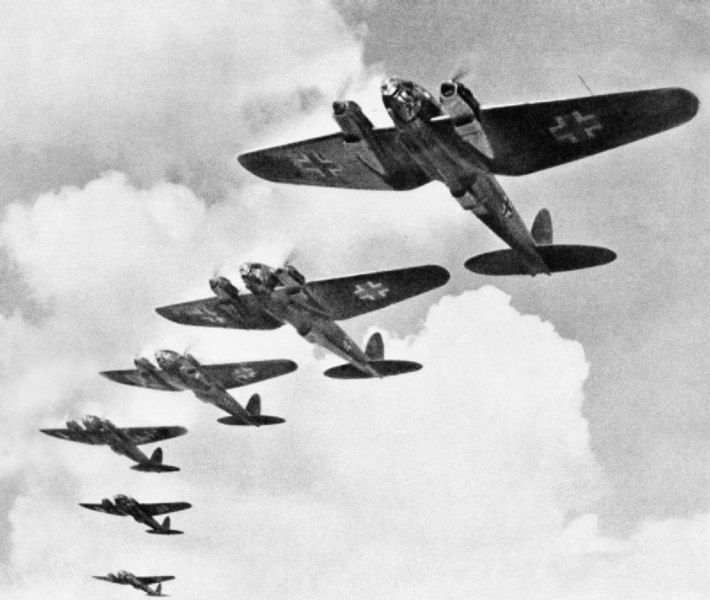
His battle was different than the ones with tanks and land offensives, but not less important. Without him and his counter-measures, the bombing of Britain in 1940 would have been a lot more accurate and the German air force would not have sustain the crippling losses.

This book is widely acclaimed as one of the best memoirs of the World World II, from one of the highest ranked positions in the British intelligence. I sincerely recommend it to all readers interested in history and science.

Pandore abusée – Peter F. Hamilton

Réveillez-vous, les gars. Ces étoiles sont à mille deux cents années-lumières de Tanyata. Tout ceci s’est produit quand l’Empire romain était à son apogée. L’astronomie, c’est de l’histoire mec.

Pandore abusée est le première tome de L’Étoile de Pandore saga (quatre volumes), part aussi-même de l’univers Commonwealth (huit volumes). Ce volume décrit une l’humanité prospère et expansive, qui a colonisé plus de 600 planètes jusqu’à en 2380, reliées entre elles par des trous de ver. L’humanité a découvert aussi la vie éternelle avec la réjuvénation.

Mais, dans une journée ordinaire, une astronome constate la disparition d’une étoile très distante, à un millier d’années-lumière. La seule explication est que l’étoile était emprisonnée dans un champ de force colossal 1 millier d’année avant. Pourquoi et qui a emprisonné une étoile entière ? Pour savoir qu’il se passe, l’humanité décide de construire le premier vaisseau interstellaire plus rapide que la vitesse de lumière. Qu’est ce que le vaisseau va découvrir ?

Peter F. Hamilton crée un univers complexe ou plusieurs histoires progressent, a cote de la trame principale : l’enquête de Paula Myo, une super détective, concernant les Gardiens de l’individualité ; la quête d’Ozzie Isaacs, le co-inventateur des trous de ver, sur les mystérieux, mais inoffensives extra-terrestres, les Silfens, sur leur planète ; l’histoire d’amour entre Justine Burnelli et Kazimir McFoster ; la tentative de sabotage des Gardiens contre le vaisseau interstellaire et autre.

Pourquoi et qui a emprisonné une étoile entière ?

L’entier saga est énorme, avec dizaine des petites histoires, qui parfois se mélangent entre eux.

L’imagination d’auteur est admirable et l’intrigue principale est fascinante, mais parfois c’est fatiguant de rappeler tous les personnages.

Un créatif and profond volume de science-fiction, mais qui a besoin de beaucoup d’attention.

Dance Dance Dance – Haruki Murakami

My peak? Would I even have one? I hardly had had anything you could call a life. A few ripples. some rises and falls. But that’s it. Almost nothing. Nothing born of nothing. I’d loved and been loved, but I had nothing to show. It was a singularly plain, featureless landscape. I felt like I was in a video game. A surrogate Pacman, crunching blindly through a labyrinth of dotted lines. The only certainty was my death.

This is one of the early books of the Japanese writer Haruki Murakami, written in 1988. It is the fourth in a series, but can be read as a stand-alone story as well. The book follows the phantasmagorical adventures of the protagonist, a freelance journalist, trying to decipher the mysterious disappearance of a loved woman.

The entire story is surreal, with a magic hotel and parallel worlds, different realities, foretelling dreams, the Sheep Man, murder of a call-girl, a clairvoyant teenager girl and many other bizarre things. That Murakami can introduce all those in a single plot, making a captivating story, is absolute genius.

The story is so far from the present reality,  so mind-boggling, with so many concepts that are changed or reinterpreted, that the writing and the stories of Murakami are truly unique.

With this writer, the reader either likes it or drops it. However, Murakami enjoyed a global success with his novels, so I would recommend a try.

[Featured picture: Infinity Rooms by Yayoi Kusama]