Babylon’s Ashes (The Expanse, book 6)

The messages coming back flooded the comm buffers with rage and sorrow, threats of vengeance and offers of aid. Those last were the hardest. New colonies still trying to force their way into local ecosystems so exotic that their bodies could hardly recognize them as life at all, isolated, exhausted, sometimes at the edge of their resources. And what they wanted was to send back help. He listened to their voices, saw the distress in their eyes. He couldn’t help, but love them a little bit.

Under the best conditions, disasters and plagues did that. It wasn’t universally true. There would always be hoarders and price gouging, people who closed their doors to refugees and left them freezing and starving. But the impulse to help was there too. To carry a burden together, even if it meant having less for yourself. Humanity had come as far as it had in a haze of war, sickness, violence, and genocide. History was drenched in blood. But it also had cooperation and kindness, generosity, intermarriage. The one didn’t come without the other.

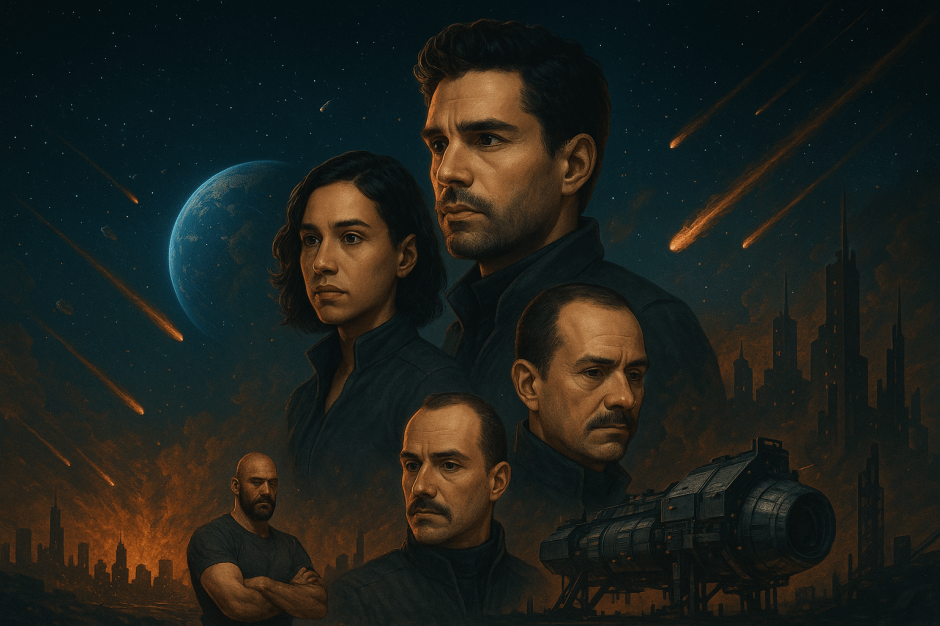
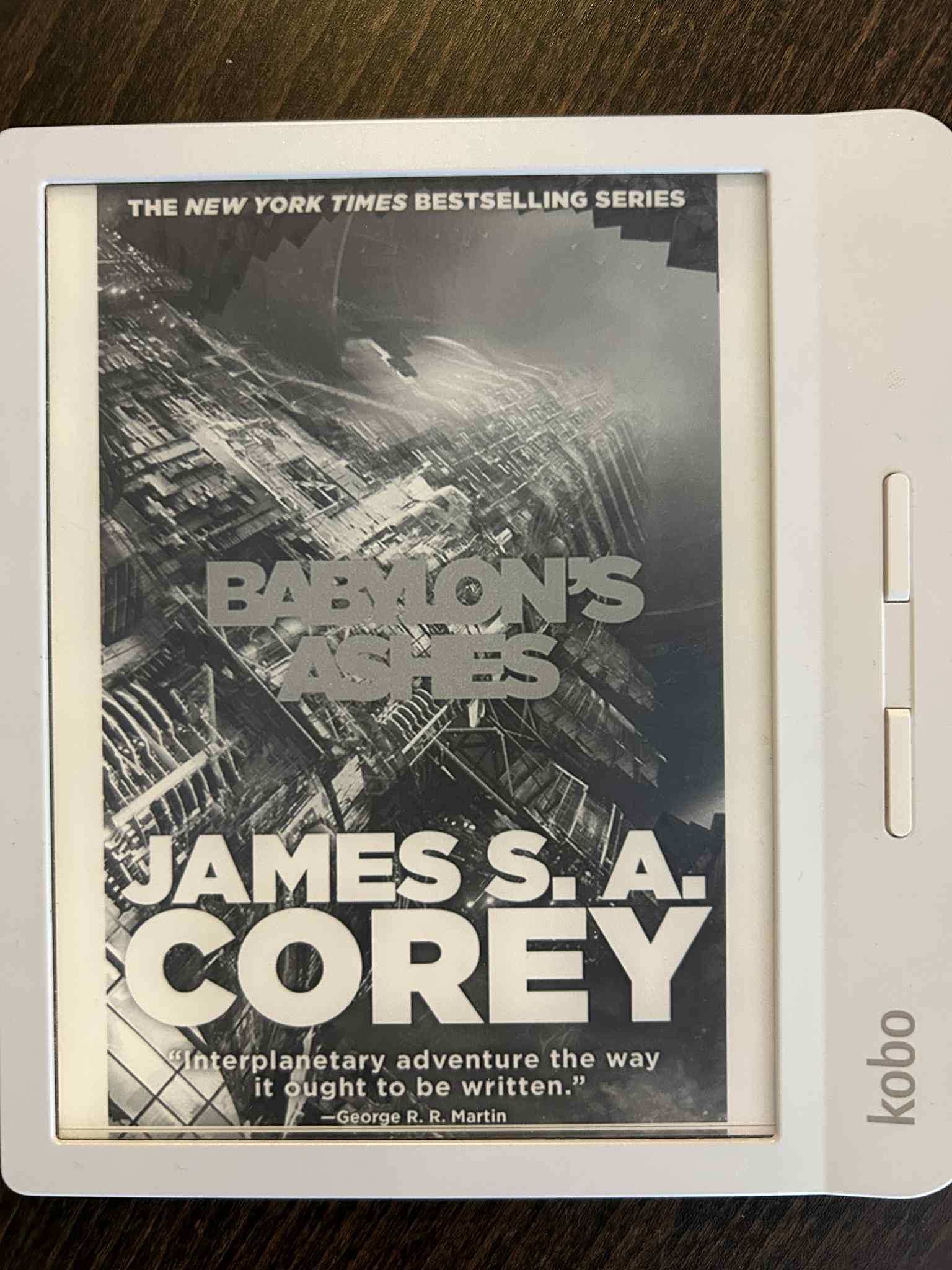
Book 6 of the Expanse series continues the saga, with the Free Navy raise and Earth’s slow recovery following the meteorites’ strikes. While James Holden is again central to the story, he is but one of the dozen characters followed by the story. Some others include his crew; Avasarala, now Earth’s leader after the disaster; Fred Johnson, one of the main driving forces of the Outer Planets Alliance; and several leaders of the new Free Navy.

The story in the book is about the civil war between the this new force of Belters, which acquired advanced Mars military ships; the Mars’ demise and collapse of military, facing the opportunity of the new worlds discovered; allied with an Earth in tatters. Many are already seeing the dangerously degrading fragile balance of the continous war and disasters in our solar system.

The new worlds, dangerous and unknown, are the only way out to save the solar system from economic collapse. That is the end motivation for James Holden, and a new social equilibrium is pursued at the end of the book.

The aliens are not central to the story anymore and Detective Miller is a far memory, mentioned only once.

Overall, the book and the new developments follow nicely the story arc and prepare the ground for the next stage in the saga. A beautifully constructed story and series, now at the 6th iteration. Loved it.

Nemesis Games (The Expanse, book 5)

No, it wasn’t. It was the scariest fucking answer to Fermi’s paradox I can think of. Do you know why there aren’t any Indians in your Old West analogy? Because they’re already dead. The whatever-they-were that built all that got a head start and used their protomolecule gate builder to kill all the rest. And that’s not even the scary part. The really frightening part is that something else came along, shot the first guys in the back of the head, and left their corpses scattered across the galaxy. The thing we should be asking is, who fired the magic bullet?

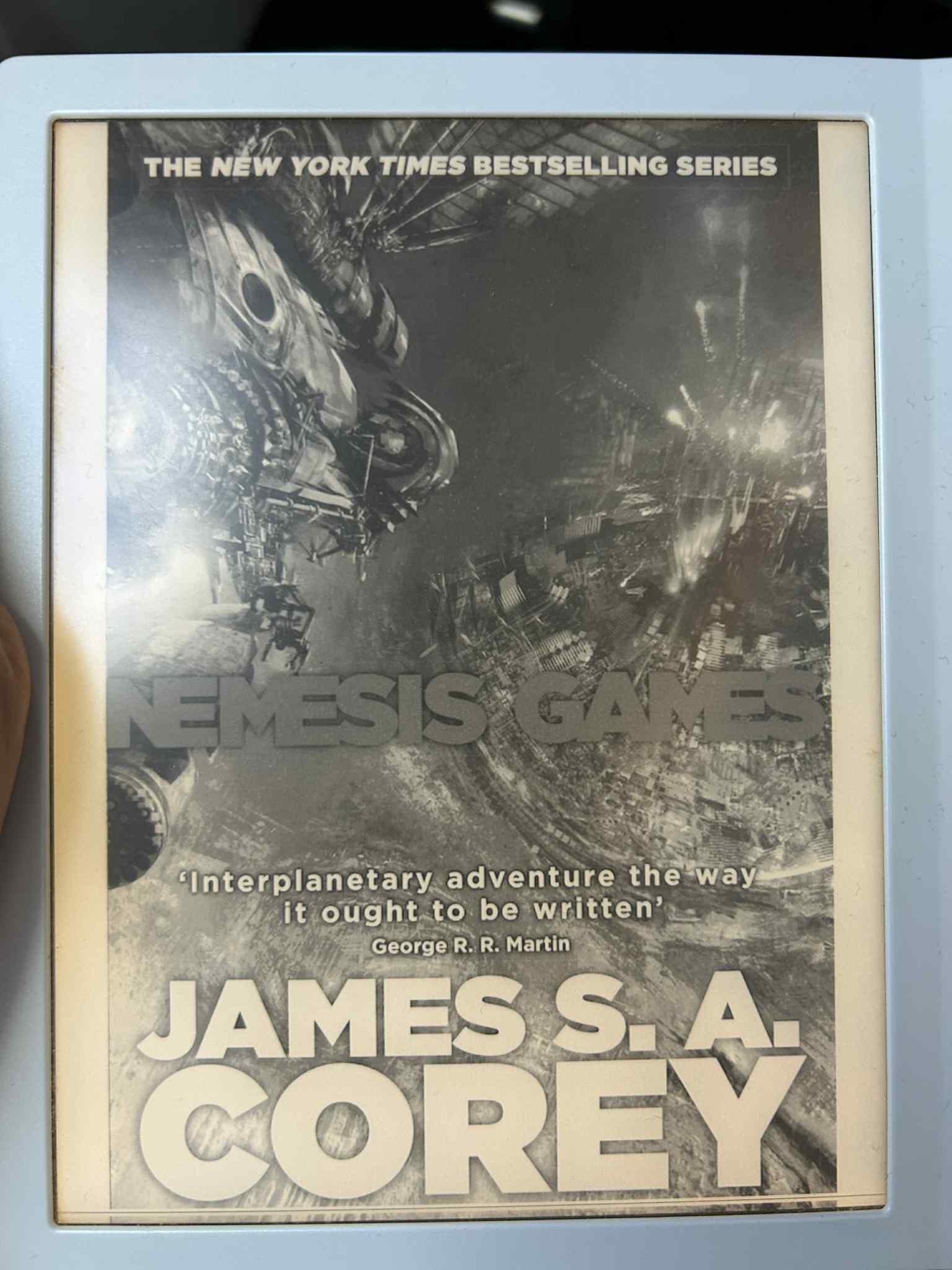
“Nemesis Games” is the fifth book in the Expanse series, with a title that accurately reflects the story in the book, happening centuries in the future, when humanity has conquered this solar system. In summary, the crew of the famous now Rocinante is taking a separate leave, each for its own reasons, with the exception of the captain Jim Holden. During their leave, the story of each crew member (Amos, Alex and Naomi) is followed, as each finds some of the greatest challenges of their lives, as they face, in some way, their own nemesis.

Their stories, now even sagas, at the fifth book, is in the context of the main ship, Rocinante, being in repairs; with the usual captain, Holden, away with the ship; and Earth being devastated by human-sent meteors.

The messages is that each character grows and develops to be more than the initial person that they started, before Rocinante: Amos, from a thug to an accomplished space engineer; Naomi, from a brilliant engineer to a politically astute Navy Second in Command; Alex, from a gifted military navy pilot to keen observant and detective.

Usually, the quality of a series declines with time. However, this book came strong – I loved it. The plot was strong, no magic bullets, but credible actions in given situations. Except one situation that was too good to be true (Amos finding survivalist supplies), the rest was good enough to keep the reader immersed in the story. I liked the character development, and the risky bet to add more depth to existing characters rather than bring new ones.

Looking forward for the sixth book in the series!

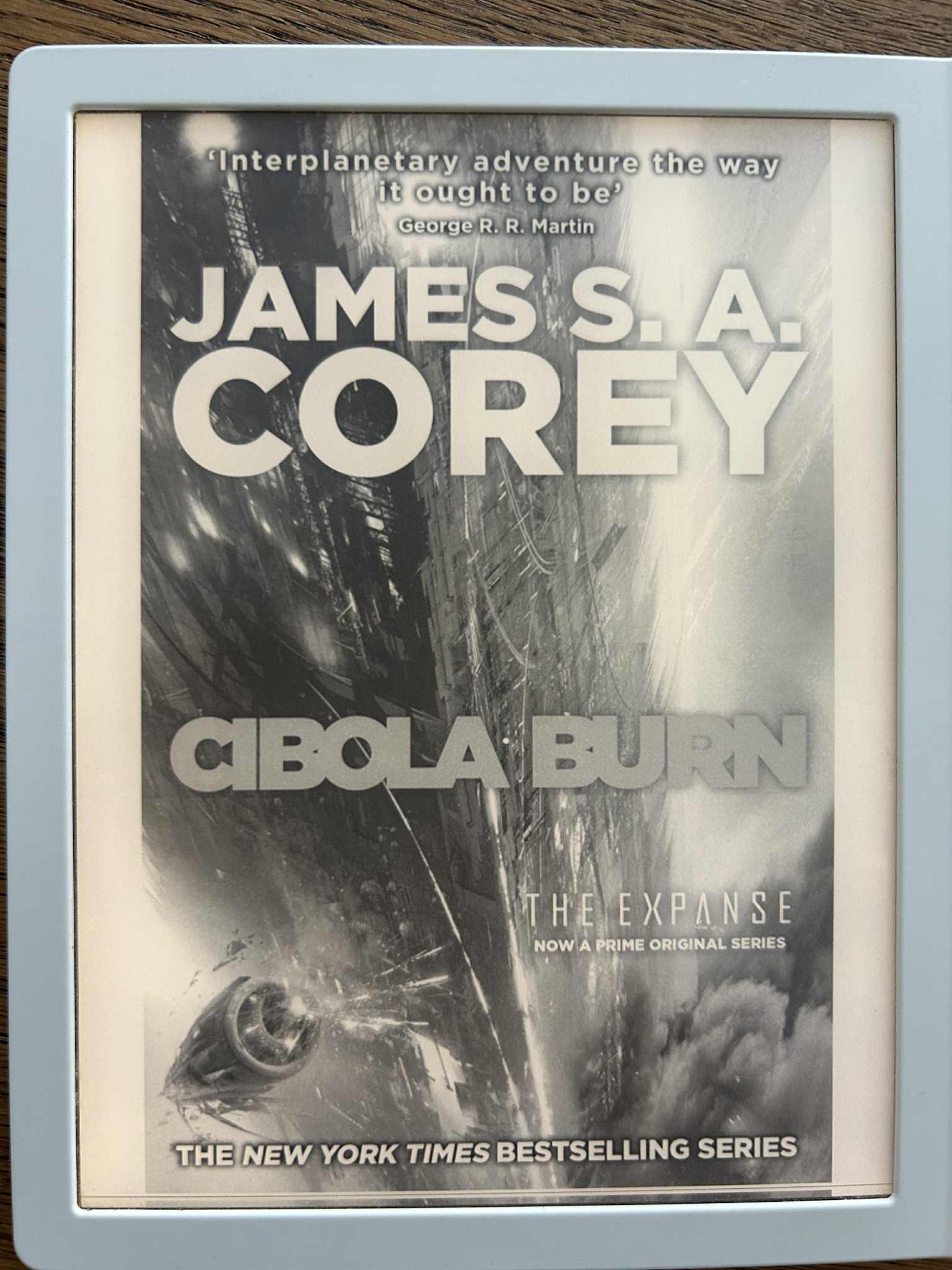
Cibola Burn (The Expanse, book 4)

Apocalyptic explosions, dead reactors, terrorists, mass murder, death-slugs, and now a blindness plague. This is a terrible planet. We should not have come here.

Cibola Burn, the forth book in the Expanse series, continues the story of humanity a few centuries in the future (when the solar system is conquered), where the first planet is explored / colonized following the stars gateway that is build by the alien protomolecule. The fast developments and lack of coordination between the 3 solar powers – Earth, Mars and Belters – make the exploration and colonization of the first planet available a chaotic process, where no one knows who owns the planet (first arrivals? or treaties signed in the Sol system?). How to impose law from years and light-years away?

In this chaotic environment, Holden and his crew is tasked to calm the tensions between the first arrived settlers and the Earth company that was given the rights to the planet. However, the planet is not what it’s looking like, it’s still a remnant of the alien empire that constructed the mysterious protomolecule, able to build a star gate a billion years later. And more puzzlingly, who was this other alien race that could destroy such an advanced and galaxy-wide spread empire?

This book in the series focuses on the planetary exploration, colonisation, survival and orbital manouvers, with a pinch of detective story to inquire over the alien ruins. It’s an engaging book, but felt slow at times. The sheer world-building, hard scifi, characters developments – remain world class.

The book is not as good as the previous 3 ones, where actions scenes, mind-blowing technology and memorable characters (Avasarala, anyone?) were introduced. All of the previous books were a ramp for the next volume of the series; however, after this volume, I am not sure where the story will go. However, I did like the cold calculation that the Earth politician is making over the ramifications for the powers of the Sol system of a star gateway opening. These were the gems of great writing and storytelling that made the book a good one, but not at the level of the others.

Overall, a great scifi series, book 4 / 9 read, and who know what future holds?

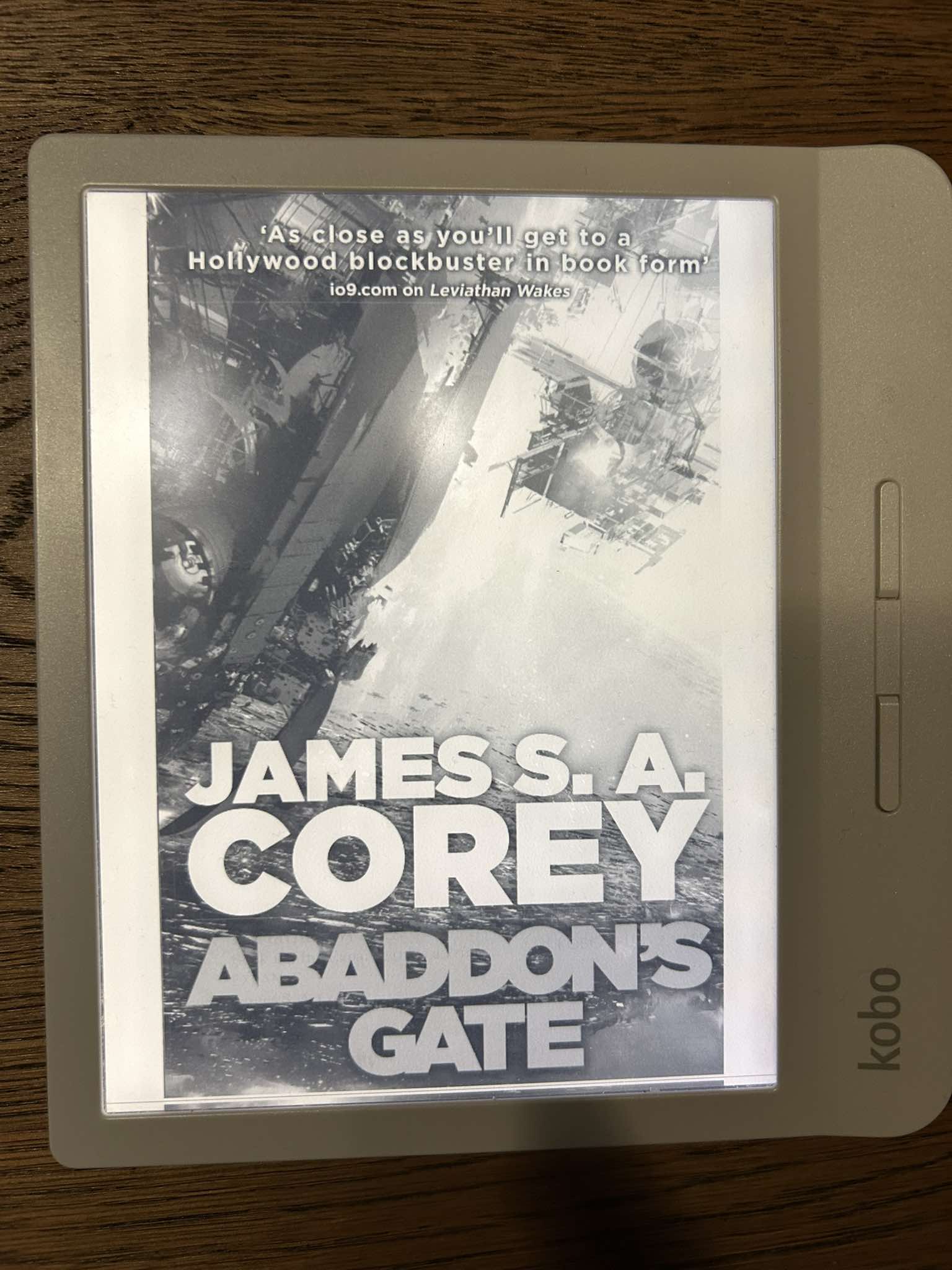
Abaddon’s Gate (The Expanse, book 3)

Violence is what people do when they run out of good ideas. It’s attractive because it’s simple, it’s direct, it’s almost always available as an option. When you can’t think of a good rebuttal for your opponent’s argument, you can always punch them in the face.

Abbandon’s Gate is the third book in the space saga The Expanse, where the action is, this time, in a space bubble built by an alien civilisation. The alien protomolecule built a gate next to Uranus, in the far future of humanity, which conquered our solar system, but not the stars. The humanity is still divided into Earth, Mars and the humans in the asteroid belt, united in the Outer Planets Alliance. All three factions are driven into the gate, and the space bubble, by the running protagonist, the adventurer and captain James Holden.

As in other books of the series, the story follows 4 characters, which gradually reunite in an epic finale. Carlos “Bull” de Baca is the security officer of the Belters’ flagship, the largest ship in the system. Anna Volovodov is a preacher of the Methodist church, volunteering in a United Nations (of Earth) ship to go into the gate. Clarissa Mao, daughter of the rich and powerful Mao (now imprisoned) plots against James Holden, whom she believes created her father’s downfall. Finally, the four story is following James Holden, the captain of Rocinante and its ragtag crew of four.

The gate created by the alien protomolecule opens to a space bubble with thousands of other gates, to other stars, controlled by a central machine. The machine reduces speed and gravity by its will, defying physics. James Holden finds, guided by the mysterious, form that appears as detective Miller (Holden’s dead companion from the first book) that the Godlike alien civilization, spanning hundreds of stars, was destroyed by an even bigger force. And that was 2 billion years ago. But what stays behind those gates? What planets or alien forces?

Interestingly, Abbadon appears in the Hebrew Bible and means destruction or the realm of the dead. This is a reference to the destruction that the gate may bring.

Overall, while a bit weaker than the other book, this is still great storytelling, world building and memorable characters. What a series!

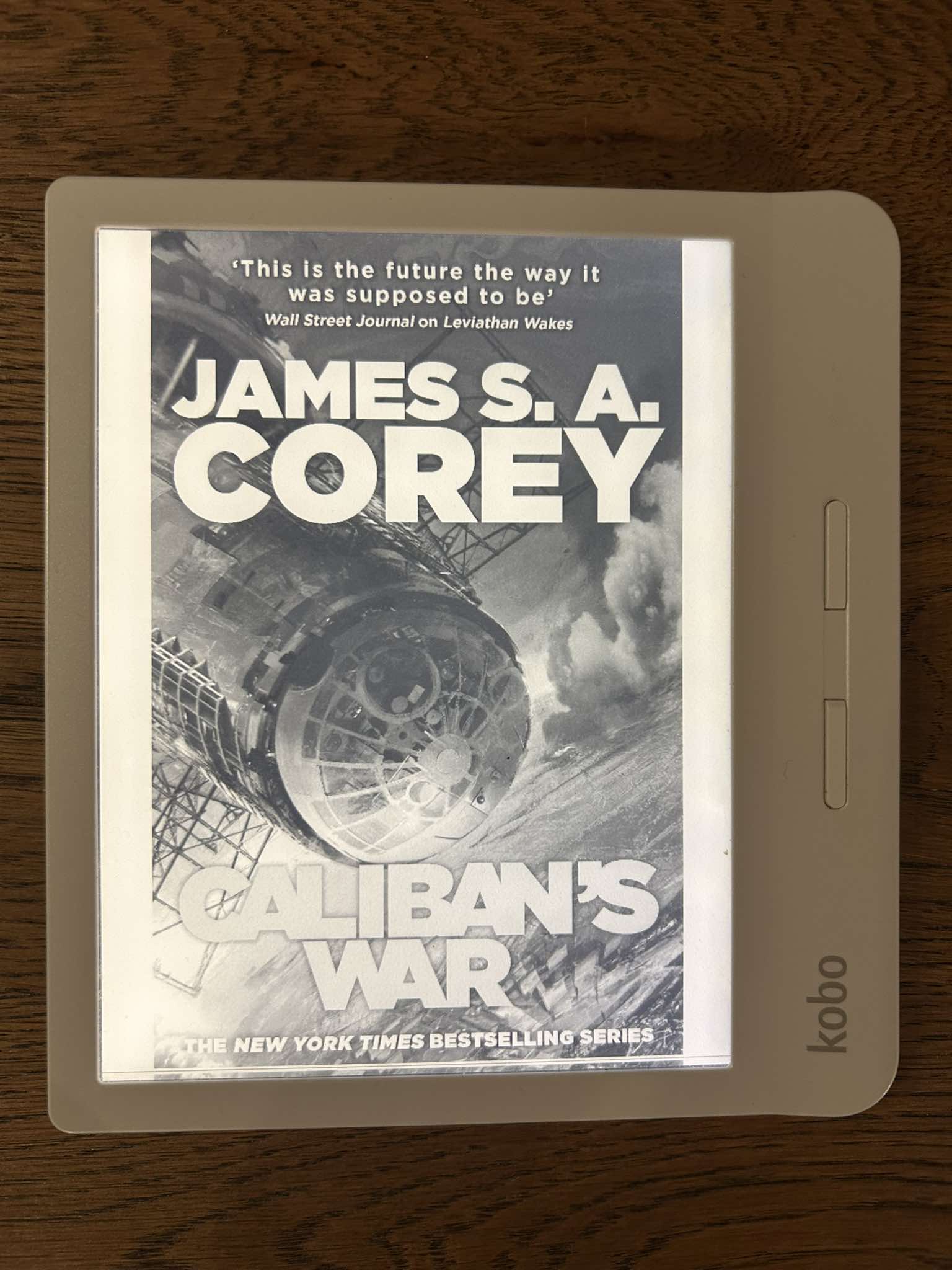
Caliban’s War (The Expanse, book 2)

There was a relentless forward motion to the man. The universe might knock him down over and over again, but unless he was dead, he’d just keep getting up and shuffling ahead toward his goal. Holden thought he had probably been a very good scientist. Thrilled by small victories, undeterred by setbacks. Plodding along until he got to where he needed to be.

The story of the first book, of an alien protomolecule seemingly indestructible, intelligent and lethal to humans, expands to another level, where politicians and planets get involved. The plot is driven ahead by not two, but four protagonists: the captain – James Holden, the doctor – Prax, the politician – Avasarala and the soldier – Bobbie. While each starts from its own background, the protomolecule brings them all together, trying to stop the increasing menace. While planetary governments try to weaponize this alien artefact, the molecule learns and becomes increasingly intelligent. Our four heroes maneuver around politics and dangerous situations to destroy the threat, but the war goes on.

The book introduces two memorable characters: the UN politician from Earth, Avasarala and the Martian female soldier, Bobbie. They team together, more by chance than design, to keep the two planets fighting against the common threat. Avasarala is diminutive, elegant, sophisticated, foul speaking, machiavellian, happily married and old. Bobbie is the opposite.

I rarely continue books in a series, but this space saga is exceptional. Great story building, memorable characters with credible motivations, a tight plot, hard science fiction, great writing – overall, an truly enjoyable reading.

The book’s title is unusual, as Caliban is never mentioned in the book. It is, in fact, a reference to the character Caliban in Shakespeare’s “The Tempest.” This character tries to free himself from subjugation of his masters, as the protomolecule tries to shake the bondage of those who try to weaponize it.

Excellent series, that goes to about 9 books. Long, but worthy reads.

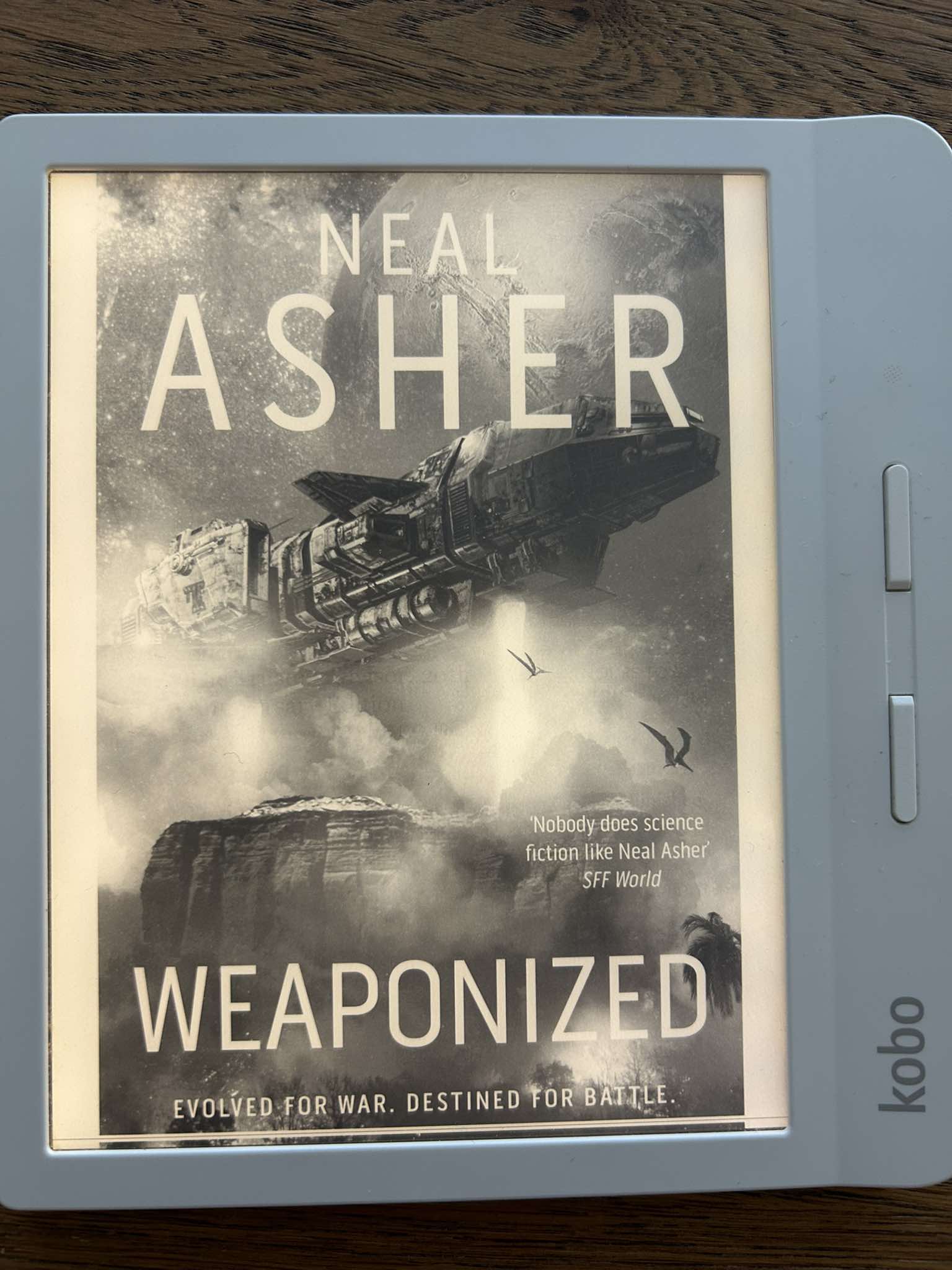
Weaponized – Neal Asher (Polity Universe, first book)

Sometimes, when you fight a war, you become what you are fighting.

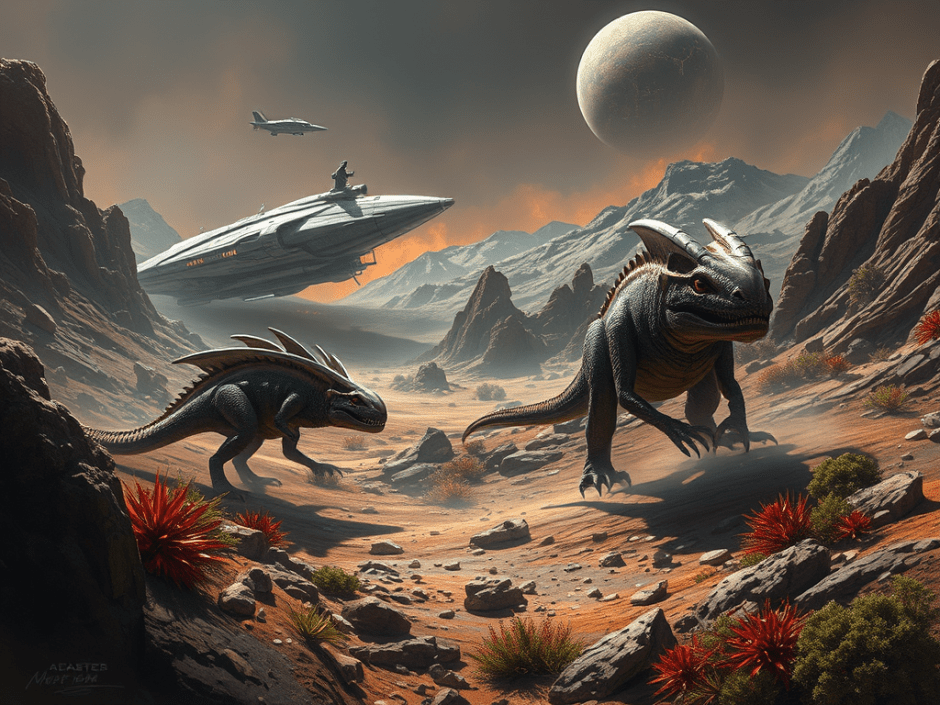
Part of the Polity space saga, this book is about a colonisation attempt on a hostile planet, in the far future, where evolution is vital for survival. But not all is what meets the eye and some quiet forces are monitoring and planned the entire ordeal.

This is a hard science fiction story that follows a colonisation leader using AI and continuous adaption to the environment until their own humanity is questioned. The alien animals on the planet, the cacoraptors, are unique in that they adapt to the invaders, changing their bodies shape, but also their level of intelligence to overcome the invaders. How come then that they did use their intelligence capabilities earlier?

In a three ways story, the human colonizers are starting a war with an enemy intelligence, the first ever met. The enemy intelligence, the pradors, land with a damaged ship on this colonizing planed, stating a three ways war. Who will win? Who will adapt best?

This is an engaging and action packed story, with a complex world developing. However, the go and forth in time narrative (past, present, near past) is sometimes confusing, although it does contribute to build the main characters. Developed in the Polity universe, which has more than a dozen books, it is placed chronologically at the beginning of the space saga, but it is not viewed as the best of the series.

Overall, an imaginative and richly build book, by Neil Archer.

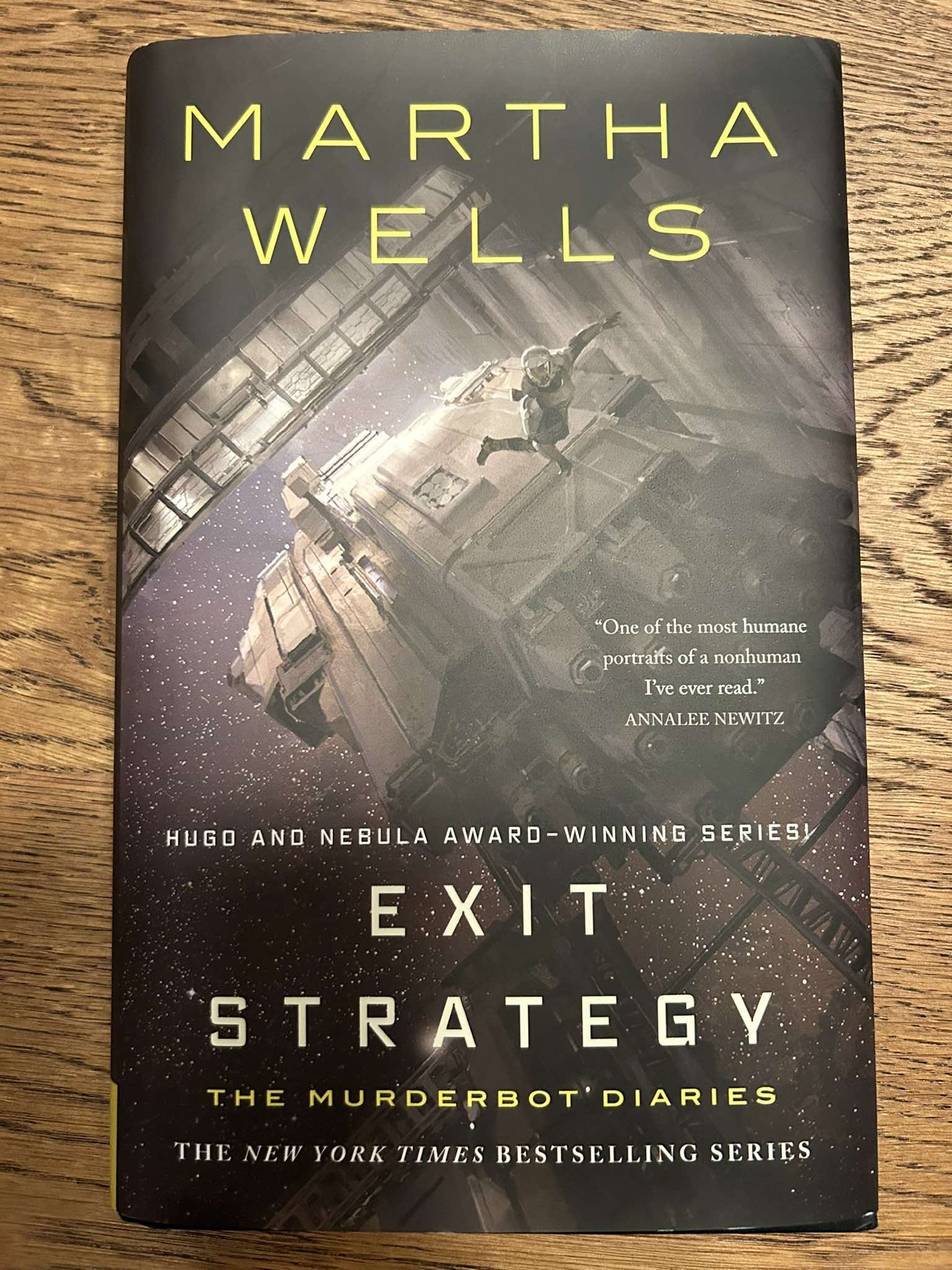
Exit Strategy (The Murderbot Diaries, book 4) – Martha Wells

So the plan wasn’t a clusterfuck, it was just circling the clusterfuck target zone, getting ready to come in for a landing.

Exit Strategy is the fourth and the last novella in the Murderbot Diaries, a fun, science-fiction adventure of a robot developing a human-like conscience and fighting evil corporations.

The introverted robot, a security unit, returns to the space station holding the headquarters of some of the protagonist companies. It manages through detective work, good human interactions and great hacking skills to finally find justice.

The series is lovely and the writing skills of Martha Wells are remarkable, intuitively understanding what the reader thinks, and adding an anecdote or a question that the reader wonders too. While the novella are short, they are well paced, without any sensation of rush, leaving enough time for descriptions and character development.

Overall, a great, relaxing, well-written and funny series of novellas by a Hugo and Nebula prizes winner.

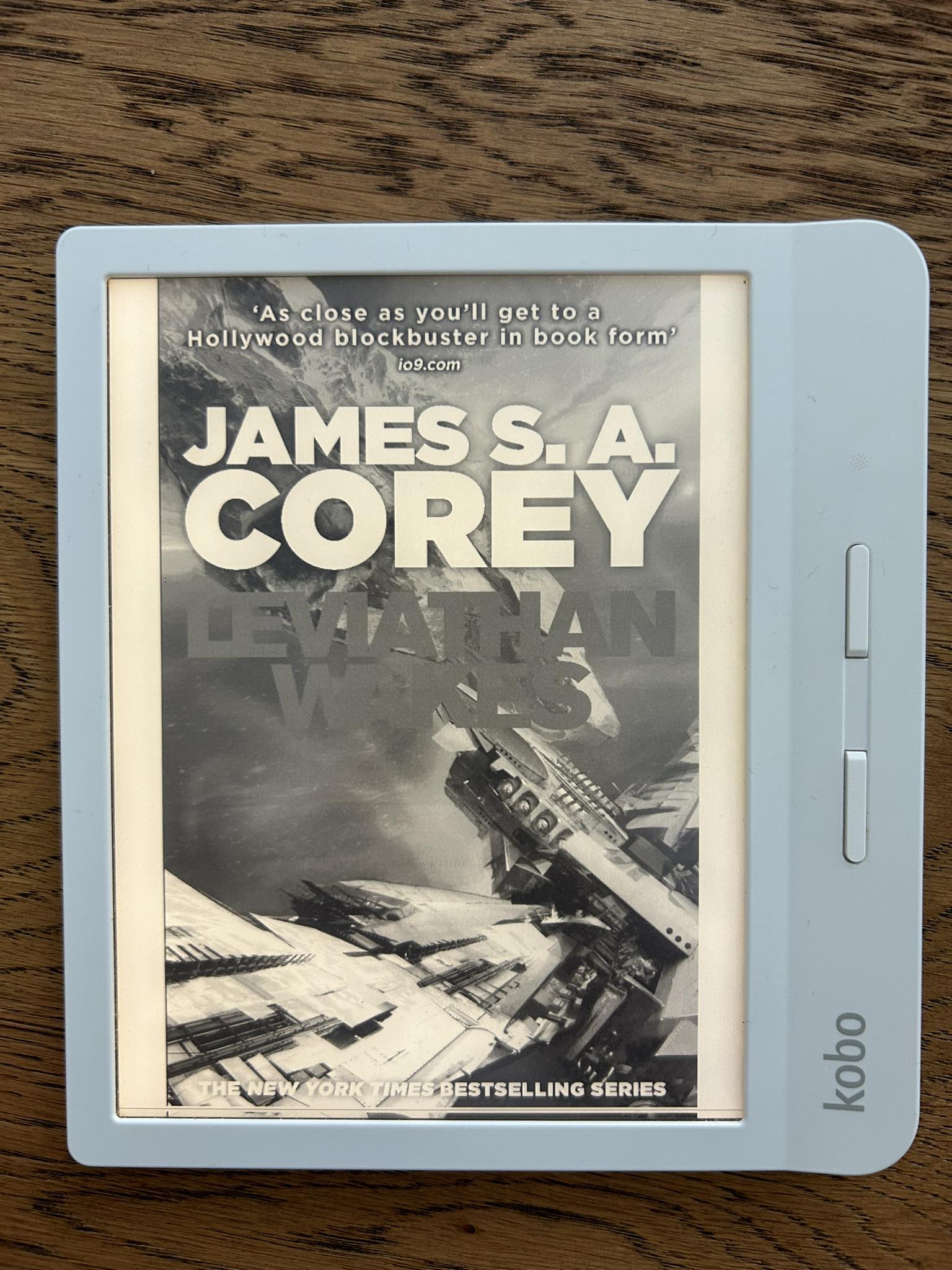
Leviathan Wakes – James S.A. Corey (The Expanse, book 1)

A hundred and fifty years before, when the parochial disagreements between Earth and Mars had been on the verge of war, the Belt had been a far horizon of tremendous mineral wealth beyond viable economic reach, and the outer planets had been beyond even the most unrealistic corporate dream. Then Solomon Epstein had built his little modified fusion drive, popped it on the back of his three-man yacht, and turned it on. With a good scope, you could still see his ship going at a marginal percentage of the speed of light, heading out into the big empty. The best, longest funeral in the history of mankind. Fortunately, he’d left the plans on his home computer. The Epstein Drive hadn’t given humanity the stars, but it had delivered the planets.

This is space opera at it’s finest. Humanity has colonized Mars, the Moon and the asteroid belt. The socioeconomic interactions between the 3 main powers (Earth, Mars and the belt) are masterfully presented in a detective story through the eyes of a belt cop and an ice freighter crew. The world building is so well thought, presenting how society evolves in the new environments (including elements such the effects of gravity, economics, languages, slang, trade).

Jim Holden is a the executive officer of an ice transport freighter, who survives the unexplainable consecutive ambushes with several original survivors. Who is trying to push the Belt and Martians to war? Detective Miller is a depressed, but skilled cop, trying to do his job. His instincts tingle when a case of missing girl is given to him, he feels it is important and becomes obsessed with it. Why so many crime figures are disappearing from Ceres, the main port of the belt? Where is the missing girl, why is he told to drop it? Meanwhile, an alien artifact is discovered, but kept secret by Earth corporations. How are all those webbed together?

The detective story webbing together the plot is engaging, but the real appeal of the book is the world development, making such an innovative and creative narrative. This is hard science fiction at its best.

Interestingly, James S. A. Corey is not an author, but the pen name used by collaborators Daniel Abraham and Ty Franck, which used their middle names to create the pen name.

The series was exceedingly well received. Leviathan Wakes, the first book, was nominated in 2012 for the Hugo Award for Best Novel and Locus Award for Best Science Fiction Novel. The book series itself was nominated for the Hugo Award for Best Series in 2017 and won it in 2020. To top it off, it was adapted for television, for successful 6 seasons.

The Expanse has a total of 9 novels, plus a dozen or so additional novellas. This makes for pretty long reading, but of great quality. A great start for the series.

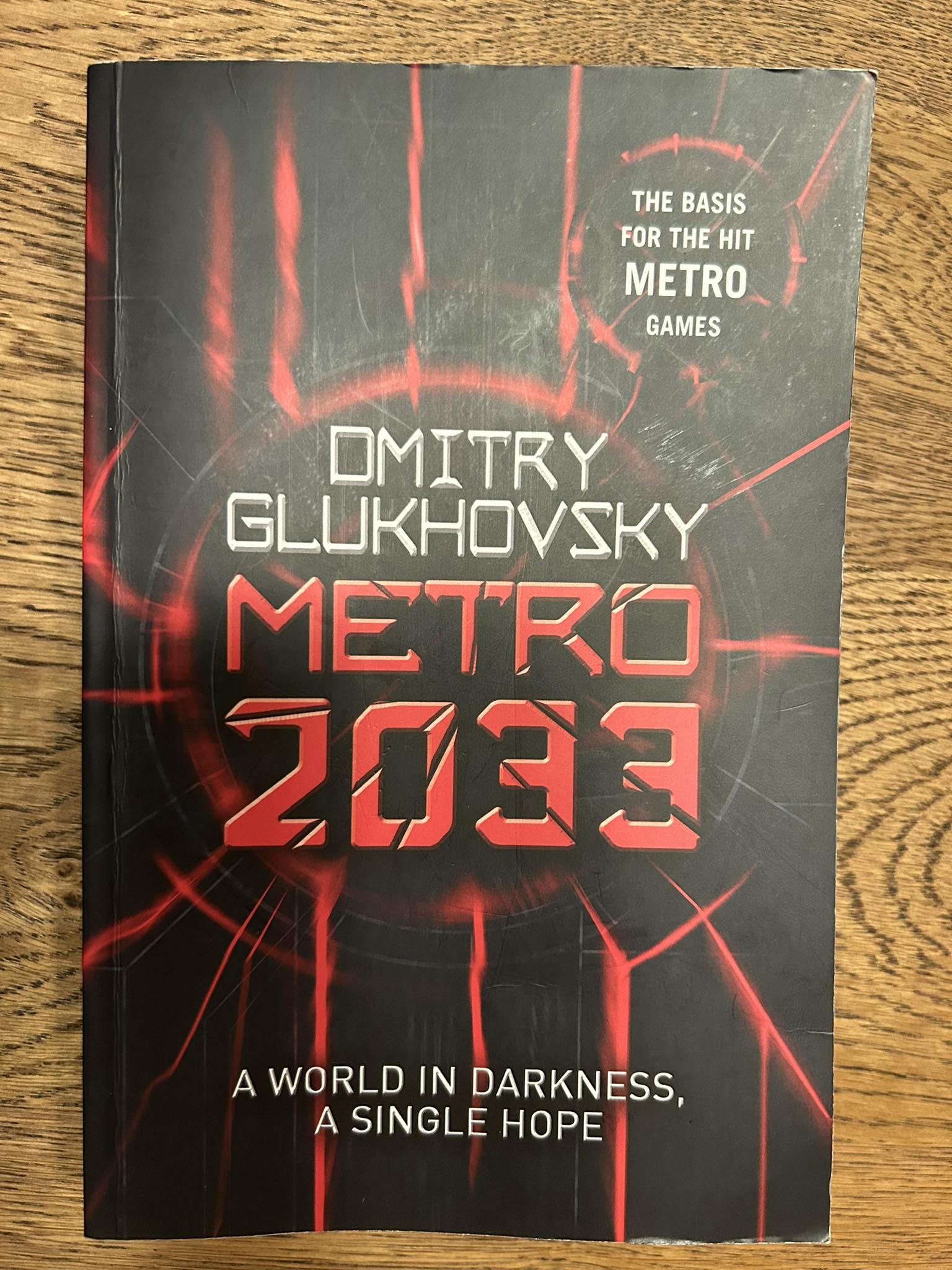
Metro 2033 – Dmitry Glukhovsky

Why was he doing this? So that life could continue in the metro? Right. So that they could grow mushrooms and pigs at VDNKh in the future, and so that his stepfather and Zhenkina’s family lived there in peace, so that people unknown to him could settle at Alekseevskaya and at Rizhskaya, and so that the uneasy bustle of trade at Byelorusskaya didn’t die away. So that the Brahmins could stroll about Polis in their robes and rustle the pages of books, grasping the ancient knowledge and passing it on to subsequent generations. So that the fascists could build their Reich, capturing racial enemies and torturing them to death, and so that the Worm people could spirit away strangers’ children and eat adults, and so that the woman at Mayakovskaya could bargain with her young son in the future, earning herself and him some bread. So that the rat races at Paveletskaya didn’t end, and the fighters of the revolutionary brigade could continue their assaults on fascists and their funny dialectical arguments. And so that thousands of people throughout the whole metro could breathe, eat, love one another, give life to their children, defecate and sleep, dream, fight, kill, be ravished and betrayed, philosophize and hate, and so that each could believe in his own paradise and his own hell . . . So that life in the metro, senseless and useless, exalted and filled with light, dirty and seething, endlessly diverse, so miraculous and fine could continue.

In a post-apocalyptic world, humans eke out their existence in the depths of several Moscow metro stations, surrounded by horrors, radiation, mutants, rats and their own fears. The protagonist, Artyom, engages in a journey to deliver a vital message that would inform and allow people to react to an external threat. In his odyssey, traders, mystics, hunters, idealists help or hinder him in various societies, often extreme, that survive in the metro stations. In a world where bullets are currency, humans cling to life in the underground and surface travels are mortally dangerous, the will to fight and survive, the thoughts of an existence close to the abyss is explored by the Russian author, in a compelling and creative story.

The book was later translated in a successful series of horror video games. For some readers, the exploration of human mind in a post-apocalyptic and grim survival story by Dmitry Glukhovsky could look monotonous; for others, it may a fascinating dive into what gives the survivors the grit to face all the horrors and the grim future.

The story of creating this book is unusual, as Glukhovsky wrote it and publish it on his website as an interactive experiment, when he was 18. It was later published on paper three years later, in 2005. Two more volumes in the series continued in 2009 and 2015,

Overall, a creative, diverse exploration of human mind and society in a post-apocalyptic, grim world, via a fulfilling odyssey.

A Memory Called Empire – Arkady Martine (Teixcalaan, book 1)

You pump the dead full of chemicals and refuse to let anything rot—people or ideas or … or bad poetry, of which there is in fact some, even in perfectly metrical verse,” said Mahit. “Forgive me if I disagree with you on emulation. Teixcalaan is all about emulating what should already be dead.” “Are you Yskandr, or are you Mahit?” Three Seagrass asked, and that did seem to be the crux of it: Was she Yskandr, without him? Was there even such a thing as Mahit Dzmare, in the context of a Teixcalaanli city, a Teixcalaanli language, Teixcalaanli politics infecting her all through, like an imago she wasn’t suited for, tendrils of memory and experience growing into her like the infiltrates of some fast-growing fungus.

The book follows the arrival of the new ambassador, Mahit Dzmare, from the independent Lsel station to the empire of Teixcalaan, and her adventures following the murder of the previous ambassador, all while trying to preserve the independence of a her small station. This is a detective thriller, intertwined with imperial intrigue and friendship, on the streets of the monumental capital of the largest interstellar empire.

This is the debut novel for the author AnnaLinden Weller, writing under the pseudonym Arkady Martine. The novel won the Hugo Award and was a finalist for the Nebula Award for Best Novel of 2019.

What is impressive in this book is the quality of prose, exceptional world-building, relatively uncomplicated plot and the memorable characters. The names chosen are unique and the book creates a new vocabulary for this glorious empire of Teixcalaan. One of the profound themes explored is of self and multiple identities, via a device called imago machine, which preserves the memory of the deceased and allows to be incorporated in a new person. The results are generally positive, the deceased being of help, but not without risks.

While usually not my type of book (it was more fiction than science), the quality of prose was undeniable and the story engaging. It is a long book, but hours of reading passed unnoticed, showing the grip that the book makes on the reader. At the no point the story stagnated or paragraphs felt unneeded, despite it’s considerable length. A highly entertaining book.