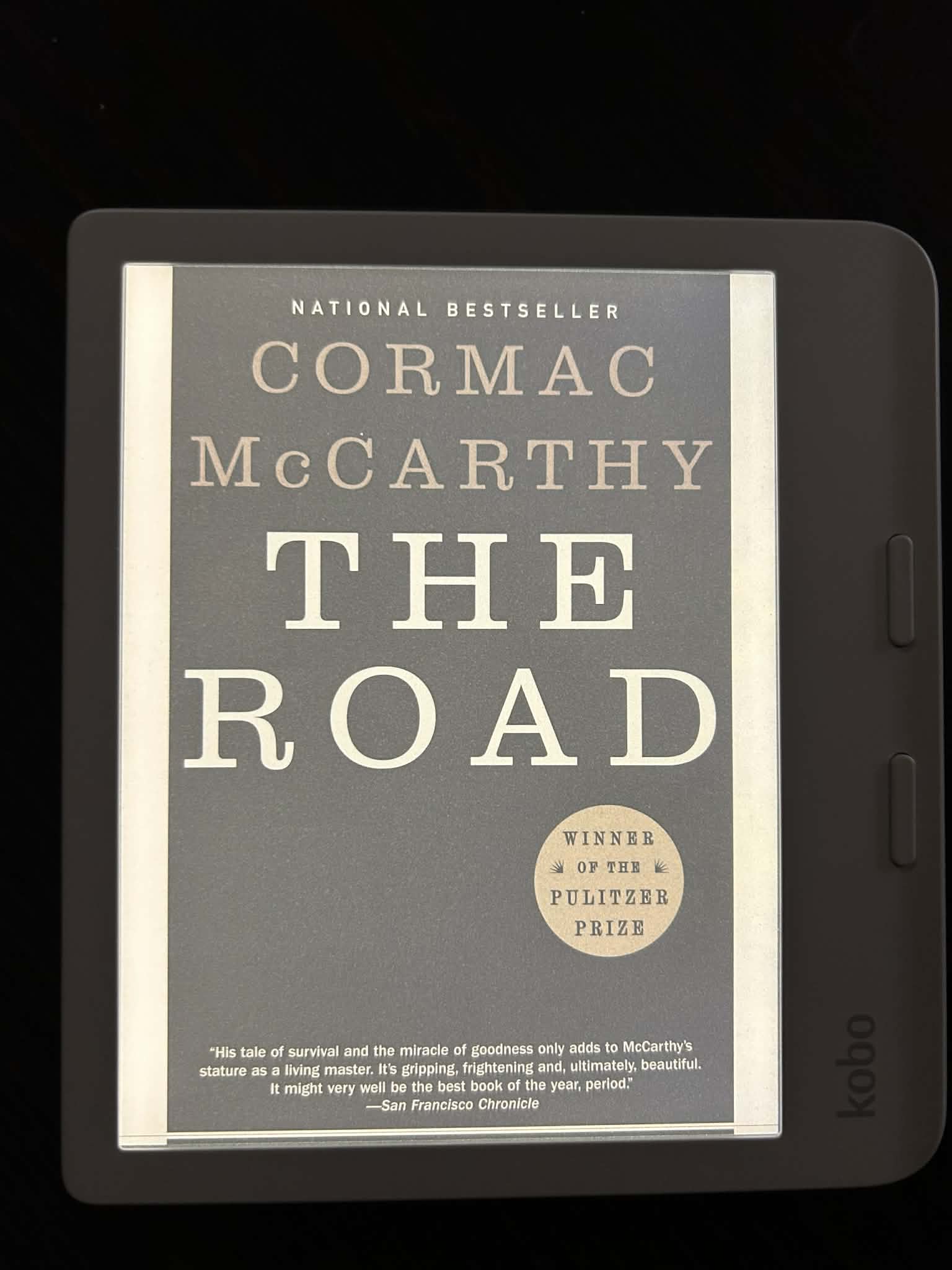
The Road – Cormac McCarthy

You have to carry the fire.”
I don’t know how to.”
Yes, you do.”
Is the fire real? The fire?”
Yes it is.”
Where is it? I don’t know where it is.”
Yes you do. It’s inside you. It always was there. I can see it.

The book follows the journey of a dad and his son, traveling south in the United States, in a contemporary post-apocalyptic world. They struggle to find food, shelter, clothes, avoid other humans turned to cannibalism. All the while, the father tried to teach his son survival skills, but also to be human, resilient, cautious and positive.

Not much happens during their journey, but the few interactions are meaningful and memorable.

The book won the Pulitzer Prize and it can be seen in the exceptional writing. The short book is a pleasure to read due to the writing skills, the descriptions, the atmosphere, the dialogue, the feelings and motivations of the characters. As reader, one is transported in that post apocalyptic world, without the need of long descriptions or explanations.

In fact, we never know the names of the family, what triggered the apocalypse, where exactly they are traveling and, in general, what happened to the world. We have only glimpses of their past and hints of what the apocalypse was.
It matters not, as the story is about passing the humanity from one generation to another, in the microcosm of this father and his son. Luck is on their side, but all has a countdown.

The late author, Cormac McCarthy, was a prized Hollywood inspiration, this book and one other (No Country For Old Man) being transposed into movies.

Are we carrying the fire?

A beautiful and touching book.
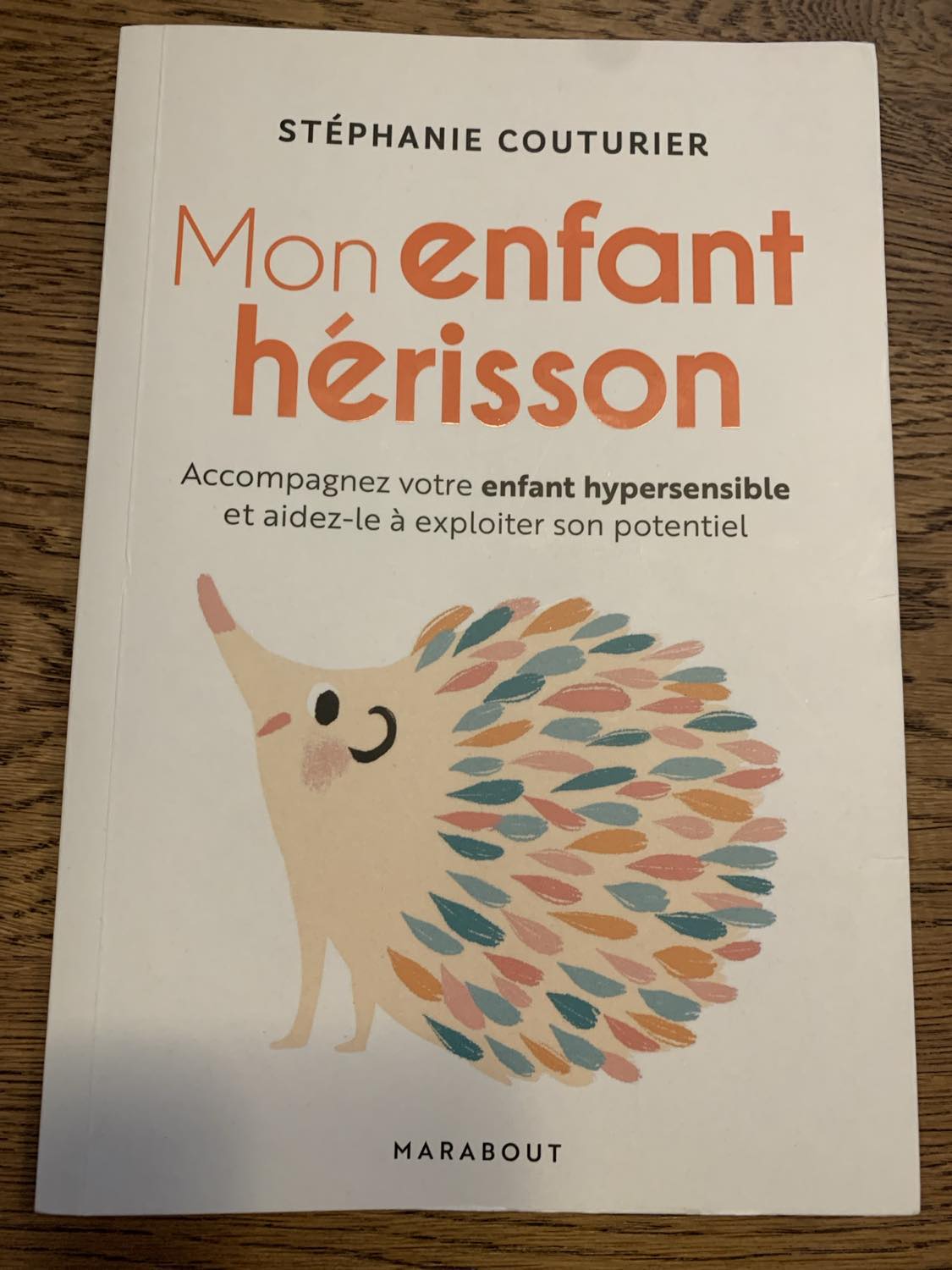
Mon enfant hérisson – Stéphanie Couturier

Lors d’une crise émotionnelle, prenez l’habitude de réagir en trois étapes :

1. Ecoutez sans jugement ce que votre enfant a à dire.Votre enfant a besoin d’une oreille attentive. N’essayez pas de rétablir des vérités.–> L’enfant hérisson se sent considéré.

2. Répétez ce que vient de vous dire votre enfant en parlant de son émotion.”Tu es profondément triste parce que…”, “Tu es en colère car…”Même si cela vous paraît anodin ou exagéré, cela ne l’est pas pour l’enfant. Le fait d’entendre son parent le dire est une forme de reconnaissance de ce qu’il vit.–> L’enfant hérisson se sent compris.

3. Interrogez-le et proposez-lui votre aide.”Que puis-je faire, que pouvons-nous faire pour t’aider en respectant la consigne initiale ?”L’enfant participe ainsi aux solutions.–> L’enfant hérisson devient acteur de son apaisement.

Ces trois étapes contribuent à la construction d’une image positive de soi. L’enfant se sent ici soutenu, compris, respecté et considéré. Cela désamorce de nombreuses situations et l’aide à se construire dans la sérénité, ce qui est un réel investissement pour son bien-être futur. Un ticket d’or pour sa confiance en lui et son estime de lui-même !

Le livre est une exploration de la façon d’identifier et de gérer les enfants émotifs. Il suit les différentes étapes d’un enfant émotif, du bébé à l’adolescent, en offrant des solutions et de nombreux exemples.

L’auteur, Stéphanie Couturier, est thérapeute spécialisée dans l’accompagnement de la sphère émotionnelle des enfants. Elle présente ainsi un passé d’enfant émotif et parle de son vécu et de celui de ses enfants.

Le livre est extrêmement utile pour identifier et comprendre les raisons pour lesquelles un enfant se comporte d’une certaine manière, parfois apparemment irrationnelle. Il guide les parents dans la compréhension et la gestion de leurs enfants et montre comment un enfant émotif peut s’épanouir. même si le livre ne dit rien d’inhabituel, la façon dont il est structuré et écrit aide le lecteur à mieux comprendre le comportement de l’enfant.

Un livre vraiment utile pour tous les parents, en particulier pour ceux qui ont des enfants émotifs.