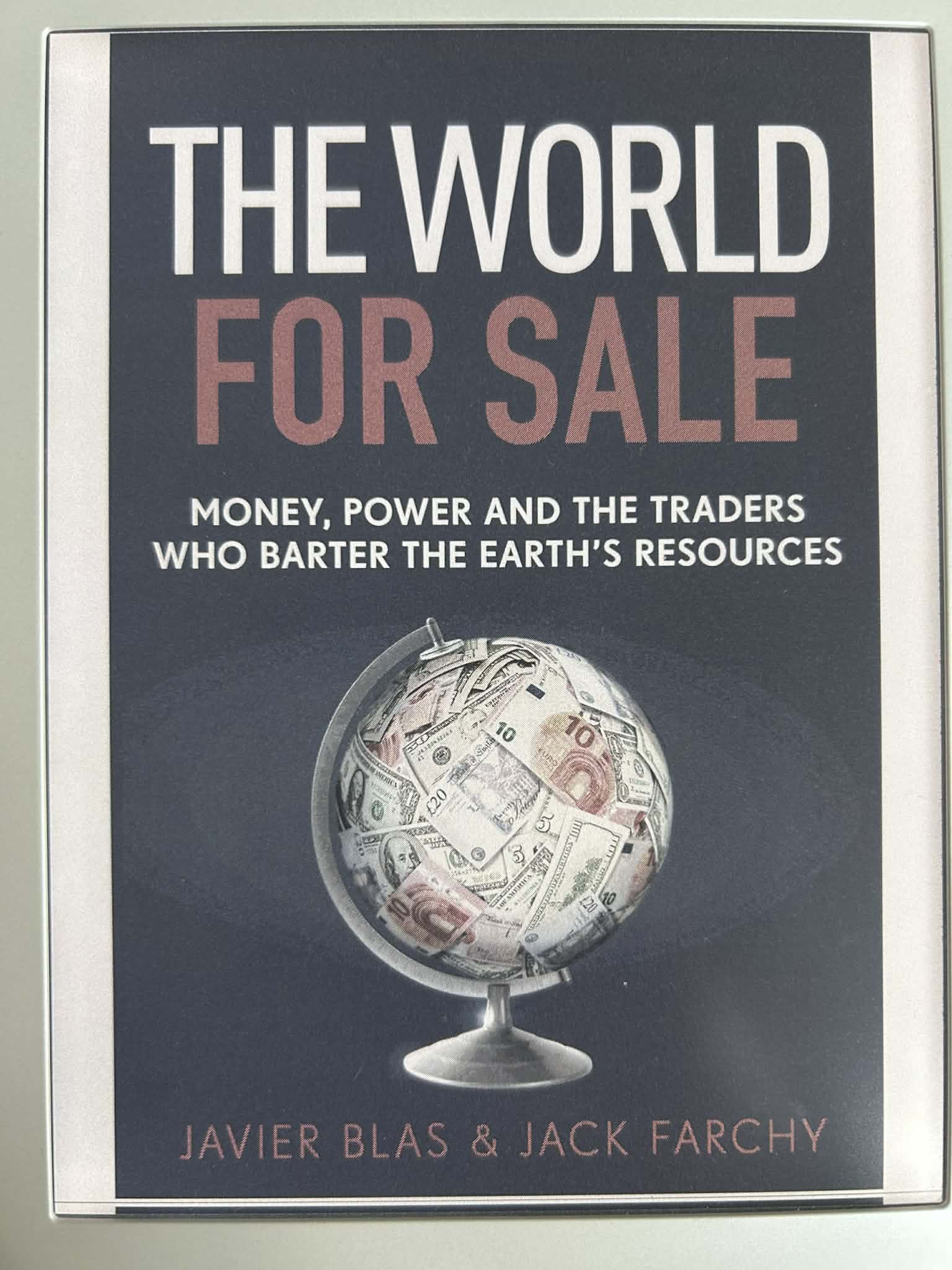
The World for Sale – Javier Blas, Jack Farchy

The commodity traders are arbitragers par excellence, trying to exploit a series of differences in prices. Because they’re doing deals to buy and to sell all the time, they are often indifferent to whether commodity prices overall go up or down. What matters to them is the price disparity – between different locations, different qualities or forms of a product, and different delivery dates. By exploiting these price differences, they help to make markets more efficient, directing resources to their highest value uses in response to price signals. They are, in the words of one academic, the visible manifestation of Adam Smith’s invisible hand.

There are companies richer that big countries, that you never heard about. The book presents the history of commodity trading firms, from their start in early 60s to present day. Commodities are energy, metals and agricultural products that we commonly use. As trading grew and become global, these firms picked up, increased the trend and developed the global flows of products that fuel our lives and industries and feed ourselves.

Starting from trading oil, the global commodity traders, overwhelmingly European and based in Switzerland, become global power houses, not only in trading, but also in producing goods, owning warehouses and financing industries and countries.

On the good side, global commodity trading dramatically decreased prices for costumers, using every opportunity to create a better deal, a better price. In this endeavors, traders because rich, with profits in the billions.

On the bad side, those firms bought from and financed dictators, morals or international sanctions having little to do with a good deal.

What makes the book interesting is that it’s exceptionally well researched, dynamic and manages to present all major global commodity traders in an un liniar way. There is a plethora of stories and characters.

Also memorable is how some of the richest companies in the world grew quietly, outside press or magazines. Only an IPO in the early 2010s started to shed some light on their fabulous incomes, all of them being private before that and even now.

This is an exceptional, real world, contemporary, well researched, well written, engaging and memorable book. What a read!

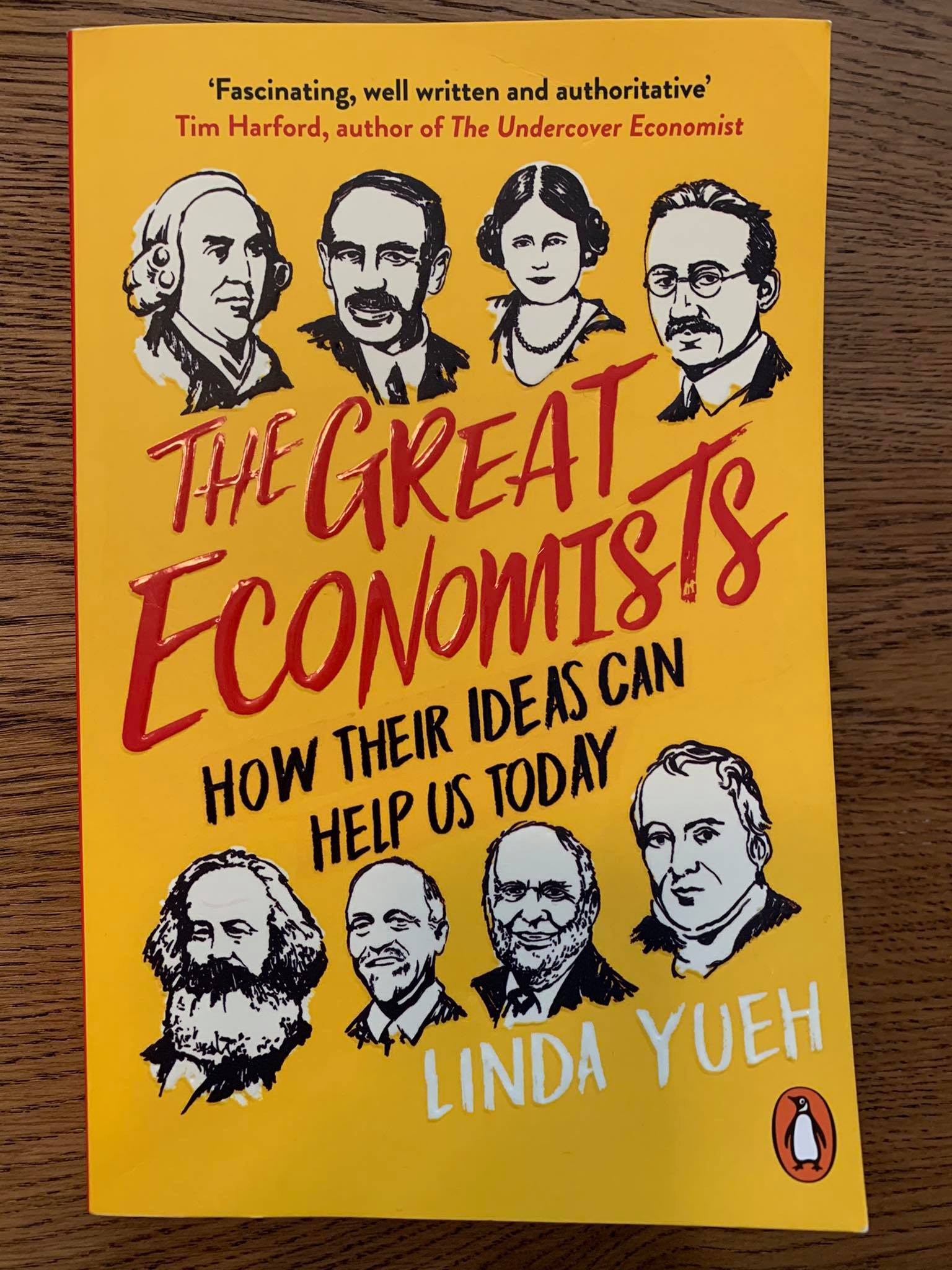
The Great Economists: How Their Ideas Can Help Us Today – Linda Yueh


Joan Robinson points out that if markets are imperfectly competitive, then firms can earn economic rents because rents aren’t entirely eroded by competition. In that situation, firms have market power…a theory of ‘monopsony’ [refers] to the market power that firms can wield in the labour market alongside the more familiar and established term, monopoly power, where firms have market power in the product market and can charge more for a good or service above their costs, earning them monopoly profits. Monopsony power allows employers to pay workers less than the value of their output, and keep more for themselves.

The book presents a selection of 12 illustrious economists, from the modern era to contemporary times. Linda Yueh introduces the reader to the ideas, times and life of those economists, but also speculates how one such economist would answer to the hot questions of today, from his/her perspective.

The Great Economists includes:
Adam Smith
David Ricardo
Karl Marx
Alfred Marshall
Irving Fisher
John Maynard Keynes
Joseph Schumpeter
Friedrich Hayek
Joan Robinson
Milton Friedman
Douglass North
Robert Solow

Linda Yueh is actually an economist, a fellow of the University of Oxford and assistant professor at the London Business School. A formal lawyer and journalists, she tries to present the groundbreaking ideas of those 12 economists in simple, non-academic terms. On that front, Yueh marvelously encapsulates the times and concepts put forward by those famous economists in the last three centuries.

The book is structured in 12 main chapters, each presented an economist. Each chapter is further divided into an introduction to the economist’s ideas, a presentation of his/her times, a study of today’s societies, with no focus on a particular country, and finally, a subsection where the economists’ ideas are tested to see how they can help us for today’s problems.

The book is truly enjoyable, particularly for a reader accustomed with the domain. It is a great reminder of important economic ideas. It is an interesting read for someone outside the domain as well, as it acts as a textbook, including a dictionary of terms at the end. I particularly liked the short biography for each economist and the brief presentation of the times they lived, bringing many insights into the motivations for their research.

Maybe exploring more the answers that such economists could have given to today’s questions would make the book even more interesting. I would have been delighted to see more economists added into the book, as each was carefully presented through the lens of their time and with a well-written, thoughtful and clear introduction of their ideas.

Overall, a great book to read that has a deserved place on my bookshelf.

Rich Dad Poor Dad – Robert Kiyosaki

I find so many people struggling, often working harder, simply because they cling to old ideas. They want things to be the way they were; they resist change. I know people who are losing their jobs or their houses, and they blame technology or the economy or their boss. Sadly they fail to realize that they might be the problem. Old ideas are their biggest liability. It is a liability simply because they fail to realize that while that idea or way of doing something was an asset yesterday, yesterday is gone.

“Rich Dad, Poor Dad” is a self-help, motivational and light financial education book. The author starts from an allegory: a poor (real) dad, with an education and a job, and a rich (adoptive) dad, with his own business. As a child, the author learns the mistakes of his real dad in making money and adopts the more successful ways of his rich dad.

Work for money or make money work for you?

Robert Kiyosaki tries to motivate the reader to have courage for his own path, not simply a job given by someone, but for creating his job. He encourages risk-taking, saying that without risk there is no reward. No one won big by playing safe. This advice I heard from other authors as well, such as Arnold Schwarzenegger in his book Total Recall.

Kiyosaki gives the example of real estate, where large sums of money can be made if enough attention and perseverance are given to an opportunity. Seen it as an allegory, or as an example, it makes sense. Taking literally, it could look as a symptom of the real estate bubble.

The author made a fortune after this book. Barnes and Noble considers it apparently the best sold Personal Finance book of all time. (source). It has a website, a game and dozens follow-up books. In 2006, he co-authored a book on advice on personal finance with Donald Trump, Why We Want You To Be Rich: Two Men, One Message.

For those books, usually you either like it or hate it. Taken literally, it doesn’t have much depth, just some advice that you can get anywhere. The book builds its legitimacy from the supposed wealth and financial success of the author. However, it has its moments with decent advice.

[Picture in the post by Gage Skidmore]

[Featured picture by Australia High Commission, Suva – Department of Foreign Affairs and Trade]