Maman m’a toujours dit que le vocabulaire était ma meilleure arme dans la vie. Avant je ne comprenais pas pourquoi. Maintenant si. Lire, c’est découvrir, voyager, mais aussi apprendre le sens des mots et surtout apprendre à s’en servir. C’est très important pour comprendre les choses et faire attention à ce qu’on nous dit.
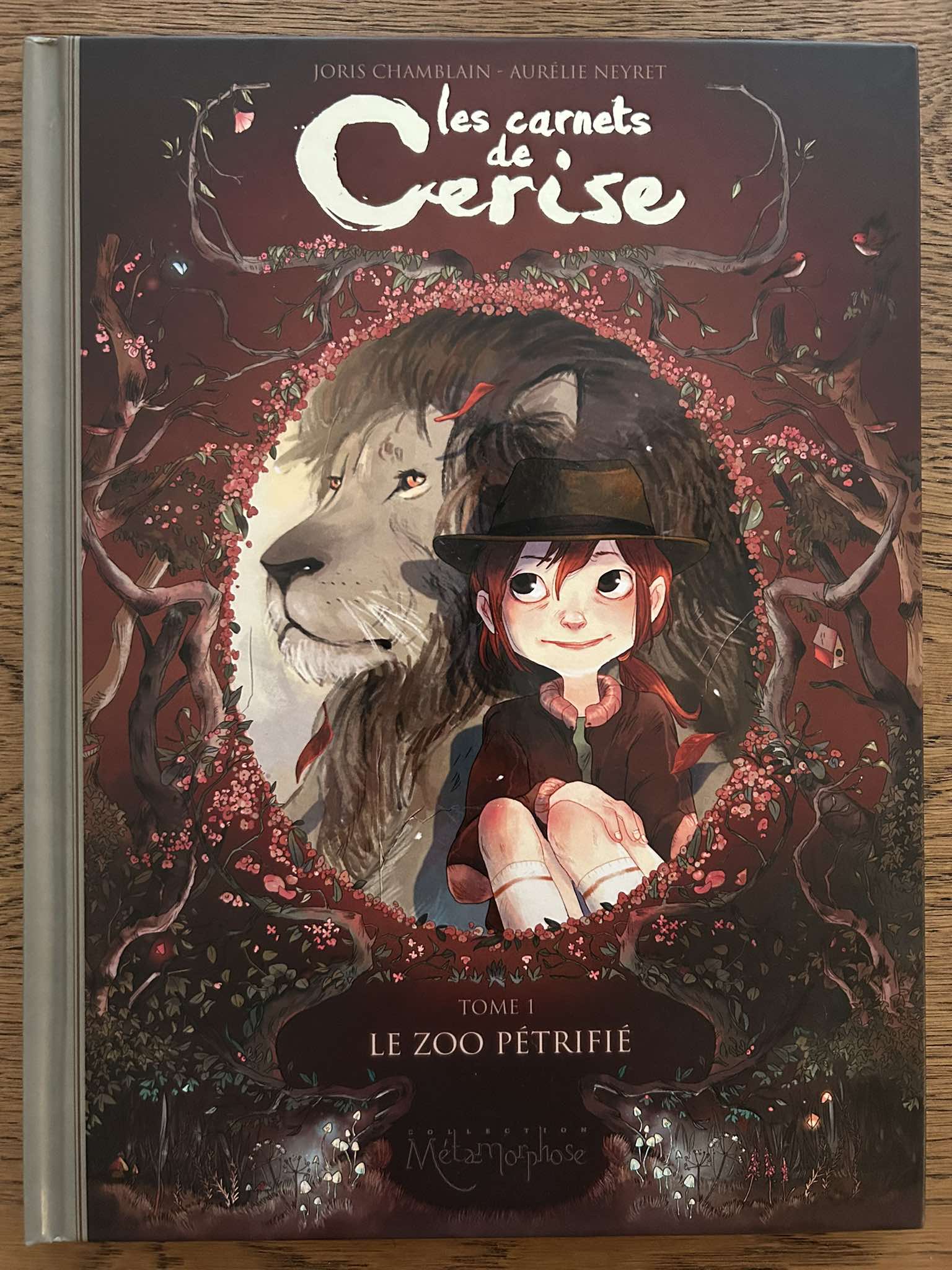
Cerise est une petite fille de 11 ans, curieuse et pleine d’énergie, qui souhaite devenir écrivaine. Avec ses 2 meilleures amies, Line et Erica, et guidées par sa mentor, Madame Desjardines, nous explorons les aventures de notre protagoniste dans sa petite ville natale en France.
Ce livre pour adolescents (que j’ai lu pour mes filles) est le premier de la série Carnets de Cerise. Il commence avec un vieil homme mystérieux, marchant dans la forêt, et colorié à la peinture. Cerise est intriguée et suit avec persévérance le vieil homme, découvrant une vieille histoire de la ville, qui va rassembler tout le monde.
L’histoire est un peu simple et triste, mais les illustrations et le concept général sont superbes. Il n’y a pas que des dessins, mais aussi des lettres et des articles de presse, le tout contribuant à une construction d’universe élégante dans le livre.
Dans l’ensemble, un degré de liberté irréaliste pour les enfants (leur donnant même de mauvaises idées), mais joliment dessiné et magnifiquement conçu.
So the plan wasn’t a clusterfuck, it was just circling the clusterfuck target zone, getting ready to come in for a landing.
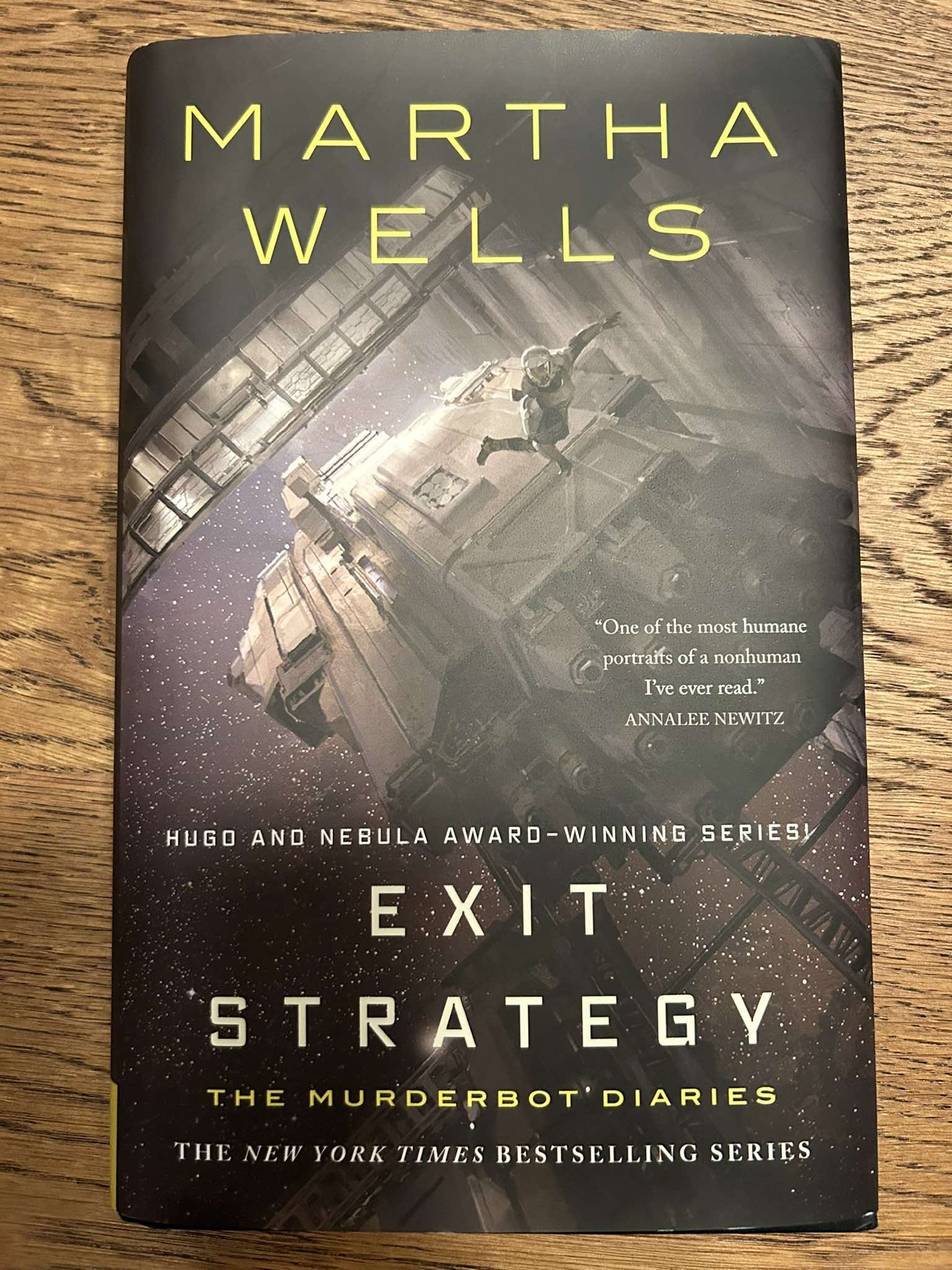
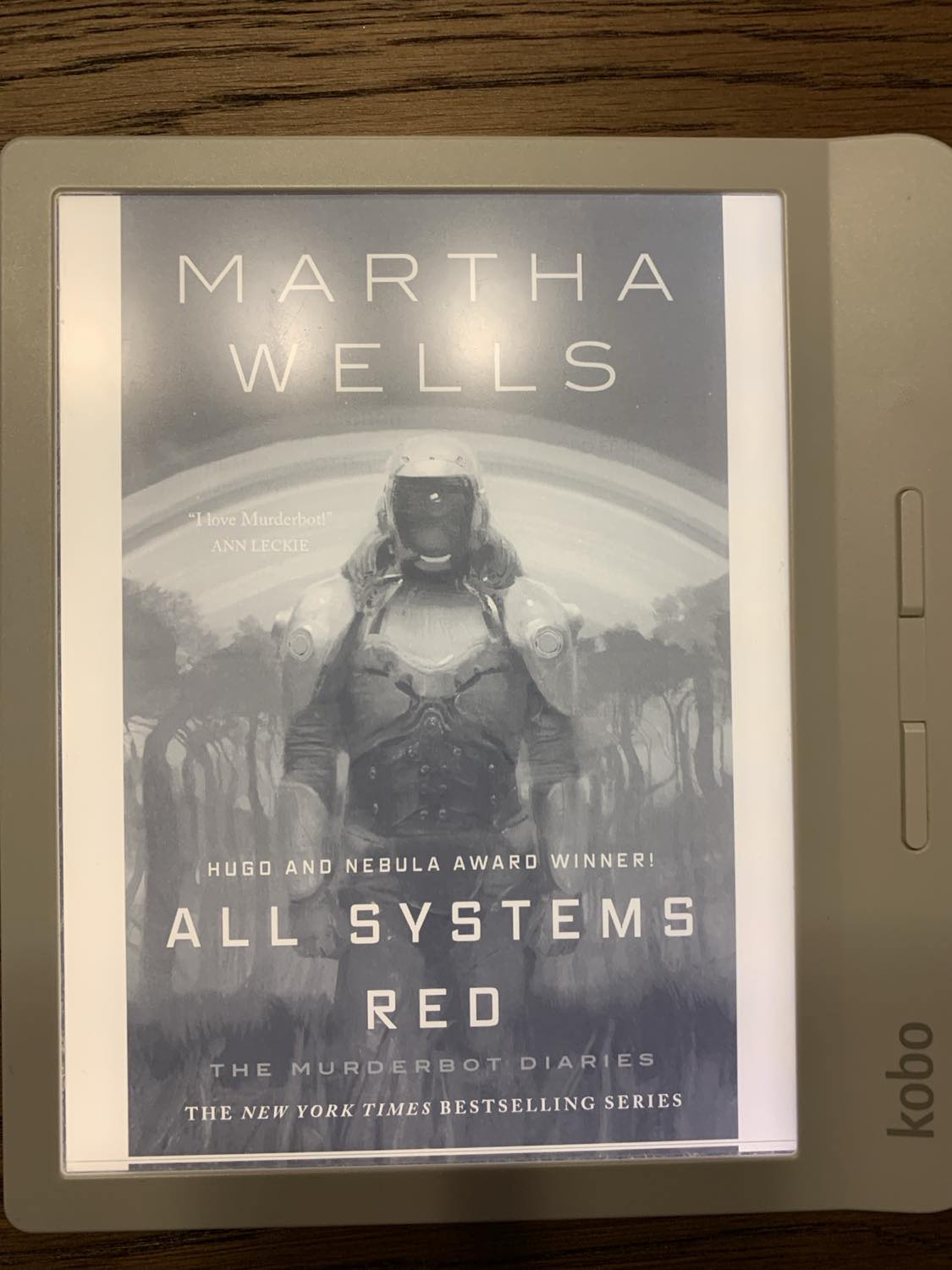
Exit Strategy is the fourth and the last novella in the Murderbot Diaries, a fun, science-fiction adventure of a robot developing a human-like conscience and fighting evil corporations.
The introverted robot, a security unit, returns to the space station holding the headquarters of some of the protagonist companies. It manages through detective work, good human interactions and great hacking skills to finally find justice.
The series is lovely and the writing skills of Martha Wells are remarkable, intuitively understanding what the reader thinks, and adding an anecdote or a question that the reader wonders too. While the novella are short, they are well paced, without any sensation of rush, leaving enough time for descriptions and character development.
Overall, a great, relaxing, well-written and funny series of novellas by a Hugo and Nebula prizes winner.
A hundred and fifty years before, when the parochial disagreements between Earth and Mars had been on the verge of war, the Belt had been a far horizon of tremendous mineral wealth beyond viable economic reach, and the outer planets had been beyond even the most unrealistic corporate dream. Then Solomon Epstein had built his little modified fusion drive, popped it on the back of his three-man yacht, and turned it on. With a good scope, you could still see his ship going at a marginal percentage of the speed of light, heading out into the big empty. The best, longest funeral in the history of mankind. Fortunately, he’d left the plans on his home computer. The Epstein Drive hadn’t given humanity the stars, but it had delivered the planets.
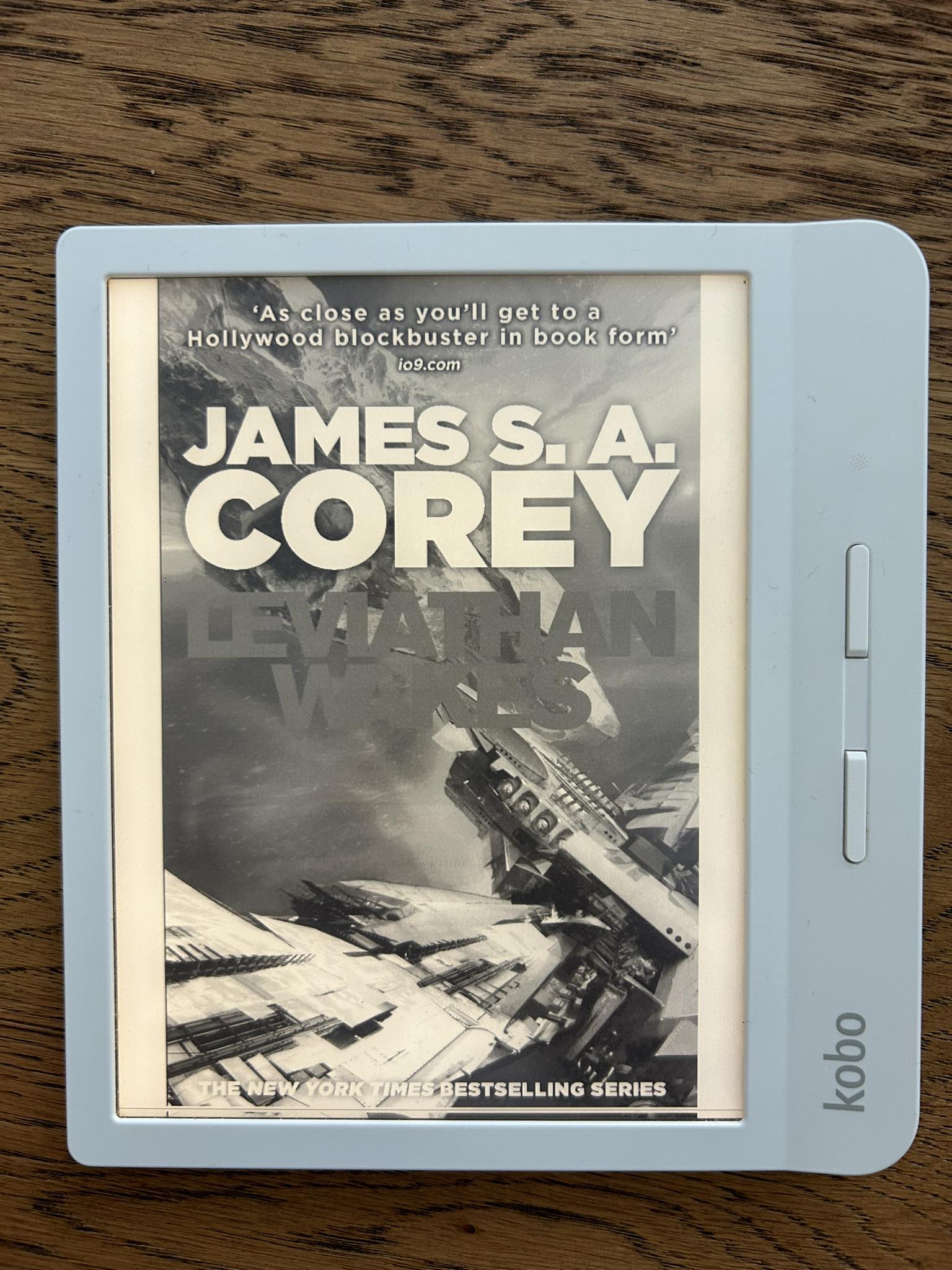
This is space opera at it’s finest. Humanity has colonized Mars, the Moon and the asteroid belt. The socioeconomic interactions between the 3 main powers (Earth, Mars and the belt) are masterfully presented in a detective story through the eyes of a belt cop and an ice freighter crew. The world building is so well thought, presenting how society evolves in the new environments (including elements such the effects of gravity, economics, languages, slang, trade).
Jim Holden is a the executive officer of an ice transport freighter, who survives the unexplainable consecutive ambushes with several original survivors. Who is trying to push the Belt and Martians to war? Detective Miller is a depressed, but skilled cop, trying to do his job. His instincts tingle when a case of missing girl is given to him, he feels it is important and becomes obsessed with it. Why so many crime figures are disappearing from Ceres, the main port of the belt? Where is the missing girl, why is he told to drop it? Meanwhile, an alien artifact is discovered, but kept secret by Earth corporations. How are all those webbed together?
The detective story webbing together the plot is engaging, but the real appeal of the book is the world development, making such an innovative and creative narrative. This is hard science fiction at its best.
Interestingly, James S. A. Corey is not an author, but the pen name used by collaborators Daniel Abraham and Ty Franck, which used their middle names to create the pen name.
The series was exceedingly well received. Leviathan Wakes, the first book, was nominated in 2012 for the Hugo Award for Best Novel and Locus Award for Best Science Fiction Novel. The book series itself was nominated for the Hugo Award for Best Series in 2017 and won it in 2020. To top it off, it was adapted for television, for successful 6 seasons.
The Expanse has a total of 9 novels, plus a dozen or so additional novellas. This makes for pretty long reading, but of great quality. A great start for the series.
You pump the dead full of chemicals and refuse to let anything rot—people or ideas or … or bad poetry, of which there is in fact some, even in perfectly metrical verse,” said Mahit. “Forgive me if I disagree with you on emulation. Teixcalaan is all about emulating what should already be dead.” “Are you Yskandr, or are you Mahit?” Three Seagrass asked, and that did seem to be the crux of it: Was she Yskandr, without him? Was there even such a thing as Mahit Dzmare, in the context of a Teixcalaanli city, a Teixcalaanli language, Teixcalaanli politics infecting her all through, like an imago she wasn’t suited for, tendrils of memory and experience growing into her like the infiltrates of some fast-growing fungus.
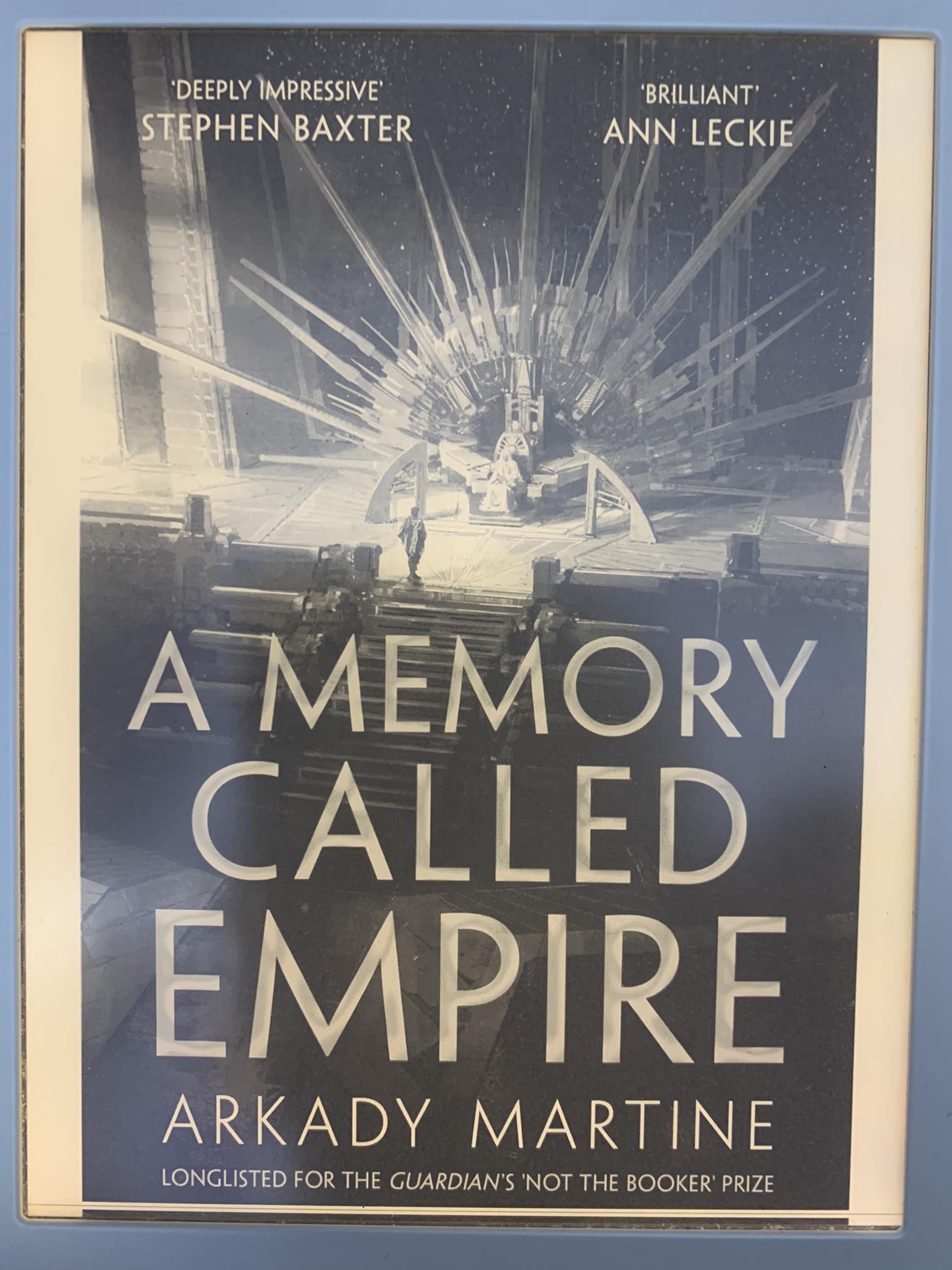
The book follows the arrival of the new ambassador, Mahit Dzmare, from the independent Lsel station to the empire of Teixcalaan, and her adventures following the murder of the previous ambassador, all while trying to preserve the independence of a her small station. This is a detective thriller, intertwined with imperial intrigue and friendship, on the streets of the monumental capital of the largest interstellar empire.
This is the debut novel for the author AnnaLinden Weller, writing under the pseudonym Arkady Martine. The novel won the Hugo Award and was a finalist for the Nebula Award for Best Novel of 2019.
What is impressive in this book is the quality of prose, exceptional world-building, relatively uncomplicated plot and the memorable characters. The names chosen are unique and the book creates a new vocabulary for this glorious empire of Teixcalaan. One of the profound themes explored is of self and multiple identities, via a device called imago machine, which preserves the memory of the deceased and allows to be incorporated in a new person. The results are generally positive, the deceased being of help, but not without risks.
While usually not my type of book (it was more fiction than science), the quality of prose was undeniable and the story engaging. It is a long book, but hours of reading passed unnoticed, showing the grip that the book makes on the reader. At the no point the story stagnated or paragraphs felt unneeded, despite it’s considerable length. A highly entertaining book.
I stared straight ahead. If there was one thing good about this situation, it was reinforcing how great my decisions to (a) hack my governor module and (b) escape were. Being a SecUnit sucked. I couldn’t wait to get back to my wild rogue rampage of hitching rides on bot-piloted transports and watching my serials.
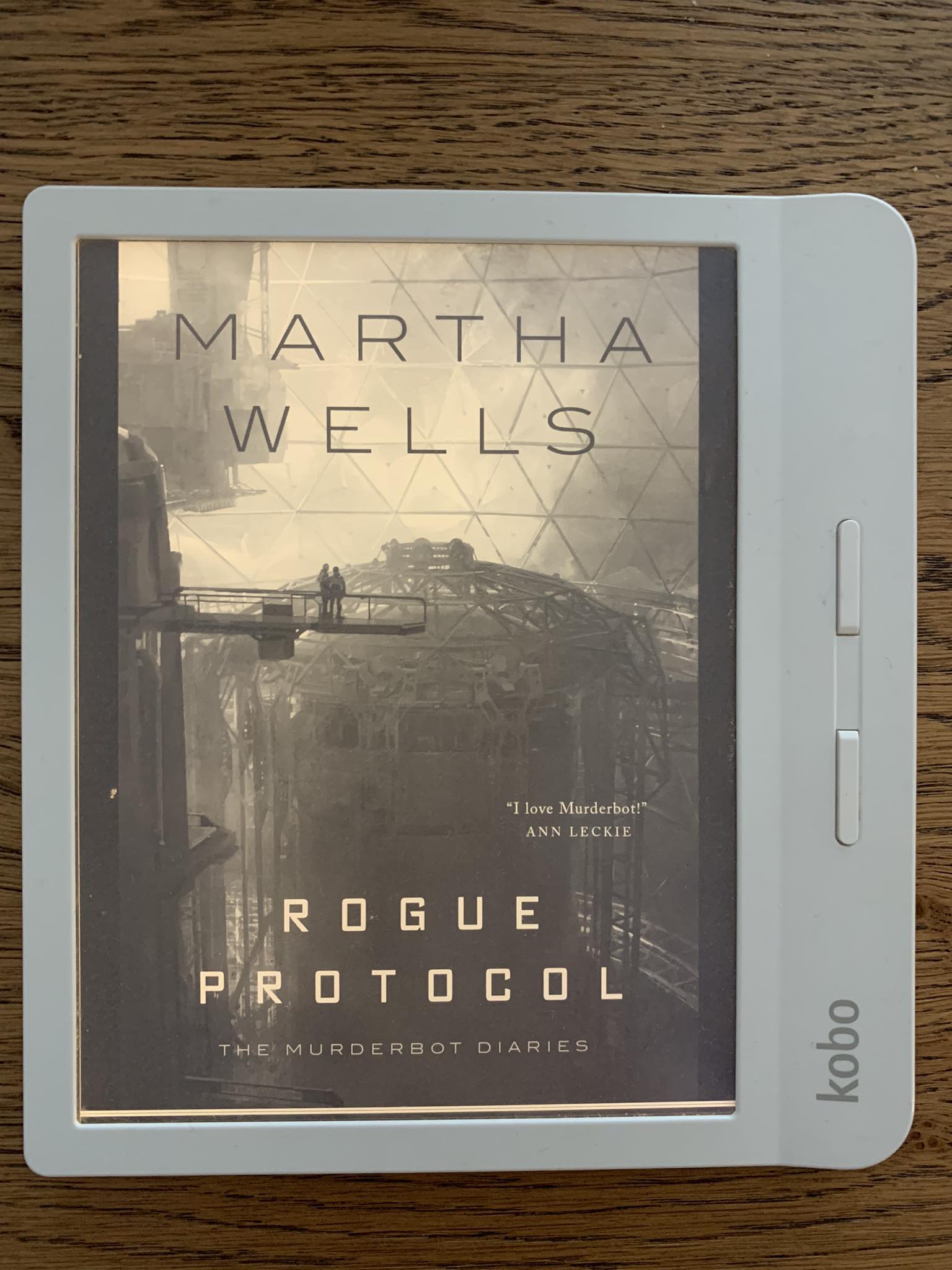
In the third book of the series (diaries because the protagonist presents the story in a first-person narrative), our rogue robot heads to a mining outpost to discover more about the past of the company that created it and mysteriously deleted some of its memory. It’s purpose is to investigate some of the stories related to this backwater, semi-abandoned outpost.
Again, the story is immersive and the investigation presents itself as a highly entertaining detective story. What is unique in this series, but particularly in this book, is how the author, Martha Wells, enters in the mind of the reader, asking questions that the reader asks as well, but in comical, ironical way.
The novella (indeed a rather short book) feels lean and the plot is tight, following a protagonist who is gradually developing while learning of the world. Few passages feel over-written, but the best of it, is that there is no endearing impression that part of the plot are missing or that some characters are under-developed. The book feels complete, despite being a novella. Additionally, the way the previous books of the series are referenced is done in short paragraphs, with well-chosen words, with excellent prose and humour.
Again, a lovely book, for a short read in the evening. What a series!
you can’t put something as dumb as a hauler bot in charge of security for anything without spending even more money for expensive company-employed human supervisors. So they made us smarter. The anxiety and depression were side effects.
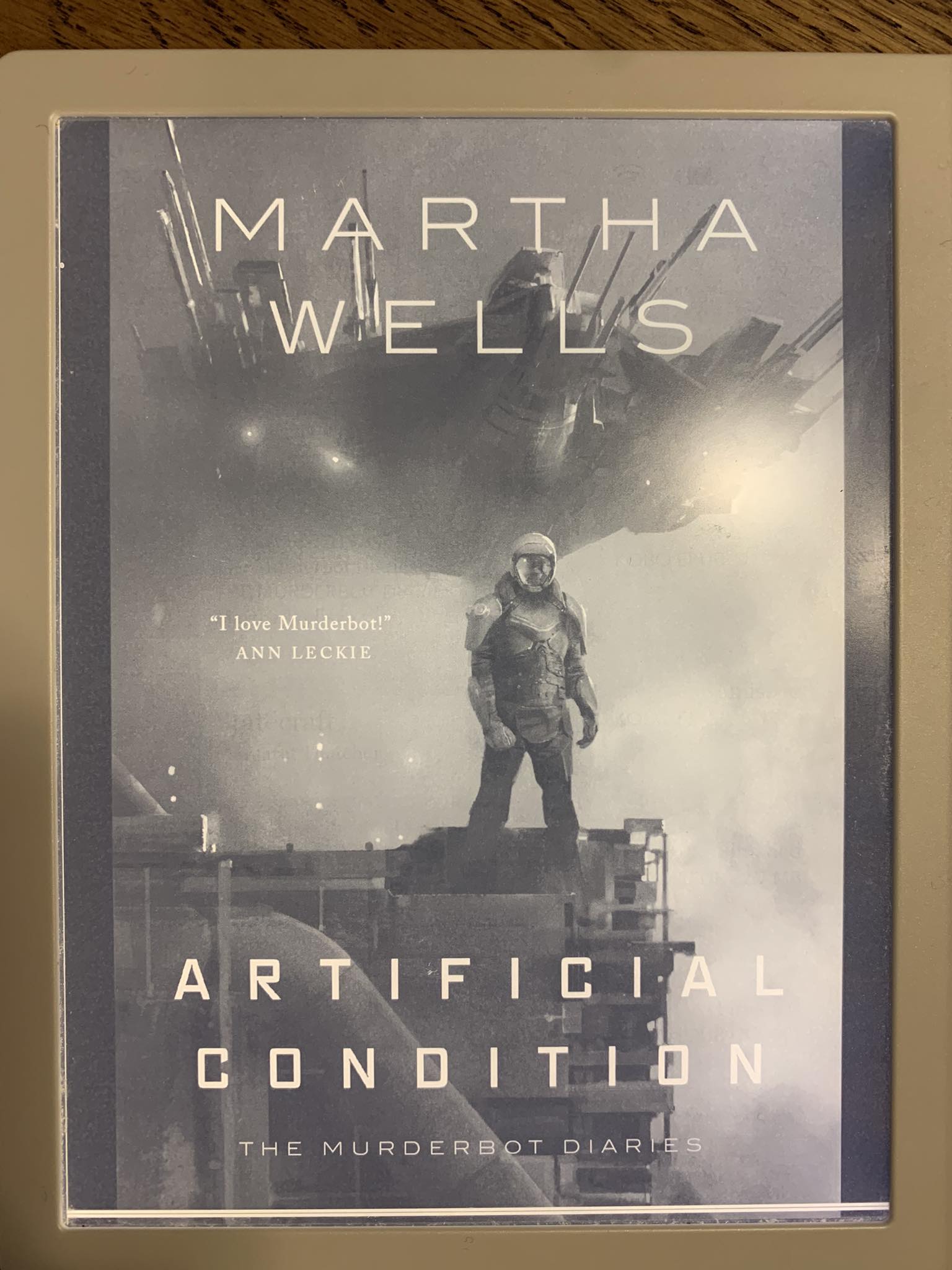
Another great detective novella from Martha Wells, of the friendly murderbot, always second-guessing itself. This time the murderbot is trying to find the origins of its decision to erase its controlling governor-module, an accident resulting in many human deaths.
The second book of the series does not disappoint and the witty humour and tight plot continues, keeping the reader engaged and relaxed.
In the book, our protagonist finds another robot friend, almost autonomous, but content with the research and traveling it is doing with the humans. The interactions between murderbot and ART make the basis of most conversations in the book, revealing much about the thinking process and background of both.
Martha Wells shows another time what a great writer she has, and that the Nebula and Hugo prizes were not a fluke.
I could have become a mass murderer after I hacked my governor module, but then I realized I could access the combined feed of entertainment channels carried on the company satellites. It had been well over 35,000 hours or so since then, with still not much murdering, but probably, I don’t know, a little under 35,000 hours of movies, serials, books, plays, and music consumed. As a heartless killing machine, I was a terrible failure.
The novella is about a cyborg, in a distant future, designed to protect humans as a security unit, but which becomes independent from its programming. Having the option to do basically anything, the cyborg (which calls itself Murderbot) decides to spend its time watching soap operas. However, circumstances (as it was escorting a research team on an unexplored, but habitable planet) make Murderbot to care more about humans than it previously considered and move it from its languor.
The book is narrated as first person by the cyborg, hence the title of The Murderbot Diaries. In a close to detective story, it explores the journey from indifference to caring for people, . However, the journey is done in a light and funny way, full doubts and timidity.
What impresses, besides the compelling storytelling and great writing, is the world development. We are in a futuristic world dominated by corporations that push the boundaries of humanity. The travel is by wormhole, but the author doesn’t lose words into describing the technologies. They are just there, doing a function, and they naturally feel familiar. The narrator doesn’t need to describe them, which makes the story very fluid.
The novella was widely acclaimed in the science fiction literature. In this genre, there are two major honours, the Nebula and Hugo Awards. The novella from Martha Wells won both awards for best novella, an impressive accomplishment.
The book is the first in the series, the Murderbot diaries, currently having six novellas and a full-length novel. Clearly an entertaining series and a great, relaxing read on a rainy evening.
He compared the intelligence task to solving a jigsaw puzzle, except that you didn’t get the box cover, so you didn’t know what the final picture was. And you got only a few pieces at a time, not all of them. And even worse, you always got a bunch of pieces from some other puzzle thrown in.
The book hypothesizes about an invasion of United States, namely Hawaii, by China in near future. While the concept is great and well researched, the story itself is highly dramatized, mostly following personal stories of some characters in Hawaii (Chinese, Russian and American) and the patching, development and fighting of a US warship (with an unique gun) and several of its crew. The book is full of drama and action, with many overlapping stories.
The strength of the book is the initial concept of China invading US, the actual tactics used and the immediate strategic consequences. This indeed is food for thought and a unique selling point. The tactics refer to how to actually bring troops to the US islands, neutralize the naval and air force, and all the logistics that make US formidable. A tall order, but the authors have well reasoned responses to this task.
The title of the book comes from the idea that mothballed, old ships (the Ghost fleet) are reinstated into service and bring much relief to the decimated US forces. However, except the story of one such ship, which is more or less, followed throughout the book, no much is mentioned about these ships.
There is little discussed by the authors in terms of overview developments following the invasion and even the US counterattack is left in limbo in terms of conclusions. We know nothing of how it ended, which feels like the book is missing a intermediary chapter.
Nevertheless, the book is exceptionally well-researched for correct military vocabulary, latest war machines and tactics. It gives a glimpse into contemporary lines of military technique.
It was an engaging book, but it felt quite a downfall in intellectual quality after the initial chapters. Nevertheless, it managed to keep me reading until the end.
I’m so sick of that argument. I’ve been hearing it for centuries. Playing God. Wolfgang, we played God when people believed they could dictate their baby’s gender by having sex in a certain position. We played God when we invented birth control, amniocentesis, cesarean sections, when we developed modern medicine and surgery. Flight is playing God. Fighting cancer is playing God. Contact lenses and glasses are playing God. Anything we do to modify our lives in a way that we were not born into is playing God. In vitro fertilization. Hormone replacement therapy. Gender reassignment surgery. Antibiotics.
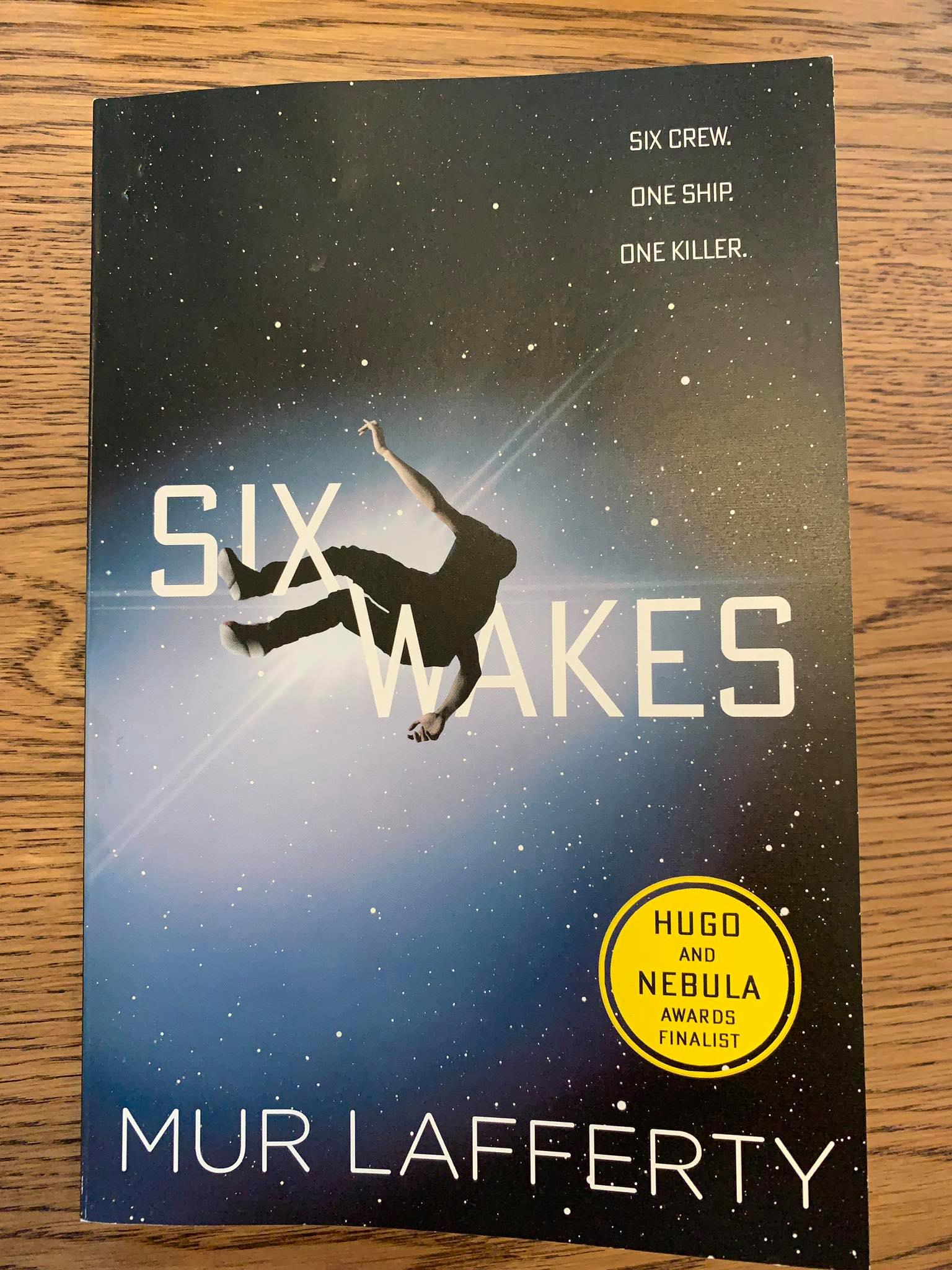
Six Wakes is hard scifi detective story taking place on a start ship headed for a new planet. Six clones, the entire crew of the ship, wake up, their earliest memory being from the start of the journey, 25 years ago. They are surrounded by their murdered bodies.
We follow the stories and point of view of each character, all having great character development and good motivations.
The novel debates the effects of cloning, in a masterful piece of suspense and mystery. The storytelling is compelling and the world building feels giving sufficient detail, without overwhelming the reader.
The book was widely appreciated, being a finalist for both Hugo and Nebula scifi competitions, the most important book competitions of the genre.
It took me less than a day to finish the book, I could not leave it down. A great detective story in space.
His strategy of flying boldly into the face of adversity was studied and taught, and during the Clone Wars would come to be known as “the Tarkin Rush”.
The book, happening in the Star Wars universe, presents an important episode in the life of Wilhuff Tarkin, the Imperial general. His unique and advanced stealth ship is stolen and used against the Empire by a cunning crew. He is tasked, together with Darth Vader, to catch the thieves by the Emperor himself. The entire story is told by using flashbacks and memories, neatly arranged.
James Lucerno is a veteran of Star Wars novels, specializing in stories of the antagonists. In this book, the reader can gave a glimpse in the life and of personality of the famous Imperial Moff, later Grand Moff, Wilhuff Tarkin.
Tarkin is meant to represent the military power: ruthless, efficient, domineering. But his personal background is rather surprising, and seems unfit with the personage.
The plot is compelling and the characters are well developed, but I would not go so far to say they were memorable. The Star Wars universe is beautifully constructed, giving depth and engaging the reader.
However, I have found the vocabulary used rather poor, despite some good tries of the author. The background of the protagonist does not seem fit with his career and personality. It often feels that his inner motivations are not explored in depth. The plot is engaging, well-thought and unpredictable, but more could be drawn from it.
Overall, a solid piece of work from Lucerno, an enjoying book for the fans of the genre.