

Today’s society is no longer Foucault’s disciplinary world of hospitals, madhouses, prisons, barracks, and factories. It has long been replaced by another regime, namely a society of fitness studios, office towers, banks, airports, shopping malls, and genetic laboratories. Twenty-first-century society is no longer a disciplinary society, but rather an achievement society [Leistungsgesellschaft]. Also, its inhabitants are no longer “obedience-subjects” but “achievement-subjects.” They are entrepreneurs of themselves.
The Burnout Society is a philosophical essay calling for humans to, basically, take it easier. Do less, think more. The main message of the book is that the inability to manage negative experiences in a world with too much positivity leads to mental disorders from depression to attention deficit disorder.
The author of the book is the Korean-born German philosopher Byung-Chul Han, who teaches philosophy and cultural studies at Berlin.
Divided into 8 separate chapters, each adopting a separate topic, the book revolves around the pressure to modern individual of the modern society. Why are we so tired and depressed, when we solved, as a society, so many immediate dangers, from illnesses to social safety?
Some chapters I did not like and skipped through, while others where engaging, such as Profound boredom. The chapter had some memorable thoughts: if sleep represents the high point of bodily relaxation, deep boredom is the peak of mental relaxation. A hectic rush produces nothing new, but reproduces what is already available. For example Running is just accelerated walking. Dancing is an entirely new form of motion.
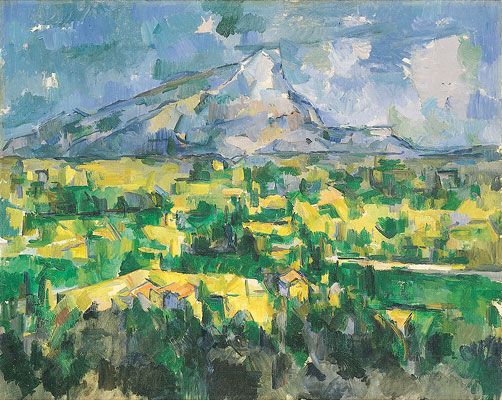
Deep, contemplative attention is inaccessible to the hyperactive ego. Even Nietzsche noted that human life ends in deadly hyperactivity if the contemplative element is taken out. The author takes the example of Paul Cezanne, – who was able to have profound attention (to the landscape).
Another interesting chapter is the one on Vita activa vs vita contemplativa. The message is that we should seek to understand first, before acting. Hyperactivity doesn’t allow free action.
I was not really convinced on the role of contemplation, as reflection felt a better word. In the reflection vs contemplation dichotomy, reflection is active and analytical, while the latter is immersive and passive. What is contemplating without doing?

Overall, the book is intriguing and captures of the main struggles of the modern society. Critics note the fancy language and lack of concrete examples. Supports highlight the depth of thought and the many poignant observations on the pressures of the individual in the modern, atomized, internet-filled and value-missing society.


 Mike Bostan - personal blog on book reviews and energy studies