Odyssey One: Into the Black (Odyssey One, book 1) – Evan Currie

A soldier’s first duty, his reason for being, is not to fight. Fighting is the final recourse for any civilized people. His duty is not even to preserve the peace; that is a police officer’s job,” Comdr. Stephen Michaels of the NAC military said by rote, remembering the many long nights of arguments and discussions that had brought this to his mind. “A soldier’s first duty is simply to stand between his nation and any who might wish it harm.

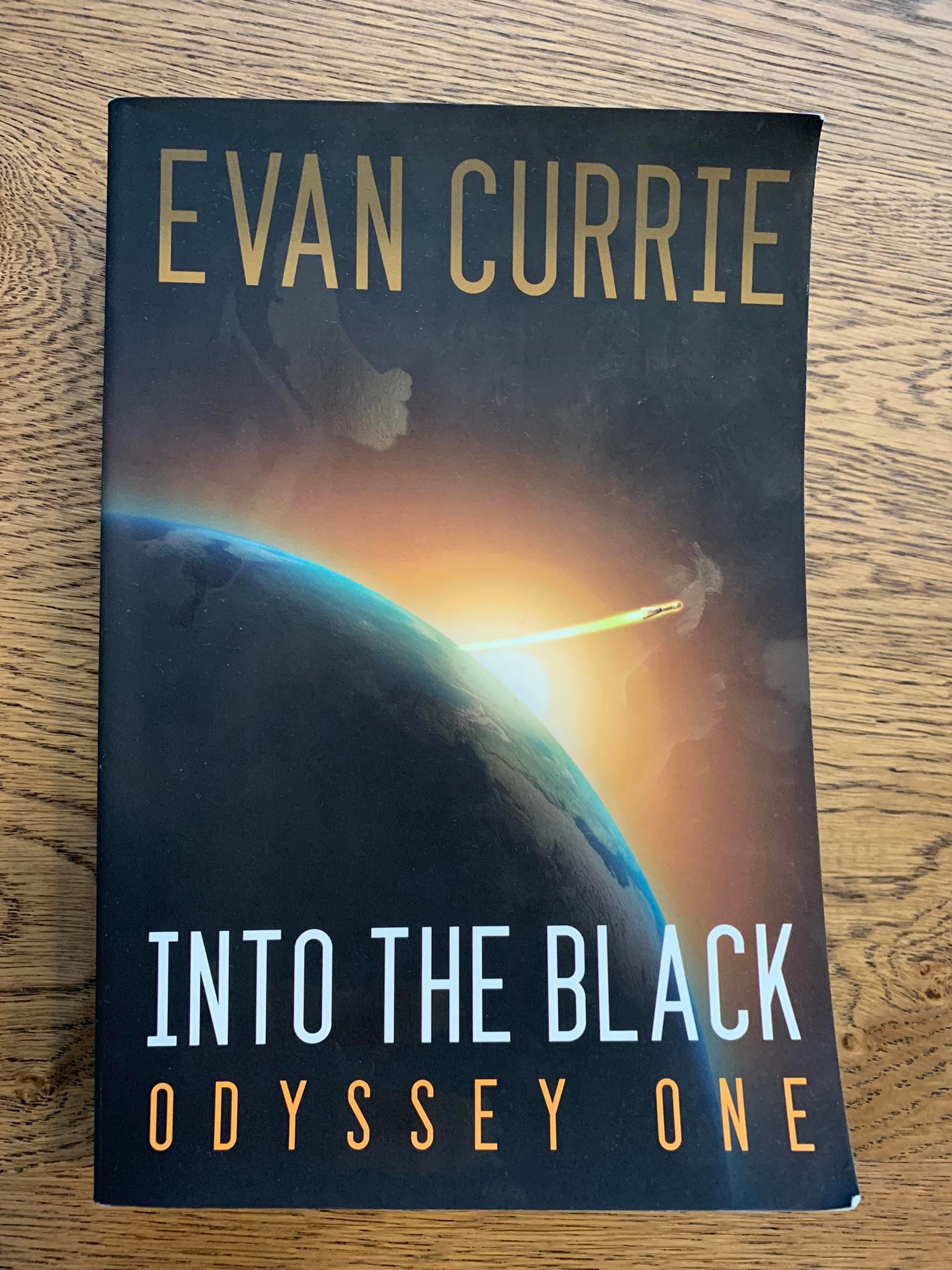
The book follows the voyage of the first interstellar human ship, more of a warship than an explorer. The first star visited outside our solar system triggers a chain reaction driving the ship to new and exciting adventures, discovering new aliens and technologies.

The book is a heavy military scifi, looking at war and fighting from three perspectives: spaceship to spaceship; fighter plane to fighter plane, in space; and futuristic soldiers on new planets. The military theme is heavy throughout the book, the author giving significant thought to what war will look like in several centuries.

From this perspective, the book is a masterpiece, looking deeply of how conflict evolves and the role of the soldier. The world is nicely build around this, creating a believable space saga. From a military perspective, the book is a hard scifi, with an interesting plot and engaging storyline.

On the other hand, the book suffers on the level of personages, which are a bit cliches. They are not truly memorable. We have the wise, heroic and balanced captain; the wacky scientist; the professional and respectful crew; the daring pilots and the merciless aliens. The vocabulary as well could be improved, saying more with less words. The plot has some gaps, it seems unusual for an explorer to go for certain danger without leaving a note from the discoveries. While the author tries to reason the decision taken, it still seems off.

The author, Evan Currie, is a prodigious writer of military scifi and tries hard to create believable and engaging stories with his series of books, the current book (Into The Black) being the first of the series called Odyssey One, which is the name of the exploring ship.

Overall, the book was a relaxing Sunday afternoon reading, which doesn’t pose significant existential questions or substantial moral dilemmas. Nevertheless, for the fans of the genre, it is a an exciting, believable story, with an interesting plot.

The Long Way to a Small, Angry Planet (Wayfarers Book 1) – Becky Chambers

The truth is, Rosemary, that you are capable of anything. Good or bad. You always have been, and you always will be. Given the right push, you, too, could do horrible things. That darkness exists within all of us. You think every soldier who picked up a cutter gun was a bad person? No. She was just doing what the soldier next to her was doing, who was doing what the soldier next to her was doing, and so on and so on. And I bet most of them — not all, but most — who made it through the war spent a long time after trying to understand what they’d done. Wondering how they ever could have done it in the first place. Wondering when killing became so comfortable.

This is the story of a motley crew, specialized in building “tunnels”, the highways of space and their adventures and individual stories. It is feel good science fiction, where bad events happen and there are bad people, but generally things are going well, there is relative stability and a place for everyone, good or bad.

The world building and character creation are the hallmarks of this novel. The world created makes sense and has enormous depth, the author cleverly staying away from introducing more complex concepts that could trigger deep changes in the society. The characters are each followed and given backstories, motivations and clear roles.

The crew is composed of nine entities: captain Ashby Santoso, a human who is keeping others in check; Dr Chef – an alien, both cook and medic, with little ambition other than to please others; Kizzy Shao – human female, the ship’s mechanic and an explosion of energy and words; Jenks – human dwarf, the software expert, literally in love with the ship’s AI; Sissix – an alien part of a species promiscuous by design, ship’s pilot; Artis Corbin – human male, responsible for life systems support and aloof guy; Lovelace – ship’s advanced and sentient AI; Ohan – alien, ship’s navigator, able to calculate faster than AI by plot armour; and Rosemary Harper – human female, and main protagonist, a runner because of her father shameful acts.

Social diversity is the theme of the book: a world less sexist, transphobic and xenophobic. It is so nice that the book feels almost like a young adult novel, with malice in few quantities; a very sugar sweet world.

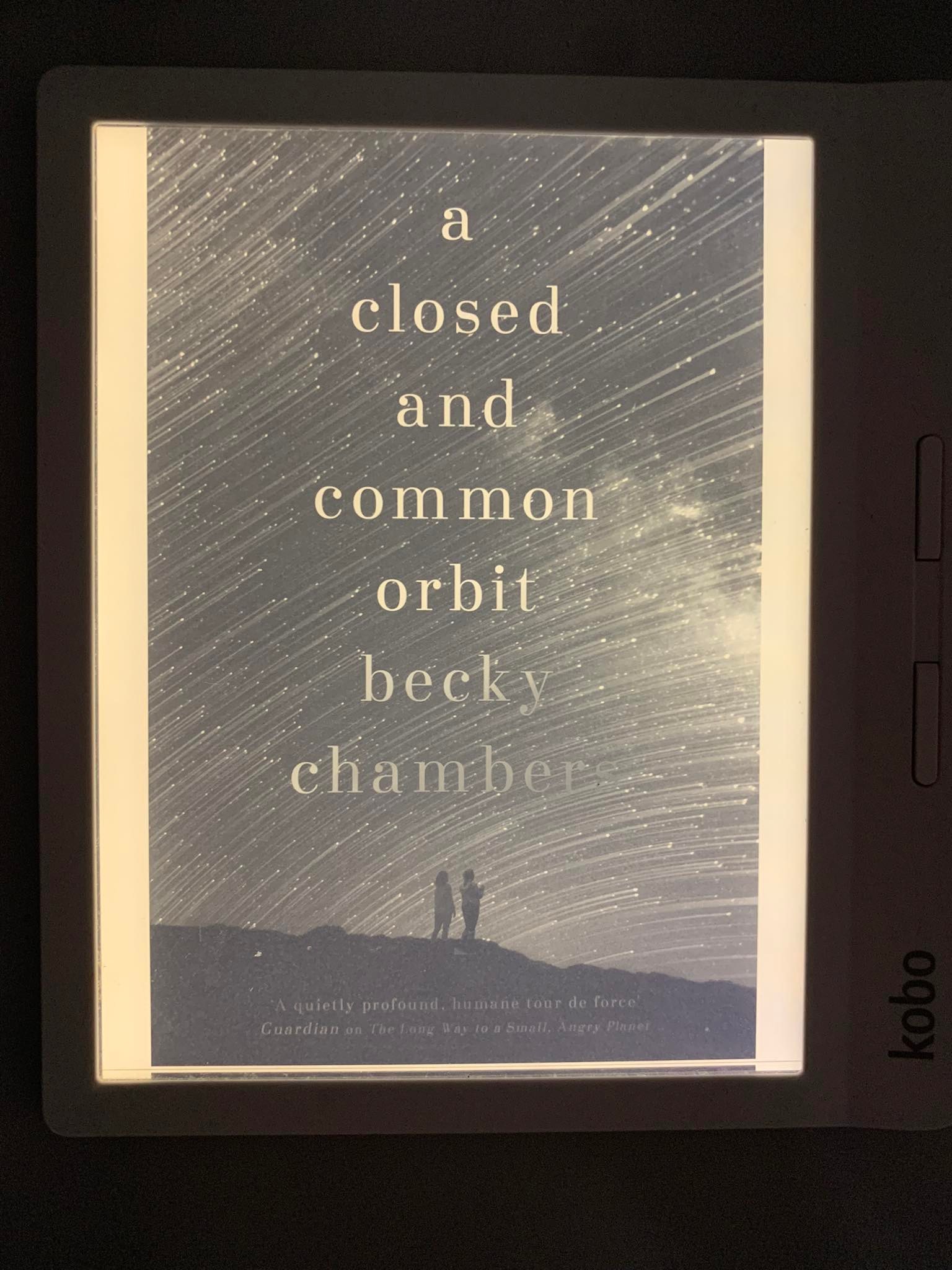
Despite the relative lack of action and more often than not romantic character building, the book is quite engaging and creates memorable, unique protagonists. It is one of those books that you either love or drop midway. The sequel of the book, A Closed and Common Orbit, was even highly regarded, finalist for the 2017 Hugo Award for Best Novel. Interestingly, the book is a kind of reflection of its real life origins, being initially self-published via a Kickstarter campaign, where about 50 people sponsored the author to continue writing.

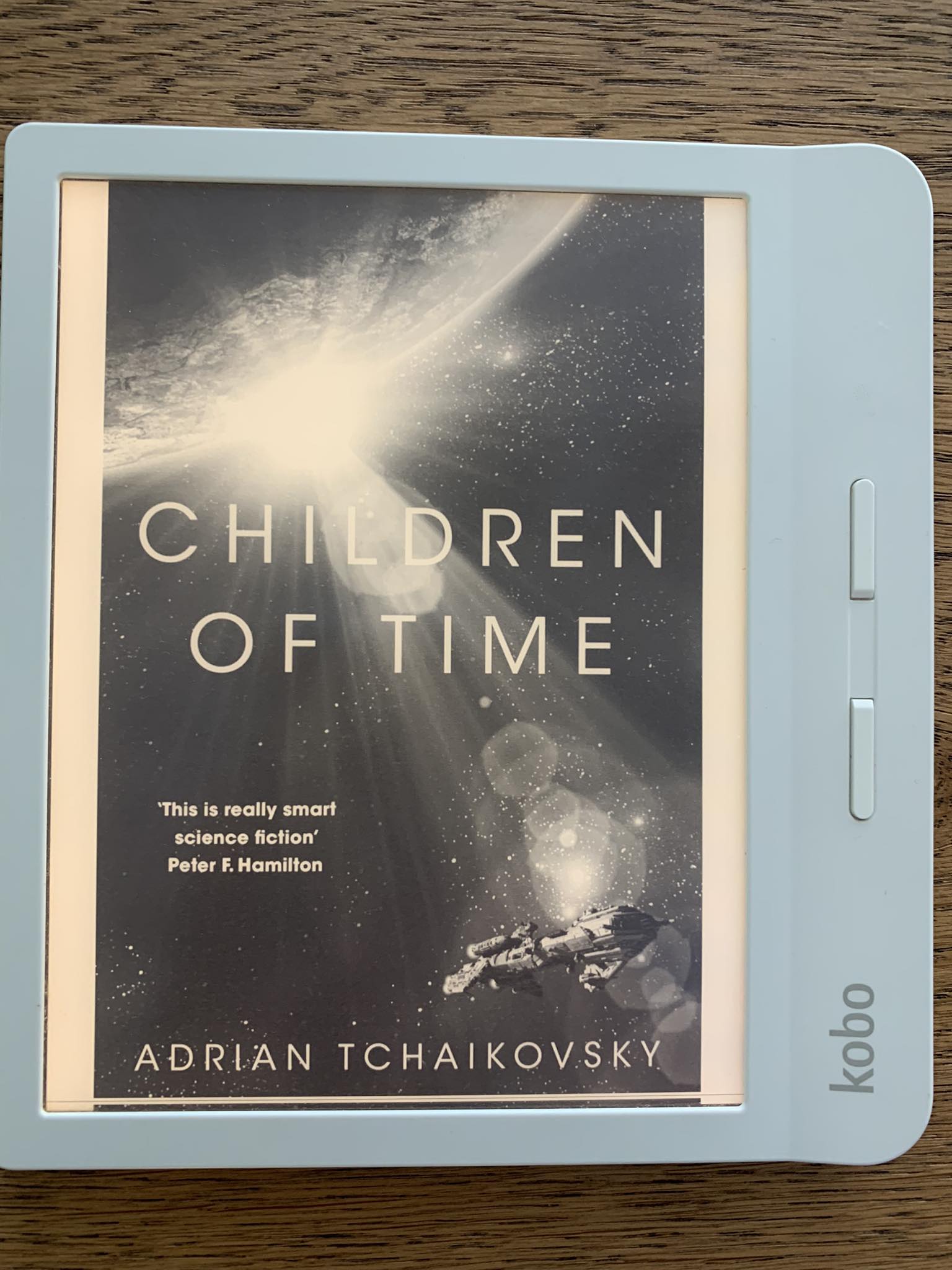
Shards of Earth – Adrian Tchaikovsky (The Final Architecture, book 1)

What’s the point of making better people, if they’re still sad and afraid and lonely?

The book follows the story of a space pilot, capable of unique feats, and a soldier, driven by duty and skill, in a futuristic galaxy, where strange aliens seem bound to destroy the universe. In a grandiose space opera, the pilot and the soldier take part in wars and in a motley crew, carried around by the threat of the Architects, the destroyer of planets.

The book is the first part of a trilogy The Final Architecture, but can stand alone and does not finish with a major cliffhanger. Tchaikovsky is increasingly appreciated as one of the best upcoming scifi authors, already winning the Arthur C. Clarke Award and Hugo Award.

Shards of Earth is entertaining, credible and memorable. The reader becomes interested in the fate of protagonists, how the world events are affecting them and how are they responding. The plot is well constructed and there are almost no points where the reader is baffled by the luck or invulnerability of the personages. On the contrary, the heroes of the story do not escape their adventures unscathed. The supporting personages are unique and memorable, with their own motivations and different, interesting backgrounds.

But what impresses most is the world building, creating aliens and separate human species, planets, ships, language, clothes, food – all deeply thought how would they look in the future, and how would they interact. The socioeconomic developments that drive colonization are well-understood. The decision of planets to side with one faction or the other make sense.

Additionally, the dialogue and descriptions are masterfully written, with memorable quotes and presentations. The descriptions manage to create and explain the new space world, without going in too much length – a sign of a great writer.

While the aliens and the worlds created are not uncommon in the scifi literature, the way their interact, the attention to strong motivations, the vocabulary, the editing and, overall, the excellent writing makes the book really engaging and hard to let down before finishing.

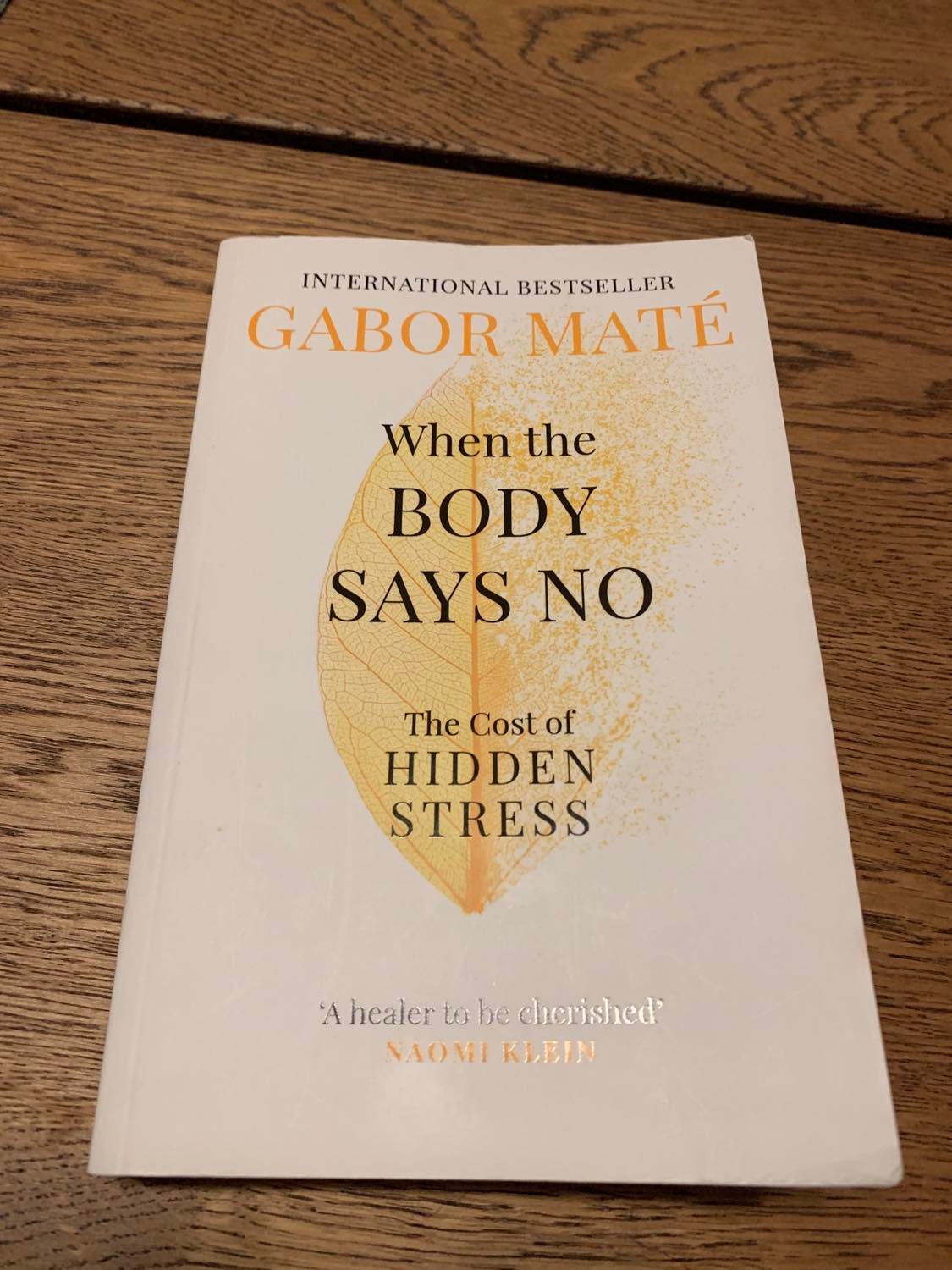
When the Body Says No: The Cost of Hidden Stress – Gabor Maté

When we have been prevented from learning how to say no, our bodies may end up saying it for us.

While it is common knowledge that stress is affecting one’s health, Dr Gabor Mate takes it a step further and analyses the impact of stress on body by looking into a patient’s childhood, relationship with partners, work and life in general.

The book is bold in its suggestion that body is over mind, considering that a person cannot accumulate stress and tension without effect. Dr Mate goes as far as saying that there is a “cancer” profile, where physicians can increase the chances of confirming cancer by looking at a patient’s personality. The ones who always try to help others, cannot say no to demands and are always smiling, those people simply bottle up negative emotions that would surface as an autoimmune disease.

An interest concept put forward by the author is the difference between rage and anger. He promotes the idea that it is ok to be angry and let tension exit the body. An angry person relaxes its body, takes a long breath and lets tension out. This comes in contrast with rage, which is uncontrolled violence (physical, verbal, behavioural). A person in a rage has all muscles contracted, does not breath correctly and accumulates tension.

The cost of hidden stress

The book is full of various medical cases and draws heavily on medical research, making it a somewhat dry reading. Nevertheless, this does not draw from the appeal of understand how our choices are affecting us.

It finishes with Seven A’s of Healing: principles of healing and the prevention of illness from hidden stress:

    • Acceptance – accepting us how we are
    • Awareness – of our bodies and what they are telling us
    • Anger – in Dr. Mate’s view, anger has cognitive value and works as a way to release tension and negative emotions
    • Autonomy – independent thoughts and actions
    • Attachment – being connected with others is healing
    • Assertion – speak up for ourselves
    • Affirmation – affirming our creating selves, and also our connection to something bigger.

    The book is really wonderful and warmly recommend to read, whenever we feel that life takes over us.

    The Differing Drivers of EU Electricity Policy – Mike Bostan

    Countries and companies are likely to store an extra supply of gas to cover more than the normal consumption need, in order to avoid any disruption of the gas supply to consumers. However, the cost of storing this extra supply must be added to the price, making the gas more expensive. Too much focus on affordability may become a vulnerability of the gas supply. Conversely, too much emphasis on secure supply can affect price. So where is the balance? What factors drive EU policymakers to pay more attention to one policy goal?

    This dissertation investigates such fundamental system imbalances in the domain of electricity and finds that differing drivers of EU electricity policy depend on its purpose. While affordability and security of supply legislation respond to expected drivers, such as electricity price or interrupted electricity, the environmental policy is an anomaly. Environmental policy is not responding to drivers such as air pollutants or GHGs reduction, but to a different set of drivers, highlighted in the paper.

    Presentation

    This is my book, a PhD thesis discussing the fundamental imbalances of the EU electricity system.

    Link: https://doi.org/10.26481/dis.20220914mb

    Les 50 règles d’or de l’éducation positive – Bénédicte Péribère, Solenne Roland-Riché

    Sachez que les violences éducatives (physiques, verbales ou “simplement” émotionnelles) laissent une trace sur un IRM cérébrale. Certaines zones du cerveau sont alors insuffisamment développées, notamment celle permettant de réguler les émotions.

    ( Règle 22 : Évitez les punitions)

    Ce petit livre propose 50 conseils sur la parentalité. Les règles mêlent des règles de bon sens à des arguments scientifiques, donnant une bonne vue d’ensemble.

    Les règles évitent les conseils controversés et le lecteur peut facilement suivre les différentes principes. Le livre est conçu pour être souvent consulté et relu, avec des règles faciles à trouver, une bonne vue d’ensemble et un petit format.

    J’ai lu le livre en quelques jours et j’y suis toujours revenu avec plaisir. C’est un excellent livre à lire pour tous les parents qui veulent apprendre quelque chose de nouveau sur la parentalité ou simplement apprendre plusieurs règles de base.

    Nautilius (Tome 2) – Mathieu Mariolle, Guénaël Grabowski

    Tout en se faisant passer pour un agent du gouvernement français du nom de Jean Paillole, Kimball parvient à faire évader Némo de la prison russe qui le retenait depuis plus de 10 ans. Avec son capitaine libéré, le légendaire Nautilus est prêt à se diriger vers la baie de Bombay où reposent toujours les documents que Kimball convoite tant. Le temps presse, l’évasion de Némo à fait grand bruit et Kimball est toujours suivi à la trace. Pourtant, le submersible n’a pas encore démarré que le ton monte entre les deux hommes. S’ils veulent s’en sortir, il devront rester soudés… Mais les dissenssions sont à chaque instant plus flagrantes. Une question reste alors en suspens : lequel trahira l’autre en premier ? Deuxième partie d’un triptyque haletant, veritable course poursuite à l’échelle planétaire où se mêlent espionnage, situations inextricables et scènes spectaculaires, Nautilus continue de proposer un récit beau et palpitant.

    Le volume est une nouvelle prise du légendaire capitaine Nemo et de son submersible, Nautilus (créé par le romancier français Jules Verne), dans un monde du 19ème siècle où les submersibles sont encore une merveille. Danse le deuxième tome de la trilogie, le capitaine Nemo est sauvé de prison par Kimball, un homme qui veut prouver son innocence avec des documents d’un épave au fond du golfe du Bengale. Ainsi, le submersible est un élément clé de sa quête ; mais pour une raison quelconque, il pose comme agent du gouvernement français.

    L’histoire de Mathieu Mariolle est bien écrite et la meilleure partie est la profondeur des principaux protagonistes, qui sont bien conçus et leurs motivations sont claires. J’ai particulièrement apprécié les dessins, qui sont de petites œuvres d’art. Le dessinateur, Guénaël Grabowski, a le sens des couleurs et des détails. Le lecteur peut ressentir les sentiments complexes des personnages dans ses dessins. Aussi, le lecteur peut voir la grandeur du Nautilus et le savant fou du capitaine Nemo.

    Les aventures du capitaine Nemo et de sa merveille d’ingénierie, le submersible Nautilus, dans un monde rempli d’intrigues et d’espionnage.

    J’ai apprécié le volume et les dessins magistraux. Une super série, j’attends avec impatience le tome 3 !

    Colonisation (Tome 6) – Denis-Pierre Filippi, Vincenzo Cucca

    Les équipes de l’Agence ont été attaquées. Une branche indépendante d’Écumeurs dirigée par un certain Raylan est parvenue à s’infiltrer dans le vaisseau du Commodore Illiatov. Leur assaut, s’il était destiné à la récolte de données concernant les nefs perdues, ne sera parvenu qu’à une chose : mettre fin à la vie de nombreux agents et notamment à celle du Commodore lui-même. Raylan et ses sbires sont en fuite et mènent la danse, agissant toujours avec un coup d’avance. La menace s’intensifie, les morts se multiplient et l’escouade de Milla réalise peut-être trop tard que l’ennemi qui lui fait face est le plus rusé et le plus redoutable qu’elle ait jamais eu à affronter.

    Colonisation est le 6ème tome de la série des bandes dessinées par scénariste Denis-Pierre Filippi et dessinateur Vincenzo Cucca. Les dessins et le scénario sont captivants et clairement profondément pensés. La série est imaginative et pleine d’action. Les inconvénients sont le manque de science dure à certains moments, comme aller sur une planète extraterrestre dangereuse (haut de gamme) par l’équipe de recherche sans casque.

    Le context de l’histoire est l’humanité dans le futur, envoyant des colonies dans le grand espace. Cependant, des extraterrestres bien intentionnés offrent à l’humanité le cadeau de voyager vite dans l’espace. Les colonies sont un prix élevé du marché noir et l’Agence est formée, pour trouver et protéger des braconniers maléfiques ces colonies perdues. La série suit les aventures de l’agence dans sa mission de défendre les colonies humaines perdues.

    Dans ce volume 6, l’Agence tente de capturer un braconnier habile appelé Raylene, qui s’avère plus ingénieux et impitoyable que prévu.

    Défendre les colonies humaines perdues contre les braconniers maléfiques dans le futur lointain de l’humanité.

    Le volume était captivant et les dessins capturaient magnifiquement l’immensité de l’espace et de l’humanité dans le futur. Si l’histoire est forte, les dialogues sont moins forts que les illustrations, qui sont vraiment mémorables. Les scènes d’action et l’histoire elle-même sont bien mises en page et facilitent la lecture et le suivi de l’action pour le lecteur.

    Dans l’ensemble, même si elle manque parfois de science dure, la série est captivante et avec des illustrations mémorables.

    Factfulness – Hans Rosling

    This is data as you have never known it: it is data as therapy. It is understanding as a source of mental peace. Because the world is not as dramatic as it seems. Factfulness, like a healthy diet and regular exercise, can and should become part of your daily life. Start to practice it, and you will be able to replace your overdramatic worldview with a worldview based on facts. You will be able to get the world right without learning it by heart. You will make better decisions, stay alert to real dangers and possibilities, and avoid being constantly stressed about the wrong things.

    The central idea of the book is that world is much better than you think and it is getting better. Hans Rosling presents with data how world improved over time and shows with surveys how pessimistic without cause the reader is. While not perfect, the world is indeed getting better and the author presents the pessimistic biases we have.

    The book is structured in 10 chapters, presenting an instinct that we must be aware from:

    1. The Gap Instinct
    2. The Negativity Instinct
    3. The Straight Line Instinct Exercise: Question Your Assumptions
    4. The Fear Instinct
    5. The Size Instinct
    6. The Generalization Instinct Exercise: Getting the Full Picture
    7. The Destiny Instinct
    8. The Single Perspective Instinct
    9. The Blame Instinct
    10. The Urgency Instinct

    The book was written in the last months of life of Doctor Hans Rosling and seems to encompass his last message to the world: that we should leave bias and look for data, which will help us to create a better world and be more successful in medicine, business and development.

    The book is thoroughly entertaining, full of imagines and survey questions that make the read a pleasure. It challenges the reader to rethink the world around. What is really the masterstroke is presenting data in a way that is easy to understand and delivers a clear message.

    One of the most thought-provoking, well-written books on the world and developing trends currently on the shelves.

    On Basilisk Station (Honor Harrington Book 1) – David Weber

    The message she’d just ordered Webster to send and Venizelos to relay to Manticore was never sent in drills, not even in the most intense or realistic Fleet maneuvers. Case Zulu had one meaning, and one only: “Invasion Imminent.

    The book follows military captain Honor Harrington’s adventures in a distant, far future, fighting foreign invasions, sexism, greed and incompetence. Honor is a woman, captain in the Queen’s Royal Manticoran Navy, and the reader sees how she handles different situations brought to her by politics and discrimination.

    The protagonist is one of the best developed characters in the military scifi universe and an inspiration for the entire genre. The book and series is widely regarded as one of the must-reads for the military scifi fans, a reference for this niche science fiction style.

    In this first book of the series, captain Harrington is exiled to a backwater station, Basilisk, where she is gradually building the confidence of her ship crew and of the local authorities in dealing with the trade and offworld traffic. She becomes involved in the defense of the planet against foreign forces.

    Critics point out that the different types of views that the book presents make the reader to do no thinking, everything is well presented pages in advance. Honor Harrington is too much of an omnipotent captain, who never makes mistakes and pushes duty over everything, even her crew. The hard scifi part, the science in the book is passable, with a long description of the technologies and the world at the of the volume. Some more description of the everyday life and universe would have been helpful as well.

    Despite these drawbacks, the book is truly memorable and entertaining. An easy, relaxing read for holidays. The plot is easy, but well paced. the vocabulary is adequate, not really fantastic, but not bad neither.

    An entertaining, recommended read.