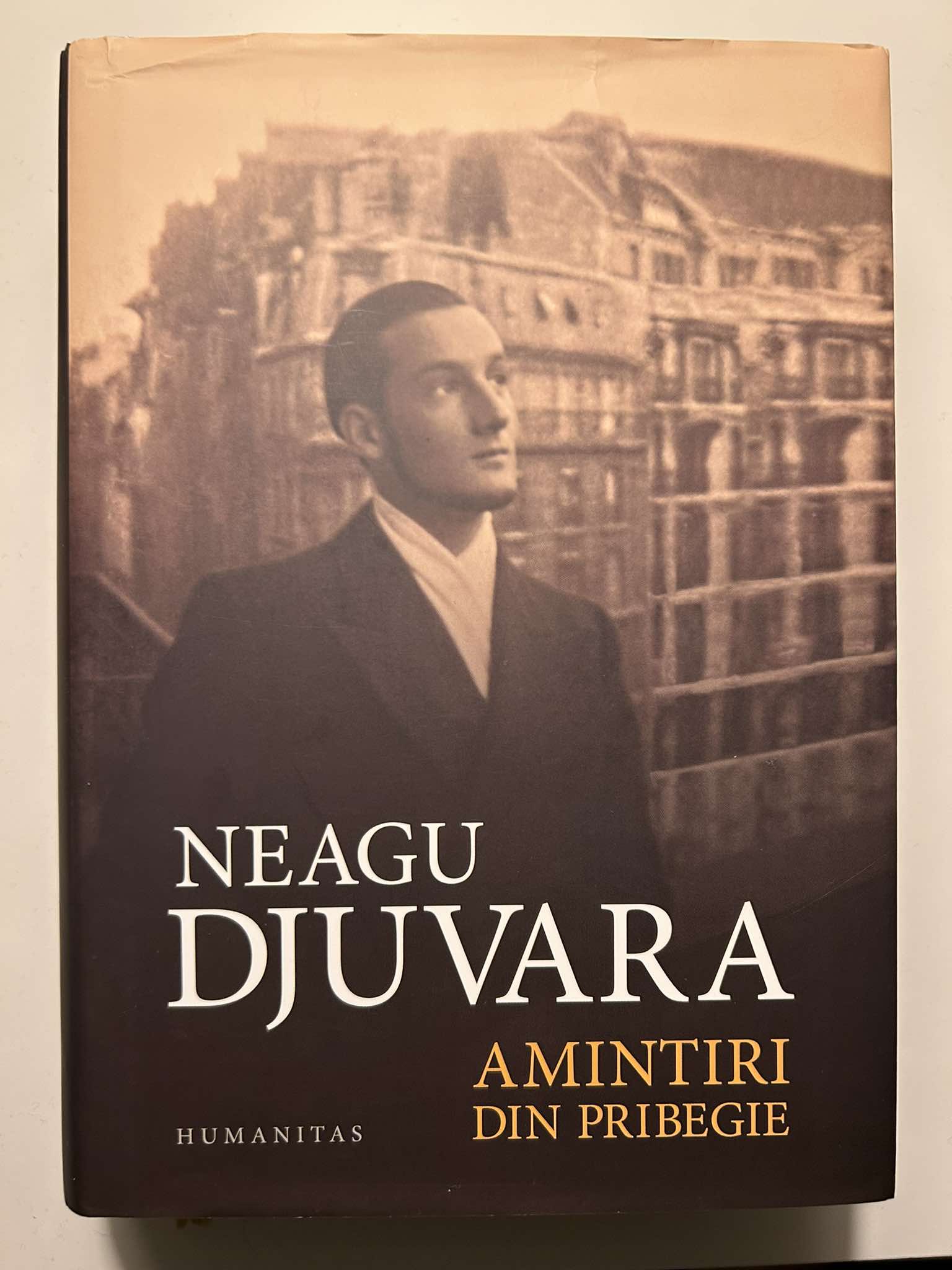
Amintiri din pribegie – Neagu Djuvara

Mănescu mă întâmpină cu un zâmbet larg, îmi strânge mâna cu efuziune; se bucura, cică, să mă-ntânlească și deodată face un gest, îl cheamă pe fotograful oficial și, luându-mă de după umeri și trăgându-mă între el și Diori, zice în franțuzește:
-Să facem o fotografie de familie…
M-a trecut un fior, o nădușeală rece pe spinare: apare mâine în Scânteia o poză cu Corneliu Mănescu, măreț, triumfal, alături de un președinte negru și de… Neagu Djuvara, de care poate-și mai aduc aminte unii, că a vorbit cu anii la Radio Europa Liberă și era anticomunist focos, și-și vor zice: ,,Și ăsta s-a dat cu ei!…”
Atunci, ca o inspirație de Sus, mi-a pornit o mișcare a mâinii pentru a astupa obiectivul aparatului și, părăsindu-i pe Mănescu și pe Diori, am zis:
-Nu! Fotografiile-s numai pentru cei mari ai lumii!- și am ieșit din birou.

Neagu Djuvara isi povesteste amintirile intr-o proza captivanta si plina de cultura, de la plecarea sa la Stockholm ca atasat diplomatic in 1943, pana la revenirea in tara, dupa revolutia din 1989. Cu o viata fascinanta, de boier saracit, dar inca plin de nobilime, cultura si inteligenta, Djuvara trece de la diplomat roman, refugiat politic in Franta, diplomat in Republica Niger, pensionar la Paris si apoi, in sfarsit, revenit in tara.

Sunt atatea povesti si amintiri frumoase ce le prezinta, detasat, intim, plin de umor si finete. Un intelectual desavarsit, viseaza toata viata la o cariera profesorala si studiaza adanc istorie, drept si antropologie. Abia dupa 70 de ani ajunge profesor, in Romania, dar cartile sale il fac si mai apreciat.

Neagu Djuvara se plange mereu de lipsa de bani in cartea lui de memorii, dar in fotografiile si povestile ce le prezinta, arata din plin unde a investit: in educatie, prietenii, calatorii si lucruri de calitate. O viata traita din plin.

Ce se desprinde din carte in primul rand este calitatea scrierii, observatiile fine, extraordinarul compas moral si claritatea in gandire. Traind peste 100 de ani, Neagu Djuvara scrie cu intelepciunea unuia ce a trecut prin viata, a vazut multe, a inteles cate ceva si lasa invatatorile celor tineri. O extraordinara carte scrisa de unul dintre cei mai eruditi, intelepti si fermecatori scriitori romani.

O scurtă istorie a românilor povestită celor tineri – Neagu Djuvara

Această Românie Mare e o ţară care se naşte cu dificultăţi uriaşe – trebuiau să se adune şi să se gospodărească împreună oameni care nu s-au aflat niciodată sub aceeaşi cârmuire. Ceea ce-i uneşte pe toţi românii este faptul de a vorbi aceeaşi limbă. Am mai spus că suntem poate singura ţară din Europa, în afară de micile ţări, al cărei sentiment naţional este exclusiv întemeiat pe faptul că vorbim aceeaşi limbă de la Nistru până la Tisa.

Neagu Djuvara prezintă într-un limbaj simplu și captivant istoria teritoriului unde este azi România și a românilor. Capitolele sunt organizate în funcție de clasicele epoci istorice, dar punând în evidență simboluri și momente importante. Uneori, detalii interesante sunt prezentate, de exemplu cum au reușit politicienii români ai vremii să găsească un domn străin (Carol).

Comentariile politice ale lui Neagu Djuvara dau de gândit. Uneori, autorul se întreabă cum ar fi fost cursul istoriei dacă s-ar fi luat alte decizii politice, la timpul lor. Profunzimea soluțiilor propuse de Djuvara, pe baza unor principii solide, mult bazate pe onoare și prestigiu internațional, deschid noi orizonturi. De exemplu, Djuvara se întreabă de ce am semnat armistițiul cu Germania în primul război mondial, când americanii tocmai debarcaseră în Europa (ceea ce a îngreunat mult negocierile cu aliații, căci noi promisesem să nu semnăm pace separată). Sau, bunăoară, de ce am cedat Basarabia în al doilea război mondial, fără să ne batem. Sigur am fi pierdut, dar am fi fost poate mai bine la masa negocierilor în timpul și după război.

Neagu Djuvara este un istoric cu o viață și experiență legendare. Născut dintr-o veche familie boierească, se luptă în al doilea război mondial, rănit la Odessa; intră în ministerul de externe, unde este plin de peripeții, emigrează în Franța, apoi în Niger; își ia doctorului la Sorbona; apoi se întoarce în România să predea, chiar după revoluția din 1989. Trăiește 101 ani, fiind lucid până la moarte.

Fascinant sunt prezentate cum se fac calculele politice la nivel înalt, cât de mult contează latura personală, familia, prieteniile, încrederea; totul foarte logic și uman.

Cartea lui Neagu Djuvara este una din puținele cărți pe care am recitit-o. Un volum extraordinar, ce păstrează perfect proporțiile a ceea ce se întâmplă pe teritoriile românești, în comparație cu evoluțiile mondiale.

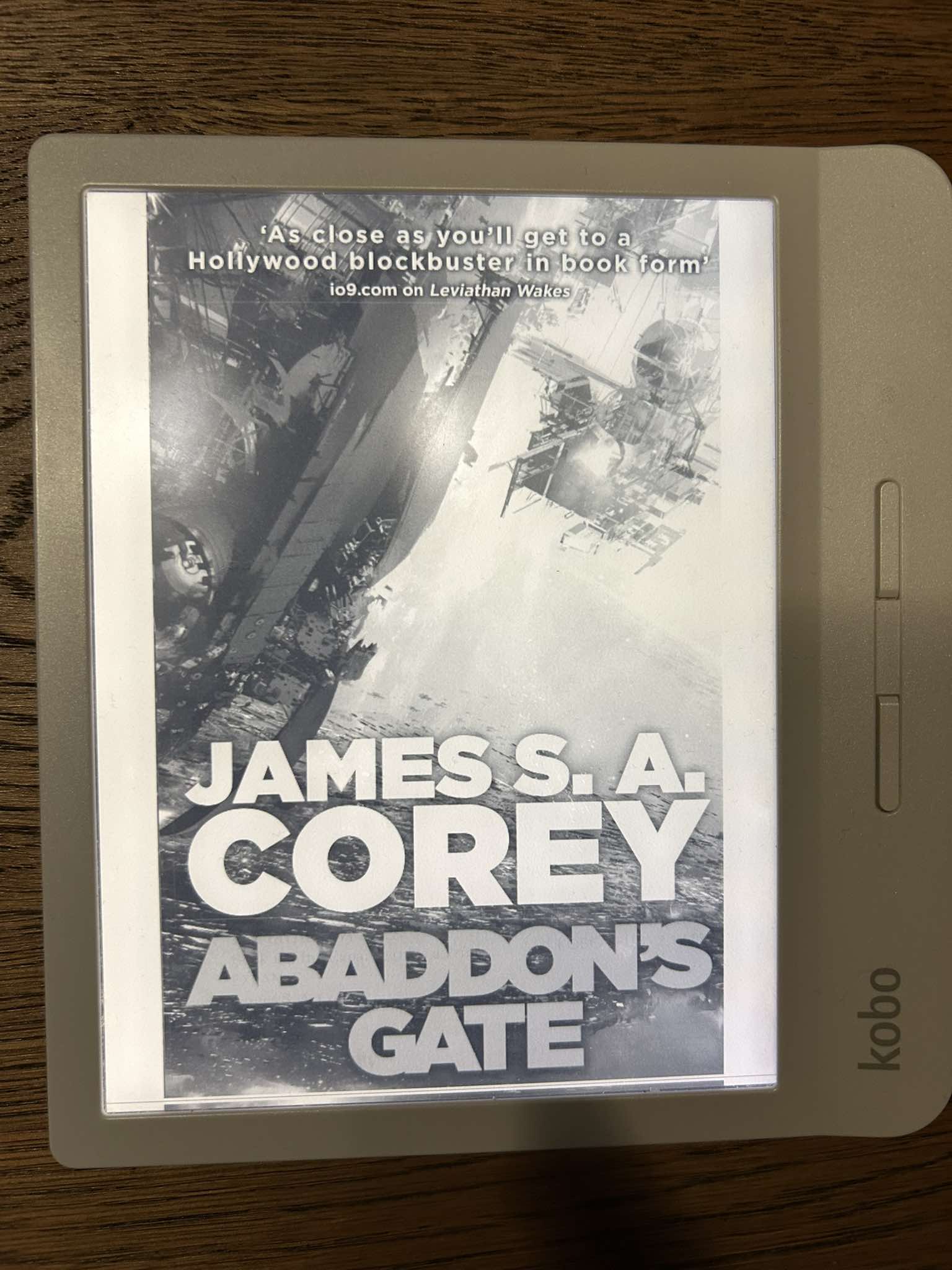
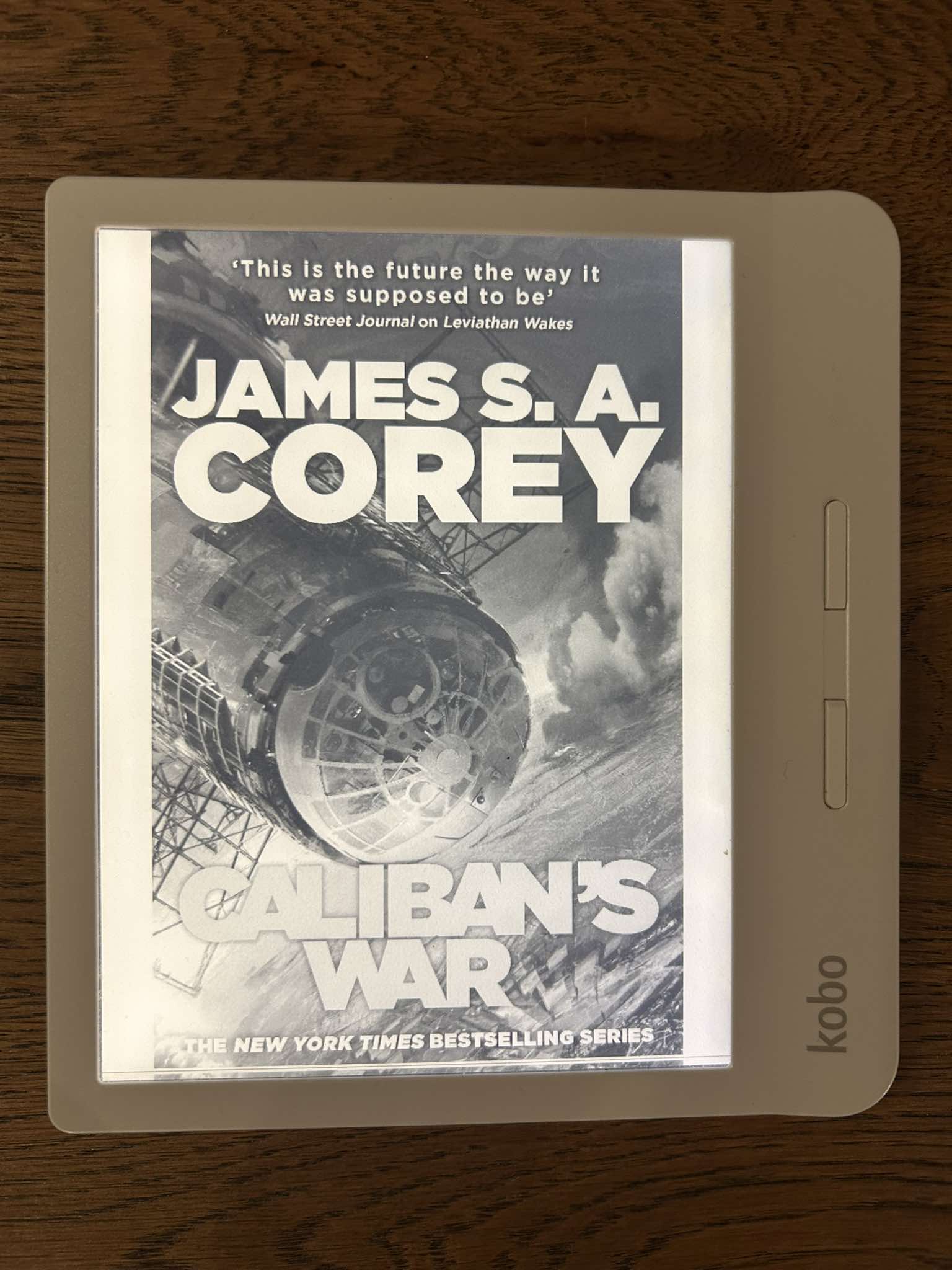
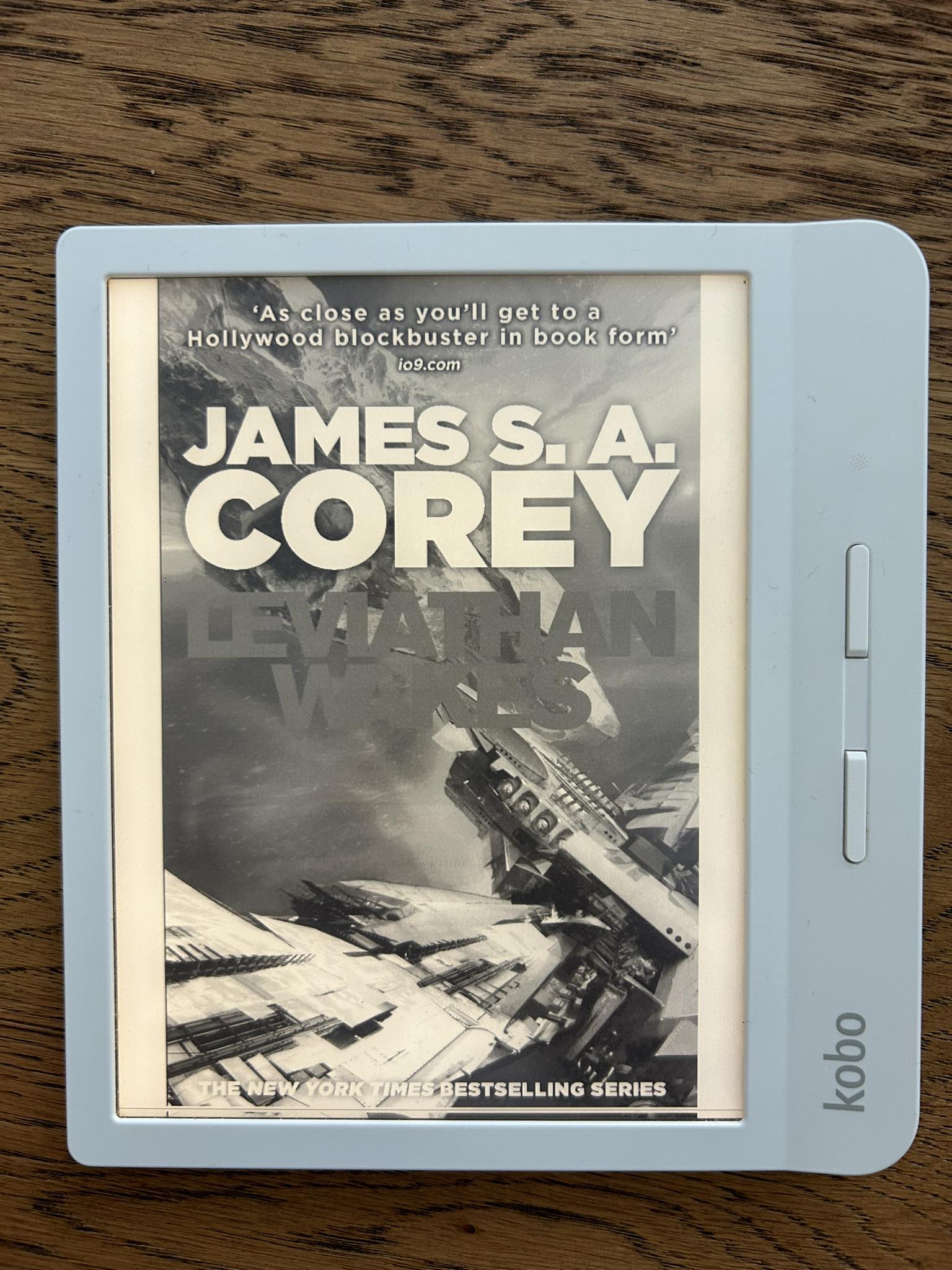
Leviathan Wakes – James S.A. Corey (The Expanse, book 1)

A hundred and fifty years before, when the parochial disagreements between Earth and Mars had been on the verge of war, the Belt had been a far horizon of tremendous mineral wealth beyond viable economic reach, and the outer planets had been beyond even the most unrealistic corporate dream. Then Solomon Epstein had built his little modified fusion drive, popped it on the back of his three-man yacht, and turned it on. With a good scope, you could still see his ship going at a marginal percentage of the speed of light, heading out into the big empty. The best, longest funeral in the history of mankind. Fortunately, he’d left the plans on his home computer. The Epstein Drive hadn’t given humanity the stars, but it had delivered the planets.

This is space opera at it’s finest. Humanity has colonized Mars, the Moon and the asteroid belt. The socioeconomic interactions between the 3 main powers (Earth, Mars and the belt) are masterfully presented in a detective story through the eyes of a belt cop and an ice freighter crew. The world building is so well thought, presenting how society evolves in the new environments (including elements such the effects of gravity, economics, languages, slang, trade).

Jim Holden is a the executive officer of an ice transport freighter, who survives the unexplainable consecutive ambushes with several original survivors. Who is trying to push the Belt and Martians to war? Detective Miller is a depressed, but skilled cop, trying to do his job. His instincts tingle when a case of missing girl is given to him, he feels it is important and becomes obsessed with it. Why so many crime figures are disappearing from Ceres, the main port of the belt? Where is the missing girl, why is he told to drop it? Meanwhile, an alien artifact is discovered, but kept secret by Earth corporations. How are all those webbed together?

The detective story webbing together the plot is engaging, but the real appeal of the book is the world development, making such an innovative and creative narrative. This is hard science fiction at its best.

Interestingly, James S. A. Corey is not an author, but the pen name used by collaborators Daniel Abraham and Ty Franck, which used their middle names to create the pen name.

The series was exceedingly well received. Leviathan Wakes, the first book, was nominated in 2012 for the Hugo Award for Best Novel and Locus Award for Best Science Fiction Novel. The book series itself was nominated for the Hugo Award for Best Series in 2017 and won it in 2020. To top it off, it was adapted for television, for successful 6 seasons.

The Expanse has a total of 9 novels, plus a dozen or so additional novellas. This makes for pretty long reading, but of great quality. A great start for the series.

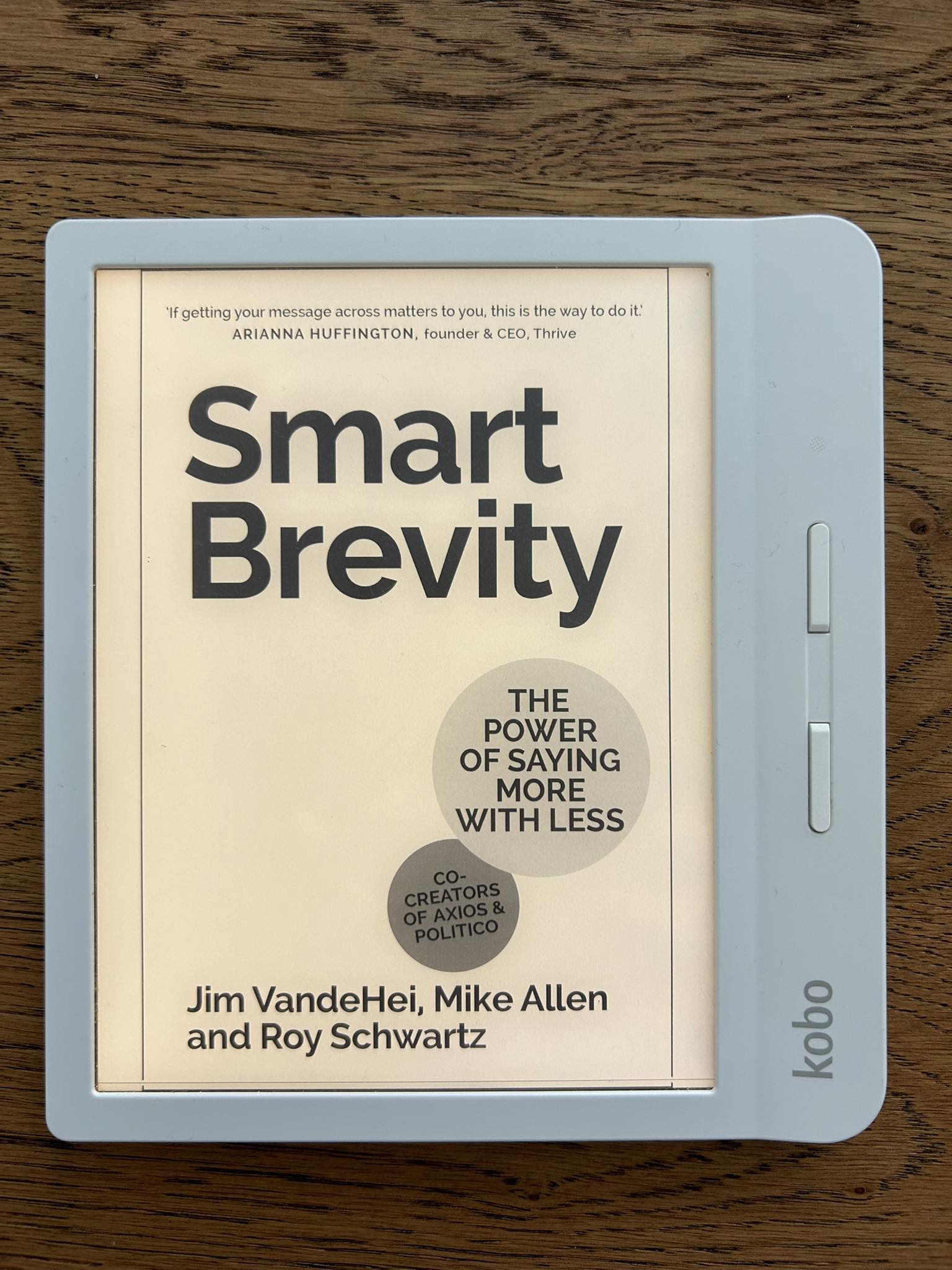
Smart Brevity – Jim Vandehei, Mike Allen, Roy Schwartz

Put your readers first. People are busy and have expectations of the precious time they give you. All they usually want to know is what’s new and “Why it matters.” Give them that.

This is easily one of the best books I have ever read. We communicate to transmit something: a message, an info, a plan, a feeling. This book helps the communicator deliver the message, and it is focused on the professional side (journalists, advocacy professionals, communication experts, etc.). The book helps the reader to get the attention of the audience and have them read, with attention, the message you want to transmit. Short, but full of wisdom gems, the book is a marvel of reading.

Written by the founders of POLITICO (one of the few global political journals making a reputable name in the last decades) it presents their template for writing attention-grabbing and memorable articles, for people interested in political and policy life (and with their attention assaulted by myriads of other messages).

The book is so well written that I will quote them again, on how to build a grabbing message:

Smart Brevity’s Core 4 Smart Brevity, in written form, has four main parts, all easy to learn and put into practice—and then teach. They don’t apply in every circumstance but will help you begin to get your mind around the shifts you need to make.

1 A muscular “tease”: Whether in a tweet, headline or email subject line, you need six or fewer strong words to yank someone’s attention away from Tinder or TikTok.

2 One strong first sentence, or “lede”: Your opening sentence should be the most memorable—tell me something I don’t know, would want to know, should know. Make this sentence as direct, short and sharp as possible.

3 Context, or “Why it matters”: We’re all faking it. Mike and I learned this speaking to Fortune 500 CEOs. We all know a lot about a little. We’re too ashamed or afraid to ask, but we almost always need you to explain why your new fact, idea or thought matters.

4 The choice to learn more, or “Go deeper”: Don’t force someone to read or hear more than they want. Make it their decision. If they decide “yes,” what follows should be truly worth their time.

An example that remained with me: what is more attention-grabbing from the 2 examples below?

Example A: There is water on the moon’s surface, and ice may be widespread in its many shadows, according to a pair of studies published Monday in the journal Nature Astronomy.

Example B: Moon is wet.

This is one of the books that will be a classic, so actual in the world of short-attention spam we have today.

Metro 2033 – Dmitry Glukhovsky

Why was he doing this? So that life could continue in the metro? Right. So that they could grow mushrooms and pigs at VDNKh in the future, and so that his stepfather and Zhenkina’s family lived there in peace, so that people unknown to him could settle at Alekseevskaya and at Rizhskaya, and so that the uneasy bustle of trade at Byelorusskaya didn’t die away. So that the Brahmins could stroll about Polis in their robes and rustle the pages of books, grasping the ancient knowledge and passing it on to subsequent generations. So that the fascists could build their Reich, capturing racial enemies and torturing them to death, and so that the Worm people could spirit away strangers’ children and eat adults, and so that the woman at Mayakovskaya could bargain with her young son in the future, earning herself and him some bread. So that the rat races at Paveletskaya didn’t end, and the fighters of the revolutionary brigade could continue their assaults on fascists and their funny dialectical arguments. And so that thousands of people throughout the whole metro could breathe, eat, love one another, give life to their children, defecate and sleep, dream, fight, kill, be ravished and betrayed, philosophize and hate, and so that each could believe in his own paradise and his own hell . . . So that life in the metro, senseless and useless, exalted and filled with light, dirty and seething, endlessly diverse, so miraculous and fine could continue.

In a post-apocalyptic world, humans eke out their existence in the depths of several Moscow metro stations, surrounded by horrors, radiation, mutants, rats and their own fears. The protagonist, Artyom, engages in a journey to deliver a vital message that would inform and allow people to react to an external threat. In his odyssey, traders, mystics, hunters, idealists help or hinder him in various societies, often extreme, that survive in the metro stations. In a world where bullets are currency, humans cling to life in the underground and surface travels are mortally dangerous, the will to fight and survive, the thoughts of an existence close to the abyss is explored by the Russian author, in a compelling and creative story.

The book was later translated in a successful series of horror video games. For some readers, the exploration of human mind in a post-apocalyptic and grim survival story by Dmitry Glukhovsky could look monotonous; for others, it may a fascinating dive into what gives the survivors the grit to face all the horrors and the grim future.

The story of creating this book is unusual, as Glukhovsky wrote it and publish it on his website as an interactive experiment, when he was 18. It was later published on paper three years later, in 2005. Two more volumes in the series continued in 2009 and 2015,

Overall, a creative, diverse exploration of human mind and society in a post-apocalyptic, grim world, via a fulfilling odyssey.

A Memory Called Empire – Arkady Martine (Teixcalaan, book 1)

You pump the dead full of chemicals and refuse to let anything rot—people or ideas or … or bad poetry, of which there is in fact some, even in perfectly metrical verse,” said Mahit. “Forgive me if I disagree with you on emulation. Teixcalaan is all about emulating what should already be dead.” “Are you Yskandr, or are you Mahit?” Three Seagrass asked, and that did seem to be the crux of it: Was she Yskandr, without him? Was there even such a thing as Mahit Dzmare, in the context of a Teixcalaanli city, a Teixcalaanli language, Teixcalaanli politics infecting her all through, like an imago she wasn’t suited for, tendrils of memory and experience growing into her like the infiltrates of some fast-growing fungus.

The book follows the arrival of the new ambassador, Mahit Dzmare, from the independent Lsel station to the empire of Teixcalaan, and her adventures following the murder of the previous ambassador, all while trying to preserve the independence of a her small station. This is a detective thriller, intertwined with imperial intrigue and friendship, on the streets of the monumental capital of the largest interstellar empire.

This is the debut novel for the author AnnaLinden Weller, writing under the pseudonym Arkady Martine. The novel won the Hugo Award and was a finalist for the Nebula Award for Best Novel of 2019.

What is impressive in this book is the quality of prose, exceptional world-building, relatively uncomplicated plot and the memorable characters. The names chosen are unique and the book creates a new vocabulary for this glorious empire of Teixcalaan. One of the profound themes explored is of self and multiple identities, via a device called imago machine, which preserves the memory of the deceased and allows to be incorporated in a new person. The results are generally positive, the deceased being of help, but not without risks.

While usually not my type of book (it was more fiction than science), the quality of prose was undeniable and the story engaging. It is a long book, but hours of reading passed unnoticed, showing the grip that the book makes on the reader. At the no point the story stagnated or paragraphs felt unneeded, despite it’s considerable length. A highly entertaining book.

Mon enfant hérisson – Stéphanie Couturier

Lors d’une crise émotionnelle, prenez l’habitude de réagir en trois étapes :

1. Ecoutez sans jugement ce que votre enfant a à dire.Votre enfant a besoin d’une oreille attentive. N’essayez pas de rétablir des vérités.–> L’enfant hérisson se sent considéré.

2. Répétez ce que vient de vous dire votre enfant en parlant de son émotion.”Tu es profondément triste parce que…”, “Tu es en colère car…”Même si cela vous paraît anodin ou exagéré, cela ne l’est pas pour l’enfant. Le fait d’entendre son parent le dire est une forme de reconnaissance de ce qu’il vit.–> L’enfant hérisson se sent compris.

3. Interrogez-le et proposez-lui votre aide.”Que puis-je faire, que pouvons-nous faire pour t’aider en respectant la consigne initiale ?”L’enfant participe ainsi aux solutions.–> L’enfant hérisson devient acteur de son apaisement.

Ces trois étapes contribuent à la construction d’une image positive de soi. L’enfant se sent ici soutenu, compris, respecté et considéré. Cela désamorce de nombreuses situations et l’aide à se construire dans la sérénité, ce qui est un réel investissement pour son bien-être futur. Un ticket d’or pour sa confiance en lui et son estime de lui-même !

Le livre est une exploration de la façon d’identifier et de gérer les enfants émotifs. Il suit les différentes étapes d’un enfant émotif, du bébé à l’adolescent, en offrant des solutions et de nombreux exemples.

L’auteur, Stéphanie Couturier, est thérapeute spécialisée dans l’accompagnement de la sphère émotionnelle des enfants. Elle présente ainsi un passé d’enfant émotif et parle de son vécu et de celui de ses enfants.

Le livre est extrêmement utile pour identifier et comprendre les raisons pour lesquelles un enfant se comporte d’une certaine manière, parfois apparemment irrationnelle. Il guide les parents dans la compréhension et la gestion de leurs enfants et montre comment un enfant émotif peut s’épanouir. même si le livre ne dit rien d’inhabituel, la façon dont il est structuré et écrit aide le lecteur à mieux comprendre le comportement de l’enfant.

Un livre vraiment utile pour tous les parents, en particulier pour ceux qui ont des enfants émotifs.

Rogue Protocol (The Murderbot Diaries, book 3) – Martha Wells

I stared straight ahead. If there was one thing good about this situation, it was reinforcing how great my decisions to (a) hack my governor module and (b) escape were. Being a SecUnit sucked. I couldn’t wait to get back to my wild rogue rampage of hitching rides on bot-piloted transports and watching my serials.

In the third book of the series (diaries because the protagonist presents the story in a first-person narrative), our rogue robot heads to a mining outpost to discover more about the past of the company that created it and mysteriously deleted some of its memory. It’s purpose is to investigate some of the stories related to this backwater, semi-abandoned outpost.

Again, the story is immersive and the investigation presents itself as a highly entertaining detective story. What is unique in this series, but particularly in this book, is how the author, Martha Wells, enters in the mind of the reader, asking questions that the reader asks as well, but in comical, ironical way.

The novella (indeed a rather short book) feels lean and the plot is tight, following a protagonist who is gradually developing while learning of the world. Few passages feel over-written, but the best of it, is that there is no endearing impression that part of the plot are missing or that some characters are under-developed. The book feels complete, despite being a novella. Additionally, the way the previous books of the series are referenced is done in short paragraphs, with well-chosen words, with excellent prose and humour.

Again, a lovely book, for a short read in the evening. What a series!

Artificial Condition (The Murderbot Diaries, book 2) – Martha Wells

you can’t put something as dumb as a hauler bot in charge of security for anything without spending even more money for expensive company-employed human supervisors. So they made us smarter. The anxiety and depression were side effects.

Another great detective novella from Martha Wells, of the friendly murderbot, always second-guessing itself. This time the murderbot is trying to find the origins of its decision to erase its controlling governor-module, an accident resulting in many human deaths.

The second book of the series does not disappoint and the witty humour and tight plot continues, keeping the reader engaged and relaxed.

In the book, our protagonist finds another robot friend, almost autonomous, but content with the research and traveling it is doing with the humans. The interactions between murderbot and ART make the basis of most conversations in the book, revealing much about the thinking process and background of both.

Martha Wells shows another time what a great writer she has, and that the Nebula and Hugo prizes were not a fluke.

All Systems Red (The Murderbot Diaries, book 1) – Martha Wells

I could have become a mass murderer after I hacked my governor module, but then I realized I could access the combined feed of entertainment channels carried on the company satellites. It had been well over 35,000 hours or so since then, with still not much murdering, but probably, I don’t know, a little under 35,000 hours of movies, serials, books, plays, and music consumed. As a heartless killing machine, I was a terrible failure.

The novella is about a cyborg, in a distant future, designed to protect humans as a security unit, but which becomes independent from its programming. Having the option to do basically anything, the cyborg (which calls itself Murderbot) decides to spend its time watching soap operas. However, circumstances (as it was escorting a research team on an unexplored, but habitable planet) make Murderbot to care more about humans than it previously considered and move it from its languor.

The book is narrated as first person by the cyborg, hence the title of The Murderbot Diaries. In a close to detective story, it explores the journey from indifference to caring for people, . However, the journey is done in a light and funny way, full doubts and timidity.

What impresses, besides the compelling storytelling and great writing, is the world development. We are in a futuristic world dominated by corporations that push the boundaries of humanity. The travel is by wormhole, but the author doesn’t lose words into describing the technologies. They are just there, doing a function, and they naturally feel familiar. The narrator doesn’t need to describe them, which makes the story very fluid.

The novella was widely acclaimed in the science fiction literature. In this genre, there are two major honours, the Nebula and Hugo Awards. The novella from Martha Wells won both awards for best novella, an impressive accomplishment.

The book is the first in the series, the Murderbot diaries, currently having six novellas and a full-length novel. Clearly an entertaining series and a great, relaxing read on a rainy evening.