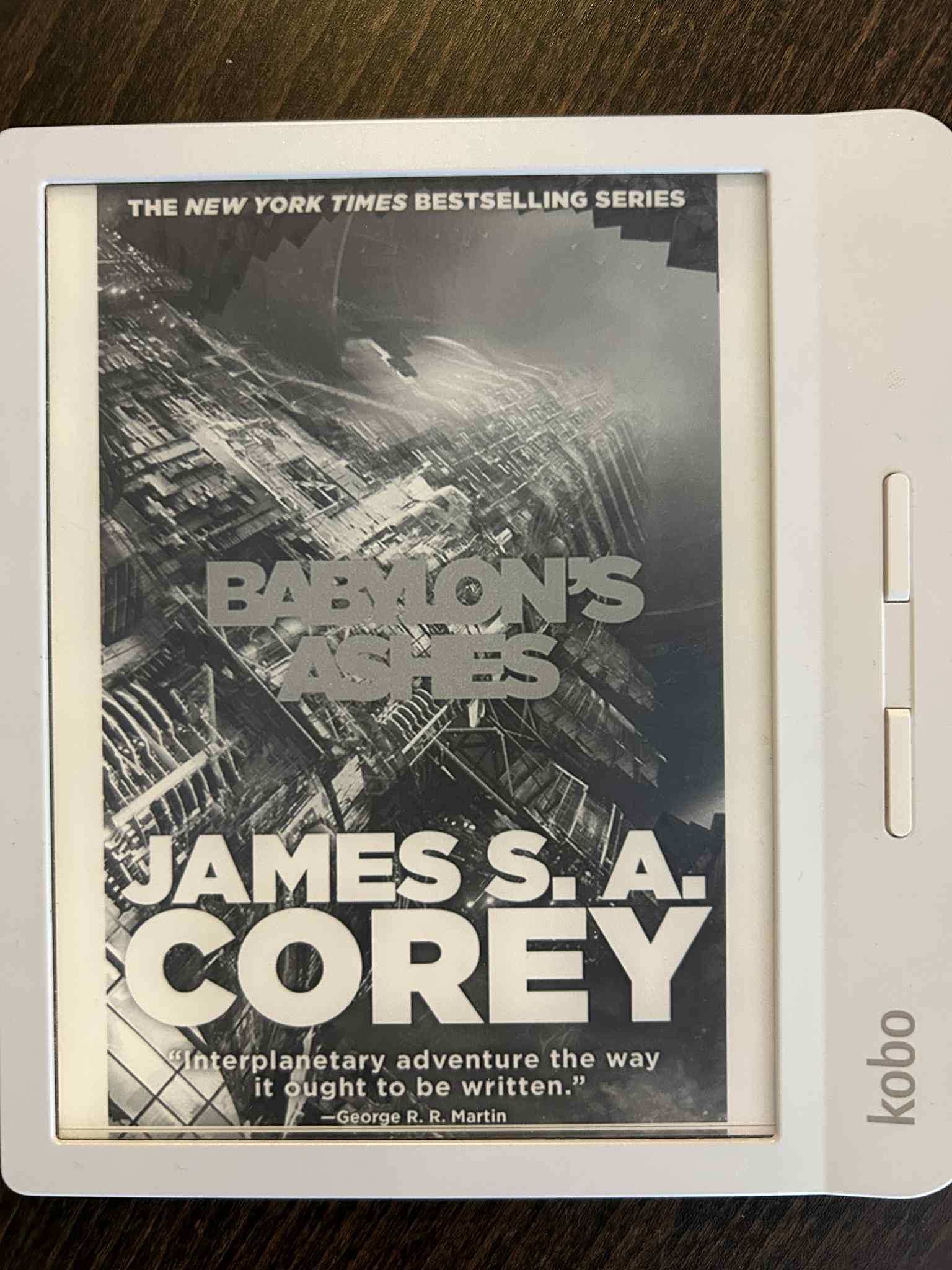
Babylon’s Ashes (The Expanse, book 6)

The messages coming back flooded the comm buffers with rage and sorrow, threats of vengeance and offers of aid. Those last were the hardest. New colonies still trying to force their way into local ecosystems so exotic that their bodies could hardly recognize them as life at all, isolated, exhausted, sometimes at the edge of their resources. And what they wanted was to send back help. He listened to their voices, saw the distress in their eyes. He couldn’t help, but love them a little bit.

Under the best conditions, disasters and plagues did that. It wasn’t universally true. There would always be hoarders and price gouging, people who closed their doors to refugees and left them freezing and starving. But the impulse to help was there too. To carry a burden together, even if it meant having less for yourself. Humanity had come as far as it had in a haze of war, sickness, violence, and genocide. History was drenched in blood. But it also had cooperation and kindness, generosity, intermarriage. The one didn’t come without the other.

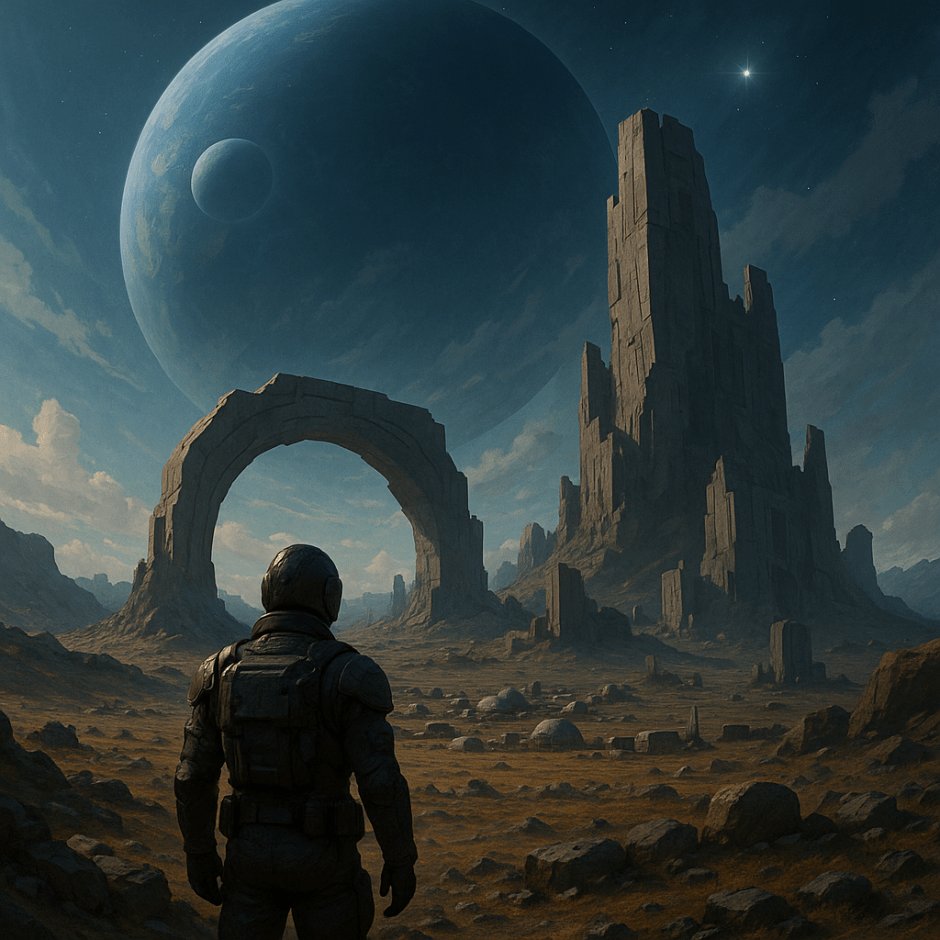
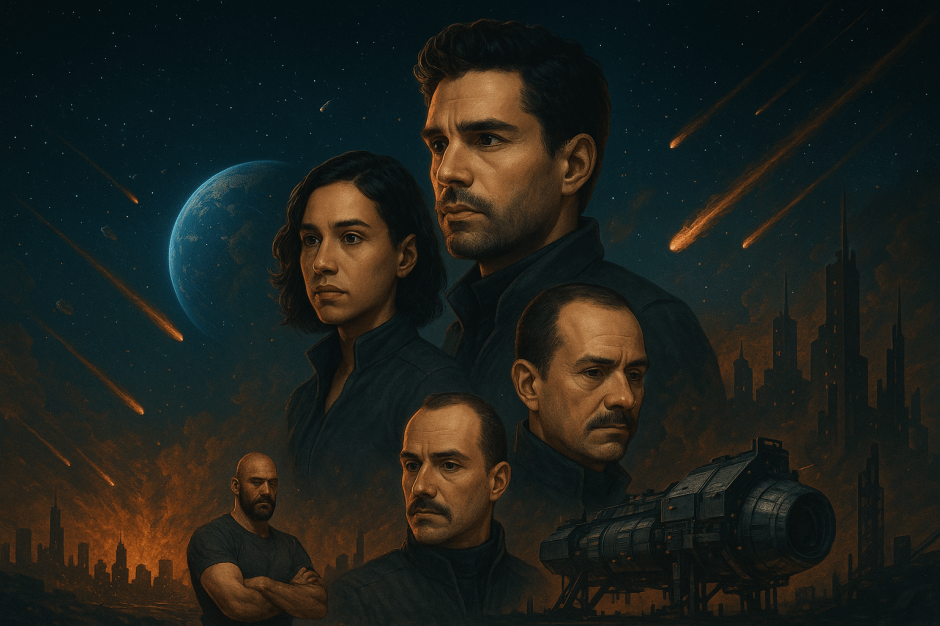
Book 6 of the Expanse series continues the saga, with the Free Navy raise and Earth’s slow recovery following the meteorites’ strikes. While James Holden is again central to the story, he is but one of the dozen characters followed by the story. Some others include his crew; Avasarala, now Earth’s leader after the disaster; Fred Johnson, one of the main driving forces of the Outer Planets Alliance; and several leaders of the new Free Navy.

The story in the book is about the civil war between the this new force of Belters, which acquired advanced Mars military ships; the Mars’ demise and collapse of military, facing the opportunity of the new worlds discovered; allied with an Earth in tatters. Many are already seeing the dangerously degrading fragile balance of the continous war and disasters in our solar system.

The new worlds, dangerous and unknown, are the only way out to save the solar system from economic collapse. That is the end motivation for James Holden, and a new social equilibrium is pursued at the end of the book.

The aliens are not central to the story anymore and Detective Miller is a far memory, mentioned only once.

Overall, the book and the new developments follow nicely the story arc and prepare the ground for the next stage in the saga. A beautifully constructed story and series, now at the 6th iteration. Loved it.

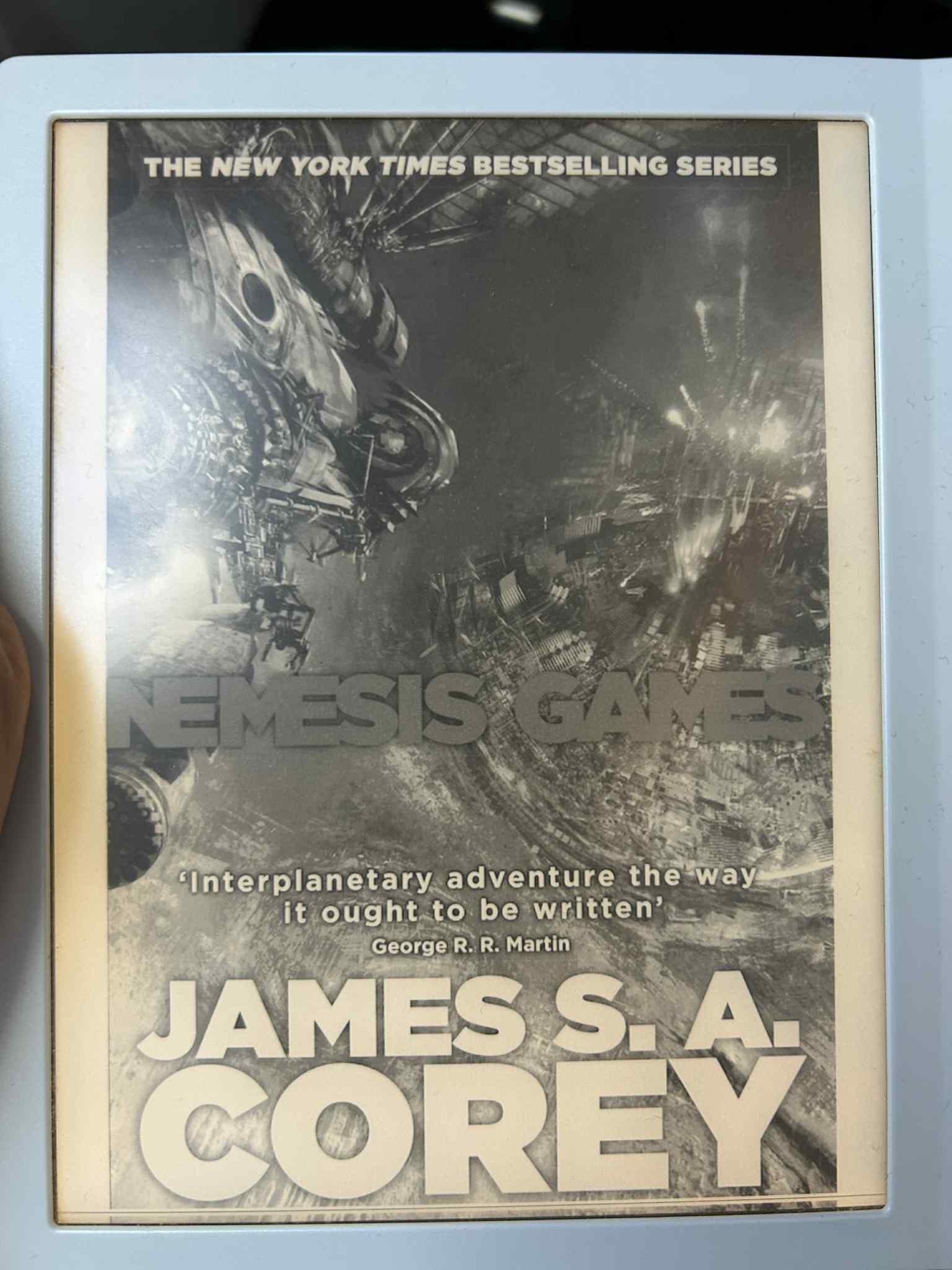
Nemesis Games (The Expanse, book 5)

No, it wasn’t. It was the scariest fucking answer to Fermi’s paradox I can think of. Do you know why there aren’t any Indians in your Old West analogy? Because they’re already dead. The whatever-they-were that built all that got a head start and used their protomolecule gate builder to kill all the rest. And that’s not even the scary part. The really frightening part is that something else came along, shot the first guys in the back of the head, and left their corpses scattered across the galaxy. The thing we should be asking is, who fired the magic bullet?

“Nemesis Games” is the fifth book in the Expanse series, with a title that accurately reflects the story in the book, happening centuries in the future, when humanity has conquered this solar system. In summary, the crew of the famous now Rocinante is taking a separate leave, each for its own reasons, with the exception of the captain Jim Holden. During their leave, the story of each crew member (Amos, Alex and Naomi) is followed, as each finds some of the greatest challenges of their lives, as they face, in some way, their own nemesis.

Their stories, now even sagas, at the fifth book, is in the context of the main ship, Rocinante, being in repairs; with the usual captain, Holden, away with the ship; and Earth being devastated by human-sent meteors.

The messages is that each character grows and develops to be more than the initial person that they started, before Rocinante: Amos, from a thug to an accomplished space engineer; Naomi, from a brilliant engineer to a politically astute Navy Second in Command; Alex, from a gifted military navy pilot to keen observant and detective.

Usually, the quality of a series declines with time. However, this book came strong – I loved it. The plot was strong, no magic bullets, but credible actions in given situations. Except one situation that was too good to be true (Amos finding survivalist supplies), the rest was good enough to keep the reader immersed in the story. I liked the character development, and the risky bet to add more depth to existing characters rather than bring new ones.

Looking forward for the sixth book in the series!

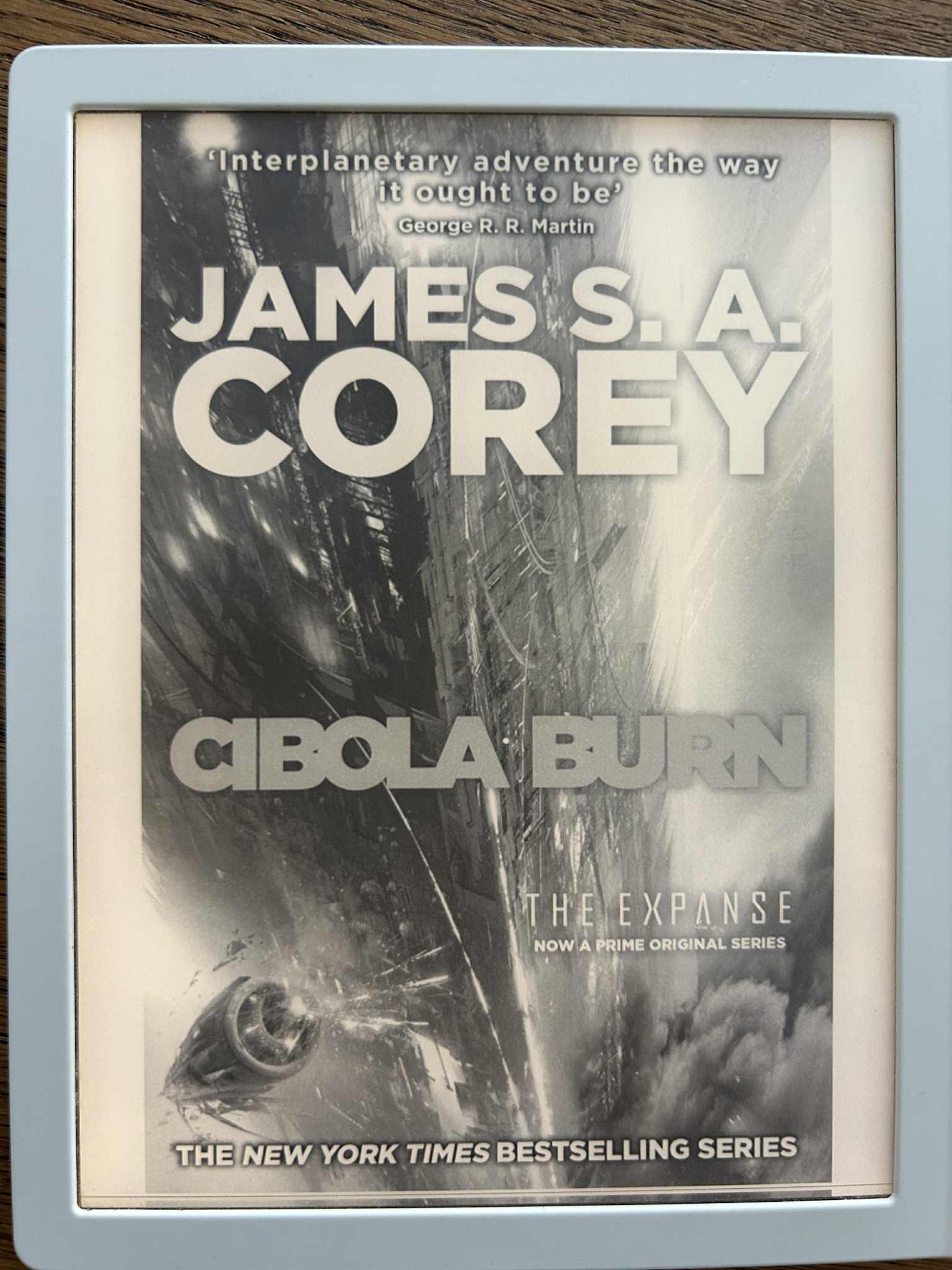
Cibola Burn (The Expanse, book 4)

Apocalyptic explosions, dead reactors, terrorists, mass murder, death-slugs, and now a blindness plague. This is a terrible planet. We should not have come here.

Cibola Burn, the forth book in the Expanse series, continues the story of humanity a few centuries in the future (when the solar system is conquered), where the first planet is explored / colonized following the stars gateway that is build by the alien protomolecule. The fast developments and lack of coordination between the 3 solar powers – Earth, Mars and Belters – make the exploration and colonization of the first planet available a chaotic process, where no one knows who owns the planet (first arrivals? or treaties signed in the Sol system?). How to impose law from years and light-years away?

In this chaotic environment, Holden and his crew is tasked to calm the tensions between the first arrived settlers and the Earth company that was given the rights to the planet. However, the planet is not what it’s looking like, it’s still a remnant of the alien empire that constructed the mysterious protomolecule, able to build a star gate a billion years later. And more puzzlingly, who was this other alien race that could destroy such an advanced and galaxy-wide spread empire?

This book in the series focuses on the planetary exploration, colonisation, survival and orbital manouvers, with a pinch of detective story to inquire over the alien ruins. It’s an engaging book, but felt slow at times. The sheer world-building, hard scifi, characters developments – remain world class.

The book is not as good as the previous 3 ones, where actions scenes, mind-blowing technology and memorable characters (Avasarala, anyone?) were introduced. All of the previous books were a ramp for the next volume of the series; however, after this volume, I am not sure where the story will go. However, I did like the cold calculation that the Earth politician is making over the ramifications for the powers of the Sol system of a star gateway opening. These were the gems of great writing and storytelling that made the book a good one, but not at the level of the others.

Overall, a great scifi series, book 4 / 9 read, and who know what future holds?

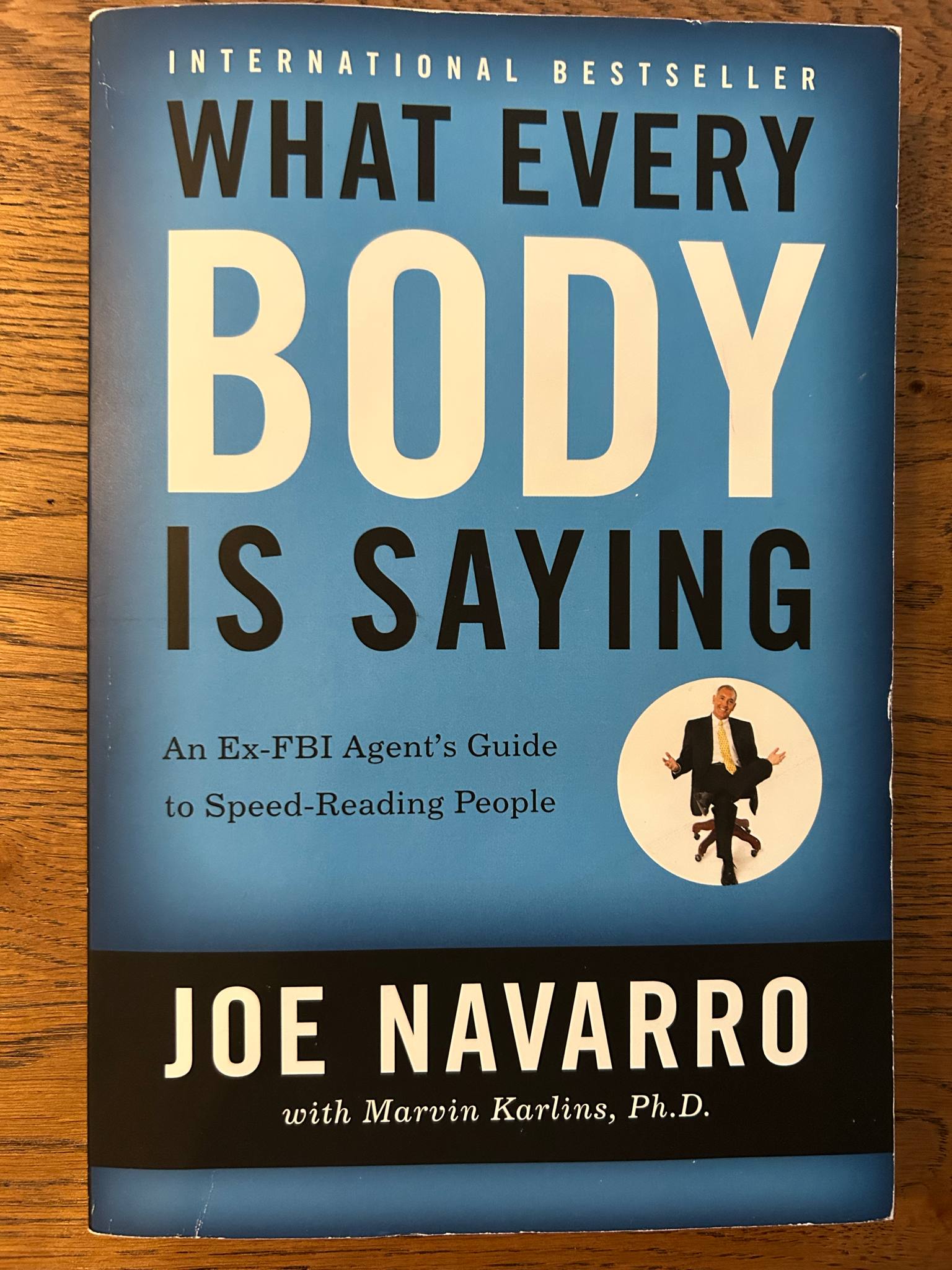
What Every Body is Saying: An Ex-FBI Agent’s Guide to Speed-Reading People – Joe Navarro, Marvin Karlins

For our purposes, any touching of the face, head, neck, shoulder, arm, hand, or leg in response to a negative stimulus (e.g., a difficult question, an embarrassing situation, or stress as a result of something heard, seen, or thought) is a pacifying behavior. These stroking behaviors don’t help us to solve problems; rather, they help us to remain calm while we do. In other words, they soothe us. Men prefer to touch their faces. Women prefer to touch their necks, clothing, jewelry, arms, and hair.

The book presents how one can read the body language of another person. Joy, sadness, discomfort, anxiety, lying, distress, etc. – can be inferred by observing gestures and movements of a person. The book structures all the movements in chapters based on human anatomy: legs, face, arms, etc. However, the authors are clear that no single gesture betrays a feeling, but a more holistic observation is always required. To reinforce their arguments, Joe Navarro and Marvin Karlins employ relevant academic literature to explain why humans gesture and move their bodies in certain way when strong feelings occur.

Joe Navarro, the main author, was FBI’s top body expert, specialized in interviewing techniques, but also employed by the private sector in corporate negotiations. He is now an author and university professor in the United States.

The book is not providing any groundbreaking advice, but organizes in an ingenious, structured way human gestures revealing strong feelings. The book also tries to explain why we use the gestures we do. In more detail, the book argues that the limbic system is the one triggering the reactions. Humans tend to calm themselves by using pacifying gestures, which can be read and interpreted externally. Excellent images to portray gestures are employed in the book.

I enjoyed the book and though that lots of common sense and good advice is packed in a book. It is clear that the book is not a manual to deceive, but to learn to be more considerate to people and notice signs of distress. I learned gestures to show openness, like not hiding the hands: a simple gesture of putting the hands on the table when taking with someone, and not hiding them beneath the table helps to create a better connection. A great book overall!

The Burnout Society – Byung-Chul Han

Today’s society is no longer Foucault’s disciplinary world of hospitals, madhouses, prisons, barracks, and factories. It has long been replaced by another regime, namely a society of fitness studios, office towers, banks, airports, shopping malls, and genetic laboratories. Twenty-first-century society is no longer a disciplinary society, but rather an achievement society [Leistungsgesellschaft]. Also, its inhabitants are no longer “obedience-subjects” but “achievement-subjects.” They are entrepreneurs of themselves.

The Burnout Society is a philosophical essay calling for humans to, basically, take it easier. Do less, think more. The main message of the book is that the inability to manage negative experiences in a world with too much positivity leads to mental disorders from depression to attention deficit disorder.

The author of the book is the Korean-born German philosopher Byung-Chul Han, who teaches philosophy and cultural studies at Berlin.

Divided into 8 separate chapters, each adopting a separate topic, the book revolves around the pressure to modern individual of the modern society. Why are we so tired and depressed, when we solved, as a society, so many immediate dangers, from illnesses to social safety?

Some chapters I did not like and skipped through, while others where engaging, such as Profound boredom. The chapter had some memorable thoughts: if sleep represents the high point of bodily relaxation, deep boredom is the peak of mental relaxation. A hectic rush produces nothing new, but reproduces what is already available. For example Running is just accelerated walking. Dancing is an entirely new form of motion.

Deep, contemplative attention is inaccessible to the hyperactive ego. Even Nietzsche noted that human life ends in deadly hyperactivity if the contemplative element is taken out. The author takes the example of Paul Cezanne, – who was able to have profound attention (to the landscape).

Another interesting chapter is the one on Vita activa vs vita contemplativa. The message is that we should seek to understand first, before acting. Hyperactivity doesn’t allow free action.

I was not really convinced on the role of contemplation, as reflection felt a better word. In the reflection vs contemplation dichotomy, reflection is active and analytical, while the latter is immersive and passive. What is contemplating without doing?

Overall, the book is intriguing and captures of the main struggles of the modern society. Critics note the fancy language and lack of concrete examples. Supports highlight the depth of thought and the many poignant observations on the pressures of the individual in the modern, atomized, internet-filled and value-missing society.

Abaddon’s Gate (The Expanse, book 3)

Violence is what people do when they run out of good ideas. It’s attractive because it’s simple, it’s direct, it’s almost always available as an option. When you can’t think of a good rebuttal for your opponent’s argument, you can always punch them in the face.

Abbandon’s Gate is the third book in the space saga The Expanse, where the action is, this time, in a space bubble built by an alien civilisation. The alien protomolecule built a gate next to Uranus, in the far future of humanity, which conquered our solar system, but not the stars. The humanity is still divided into Earth, Mars and the humans in the asteroid belt, united in the Outer Planets Alliance. All three factions are driven into the gate, and the space bubble, by the running protagonist, the adventurer and captain James Holden.

As in other books of the series, the story follows 4 characters, which gradually reunite in an epic finale. Carlos “Bull” de Baca is the security officer of the Belters’ flagship, the largest ship in the system. Anna Volovodov is a preacher of the Methodist church, volunteering in a United Nations (of Earth) ship to go into the gate. Clarissa Mao, daughter of the rich and powerful Mao (now imprisoned) plots against James Holden, whom she believes created her father’s downfall. Finally, the four story is following James Holden, the captain of Rocinante and its ragtag crew of four.

The gate created by the alien protomolecule opens to a space bubble with thousands of other gates, to other stars, controlled by a central machine. The machine reduces speed and gravity by its will, defying physics. James Holden finds, guided by the mysterious, form that appears as detective Miller (Holden’s dead companion from the first book) that the Godlike alien civilization, spanning hundreds of stars, was destroyed by an even bigger force. And that was 2 billion years ago. But what stays behind those gates? What planets or alien forces?

Interestingly, Abbadon appears in the Hebrew Bible and means destruction or the realm of the dead. This is a reference to the destruction that the gate may bring.

Overall, while a bit weaker than the other book, this is still great storytelling, world building and memorable characters. What a series!

Caliban’s War (The Expanse, book 2)

There was a relentless forward motion to the man. The universe might knock him down over and over again, but unless he was dead, he’d just keep getting up and shuffling ahead toward his goal. Holden thought he had probably been a very good scientist. Thrilled by small victories, undeterred by setbacks. Plodding along until he got to where he needed to be.

The story of the first book, of an alien protomolecule seemingly indestructible, intelligent and lethal to humans, expands to another level, where politicians and planets get involved. The plot is driven ahead by not two, but four protagonists: the captain – James Holden, the doctor – Prax, the politician – Avasarala and the soldier – Bobbie. While each starts from its own background, the protomolecule brings them all together, trying to stop the increasing menace. While planetary governments try to weaponize this alien artefact, the molecule learns and becomes increasingly intelligent. Our four heroes maneuver around politics and dangerous situations to destroy the threat, but the war goes on.

The book introduces two memorable characters: the UN politician from Earth, Avasarala and the Martian female soldier, Bobbie. They team together, more by chance than design, to keep the two planets fighting against the common threat. Avasarala is diminutive, elegant, sophisticated, foul speaking, machiavellian, happily married and old. Bobbie is the opposite.

I rarely continue books in a series, but this space saga is exceptional. Great story building, memorable characters with credible motivations, a tight plot, hard science fiction, great writing – overall, an truly enjoyable reading.

The book’s title is unusual, as Caliban is never mentioned in the book. It is, in fact, a reference to the character Caliban in Shakespeare’s “The Tempest.” This character tries to free himself from subjugation of his masters, as the protomolecule tries to shake the bondage of those who try to weaponize it.

Excellent series, that goes to about 9 books. Long, but worthy reads.

Le Zoo pétrifié (Les Carnets de Cerise Series) – Joris Chamblain, Aurélie Neyret

Maman m’a toujours dit que le vocabulaire était ma meilleure arme dans la vie. Avant je ne comprenais pas pourquoi. Maintenant si. Lire, c’est découvrir, voyager, mais aussi apprendre le sens des mots et surtout apprendre à s’en servir. C’est très important pour comprendre les choses et faire attention à ce qu’on nous dit.

Cerise est une petite fille de 11 ans, curieuse et pleine d’énergie, qui souhaite devenir écrivaine. Avec ses 2 meilleures amies, Line et Erica, et guidées par sa mentor, Madame Desjardines, nous explorons les aventures de notre protagoniste dans sa petite ville natale en France.

Ce livre pour adolescents (que j’ai lu pour mes filles) est le premier de la série Carnets de Cerise. Il commence avec un vieil homme mystérieux, marchant dans la forêt, et colorié à la peinture. Cerise est intriguée et suit avec persévérance le vieil homme, découvrant une vieille histoire de la ville, qui va rassembler tout le monde.

L’histoire est un peu simple et triste, mais les illustrations et le concept général sont superbes. Il n’y a pas que des dessins, mais aussi des lettres et des articles de presse, le tout contribuant à une construction d’universe élégante dans le livre.

Dans l’ensemble, un degré de liberté irréaliste pour les enfants (leur donnant même de mauvaises idées), mais joliment dessiné et magnifiquement conçu.

Strategy: A History – Lawrence Freedman

So the realm of strategy is one of bargaining and persuasion as well as threats and pressure, psychological as well as physical effects, and words as well as deeds. This is why strategy is the central political art. It is about getting more out of a situation than the starting balance of power would suggest. It is the art of creating power.

The book is a comprehensive history of strategy, starting from chimpanzees decision-making and going to military, business and political thought. Presented in a chronological order, the book covers all relevant points on what could be included in the topic of strategy: from nuclear war to guerilla tactics, from Cold War to deterrence strategy, from Sun Tzu to Jomini, from business Red Queen to Blue Ocean strategy, from political rational decisions to cooperation and coalition games.

The book feels like a compendium of all important ideas in this domain, describing and commenting on each of them. There is no single message of the book, but appears more like a textbook for those interested in the topic. At points it feels dry, almost academic, with long paragraphs and descriptions. Nevertheless, the ideas are presented in a clear and logic way, and chapters are flowing well one after the other.

The thinkers mentioned and analyzed are mostly American or West European, with few examples from other parts of the world, although the success of non-English thinkers or organizations is mentioned and praised. More examples to captivating theories, or some anecdotes (such as the one describing the movie Mr Smith is sent to Washington) would have elevated the book even further.

Sir Lawrence Freedman, the author of the volume, is an authority on the area, former Professor of War Studies at King’s College London, and largely considered the authority on British strategic studies.

It took me about 8 years to finish the book, which stands at about 700-plus pages, but it was always an interesting read, although slow at times, as profound ideas follow quickly one after the other, paragraph after paragraph.

A must-have book in the library for anyone interested in the topic of strategy from a political, military and business perspectives. This is a book that can stand the test of time, as it contains all influencing ideas and thinkers on strategy until early 2010s.

Weaponized – Neal Asher (Polity Universe, first book)

Sometimes, when you fight a war, you become what you are fighting.

Part of the Polity space saga, this book is about a colonisation attempt on a hostile planet, in the far future, where evolution is vital for survival. But not all is what meets the eye and some quiet forces are monitoring and planned the entire ordeal.

This is a hard science fiction story that follows a colonisation leader using AI and continuous adaption to the environment until their own humanity is questioned. The alien animals on the planet, the cacoraptors, are unique in that they adapt to the invaders, changing their bodies shape, but also their level of intelligence to overcome the invaders. How come then that they did use their intelligence capabilities earlier?

In a three ways story, the human colonizers are starting a war with an enemy intelligence, the first ever met. The enemy intelligence, the pradors, land with a damaged ship on this colonizing planed, stating a three ways war. Who will win? Who will adapt best?

This is an engaging and action packed story, with a complex world developing. However, the go and forth in time narrative (past, present, near past) is sometimes confusing, although it does contribute to build the main characters. Developed in the Polity universe, which has more than a dozen books, it is placed chronologically at the beginning of the space saga, but it is not viewed as the best of the series.

Overall, an imaginative and richly build book, by Neil Archer.