
Why was he doing this? So that life could continue in the metro? Right. So that they could grow mushrooms and pigs at VDNKh in the future, and so that his stepfather and Zhenkina’s family lived there in peace, so that people unknown to him could settle at Alekseevskaya and at Rizhskaya, and so that the uneasy bustle of trade at Byelorusskaya didn’t die away. So that the Brahmins could stroll about Polis in their robes and rustle the pages of books, grasping the ancient knowledge and passing it on to subsequent generations. So that the fascists could build their Reich, capturing racial enemies and torturing them to death, and so that the Worm people could spirit away strangers’ children and eat adults, and so that the woman at Mayakovskaya could bargain with her young son in the future, earning herself and him some bread. So that the rat races at Paveletskaya didn’t end, and the fighters of the revolutionary brigade could continue their assaults on fascists and their funny dialectical arguments. And so that thousands of people throughout the whole metro could breathe, eat, love one another, give life to their children, defecate and sleep, dream, fight, kill, be ravished and betrayed, philosophize and hate, and so that each could believe in his own paradise and his own hell . . . So that life in the metro, senseless and useless, exalted and filled with light, dirty and seething, endlessly diverse, so miraculous and fine could continue.
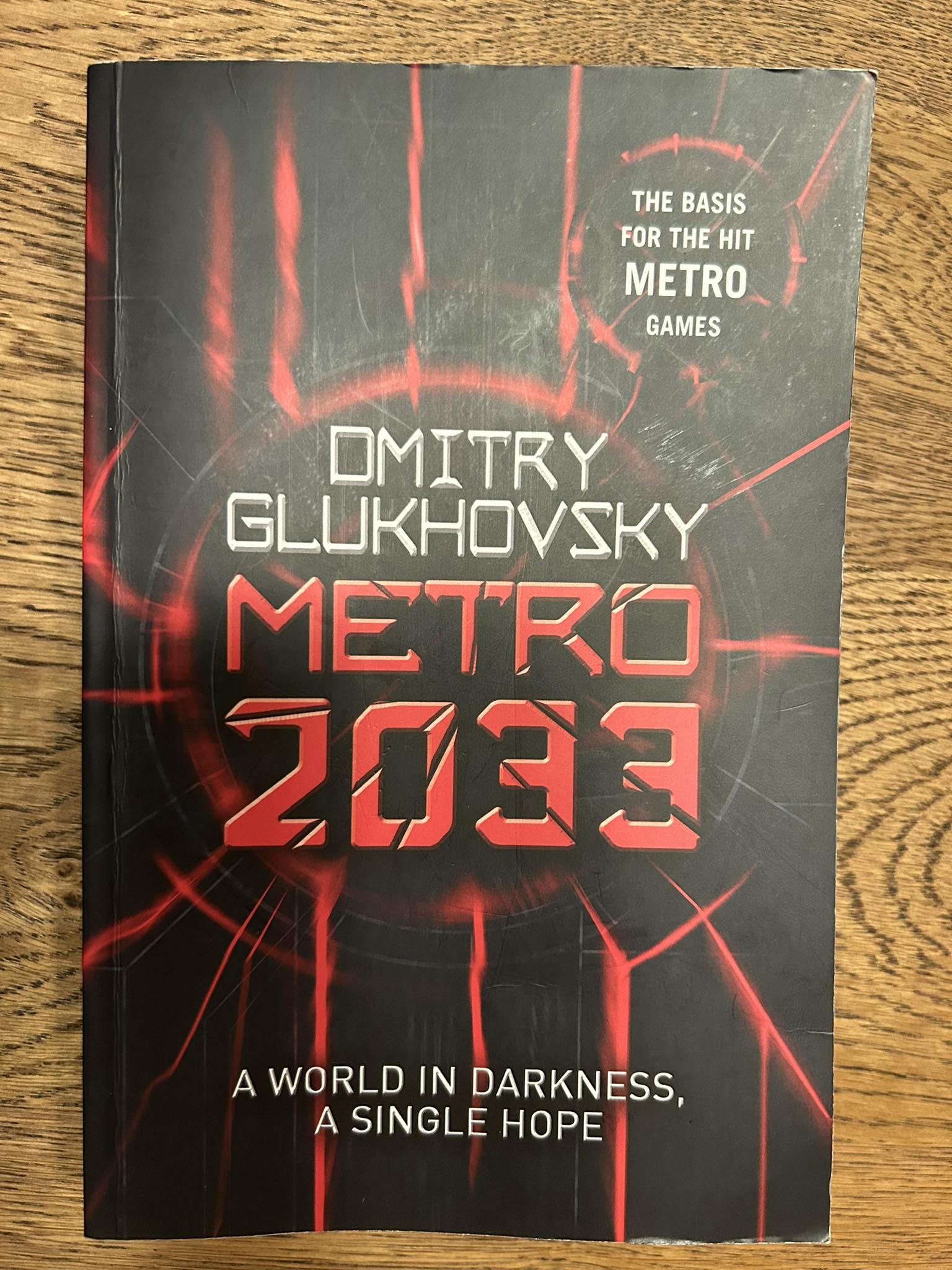
In a post-apocalyptic world, humans eke out their existence in the depths of several Moscow metro stations, surrounded by horrors, radiation, mutants, rats and their own fears. The protagonist, Artyom, engages in a journey to deliver a vital message that would inform and allow people to react to an external threat. In his odyssey, traders, mystics, hunters, idealists help or hinder him in various societies, often extreme, that survive in the metro stations. In a world where bullets are currency, humans cling to life in the underground and surface travels are mortally dangerous, the will to fight and survive, the thoughts of an existence close to the abyss is explored by the Russian author, in a compelling and creative story.
The book was later translated in a successful series of horror video games. For some readers, the exploration of human mind in a post-apocalyptic and grim survival story by Dmitry Glukhovsky could look monotonous; for others, it may a fascinating dive into what gives the survivors the grit to face all the horrors and the grim future.
The story of creating this book is unusual, as Glukhovsky wrote it and publish it on his website as an interactive experiment, when he was 18. It was later published on paper three years later, in 2005. Two more volumes in the series continued in 2009 and 2015,
Overall, a creative, diverse exploration of human mind and society in a post-apocalyptic, grim world, via a fulfilling odyssey.
 Mike Bostan - personal blog on book reviews and energy studies