Koban – Stephen W. Bennett

His octet was to be limited to the same weapons these humans were given. A very detailed video of the compound’s terrain was furnished. This he shared with his octet, because every Krall had an inborn ability to memorize such details for a mission. Repetition was unnecessary.

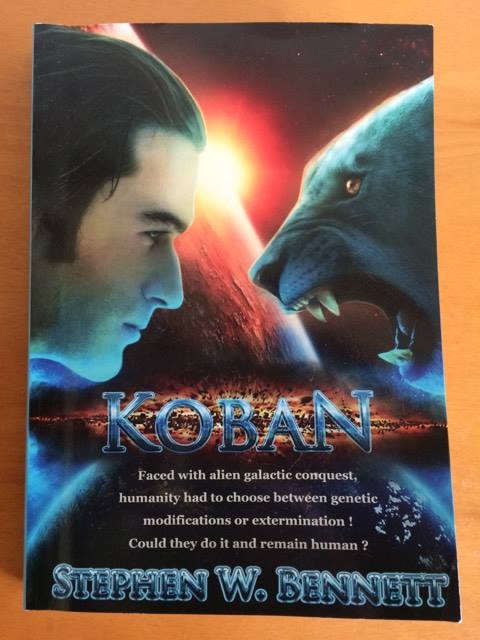
Koban is a very imaginative and action-packed military survival sci-fi. The story revolves around Captain Mirikami, who is transporting in a passenger spaceship scientists to a far colony, when he is attacked by an unknown and far more advanced alien species. Captain Mirikami and all on board is then isolated on a dangerous planet, Koban, where he has to prove to alien war race that humanity deserve to be treated as worthy opponents.

The author creates an entire universe with this book, with a new planet and a new alien species. The Krall are very advanced military, highly physical, destroyed or enslaving every other intelligent species they met so far. They use those wars to enhance their military abilities. Humans are considered weak and very low technologically speaking, but they are still put to trial. If they succeed, aliens plan to destroy humans gradually, rather then in a one big stroke, hence the struggle of Captain Mirikami.
Scifi survival story

Stephen Bennett creates a future where genetic warfare  almost killed the entire male population and changed ways of society. The men are subservient to women and the first part of the book is full with sexist situations. After the genetic war. humanity is not fighting internally nor meeting any other intelligent species in 300 years.

The narrative is captivating, some chapters are looking at events through the eyes of predators on Koban, some others through the Krall aliens. It makes the story a lot more interesting.The book has some fantastic ideas, but with others it went overboard. The sexism is interesting, but not adding to the story. The genetic enhancement done in days leave too many logical holes.

Nonetheless, it is a solid scifi survival book, imaginative, well paced, action-packed and entertaining.
Europe: The Struggle for Supremacy 1453 to the present – Brendan Simms

The hatchet with France was slowly being buried, but there were still serious differences to be ironed out over North Africa. Russia remained a huge threat, and it was against her that Britain’s first major diplomatic initiative of the new century, the Anglo-Japanese alliance of 1902, was directed. The main worry, however, was Germany, which had shown unconcealed sympathy for the Boers and whose naval ambitions were seen as a direct challenge to British maritime supremacy.

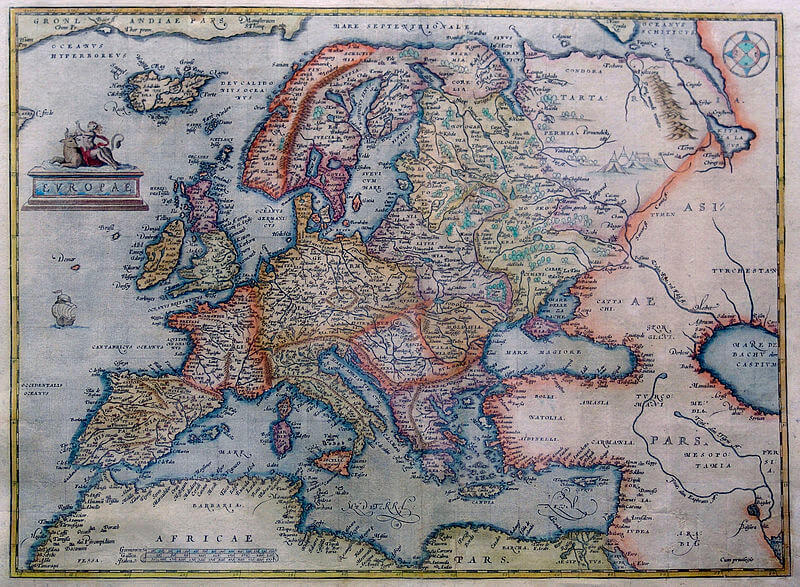
At 550 pages, Europe is a very dense book of European history, mainly focusing on German lands, due to their position in the center of Europe. It follows the struggles between kingdoms and nations from an international relations perspective. The depth of detail is impressive, but the way the narration progresses and the events are presented keeps the reader engaged.

The book has everything, from the wars within the Holy Roman Empire to modern Germany, from conquest of Cyprus by Ottomans to Crimean war, from Ivan the Terrible to Putin. While Europe is the main focus, there are historical events from Afghanistan, China or the United Stated which get much attention as well.

Brendan Simms offers a thorough explanation of some crucial questions, such why Germany is so important and why Europe conquered the world. It explains brilliantly the motivations of why some countries acted in a specific way.

International relations in action

Brendan Peter Simms is Professor of the History of International Relations in the Department of Politics and International Studies at the University of Cambridge. He shows an impressive quality of understanding historical events, while not pinning down the reader in an infinite enumeration of details.

Just until the present day analysis, the book is a scholarly masterpiece. The present day  events are a lot less clear as the author wants them to be. Also, international relations and foreign policy are sometimes given too much weight, while other actors, such as technology, leaders at a specific time or culture, were important factors as well.

To sum up, this is a brilliant scholarly book on European history from a primacy of international relations viewpoint.

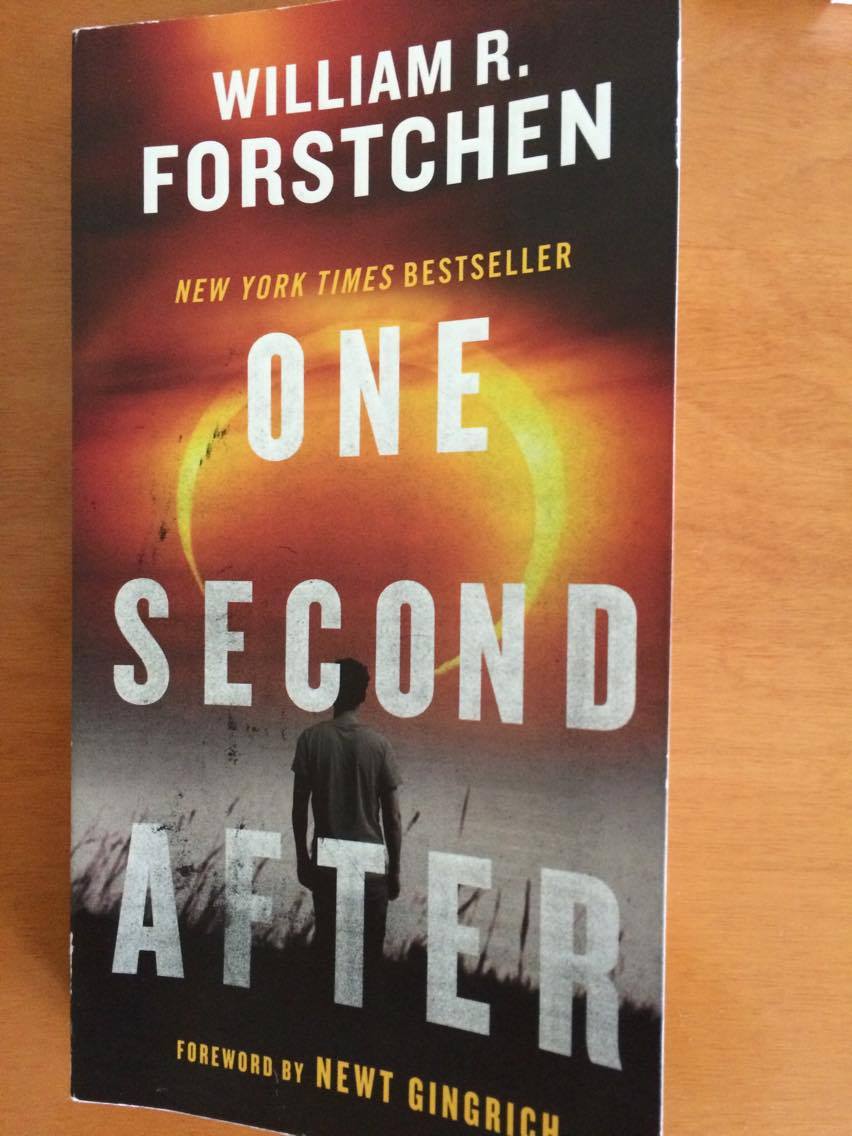
One Second After – William R. Forstchen

She’d always talk about how great Gandhi was. I’d tell her the only reason Gandhi survived after his first protest was that he was dealing with the Brits. If Stalin had been running India, he’d been dead in a second, his name forgotten.

Have you wondered what will happen if electricity suddenly stops coming? This book replies exactly at that questions, under a fictional story following an ex-military history professor, in a small town in the mountains in the United States.

Loss of electricity (not a blackout, in a blackout you kind of expect electricity to return) can have several reasons. In this book, there is an electromagnetic pulse that fries the grid and everything electric (circuitry). This threat is actually possible, and the guy in the US Army looking at this problem (asymmetrical threats) was an advisor for the book.

In case electricity stops coming, the very fiber of society disintegrates: no communications (no phones, television, internet, newspapers), no commerce (no card readers, only cash for a while, then only barter), no food (no refrigeration, no trucks to bring food to supermarkets, no machinery to harvest, no trucks to bring food from silos to animal farms), government loses the monopoly of violence (how can you announce the police of a robbery, crime, rape, if communications are down?), no medicines for the needy (diabetics and others). Also, no hygiene products for women.

Without electricity

Electricity allows to increase tremendously the efficiency of agriculture and food production. Therefore, as soon as it disappears, human population reduces to the efficiency of food production before electricity. This means mass starvation, which the book painfully describes.

The story takes place in the United States, in a mountain town. Hence, some features are present, which might be specific to the country, such as : numerous people have guns that can hunt with and many citizens have military experience. This comes as an advantage, because, as society breaks, individuals usually kept in check by police, re-surge as organized bands, taking food by force and killing. Police can’t quickly intervene, without the instant communications.  Also, many officers and hospital staff might be wanting to return home, at their loved ones, until some form of community protection is realized.

William R. Forstchen is asking many interesting, deep questions about the vulnerabilities of our society. The literary value of the book is quite low, writing is ok, fluid, but not fantastic; however, the strength of the book is coming from the really good questions that it asks. This is kind of hard fiction, from politically conservative perspective.

There are many low chance, high threat events that could destroy civilization. Supervolcanoes, meteorites, robots, plagues, but it is not a lot you can do if a meteorite comes. On the other hand, just blowing a nuclear bomb at high-altitude, for example 50 km up over a continent, the US Army colonel specialized in this issue argues, is enough to destroy a country. In the book, they don’t even know who launched the nuclear bomb. All that they know was that the launch was from a freighter out in the sea and they speculate that maybe a terrorist group or a country not friendly to US or even a large power that covered their tracks really well.

A report from nine scientists was published, unluckily in the day of the 9/11 attacks and, seemingly, a US Congress inquiry was made over this, but overridden by the terrorists attacks.

Overall, a must-read book for the interesting questions it asks.


[Picture from http://maxpixel.freegreatpicture.com/Strommast-Current-Pylon-Steel-High-Voltage-Sunset-520008%5D